Home / Articles / Tricoordinate silyl cations (silylium ions)

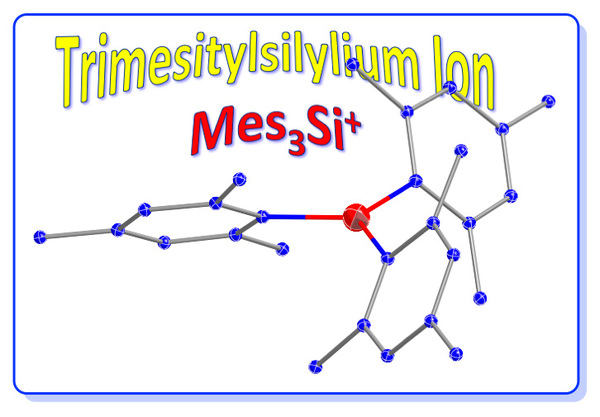
Tricoordinate silyl cations (silylium ions)

1 Department of Chemistry, Graduate School of Pure and Applied Sciences, University of Tsukuba, Japan
Published 30 November 2018
20
Share
Cite this
GOST
 | 
Cite this
GOST
Lee V. Y. Tricoordinate silyl cations (silylium ions) // Russian Chemical Reviews. 2018. Vol. 88. No. 4. pp. 351-369.
GOST all authors (up to 50)
Lee V. Y. Tricoordinate silyl cations (silylium ions) // Russian Chemical Reviews. 2018. Vol. 88. No. 4. pp. 351-369.
RIS
 | 
Cite this
RIS
TY - JOUR
DO - 10.1070/RCR4868
UR - https://rcr.colab.ws/publications/10.1070/RCR4868
TI - Tricoordinate silyl cations (silylium ions)
T2 - Russian Chemical Reviews
AU - Lee, Vladimir Yaroslavovich
PY - 2018
DA - 2018/11/30
PB - ANO Editorial Board of the journal Uspekhi Khimii
SP - 351-369
IS - 4
VL - 88
ER -
BibTex
 | 
Cite this
BibTex (up to 50 authors)
@article{2018_Lee,
author = {Vladimir Yaroslavovich Lee},
title = {Tricoordinate silyl cations (silylium ions)},
journal = {Russian Chemical Reviews},
year = {2018},
volume = {88},
publisher = {ANO Editorial Board of the journal Uspekhi Khimii},
month = {Nov},
url = {https://rcr.colab.ws/publications/10.1070/RCR4868},
number = {4},
pages = {351--369},
doi = {10.1070/RCR4868}
}
MLA
Cite this
MLA
Lee, Vladimir Yaroslavovich. “Tricoordinate silyl cations (silylium ions).” Russian Chemical Reviews, vol. 88, no. 4, Nov. 2018, pp. 351-369. https://rcr.colab.ws/publications/10.1070/RCR4868.
Views / Visits / Downloads
20 / 20 / 4

Abstract

Being silicon analogues of carbenium ions, which are ubiquitous in organic chemistry, silylium ions play a pivotal role in organosilicon chemistry. However, unlike widespread carbenium ions, silylium ions are much less accessible and much more difficult to stabilize due to the lower electronegativity of the silicon atom, its greater polarizability and notably larger size (compared to those of carbon atom), which results in extraordinarily high electrophilicity and Lewis acidity of silylium ions. These peculiar characteristics of silylium ions require very special, sophisticated synthetic approaches for their generation, isolation and structural elucidation, on the one hand, and open the door for their use as exceptionally potent Lewis acids in a number of catalytic transformations, on the other hand. In this review, we present and discuss the latest advances in the field of stable silylium ion derivatives, particularly emphasizing the state-of-the-art procedures for their synthesis, structural studies both in solution and in the solid state, most remarkable recent representatives of the isolable silylium ions, and finally, discuss the use of silylium ions in synthetic organic chemistry.

The bibliography includes 155 references.

References
1.
Cations of Group 14 Organometallics
Müller T.
Advances in Organometallic Chemistry , 2005
2.
Silylium ions
Kochina T.A., Vrazhnov D.V., Sinotova E.N., Voronkov M.G.
Russian Chemical Reviews , 2006
4.
rcr_88_4_351_bib4
Lee
2010
5.
rcr_88_4_351_bib5
Müller
2014
6.
rcr_88_4_351_bib6
Lee
2017
7.
The (Me 5 C 5 )Si + Cation: A Stable Derivative of HSi +
Jutzi P., Mix A., Rummel B., Schoeller W.W., Neumann B., Stammler H.
Science , 2004
8.
Low-Valent Silicon Cations with Two-Coordinate Silicon and Aromatic Character
Driess M., Yao S., Brym M., van Wüllen C.
Angewandte Chemie - International Edition , 2006
10.
rcr_88_4_351_bib10
Xiong
Angew. Chem., Int. Ed. , 2012
11.
Dibenzosilanorbornadienyl Cations and Their Fragmentation into Silyliumylidenes
Gerdes C., Saak W., Haase D., Müller T.
Journal of the American Chemical Society , 2013
12.
rcr_88_4_351_bib12
Yeong
Chem. – Eur. J. , 2013
13.
From a Zwitterionic Phosphasilene to Base Stabilized Silyliumylidene-Phosphide and Bis(silylene) Complexes
Breit N.C., Szilvási T., Suzuki T., Gallego D., Inoue S.
Journal of the American Chemical Society , 2013
14.
rcr_88_4_351_bib14
Ahmad
Chem. Commun. , 2014
15.
An NHC-Stabilized Silicon Analogue of Acylium Ion: Synthesis, Structure, Reactivity, and Theoretical Studies
Ahmad S.U., Szilvási T., Irran E., Inoue S.
Journal of the American Chemical Society , 2015
16.
Synthesis of a Bent 2-Silaallene with a Perturbed Electronic Structure from a Cyclic Alkyl(amino) Carbene-Diiodosilylene
Li Y., Chan Y., Li Y., Purushothaman I., De S., Parameswaran P., So C.
Inorganic Chemistry , 2016
18.
Organosilicon Radical Cations
Bock H., Solouki B.
Chemical Reviews , 1995
19.
Organosilicon radical cations
Bock H., Kaim W.
Accounts of Chemical Research , 1982
20.
rcr_88_4_351_bib20
Schwarz
1989
21.
rcr_88_4_351_bib21
Goldberg
1998
22.
rcr_88_4_351_bib22
Fornarini
2001
23.
Silylium cations and their analogs: Radiochemical approach (A review)
Kochina T.A., Vrazhnov D.V.
Glass Physics and Chemistry , 2009
24.
rcr_88_4_351_bib24
Kochina
2010
25.
Nucleogenic silylium cations and their analogs
Kochina T.A., Vrazhnov D.V., Ignatyev I.S., Sinotova E.N., Voronkov M.G.
Journal of Organometallic Chemistry , 2011
28.
Covalent grafting of fluoride-encapsulating silsesquioxane F−@Ph8T8 onto glassy carbon
Farhati A., Syroeshkin M., Dammak M., Jouikov V.
Electrochemistry Communications , 2018
29.
Exchanges of Halogen and Hydrogen between Organic Halides and Isoparaffins in the Presence of Aluminum Halides
Bartlett P.D., Condon F.E., Schneider A.
Journal of the American Chemical Society , 1944
30.
Generation of a silicenium ion in solution
Corey J.Y.
Journal of the American Chemical Society , 1975
31.
rcr_88_4_351_bib31
Lambert
1993
32.
Silyl Cations in the Solid and in Solution
Lambert J.B., Zhang S., Ciro S.M.
Organometallics , 1994
33.
Approaching the Silylium (R3Si+) Ion:  Trends with Hexahalo (Cl, Br, I) Carboranes as Counterions
Xie Z., Manning J., Reed R.W., Mathur R., Boyd P.D., Benesi A., Reed C.A.
Journal of the American Chemical Society , 1996
34.
35.
The Allyl Leaving Group Approach to Tricoordinate Silyl, Germyl, and Stannyl Cations
Lambert J.B., Zhao Y., Wu H., Tse W.C., Kuhlmann B.
Journal of the American Chemical Society , 1999
39.
Silaimidazolium and silaimidazolidinium ions
Schäfer A., Schäfer A., Müller T.
Dalton Transactions , 2010
41.
The Nature of Protonated Decamethylsilicocene, (Me5C5)2Si+H
Müller T., Jutzi P., Kühler T.
Organometallics , 2001
43.
rcr_88_4_351_bib43
Lee
2005
45.
rcr_88_4_351_bib45
Lee
2010
46.
Cyclotetrasilenyl:  The First Isolable Silyl Radical
Sekiguchi A., Matsuno T., Ichinohe M.
Journal of the American Chemical Society , 2001
47.
rcr_88_4_351_bib47
Sekiguchi
J. Am. Chem. Soc. , 2000
48.
Isolable Silyl and Germyl Radicals Lacking Conjugation with π-Bonds:  Synthesis, Characterization, and Reactivity
Sekiguchi A., Fukawa T., Nakamoto M., Lee V.Y., Ichinohe M.
Journal of the American Chemical Society , 2002
49.
Silylium Ion to Silylium Ion Rearrangement Caused by 1,3-Methyl Migration
Nakamoto M., Fukawa T., Sekiguchi A.
Chemistry Letters , 2004
50.
[(tBu2MeSi)3Ge]: An Isolable Free Germyl Cation Lacking Conjugation to π Bonds
Sekiguchi A., Fukawa T., Lee V.Y., Nakamoto M., Ichinohe M.
Angewandte Chemie - International Edition , 2003
51.
10.1021/ja030156+
52.
Synthesis of Silylium and Germylium Ions by a Substituent Exchange Reaction
Schäfer A., Reißmann M., Jung S., Schäfer A., Saak W., Brendler E., Müller T.
Organometallics , 2013
53.
Nature of the Si(SiMe3)3+ Cation in Aromatic Solvents
Ottosson C., Cremer D.
Organometallics , 1996
54.
A Free Silylium Ion: A Cyclotetrasilenylium Ion with Allylic Character
Inoue S., Ichinohe M., Yamaguchi T., Sekiguchi A.
Organometallics , 2008
55.
[Me3Si][R-CB11F11]-Synthesis and Properties
Küppers T., Bernhardt E., Eujen R., Willner H., Lehmann C.
Angewandte Chemie - International Edition , 2007
56.
The Silaguanidinium Cation and the Search for a Stable Silylium Cation in Condensed Phases
59.
Closely Approaching the Silylium Ion (R
            3
            Si
            +
            )
Reed C.A., Xie Z., Bau R., Benesi A.
Science , 1993
61.
rcr_88_4_351_bib61
Lee
2007
62.
Computational Evidence for a Free Silylium Ion
Müller T., Zhao Y., Lambert J.B.
Organometallics , 1998
63.
Crystallographic Evidence for a Free Silylium Ion
Kim K., Reed C.A., Elliott D.W., Mueller L.J., Tham F., Lin L., Lambert J.B.
Science , 2002
65.
Steinberger H., Müller T., Auner N., Maerker C., von Ragué Schleyer P.
1997
66.
Unusually Stable Vinyl Cations
Müller T., Meyer R., Lennartz D., Siehl H.
Angewandte Chemie - International Edition , 2000
68.
rcr_88_4_351_bib68
Müller
2003
69.
Persistent Bissilylated Arenium Ions
Meyer R., Werner K., Müller T.
Chemistry - A European Journal , 2002
70.
rcr_88_4_351_bib70
Auner
1998
71.
rcr_88_4_351_bib71
Auner
2000
72.
Hydrogen- and Fluorine-Bridged Disilyl Cations and Their Use in Catalytic C−F Activation
Panisch R., Bolte M., Müller T.
Journal of the American Chemical Society , 2006
73.
Structure and Bonding in Bissilylated Arenium Ions
Panisch R., Bolte M., Müller T.
Organometallics , 2007
74.
The X-ray Structure of a Vinyl Cation
Müller T., Juhasz M., Reed C.A.
Angewandte Chemie - International Edition , 2004
75.
Synthesis of 2,6-Diarylphenyldimethylsilyl Cations: Polar-π Distribution of Cation Character
Duttwyler S., Do Q., Linden A., Baldridge K., Siegel J.
Angewandte Chemie - International Edition , 2008
76.
Intramolecular Halogen Stabilization of Silylium Ions Directs Gearing Dynamics
Romanato P., Duttwyler S., Linden A., Baldridge K.K., Siegel J.S.
Journal of the American Chemical Society , 2010
77.
Competition between π-Arene and Lone-Pair Halogen Coordination of Silylium Ions?
Romanato P., Duttwyler S., Linden A., Baldridge K.K., Siegel J.S.
Journal of the American Chemical Society , 2011
78.
Chiral Memory in Silylium Ions
Ducos P., Liautard V., Robert F., Landais Y.
Chemistry - A European Journal , 2015
79.
rcr_88_4_351_bib79
Schäfer
Angew. Chem., Int. Ed. , 2011
80.
Synthesis and Structure of Sila-Adamantane
Fischer J., Baumgartner J., Marschner C.
Science , 2005
81.
Shuttling Germanium Atoms into Branched Polysilanes
Wagner H., Baumgartner J., Müller T., Marschner C.
Journal of the American Chemical Society , 2009
82.
Wagner–Meerwein-Type Rearrangements of Germapolysilanes - A Stable Ion Study
Albers L., Aghazadeh Meshgi M., Baumgartner J., Marschner C., Müller T.
Organometallics , 2015
83.
Cationic Si−H−Si Bridges in Polysilanes: Their Detection and Targeted Formation in Stable Ion Studies
Albers L., Baumgartner J., Marschner C., Müller T.
Chemistry - A European Journal , 2016
84.
Taming the Silylium Ion for Low-Temperature Diels-Alder Reactions
Klare H. ., Bergander K., Oestreich M.
Angewandte Chemie - International Edition , 2009
85.
A Unique Transition Metal-Stabilized Silicon Cation
Müther K., Fröhlich R., Mück-Lichtenfeld C., Grimme S., Oestreich M.
Journal of the American Chemical Society , 2011
87.
Planar Chiral, Ferrocene-Stabilized Silicon Cations
Schmidt R.K., Klare H.F., Fröhlich R., Oestreich M.
Chemistry - A European Journal , 2016
88.
Intramolecularly Sulfur-Stabilized Silicon Cations as Lewis Acid Catalysts
Rohde V.H., Pommerening P., Klare H.F., Oestreich M.
Organometallics , 2014
90.
Silylium–Arene Adducts: An Experimental and Theoretical Study
Ibad M.F., Langer P., Schulz A., Villinger A.
Journal of the American Chemical Society , 2011
91.
Bissilylated Halonium Ions: [Me3SiXSiMe3][B(C6F5)4] (X=F, Cl, Br, I)
Lehmann M., Schulz A., Villinger A.
Angewandte Chemie - International Edition , 2009
93.
Synthesis of a Silylium Zwitterion
Ramírez-Contreras R., Bhuvanesh N., Zhou J., Ozerov O.V.
Angewandte Chemie - International Edition , 2013
94.
Persistent Silylium Ions Stabilized by Polyagostic SiH⋅⋅⋅Si Interactions
Khalimon A., Lin Z., Simionescu R., Vyboishchikov S., Nikonov G.
Angewandte Chemie - International Edition , 2007
95.
Dynamics of Si−H−Si Bridges in Agostically Stabilized Silylium Ions
Tussupbayev S., Nikonov G.I., Vyboishchikov S.F.
Journal of Physical Chemistry A , 2009
96.
Synthesis and Structure of the First Bridgehead Silylium Ion
Wehmschulte R.J., Laali K.K., Borosky G.L., Powell D.R.
Organometallics , 2014
97.
Ring-Opening Protonolysis of Strained Silicon-Containing Rings:  A New Approach to Ions with Silylium Character
MacLachlan M.J., Bourke S.C., Lough A.J., Manners I.
Journal of the American Chemical Society , 2000
98.
Ring-Opening Protonolysis of Sila[1]ferrocenophanes as a Route to Stabilized Silylium Ions
Bourke S.C., MacLachlan M.J., Lough A.J., Manners I.
Chemistry - A European Journal , 2005
99.
New reactivity at the silicon bridge in sila[1]ferrocenophanes
Musgrave R.A., Hailes R.L., Schäfer A., Russell A.D., Gates P.J., Manners I.
Dalton Transactions , 2018
101.
From an N-Heterocyclic Silacyclopropene to Donor-Supported Silacyclopropenylium Cations
Yao S., Xiong Y., van Wüllen C., Driess M.
Organometallics , 2009
105.
Silicon‐Containing Formal 4π‐Electron Four‐Membered Ring Systems: Antiaromatic, Aromatic, or Nonaromatic?
Yang Y., Cheng G., Zhu J., Zhang X., Inoue S., Wu Y.
Chemistry - A European Journal , 2012
106.
[[(Me3Si)2CH]2iPrSi(NHC)Si═Si(Me)SiiPr[CH(SiMe3)2]2]+: A Molecule with Disilenyl Cation Character
Yamaguchi T., Asay M., Sekiguchi A.
Journal of the American Chemical Society , 2011
107.
rcr_88_4_351_bib107
Yamaguchi
J. Am. Chem. Soc. , 2010
108.
10.1021/ja053202+
110.
The First Cyclic π-Conjugated Silylium Ion:  The Silatropylium Ion Annelated with Rigid σ-Frameworks
Nishinaga T., Izukawa Y., Komatsu K.
Journal of the American Chemical Society , 2000
112.
rcr_88_4_351_bib112
Ishida
2005
113.
Quantitative Assessment of the Lewis Acidity of Silylium Ions
Großekappenberg H., Reißmann M., Schmidtmann M., Müller T.
Organometallics , 2015
114.
“Tamed” Silylium Ions: Versatile in Catalysis
Schulz A., Villinger A.
Angewandte Chemie - International Edition , 2012
115.
Main-Group Lewis Acids for C–F Bond Activation
Stahl T., Klare H.F., Oestreich M.
ACS Catalysis , 2013
116.
Room-Temperature Catalytic Hydrodefluorination of C(sp3)−F Bonds
Scott V.J., Çelenligil-Çetin R., Ozerov O.V.
Journal of the American Chemical Society , 2005
118.
Hydrodefluorination and Other Hydrodehalogenation of Aliphatic Carbon−Halogen Bonds Using Silylium Catalysis
Douvris C., Nagaraja C.M., Chen C., Foxman B.M., Ozerov O.V.
Journal of the American Chemical Society , 2010
119.
A catalytic CC bond-forming reaction between aliphatic fluorohydrocarbons and arylsilanes
Lühmann N., Panisch R., Müller T.
Applied Organometallic Chemistry , 2010
120.
Hydrogen-Bridged Digermyl and Germylsilyl Cations
Kordts N., Borner C., Panisch R., Saak W., Müller T.
Organometallics , 2014
121.
Catalytic CF Activation and Hydrodefluorination of Fluoroalkyl Groups
Meier G., Braun T.
Angewandte Chemie - International Edition , 2009
123.
Silylium Ion-Catalyzed Challenging Diels–Alder Reactions: The Danger of Hidden Proton Catalysis with Strong Lewis Acids
Schmidt R.K., Müther K., Mück-Lichtenfeld C., Grimme S., Oestreich M.
Journal of the American Chemical Society , 2012
125.
Silylium ions in catalysis
Klare H.F., Oestreich M.
Dalton Transactions , 2010
126.
Asymmetric Lewis acid organocatalysis of the Diels–Alder reaction by a silylated C–H acid
Gatzenmeier T., van Gemmeren M., Xie Y., Höfler D., Leutzsch M., List B.
Science , 2016
127.
A Catalytic SEAr Approach to Dibenzosiloles Functionalized at Both Benzene Cores
Omann L., Oestreich M.
Angewandte Chemie - International Edition , 2015
128.
Catalytic Electrophilic CH Silylation of Pyridines Enabled by Temporary Dearomatization
Wübbolt S., Oestreich M.
Angewandte Chemie - International Edition , 2015
129.
Brønsted Acid-Promoted Formation of Stabilized Silylium Ions for Catalytic Friedel–Crafts C–H Silylation
131.
Proton-Catalyzed, Silane-Fueled Friedel-Crafts Coupling of Fluoroarenes
Allemann O., Duttwyler S., Romanato P., Baldridge K.K., Siegel J.S.
Science , 2011
132.
CF Activation of Fluorobenzene by Silylium Carboranes: Evidence for Incipient Phenyl Cation Reactivity
Duttwyler S., Douvris C., Fackler N.L., Tham F.S., Reed C.A., Baldridge K.K., Siegel J.S.
Angewandte Chemie - International Edition , 2010
136.
Teaching an old carbocation new tricks: Intermolecular C–H insertion reactions of vinyl cations
Popov S., Shao B., Bagdasarian A.L., Benton T.R., Zou L., Yang Z., Houk K.N., Nelson H.M.
Science , 2018
137.
Synthesis and Optoelectronic Properties of Hexa-peri -hexabenzoborazinocoronene
Dosso J., Tasseroul J., Fasano F., Marinelli D., Biot N., Fermi A., Bonifazi D.
Angewandte Chemie - International Edition , 2017
138.
Silyl Cation Mediated Conversion of CO2into Benzoic Acid, Formic Acid, and Methanol
Schäfer A., Saak W., Haase D., Müller T.
Angewandte Chemie - International Edition , 2012
139.
Silylium Ion/Phosphane Lewis Pairs
Reißmann M., Schäfer A., Jung S., Müller T.
Organometallics , 2013
140.
Dihydrogen Activation by a Silylium Silylene Frustrated Lewis Pair and the Unexpected Isomerization Reaction of a Protonated Silylene
Schäfer A., Reißmann M., Schäfer A., Schmidtmann M., Müller T.
Chemistry - A European Journal , 2014
141.
Frustrated N-heterocyclic carbene–silylium ion Lewis pairs
Silva Valverde M.F., Theuergarten E., Bannenberg T., Freytag M., Jones P.G., Tamm M.
Dalton Transactions , 2015
143.
Transition-Metal-Free Cleavage of CO
Devillard M., de Bruin B., Siegler M.A., van der Vlugt J.I.
Chemistry - A European Journal , 2017
144.
Self-regeneration of a silylium ion catalyst in carbonyl reduction
Müther K., Oestreich M.
Chemical Communications , 2011
145.
Silylium dual catalysis in living polymerization of methacrylates via In situ hydrosilylation of monomer
148.
Regioselective and Stereospecific Dehydrogenative Annulation Utilizing Silylium Ion-Activated Alkenes
Arii H., Yano Y., Nakabayashi K., Yamaguchi S., Yamamura M., Mochida K., Kawashima T.
Journal of Organic Chemistry , 2016
151.
rcr_88_4_351_bib151
Zhang
2008
152.
Silylium Ion Promoted Reduction of Imines with Hydrosilanes
Müther K., Mohr J., Oestreich M.
Organometallics , 2013
153.
Catalytic Trimerization of Bis-silylated Diazomethane
Ibad M.F., Langer P., Reiß F., Schulz A., Villinger A.
Journal of the American Chemical Society , 2012