

Home / Articles / Photopharmacological compounds based on azobenzenes and azoheteroarenes: principles of molecular design, molecular modelling, and synthesis

Photopharmacological compounds based on azobenzenes and azoheteroarenes: principles of molecular design, molecular modelling, and synthesis

Mikhail Nikolaevich Ryazantsev 1, 2
Mikhail Nikolaevich Ryazantsev
, 
Daniil Mikhailovich Strashkov 2
Daniil Mikhailovich Strashkov
, 
Dmitrii Mikhailovich Nikolaev 2
Dmitrii Mikhailovich Nikolaev
, 
Andrey Andreevich Shtyrov 1
Andrey Andreevich Shtyrov
, 
Maksim Sergeevich Panov 1
Maksim Sergeevich Panov
1 Institute of Chemistry, St. Petersburg State University
2 Peter the Great St. Petersburg Polytechnic University, Institute of Biomedical Systems and Biotechnologies, Saint Petersburg, Russian Federation
Published 30 November 2020
30
Share
Cite this
GOST
 | 
Cite this
GOST
Ryazantsev M. N. et al. Photopharmacological compounds based on azobenzenes and azoheteroarenes: principles of molecular design, molecular modelling, and synthesis // Russian Chemical Reviews. 2020. Vol. 90. No. 7. pp. 868-893.
GOST all authors (up to 50)
Ryazantsev M. N., Strashkov D. M., Nikolaev D. M., Shtyrov A. A., Panov M. S. Photopharmacological compounds based on azobenzenes and azoheteroarenes: principles of molecular design, molecular modelling, and synthesis // Russian Chemical Reviews. 2020. Vol. 90. No. 7. pp. 868-893.
RIS
 | 
Cite this
RIS
TY - JOUR
DO - 10.1070/RCR5001
UR - https://rcr.colab.ws/publications/10.1070/RCR5001
TI - Photopharmacological compounds based on azobenzenes and azoheteroarenes: principles of molecular design, molecular modelling, and synthesis
T2 - Russian Chemical Reviews
AU - Ryazantsev, Mikhail Nikolaevich
AU - Strashkov, Daniil Mikhailovich
AU - Nikolaev, Dmitrii Mikhailovich
AU - Shtyrov, Andrey Andreevich
AU - Panov, Maksim Sergeevich
PY - 2020
DA - 2020/11/30
PB - ANO Editorial Board of the journal Uspekhi Khimii
SP - 868-893
IS - 7
VL - 90
ER -
BibTex
 | 
Cite this
BibTex (up to 50 authors)
@article{2020_Ryazantsev,
author = {Mikhail Nikolaevich Ryazantsev and Daniil Mikhailovich Strashkov and Dmitrii Mikhailovich Nikolaev and Andrey Andreevich Shtyrov and Maksim Sergeevich Panov},
title = {Photopharmacological compounds based on azobenzenes and azoheteroarenes: principles of molecular design, molecular modelling, and synthesis},
journal = {Russian Chemical Reviews},
year = {2020},
volume = {90},
publisher = {ANO Editorial Board of the journal Uspekhi Khimii},
month = {Nov},
url = {https://rcr.colab.ws/publications/10.1070/RCR5001},
number = {7},
pages = {868--893},
doi = {10.1070/RCR5001}
}
MLA
Cite this
MLA
Ryazantsev, Mikhail Nikolaevich, et al. “Photopharmacological compounds based on azobenzenes and azoheteroarenes: principles of molecular design, molecular modelling, and synthesis.” Russian Chemical Reviews, vol. 90, no. 7, Nov. 2020, pp. 868-893. https://rcr.colab.ws/publications/10.1070/RCR5001.
Views / Visits / Downloads
30 / 29 / 8

Keywords

azobenzenes
heteroaryl dyes
molecular photoswitches
photopharmacology

Abstract

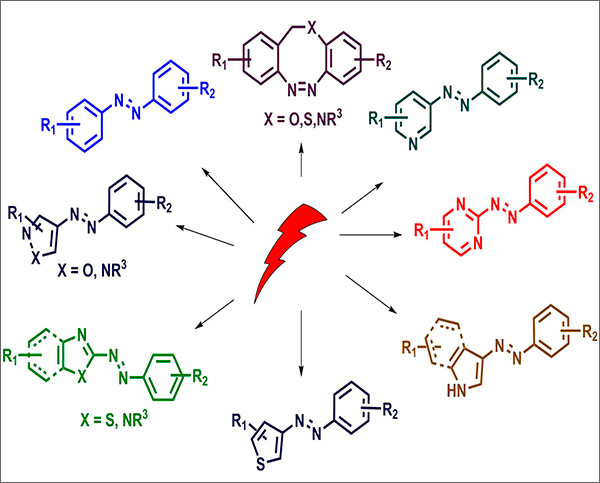
Photopharmacology is a field of medicine and pharmacology that uses light to selectively activate or deactivate pharmaceutical agents. This approach significantly enhances and localizes the drug action and, therefore, reduces its side effects. Apart from the bioactive moiety, any photopharmacological compound should contain a photoactive group that must absorb light at the desired wavelength and reorganize the molecular structure after photoactivation. The design of an effective photopharmacological compound requires careful tuning of physical, chemical, and biological properties. The present review summarizes and analyzes the main approaches to the molecular design of photopharmacological drugs based on azobenzene or azoheteroarenes. The main ideas and methods used for tuning spectral and photochemical properties of compounds of this class are discussed. A comparative analysis of main computational methods for their \emph{in silico} screening is carried out; the most common approaches to the synthesis of azobenzenes and azoheteroarenes derivatives are systematized. Special attention is given to the methods and approaches that are specific to the molecular design of photopharmacological compounds with required physicochemical and photochemical properties.

The bibliography includes 212 references.

Funders

Russian Foundation for Basic Research
19-115-50477 Экспансия
Ministry of Education and Science of the Russian Federation
5-100

References

1.
In Vivo Photopharmacology
Hüll K., Morstein J., Trauner D.
Chemical Reviews , 2018
2.
Emerging Targets in Photopharmacology
Lerch M.M., Hansen M.J., van Dam G.M., Szymanski W., Feringa B.L.
Angewandte Chemie - International Edition , 2016
3.
rcr_90_7_868bib3
Brezhestovskii
Zh. Vyssh. Nerv. Deyat. , 2017
4.
Photopharmacology: A Brief Review Using the Control of Potassium Channels as an Example
Bregestovski P.D., Maleeva G.V.
Neuroscience and Behavioral Physiology , 2019
5.
New players in phototherapy: photopharmacology and bio-integrated optoelectronics
7.
Specificity and Speed: Tethered Photopharmacology
Leippe P., Koehler Leman J., Trauner D.
Biochemistry , 2017
8.
rcr_90_7_868bib8
Nikolaev
2019
9.
rcr_90_7_868bib9
Khan
Mini-Rev. Med. Chem. , 2020
10.
Photoresponsive molecular tools for emerging applications of light in medicine
Welleman I.M., Hoorens M.W., Feringa B.L., Boersma H.H., Szymański W.
Chemical Science , 2020
11.
In Vivo Photopharmacology Enabled by Multifunctional Fibers
Frank J.A., Antonini M., Chiang P., Canales A., Konrad D.B., Garwood I.C., Rajic G., Koehler F., Fink Y., Anikeeva P.
ACS Chemical Neuroscience , 2020
12.
rcr_90_7_868bib12
Berlin
2020
13.
rcr_90_7_868bib13
Li
Future Sci. , 2020
15.
rcr_90_7_868bib15
Berizzi
2020
16.
Chemical biology of noncanonical G protein–coupled receptor signaling: Toward advanced therapeutics
Shchepinova M.M., Hanyaloglu A.C., Frost G.S., Tate E.W.
Current Opinion in Chemical Biology , 2020
17.
Branched Photoswitchable Tethered Ligands Enable Ultra-efficient Optical Control and Detection of G Protein-Coupled Receptors In Vivo
Acosta-Ruiz A., Gutzeit V.A., Skelly M.J., Meadows S., Lee J., Parekh P., Orr A.G., Liston C., Pleil K.E., Broichhagen J., Levitz J.
Neuron , 2020
18.
Optical control of neuronal ion channels and receptors
Paoletti P., Ellis-Davies G.C., Mourot A.
Nature Reviews Neuroscience , 2019
19.
rcr_90_7_868bib19
Damijonaitis
Neurotransmitter , 2016
20.
Probing the ionotropic activity of glutamate GluD2 receptor in HEK cells with genetically-engineered photopharmacology
Lemoine D., Mondoloni S., Tange J., Lambolez B., Faure P., Taly A., Tricoire L., Mourot A.
eLife , 2020
21.
Optical Control of Cytokine Production Using Photoswitchable Galactosylceramides
Hartrampf N., Seki T., Baumann A., Watson P., Vepřek N.A., Hetzler B.E., Hoffmann‐Röder A., Tsuji M., Trauner D.
Chemistry - A European Journal , 2020
22.
Recent developments in reversible photoregulation of oligonucleotide structure and function.
Lubbe A.S., Szymanski W., Feringa B.L.
Chemical Society Reviews , 2017
24.
rcr_90_7_868bib24
Gazerani
Future Medicine , 2017
25.
Short Photoswitchable Antibacterial Peptides
Yeoh Y.Q., Horsley J.R., Yu J., Polyak S.W., Jovcevski B., Abell A.D.
ChemMedChem , 2020
26.
Optical control of the nuclear bile acid receptor FXR with a photohormone
Morstein J., Trads J.B., Hinnah K., Willems S., Barber D.M., Trauner M., Merk D., Trauner D.
Chemical Science , 2020
27.
Light-assisted and remote delivery of carbon monoxide to malignant cells and tissues: Photochemotherapy in the spotlight
Pinto M.N., Mascharak P.K.
Journal of Photochemistry and Photobiology C: Photochemistry Reviews , 2020
28.
rcr_90_7_868bib28
Rodríguez-Soacha
Adv. Ther. , 2018
29.
Rotov A.Y., Astakhova L.A., Sitnikova V.S., Evdokimov A.A., Boitsov V.M., Dubina M.V., Ryazantsev M.N., Firsov M.L.
Acta Naturae , 2018
30.
rcr_90_7_868bib30
Kleinlogel
Physiol. Rev. , 2020
31.
Long-wavelength photoremovable protecting groups: On the way to in vivo application
Vorobev A.Y., Moskalensky A.E.
Computational and Structural Biotechnology Journal , 2020
32.
rcr_90_7_868bib33
Hoppmann
2019
33.
rcr_90_7_868bib34
Zefirova
Vestn. MGU. Ser. 2, Khimiya (Bull. Moscow State Univ., Ser. 2, Chem.) , 2000
34.
rcr_90_7_868bib35
Zefirova
Vestn. MGU. Ser. 2, Khimiya , 2000
36.
rcr_90_7_868bib37
van de Waterbeemd
2009
37.
rcr_90_7_868bib38
Livingstone
2011
38.
rcr_90_7_868bib39
Stevens
2014
39.
Heteroaryl azo dyes as molecular photoswitches
Crespi S., Simeth N.A., König B.
Nature Reviews Chemistry , 2019
40.
rcr_90_7_868bib41
Dong
Chem. Commun. , 2015
41.
Visible‐Light‐Activated Molecular Switches
Bléger D., Hecht S.
Angewandte Chemie - International Edition , 2015
42.
Photoisomerization in different classes of azobenzene
Bandara H.M., Burdette S.C.
Chemical Society Reviews , 2012
43.
Azobenzene Photoswitching without Ultraviolet Light
Beharry A.A., Sadovski O., Woolley G.A.
Journal of the American Chemical Society , 2011
45.
The absorption spectrum of cis-azobenzene
Vetráková L., Ladányi V., Al Anshori J., Dvořák P., Wirz J., Heger D.
Photochemical and Photobiological Sciences , 2017
46.
The absorption spectra of azobenzene and some derivatives
Birnbaum P.P., Linford J.H., Style D.W.
Transactions of the Faraday Society , 1953
47.
Spectroscopic Properties of Organic Azo Compounds
Rau H.
Angewandte Chemie - International Edition , 1973
48.
Azobenzene photoswitches for biomolecules
Beharry A.A., Woolley G.A.
Chemical Society Reviews , 2011
49.
Azobenzene photoisomerization quantum yields in methanol redetermined
Ladányi V., Dvořák P., Al Anshori J., Vetráková L., Wirz J., Heger D.
Photochemical and Photobiological Sciences , 2017
50.
rcr_90_7_868bib51
Yu
Phys. Chem. Chem. Phys. , 2015
52.
On the Mechanism of the cis−trans Isomerization in the Lowest Electronic States of Azobenzene:  S0, S1, and T1
Cembran A., Bernardi F., Garavelli M., Gagliardi L., Orlandi G.
Journal of the American Chemical Society , 2004
55.
The electronic spectra of azobenzene derivatives and their conjugate acids
Jaffé H.H., Yeh S., Gardner R.W.
Journal of Molecular Spectroscopy , 1958
56.
Syntheses and Ultraviolet Spectra of Aromatic Azo Compounds. III. Methoxyazobenzene Derivatives
Nomura Y., Anzai H., Tarao R., Shiomi K.
Bulletin of the Chemical Society of Japan , 1964
57.
ThermalCis-to-TransIsomerization of Substituted Azobenzenes II. Substituent and Solvent Effects
Nishimura N., Sueyoshi T., Yamanaka H., Imai E., Yamamoto S., Hasegawa S.
Bulletin of the Chemical Society of Japan , 1976
58.
Photochemical storage potential of azobenzenes
Olmsted J., Lawrence J., Yee G.G.
Solar Energy , 1983
59.
rcr_90_7_868bib60
Albini
1983
60.
PHOTOISOMERIZATION OF AZOBENZOCROWN ETHERS. EFFECT OF COMPLEXATION OF ALKALINE EARTH METAL IONS
Tahara R., Morozumi T., Nakamura H., Shimomura M.
Journal of Physical Chemistry B , 1997
62.
Photoisomerization of Azobenzene Derivatives in Nanostructured Silica
Sierocki P., Maas H., Dragut P., Richardt G., Vögtle F., De Cola L., Brouwer F.(., Zink J.I.
Journal of Physical Chemistry B , 2006
64.
Spectra and cis-trans isomerism in highly dipolar derivatives of azobenzene
Gabor G., Fischer E.
The Journal of Physical Chemistry , 1971
66.
New heterocyclic systems to afford microsecond green-light isomerisable azo dyes and their use as fast molecular photochromic switches
Garcia-Amorós J., R. Castro M.C., Coelho P., M. Raposo M.M., Velasco D.
Chemical Communications , 2013
67.
Fast Isomerizing Methyl Iodide Azopyridinium Salts for Molecular Switches
Garcia-Amorós J., Massad W.A., Nonell S., Velasco D.
Organic Letters , 2010
68.
Fastest Thermal Isomerization of an Azobenzene for Nanosecond Photoswitching Applications under Physiological Conditions
Garcia-Amorós J., Díaz-Lobo M., Nonell S., Velasco D.
Angewandte Chemie - International Edition , 2012
69.
Solvatochromism, tautomerism and dichroism of some azoquinoline dyes in liquids and liquid crystals
Ghanadzadeh Gilani A., Moghadam M., Zakerhamidi M.S., Moradi E.
Dyes and Pigments , 2012
70.
Photoswitchable Intramolecular Hydrogen Bonds in 5‐Phenylazopyrimidines Revealed By In Situ Irradiation NMR Spectroscopy
Procházková E., Čechová L., Kind J., Janeba Z., Thiele C.M., Dračínský M.
Chemistry - A European Journal , 2017
71.
Synthesis of (E)-diethyl 6,6′-(diazene-1,2-diyl)bis(5-cyano-2-methyl-4-phenylnicotinates), a new type of 2,2′-azopyridine dyes
72.
Tuning the Thermal Isomerization of Phenylazoindole Photoswitches from Days to Nanoseconds
Simeth N.A., Crespi S., Fagnoni M., König B.
Journal of the American Chemical Society , 2018
73.
pH Tuning of Water‐Soluble Arylazopyrazole Photoswitches
Ludwanowski S., Ari M., Parison K., Kalthoum S., Straub P., Pompe N., Weber S., Walter M., Walther A.
Chemistry - A European Journal , 2020
74.
Arylazopyrazoles: Azoheteroarene Photoswitches Offering Quantitative Isomerization and Long Thermal Half-Lives
Weston C.E., Richardson R.D., Haycock P.R., White A.J., Fuchter M.J.
Journal of the American Chemical Society , 2014
76.
Photoisomerization of Protonated Azobenzenes in the Gas Phase
Scholz M.S., Bull J.N., Coughlan N.J., Carrascosa E., Adamson B.D., Bieske E.J.
Journal of Physical Chemistry A , 2017
77.
rcr_90_7_868bib78
Samanta
Angew. Chem., Int. Ed. , 2013
78.
rcr_90_7_868bib79
Dong
J. Am. Chem. Soc. , 2017
79.
Photoswitchable basicity through the use of azoheteroarenes
Weston C.E., Richardson R.D., Fuchter M.J.
Chemical Communications , 2016
80.
Highly Efficient Reversible Z−E Photoisomerization of a Bridged Azobenzene with Visible Light through Resolved S1(nπ*) Absorption Bands
Siewertsen R., Neumann H., Buchheim-Stehn B., Herges R., Näther C., Renth F., Temps F.
Journal of the American Chemical Society , 2009
81.
Photoswitchable Azo- and Diazocine-Functionalized Derivatives of the VEGFR-2 Inhibitor Axitinib
Heintze L., Schmidt D., Rodat T., Witt L., Ewert J., Kriegs M., Herges R., Peifer C.
International Journal of Molecular Sciences , 2020
82.
Heterodiazocines: Synthesis and Photochromic Properties, Trans to Cis Switching within the Bio-optical Window
Hammerich M., Schütt C., Stähler C., Lentes P., Röhricht F., Höppner R., Herges R.
Journal of the American Chemical Society , 2016
83.
Nitrogen Bridged Diazocines: Photochromes Switching within the Near-Infrared Region with High Quantum Yields in Organic Solvents and in Water
Lentes P., Stadler E., Röhricht F., Brahms A., Gröbner J., Sönnichsen F.D., Gescheidt G., Herges R.
Journal of the American Chemical Society , 2019
84.
Electronic spectra of cis- and trans-azobenzenes: consequences of ortho substitution
Forber C.L., Kelusky E.C., Bunce N.J., Zerner M.C.
Journal of the American Chemical Society , 1985
86.
o-Fluoroazobenzenes as Readily Synthesized Photoswitches Offering Nearly Quantitative Two-Way Isomerization with Visible Light
Bléger D., Schwarz J., Brouwer A.M., Hecht S.
Journal of the American Chemical Society , 2012
87.
General Principles for the Design of Visible‐Light‐Responsive Photoswitches: Tetra‐ortho‐Chloro‐Azobenzenes
Lameijer L.N., Budzak S., Simeth N.A., Hansen M.J., Feringa B.L., Jacquemin D., Szymanski W.
Angewandte Chemie , 2020
88.
Redox Potential of Azobenzene as an Amino Acid Residue in Peptides
Boulègue C., Löweneck M., Renner C., Moroder L.
ChemBioChem , 2007
89.
Glutathione. 13. Mechanism of thiol oxidation by diazenedicarboxylic acid derivatives
Kosower E.M., Kanety-Londner H.
Journal of the American Chemical Society , 1976
90.
rcr_90_7_868bib91
Samanta
Chem. Commun. , 2013
91.
Modulating Protein–Protein Interactions with Visible‐Light‐Responsive Peptide Backbone Photoswitches
Albert L., Peñalver A., Djokovic N., Werel L., Hoffarth M., Ruzic D., Xu J., Essen L., Nikolic K., Dou Y., Vázquez O.
ChemBioChem , 2019
92.
Spectral tuning of azobenzene photoswitches for biological applications.
Sadovski O., Beharry A., Zhang F., Woolley G. .
Angewandte Chemie - International Edition , 2009
93.
Arylazopyrazole Photoswitches in Aqueous Solution: Substituent Effects, Photophysical Properties, and Host–Guest Chemistry
Stricker L., Böckmann M., Kirse T.M., Doltsinis N.L., Ravoo B.J.
Chemistry - A European Journal , 2018
96.
rcr_90_7_868bib97
Fouts
J. Pharmacol. Exp. Ther. , 1957
97.
Theoretical Assessment of Excited State Gradients and Resonance Raman Intensities for the Azobenzene Molecule
Staniszewska M., Kupfer S., Łabuda M., Guthmuller J.
Journal of Chemical Theory and Computation , 2017
98.
Extensive TD-DFT investigation of the first electronic transition in substituted azobenzenes
Jacquemin D., Perpète E.A., Scuseria G.E., Ciofini I., Adamo C.
Chemical Physics Letters , 2008
99.
Spectroscopic Properties of Azobenzene-Based pH Indicator Dyes: A Quantum Chemical and Experimental Study
Escudero D., Trupp S., Bussemer B., Mohr G.J., González L.
Journal of Chemical Theory and Computation , 2011
100.
Absorption spectra of azobenzenes simulated with time-dependent density functional theory
Jacquemin D., Preat J., Perpète E.A., Vercauteren D.P., André J., Ciofini I., Adamo C.
International Journal of Quantum Chemistry , 2011
101.
Investigating the Halochromic Properties of Azo Dyes in an Aqueous Environment by Using a Combined Experimental and Theoretical Approach
De Meyer T., Hemelsoet K., Van der Schueren L., Pauwels E., De Clerck K., Van Speybroeck V.
Chemistry - A European Journal , 2012
103.
Long-Range Corrected Hybrid Density Functionals with Improved Dispersion Corrections
Lin Y., Li G., Mao S., Chai J.
Journal of Chemical Theory and Computation , 2012
104.
Tuning Azoheteroarene Photoswitch Performance through Heteroaryl Design
Calbo J., Weston C.E., White A.J., Rzepa H.S., Contreras-García J., Fuchter M.J.
Journal of the American Chemical Society , 2017
106.
rcr_90_7_868bib107
Thawani
2020
107.
New theoretical insight into the thermal cis–trans isomerization of azo compounds: Protonation lowers the activation barrier
Sokalski W.A., Góra R.W., Bartkowiak W., Kobyliński P., Sworakowski J., Chyla A., Leszczyński J.
Journal of Chemical Physics , 2001
108.
Thermal isomerization of azobenzenes: on the performance of Eyring transition state theory
Rietze C., Titov E., Lindner S., Saalfrank P.
Journal of Physics Condensed Matter , 2017
110.
rcr_90_7_868bib111
Ryazantsev
Phys. Chem. Chem. Phys. , 2015
111.
rcr_90_7_868bib112
Parker
J. Phys. Chem. A , 2014
112.
Computational methods for calculation of ligand-binding affinity.
114.
Synthesis of Photoswitchable Δ9-Tetrahydrocannabinol Derivatives Enables Optical Control of Cannabinoid Receptor 1 Signaling
Westphal M.V., Schafroth M.A., Sarott R.C., Imhof M.A., Bold C.P., Leippe P., Dhopeshwarkar A., Grandner J.M., Katritch V., Mackie K., Trauner D., Carreira E.M., Frank J.A.
Journal of the American Chemical Society , 2017
115.
Synthetic Photoswitchable Neurotransmitters Based on Bridged Azobenzenes
Cabré G., Garrido-Charles A., González-Lafont À., Moormann W., Langbehn D., Egea D., Lluch J.M., Herges R., Alibés R., Busqué F., Gorostiza P., Hernando J.
Organic Letters , 2019
116.
Photochromic histone deacetylase inhibitors based on dithienylethenes and fulgimides
Wutz D., Gluhacevic D., Chakrabarti A., Schmidtkunz K., Robaa D., Erdmann F., Romier C., Sippl W., Jung M., König B.
Organic and Biomolecular Chemistry , 2017
117.
Rigorous Free Energy Calculations in Structure-Based Drug Design
Michel J., Foloppe N., Essex J.W.
Molecular Informatics , 2010
118.
Advances in the calculation of binding free energies
de Ruiter A., Oostenbrink C.
Current Opinion in Structural Biology , 2020
119.
Relative Binding Free Energy Calculations in Drug Discovery: Recent Advances and Practical Considerations
Cournia Z., Allen B., Sherman W.
Journal of Chemical Information and Modeling , 2017
120.
Enhanced Monte Carlo Methods for Modeling Proteins Including Computation of Absolute Free Energies of Binding
Cabeza de Vaca I., Qian Y., Vilseck J.Z., Tirado-Rives J., Jorgensen W.L.
Journal of Chemical Theory and Computation , 2018
121.
Binding Modes of Ligands Using Enhanced Sampling (BLUES): Rapid Decorrelation of Ligand Binding Modes via Nonequilibrium Candidate Monte Carlo
Gill S.C., Lim N.M., Grinaway P.B., Rustenburg A.S., Fass J., Ross G.A., Chodera J.D., Mobley D.L.
Journal of Physical Chemistry B , 2018
122.
The MM/PBSA and MM/GBSA methods to estimate ligand-binding affinities
123.
End-Point Binding Free Energy Calculation with MM/PBSA and MM/GBSA: Strategies and Applications in Drug Design.
124.
Binding Free Energy Calculations for Lead Optimization: Assessment of Their Accuracy in an Industrial Drug Design Context
Homeyer N., Stoll F., Hillisch A., Gohlke H.
Journal of Chemical Theory and Computation , 2014
125.
Photoinduced reconfiguration to control the protein-binding affinity of azobenzene-cyclized peptides
Day K., Schneible J.D., Young A.T., Pozdin V.A., Van Den Driessche G., Gaffney L.A., Prodromou R., Freytes D.O., Fourches D., Daniele M., Menegatti S.
Journal of Materials Chemistry B , 2020
126.
Predicting Binding Free Energies: Frontiers and Benchmarks
127.
Binding affinity in drug design: experimental and computational techniques
Kairys V., Baranauskiene L., Kazlauskiene M., Matulis D., Kazlauskas E.
Expert Opinion on Drug Discovery , 2019
128.
A Second Generation Force Field for the Simulation of Proteins, Nucleic Acids, and Organic Molecules
Cornell W.D., Cieplak P., Bayly C.I., Gould I.R., Merz K.M., Ferguson D.M., Spellmeyer D.C., Fox T., Caldwell J.W., Kollman P.A.
Journal of the American Chemical Society , 1995
129.
CHARMM general force field: A force field for drug-like molecules compatible with the CHARMM all-atom additive biological force fields
Vanommeslaeghe K., Hatcher E., Acharya C., Kundu S., Zhong S., Shim J., Darian E., Guvench O., Lopes P., Vorobyov I., Mackerell A.D.
Journal of Computational Chemistry , 2009
131.
Advances in binding free energies calculations: QM/MM-based free energy perturbation method for drug design.
Rathore R.S., Sumakanth M., Reddy M., Reddanna P., Rao A., Erion M., Reddy M.R.
Current Pharmaceutical Design , 2013
132.
Force Field Parametrization of Metal Ions from Statistical Learning Techniques
Fracchia F., Del Frate G., Mancini G., Rocchia W., Barone V.
Journal of Chemical Theory and Computation , 2017
133.
Machine Learning Force Field Parameters from Ab Initio Data
Li Y., Li H., Pickard F.C., Narayanan B., Sen F.G., Chan M.K., Sankaranarayanan S.K., Brooks B.R., Roux B.
Journal of Chemical Theory and Computation , 2017
134.
A Comparative Study of Modern Homology Modeling Algorithms for Rhodopsin Structure Prediction
Nikolaev D.M., Shtyrov A.A., Panov M.S., Jamal A., Chakchir O.B., Kochemirovsky V.A., Olivucci M., Ryazantsev M.N.
ACS Omega , 2018
136.
Modern methods for estimation of ionization constants of organic compounds in solution
Zevatskii Y.E., Samoilov D.V.
Russian Journal of Organic Chemistry , 2011
137.
rcr_90_7_868bib138
Shields
2013
138.
rcr_90_7_868bib139
Reis
2018
139.
Constant-pH Molecular Dynamics Simulations for Large Biomolecular Systems
Radak B.K., Chipot C., Suh D., Jo S., Jiang W., Phillips J.C., Schulten K., Roux B.
Journal of Chemical Theory and Computation , 2017
140.
Hydration in drug design. 3. Conserved water molecules at the ligand-binding sites of homologous proteins
141.
Accounting for water molecules in drug design
Wong S.E., Lightstone F.C.
Expert Opinion on Drug Discovery , 2010
143.
How many water molecules can be detected by protein crystallography?
Carugo O., Bordo D.
Acta Crystallographica Section D Biological Crystallography , 1999
144.
Water: now you see it, now you don't
145.
Dowser++, a new method of hydrating protein structures
Morozenko A., Stuchebrukhov A.A.
Proteins: Structure, Function and Genetics , 2016
147.
An assessment of water placement algorithms in quantum mechanics/molecular mechanics modeling: the case of rhodopsins' first spectral absorption band maxima.
Nikolaev D.M., Shtyrov A.A., Mereshchenko A.S., Panov M.S., Tveryanovich Y.S., Ryazantsev M.N.
Physical Chemistry Chemical Physics , 2020
148.
Tuning photochromic ion channel blockers.
Mourot A., Kienzler M.A., Banghart M.R., Fehrentz T., Huber F.M., Stein M., Kramer R.H., Trauner D.
ACS Chemical Neuroscience , 2011
149.
Photochemical control of endogenous ion channels and cellular excitability
Fortin D.L., Banghart M.R., Dunn T.W., Borges K., Wagenaar D.A., Gaudry Q., Karakossian M.H., Otis T.S., Kristan W.B., Trauner D., Kramer R.H.
Nature Methods , 2008
150.
rcr_90_7_868bib151
Safari
RSC Adv. , 2015
151.
Efficient Preparation of Nitrosoarenes for the Synthesis of Azobenzenes
Priewisch B., Rück-Braun K.
Journal of Organic Chemistry , 2005
152.
A photoswitchable GABA receptor channel blocker
Maleeva G., Wutz D., Rustler K., Nin‐Hill A., Rovira C., Petukhova E., Bautista‐Barrufet A., Gomila‐Juaneda A., Scholze P., Peiretti F., Alfonso‐Prieto M., König B., Gorostiza P., Bregestovski P.
British Journal of Pharmacology , 2019
153.
Optical Control of TRPV1 Channels
Stein M., Breit A., Fehrentz T., Gudermann T., Trauner D.
Angewandte Chemie - International Edition , 2013
154.
Preparations of C-Nitroso Compounds
Gowenlock B.G., Richter-Addo G.B.
Chemical Reviews , 2004
155.
LXXXV.—Reduction of emulsified nitro-compounds. Part II. Some extensions of the method
Haworth R.D., Lapworth A.
Journal of the Chemical Society Transactions , 1921
156.
Synthesis and spectroscopic characterisation of 3-chloroperbenzoic acid-17O,18O, nitrosobenzene-17O,18O and nitrosobenzene-15N
Bleasdale C., Ellis M.K., Farmer P.B., Golding B.T., Handley K.F., Jones P., McFarlane W.
Journal of Labelled Compounds and Radiopharmaceuticals , 1993
157.
A Convenient Synthesis of Aryl Nitroso Compounds
Wood W.W., Wilkin J.A.
Synthetic Communications , 1992
158.
The Kinetics and Mechanism of the Ferrate(VI) Oxidation of Hydroxylamines
160.
Oxydations par le carbonate d'argent—XII
Fetizon M., Golfier M., Milcent R., Papadakis I.
Tetrahedron , 1975
161.
Silver(II) oxide as a reagent. Reactions with aromatic amines and miscellaneous related compounds
163.
Formation of Symmetric Azo-compounds from Primary Aromatic Amines by Lead Tetraacetate
Baer E., Tosoni A.L.
Journal of the American Chemical Society , 1956
164.
rcr_90_7_868bib165
Pausacker
1953
165.
rcr_90_7_868bib166
Hughes
1954
166.
Azobenzenes—synthesis and carbohydrate applications
Hamon F., Djedaini-Pilard F., Barbot F., Len C.
Tetrahedron , 2009
169.
Reduction of aromatic nitro compounds with sodium borohydride in dimethyl sulfoxide or sulfolane. Synthesis of azo or azoxy derivatives
171.
Design, Synthesis, and Crystallographic Studies of Neutral Platinum-Based Macrocycles Formed via Self-Assembly
Mukherjee P.S., Das N., Kryschenko Y.K., Arif A.M., Stang P.J.
Journal of the American Chemical Society , 2004
172.
Super electron donor-mediated reductive transformation of nitrobenzenes: a novel strategy to synthesize azobenzenes and phenazines
Nozawa-Kumada K., Abe E., Ito S., Shigeno M., Kondo Y.
Organic and Biomolecular Chemistry , 2018
173.
The crystal structure of benzenediazonium tetrafluoroborate, C6H5N2+•BF4−1
Cygler M., Przybylska M., Elofson R.M.
Canadian Journal of Chemistry , 1982
175.
Diazotisation of weakly basic aromatic and heterocyclic amines in strongly acid media
Godovikova T.I., Rakitin O.A., Khmel'nitskii L.I.
Russian Chemical Reviews , 1983
178.
Unusually Stable, Versatile, and Pure Arenediazonium Tosylates: Their Preparation, Structures, and Synthetic Applicability
Filimonov V.D., Trusova M., Postnikov P., Krasnokutskaya E.A., Lee Y.M., Hwang H.Y., Kim H., Chi K.
Organic Letters , 2008
179.
rcr_90_7_868bib180
Hansen
Angew. Chem., Int. Ed. , 2016
181.
Optical control of AMPA receptors using a photoswitchable quinoxaline-2,3-dione antagonist
Barber D.M., Liu S., Gottschling K., Sumser M., Hollmann M., Trauner D.
Chemical Science , 2017
182.
Triazenes: A Versatile Tool in Organic Synthesis
Kimball D.B., Haley M.M.
Angewandte Chemie - International Edition , 2002
184.
The Structures of Arylhydrazones of Unsymmetrically Substituted Quinones
Smith L.I., Irwin W.B.
Journal of the American Chemical Society , 1941
185.
Diazocine chemistry. VI. Aromaticity of 5,6-dihydrodibenzo[b,f][1,2]diazocine
Paudler W.W., Zeiler A.G.
Journal of Organic Chemistry , 1969
186.
Bidirectional Photocontrol of Peptide Conformation with a Bridged Azobenzene Derivative
Samanta S., Qin C., Lough A.J., Woolley G.A.
Angewandte Chemie - International Edition , 2012
187.
Synthesis of mono-functionalized S-diazocines via intramolecular Baeyer–Mills reactions
Schehr M., Hugenbusch D., Moje T., Näther C., Herges R.
Beilstein Journal of Organic Chemistry , 2018
188.
The contrasting chemical reactivity of potent isoelectronic iminopyridine and azopyridine osmium(ii) arene anticancer complexes
Fu Y., Romero M.J., Habtemariam A., Snowden M.E., Song L., Clarkson G.J., Qamar B., Pizarro A.M., Unwin P.R., Sadler P.J.
Chemical Science , 2012
189.
Influence of Intramolecular Charge Transfer and Nuclear Quantum Effects on Intramolecular Hydrogen Bonds in Azopyrimidines
Bártová K., Čechová L., Procházková E., Socha O., Janeba Z., Dračínský M.
Journal of Organic Chemistry , 2017
190.
rcr_90_7_868bib191
Čechová
Angew. Chem., Int. Ed. , 2020
191.
π-Extended push–pull azo-pyrrole photoswitches: synthesis, solvatochromism and optical band gaps
Balam-Villarreal J.A., López-Mayorga B.J., Gallardo-Rosas D., Toscano R.A., Carreón-Castro M.P., Basiuk V.A., Cortés-Guzmán F., López-Cortés J.G., Ortega-Alfaro M.C.
Organic and Biomolecular Chemistry , 2020
193.
rcr_90_7_868bib194
Lin
RSC Adv. , 2016
194.
Photoisomerization dynamics of N-1-methyl-2-(tolylazo) imidazole and the effect of complexation with Cu(ii)
Mondal J.A., Saha G., Sinha C., Palit D.K.
Physical Chemistry Chemical Physics , 2012
197.
Electrophilic substitution of diazonium salts in 2-amino-4-(alkyl or aryl)oxazoles
198.
Diazo compounds of the heterocyclic series. 4. Some peculiarities of the diazo coupling of benzimidazole-2-diazonium salts with phenols and their ethers
200.
Photochromic Nucleobase Photoisomerized by Visible Light
Ogasawara S., Ito S., Miyasaka H., Maeda M.
Chemistry Letters , 2010
203.
Oxidative Dehydrogenative Couplings of Pyrazol-5-amines Selectively Forming Azopyrroles
Jiang B., Ning Y., Fan W., Tu S., Li G.
Journal of Organic Chemistry , 2014
205.
Synthesis and Photophysical Characterization of Azoheteroarenes
Xu Y., Gao C., Andréasson J., Grøtli M.
Organic Letters , 2018
206.
Two-Step, One-Pot Synthesis of Visible-Light-Responsive 6-Azopurines
Kolarski D., Szymanski W., Feringa B.L.
Organic Letters , 2017
207.
rcr_90_7_868bib208
Kumar
Chem. – Eur. J. , 2019
208.
Arylazopyrazoles as Light-Responsive Molecular Switches in Cyclodextrin-Based Supramolecular Systems
Stricker L., Fritz E., Peterlechner M., Doltsinis N.L., Ravoo B.J.
Journal of the American Chemical Society , 2016
209.
Toward Photopharmacological Antimicrobial Chemotherapy Using Photoswitchable Amidohydrolase Inhibitors
Weston C.E., Krämer A., Colin F., Yildiz Ö., Baud M.G., Meyer-Almes F., Fuchter M.J.
ACS Infectious Diseases , 2016
211.
Arylazoindazole Photoswitches: Facile Synthesis and Functionalization via SNAr Substitution
Travieso-Puente R., Budzak S., Chen J., Stacko P., Jastrzebski J.T., Jacquemin D., Otten E.
Journal of the American Chemical Society , 2017