

Keywords
Abstract
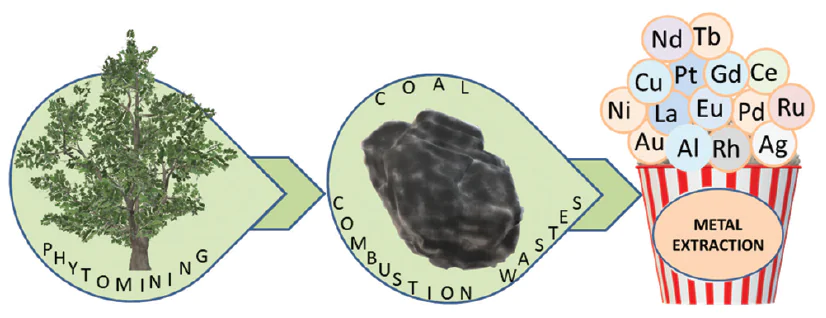
The review describes the phenomenon of phytomining, that is, accumulation of metals, including noble and rare-earth elements, by plants. Kinetic modelling is used to explore the process dynamics, which has a two-compartment nature. In terms the widely accepted concept of the plant origin of coal, the role of metal phytomining in the formation of coal deposits is analyzed, demonstrating the effect of accumulation of toxic metals in plants near coal mining areas and in industrial waste dumps. The metal contents of natural coals and ash and slag waste of coal-fired power plants in Russia are analyzed. The challenges of metal extraction by the conversion of technogenic mineral deposits are discussed. Data on the nature and kinetics of phytomining and on the geochemical and technological consequences of this global natural phenomenon are summarized and analyzed for the first time.
The bibliography includes 107 references.
1. Introduction
Biological processes occur globally and considerably affect the geochemical phenomena on the Earth. Over hundreds of millions and even billions of years, the steadily developing biosphere has influenced the Earth’s chemical environment. The biological cycles have involved interactions between the hydrosphere, phytosphere, and microbial processes,[1] and also the geosphere. A vivid example of the influence of biological processes on the geochemical environment of the Earth is the crucial change in the atmosphere, in which a reducing environment (CO, H2, CH4) turned into an oxidative one. Using the photosynthesis mechanism, the phytosphere enriched the atmosphere with oxygen by breaking down water.[2][3] According to V.I.Vernadsky,[4][5] oil, coal, and atmospheric oxygen are of biogenic origin. It is evident that plants can also influence chemical processes in the solid phase via interaction with the geosphere. For normal development, plants require an active supply of metals during the growing season. Most enzymes involved in plant metabolism use metal ions as cofactors. The photosynthesis occurs with the help of magnesium ions incorporated in chlorophyll. Magnesium and manganese ions are key components of DNA and RNA metabolism, while iron, copper, and zinc ions form the active sites of hydrolytic and redox enzymes. In recent decades, the accumulation of metals such as gold, silver, platinum group metals, and rare earth elements has attracted considerable attention. The technology for noble metal recovery from soil or waste using hyperaccumulator plants is known as phytomining. It turned out that phytomining involves substantial volumes and has serious technological consequences. This review addresses the mechanisms, kinetic features, geochemical consequences, and practical applications of the heavy metal accumulation in plants. No comprehensive reviews on metal accumulation in plants or on the geochemical and technological implications of this global natural phenomenon can be found in contemporary scientific literature. We believe that this review will be useful to specialists in the fields of chemistry, geochemistry, biogeochemistry, and chemical engineering.
2. Phytomining: plants as metal accumulators
The ability of plants to accumulate metals of various types is based on their capacity to take up enormous amounts of water from the soil. A common birch in the central part of Russia absorbs up to 300 litres of water from the soil per day.[6] Simultaneously, all the dissolved salts and colloidal metal particles present in water are also absorbed and accumulated by the plant. The plant roots, stems, and leaves are enriched with metals.
The biomass combustion results in a pronounced accumulation of metals in the ash. If the ash content of woody plants is assumed to be 0.25%, the concentration of metals in the ash is 400 times higher than that in dry biomass.[7][8] Considering the accumulation of metals upon water absorption from the soil during the growing season [the bioaccumulation factor (BF) is ~ 50; for details, see below], the metal concentration can increase by a factor of up to 1000 on going from the soil to the ash. It is evident that these processes can be significant for the formation of deposits and organic matter: sapropel, peat, coal, and oil.
Due to the reducing organic medium of plants, metals are accumulated in plants as metallic particles or reduced ionic species. The metal content in plants is determined by their concentration in the soil, solubility, and mobility in the aqueous medium within the soil. The increase in the metal concentration (evaluated by the BF value defined by the ratio given below) may be fairly high
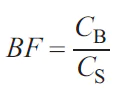
where CB is the metal content in dry biomass, CS is the metal content in soil.
To describe the system behaviour, it is useful to introduce the translocation factor (TF), which is defined as the ratio of metal contents in the roots (CR) and in the upper part of the biomass, that is, the stems and leaves (CL)
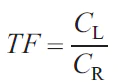
Throughout the past few decades, scientists have been able to evaluate rather objectively the contribution of biosystems to the geochemical evolution of geological features of mineral origin. The number of studies dealing with incorporation of heavy metal ions into the biomass of higher plants is increasing and the development of techniques to recover the metals is being discussed. The fact that plants are capable of accumulating heavy metals, including gold, has been known for quite a long time.[9-12] Currently, the interest in phytomining mechanisms is continuously increasing, which forms the grounds for the potential development of a new type of industrial processes.
The considerable accumulation of heavy metals by plants was first demonstrated in relation to nickel. Da Silva and co-workers[13] introduced the term hyperaccumulation, which emphasized a high degree of metal accumulation during plant cultivation. Table 1[14-18] presents the most significant results on nickel accumulation by hyperaccumulator plants.
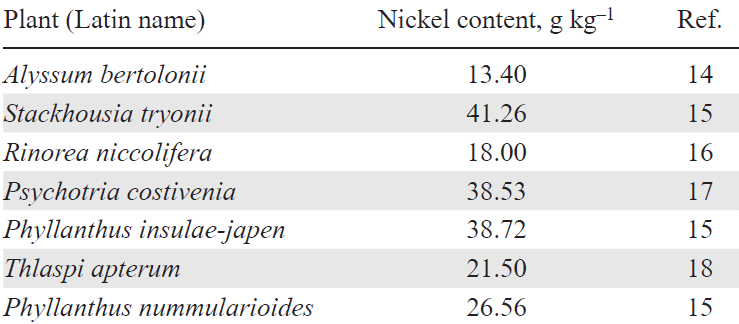
In view of the social consequences of bioremediation of industrial waste dumps, the observed nickel accumulation effects may ensure the environmental and economic relevance of biogeotechnology.[13][19]
Some plants are capable of accumulating heavy metals in very high concentrations (up to 2% of the dry biomass weight).[20] There are data on hyperaccumulation for cadmium at a level of 100 mg kg–1 (100 g ton–1); cobalt, copper, nickel, arsenic, and selenium at a level of 1000 mg kg–1 (1000 g ton–1); and zinc and magnesium at a level of 10 000 mg kg–1 (10 000 g ton–1).[21][22] The metals are accumulated in the aerial parts of the plant.
The incorporation of heavy metal ions into particular parts of a plant largely depends on the mobility of the metal in soil. Evidently, this dependence is determined by binding of metals by chelators, i.e., organic acids released by plant roots. These processes are driven by the presence of bacterial and fungal associations in the vicinity of roots[23][24] and by the ability of plants to perform passive or active ion transport.[25-27]
The primary goal in enhancing the hyperaccumulation of gold in plants is to ensure the mobility of gold in the soil with the aid of chelating agents. Numerous studies have demonstrated the efficacy of using ammonium thiocyanate and thiosulfate, KBr, potassium and sodium cyanide, sodium thiocyanate, and thiourea (see, e.g., da Silva et al.[13] and Timofeeva and Drozdova[19]).
The first experiments on gold hyperaccumulation in plants were conducted in the late 1990s.[19][28] The plant called Indian mustard (Brassica juncea) grown on artificial soil containing 5 mg kg–1 of gold was found to accumulate 57 mg kg–1 of gold (BF ~ 11.4).[29] Ammonium thiocyanate (NH4SCN) was used as a chelating agent to increase the gold solubility. To date, dozens of studies on gold hyperaccumulation have been conducted. A fairly efficient technique is the induced accumulation that includes the step of plant growth followed by the introduction of a chelator that increases the solubility of the metal. The studies were carried out both on artificially created soil with variable metal contents and on the soil of tailing storage near gold mining facilities. Table 2[29-36] presents data summarizing most significant effects of gold accumulation in plants.
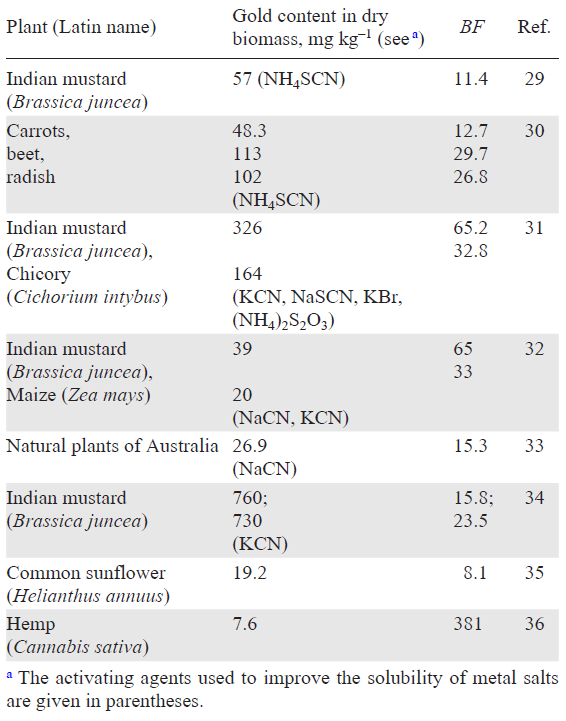
Mention should be made of the studies[19][28] in which traditional agricultural crops such as sunflowers, oats, maize, and hemp were used as gold accumulators. According to the authors, the use of industrial hemp is the most promising option. It can be seen from Table 2 that cyanides, thiocyanates, and thiosulfates markedly improve the mobility of gold in the soil and promote gold accumulation in plants.
Interesting effects were observed for the hyperaccumulation of palladium and platinum (Table 3)[37-42]. A surprisingly high accumulation of platinum, palladium, and rhodium (5.9 kg ton–1 of biomass) was inherent in white mustard.
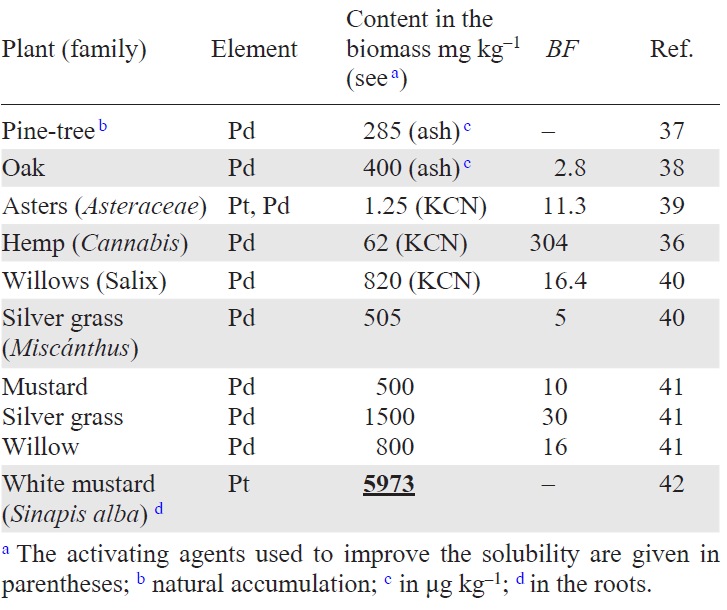
It is noteworthy that considerable amounts of platinum and palladium (12 – 14 mg kg–1) were detected in soils located near busy highways, due to the transfer of metals from catalytic CO afterburners. Some publications substantiate the economic viability of using metal hyperaccumulation in plants for the industrial production of metals.[13][19][32] [43]
A high level of metal hyperaccumulation is observed for rare-earth elements. In nature, lanthanides (cerium, lanthanum, europium, gadolinium, dysprosium, neodymium, etc.) occur in markedly higher concentrations than classic metals such as lead or copper. However, they are dispersed and are quite rarely found in sufficiently high concentrations to be of interest for industry.
High concentrations of rare earth metals were first detected by Robinson et al.[44] in hickory leaves. The total concentration of rare-earth metals reached 2000 mg kg–1 (or 2 kg ton–1) of dry biomass (Table 4). Correspondingly, the ash from this source yielded a value of 25 000 mg kg–1 (or 25 kg ton–1), i.e., 2.5% of the total content.[45]
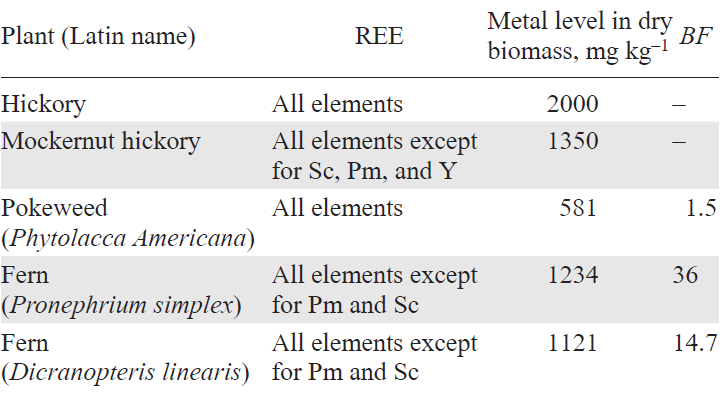
The most effective hyperaccumulators for rare earth elements are Asplenium, Polystichum, and Dryopteris ferns. The plant leaves may contain up to 3358 mg kg–1 (or 3.358 kg ton–1) of La, Ce, Nd, Sm, Eu, Tb, and Yb, with high metal content being found in roots and stems. A fairly high concentration of rare earth elements (up to 6946 mg kg–1) was detected in the leaves of the Dicranopteris linearis fern.Table 4[45] gives the total concentrations of REEs.
It is noteworthy that metal hyperaccumulation occurs not only for plants that grow in mining areas with high natural metal concentrations, but also in non-mining areas.
The metal hyperaccumulation in plants is a common phenomenon that depends little on the nature of the metal.[46] The efficiency of metal extraction from the soil depends on the metal concentration and mobility and also as on the operation of the plant ‘water pump’. Most of chemically inert metals do not participate in the major metabolic reactions of the plant and are accumulated in the plant as inert components. The plant efficiently uses water for photosynthesis, thus producing molecular oxygen and releases water into the environment by evaporating the excess water.
The metals detected in the plant may perform antiseptic and antibacterial roles. Metal nanoparticles and colloids are known to exhibit high antibacterial activity. These properties are especially typical of silver. It is noteworthy that, while using metal ions such as Mg2+, Fe3+, K+, and other, plants release the balancing hydrogen ions into the soil to maintain the electrical neutrality of their metabolism and keep pH of the environment at a neutral level and thus lower the local pH in the root zone.[47] This may promote higher metal mobility and improve the hyperaccumulation characteristics. Plants non-specifically accumulate the whole range of mobile metals, and a large portion of metals is returned to the soil during the growing season (foliage and roots). Meanwhile, since the biogeochemical system is open, metals are transferred from the geological zone where they are concentrated.* [48]
Subsequently, these metals are partially returned to the soil together with dying leaves and roots, but in a different location (biogeochemical cycle). This is how metals migrate from their native geological deposit (the area where they were originally concentrated) into the surrounding biosphere.
* Plants extract mobile metals, for example, from ore bodies or dispersed inclusions.
3. Kinetic models of phytomining
It is of interest to develop and analyze the kinetics of phytomining taking into account the two-compartment nature of the process, that is, the presence of underground and aerial parts of the plant, which function under fundamentally different conditions.[49]
The kinetic diagram of metal uptake in a plant can be represented as shown in Scheme 1.
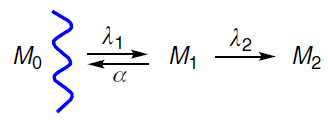
Here M0 is the metal content in soil; M1 is the metal concentration in the plant roots (the first compartment); M2 is the metal concentration in the aerial parts of the plant (the second-compartment); λ1, λ2 are the rate constant for metal transfer from the soil to the roots (λ1) and the rate constant for metal translocation from the roots to the aerial parts (λ2); and α is the rate constant for the backward transfer of the metal from the plant roots into the soil. As a first approximation, it is assumed that the volumes of the compartments are constant.
The kinetic model shown in Scheme 1 is described by the system of equations:[50]
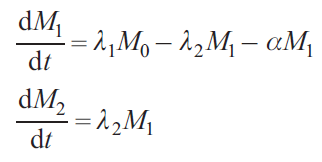
where M0 = M0(0) – M1 – M2; M0(0) is the metal concentration in the soil at the initial time point. The initial conditions are as follows: t = 0, M1(0) = 0, M2(0) = 0.
The integration of the system of Equations (3), parametric analysis, and the selection of parameters that describe the experimental data were performed using a numerical (m,k)-method for the solution of stiff equation systems implemented in Delphi Community Edition.*
Ideal experimental data for verification of the model were reported by Masinire et al.[49] Researchers from South Africa grew the plant Chrysopogon zizanioides in soil, then carefully removed the soil and adapted the plant to a hydroponic system (the roots in water). Then a Pd salt was added to the aqueous medium, and the efficiency of palladium removal from water and accumulation in the plant were evaluated. The experimental data[49] and kinetic calculations[50] are depicted inFig. 1. It can be seen that the process follows a two-phase kinetics. The system of equations (3) was integrated using the following parameters: λ1 = 2 day–1, λ2 = 0.4 day–1, α = 4 day–1. It is of prime importance that the experimentally observed two-stage process occurs only when there is a pronounced backward transfer of the metal from the roots: α = 4 day–1. If it is assumed that α = 0, the metal accumulation in the plant would be an exponential single-stage process.
![[{"id":"pI-8ZT_MpF","type":"paragraph","data":{"text":"Dynamics of variation of the total concentration (М<sub>1</sub> + М<sub>2</sub>) (<i>a</i>) and concentrations М<sub>0</sub>, М<sub>1</sub>, and М<sub>2</sub> (<i>b</i>) over time upon the variation of λ<sub>1</sub> , day<sup>–1</sup>: (1) 1; (2) 2; (3) 5 for λ<sub>2</sub> = 0.4 day<sup>–1</sup>, α = 4 day<sup>–1</sup>, and M<sub>0</sub> = 0.87 mg kg<sup>–1</sup>. In Fig. 1<i>a</i>, the dots show experimental data<sup>49</sup> and continuous lines correspond to theoretical calculations;<sup>50</sup> in Fig. 1<i>b</i>, the variation of М<sub>0</sub> is shown by a black-coloured curve, М<sub>1</sub> is depicted by a red curve, and М<sub>2</sub> is given in blue. Published under the CC BY-NC-ND 4.0 licence."}}]](/storage/images/resized/UNufECpYdEJsAYRvNd5mjdDcwkBttRwpvVMutCbe_xl.webp)
The calculation results shown in Fig. 1 correspond to variable λ1 . An increase in λ1 induces fast transfer of the metal into the roots at an initial stage of the process. It can be seen that a decrease in the rate of metal backward transfer from the first compartment (roots) leads to increasing rate of metal accumulation in the roots.
The two-phase kinetics reflects the two-stage course of the process and provides evidence for the involvement of two compartments in the metal uptake by the plant.
* See the website of the software manufacturer https://www.embarcadero.com
3.1. Phytomining dynamics: plant, soil, and geological substrate
The kinetic model of phytomining taking account of interactions between the plant and the soil in terms of two-compartment system is reflected in Scheme 2.
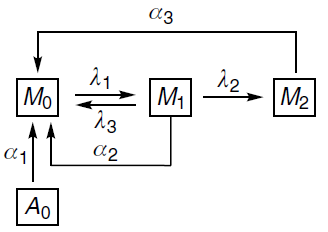
The designations in this Scheme are as follows: А0 is the metal concentration in the geological substrate of plant cultivation area; M0 is the metal concentration in the soil in the zone of plant roots; M1 is the metal concentration in plant roots (first compartment); M2 is the metal concentration in the aerial part of the plant (second compartment); λ1, λ2 are the rate constant for the transfer of metal from the soil to the roots (λ1) and the rate constant for translocation from the roots to the aerial part (λ2); λ3 is the rate constant for the backward transfer of metal from plant roots into the soil; α1 is the rate constant for the metal uptake from the environment; α2 is the rate constant for the transfer of metal into the soil after the growing season; α3 is the rate constant for the metal translocation from the aerial to underground part of a plant after the growing season.
According to Scheme 2, the phytomining model can be written as
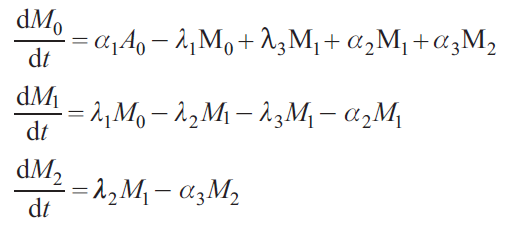
where A0 is the metal concentration in the geological substrate of plant cultivation.
The initial conditions for system (4) can be written in the following form: t = 0, M0(0) = M1(0) = M2(0) = 0. The numerical calculations were carried out[49][50] for the following parameters: A0 = 8.7 mg kg–1, λ1 = 0.05 day–1, λ2 = 0.008 day–1, λ3 = 0.16 day–1, α1 = 0.01 day–1, α2 = 0.005 day–1, α3 = 0.003 day–1, and growing season tk = 150 days.
The variation of the rate of metal transfer from the soil to the roots (λ1) shows that increase in λ1 results in increasing concentrations M1 and M2 and their sum (M1 + M2) and decreasing M0 .
It is clear that the metal content A0 is different for different areas of plant growth. In a metal mining area, the concentration of the metal may be much higher than that in a non-mining area. Fig. 2 shows the process dynamics depending on the overall buffer content of the metal in the geological substrate.
![[{"id":"En9CztvJ4M","type":"paragraph","data":{"text":"Variation of the total concentration (М<sub>1</sub> + М<sub>2</sub>) (<i>a</i>) and the concentrations М<sub>0</sub>, М<sub>1</sub>, and М<sub>2</sub> (<i>b</i>) over time upon the variation of the metal concentration in the geological substrate of plant cultivation (A<sub>0</sub>), mg kg<sup>–1</sup>: (1) 8.7; (2) 16; for other parameters, see the text.<sup>50</sup> Published under the CC BY-NC-ND 4.0 licence."}}]](/storage/images/resized/8AW9XYB0CuqXV3qsUDjFVAPHbYwml1fyJaO5120r_xl.webp)
The cultivation of metal-accumulating plants should lead to metal accumulation in the soil. Provided that both the underground and aerial parts of the plant remain in the cultivation area after the growing season, the degradation of these structures results in metal transfer into the soil (as indicated by parameters α2 and α3).
Different plant species can markedly vary in their physiological characteristics and, hence, in the ability to accumulate metals. The kinetic model can predict the behaviour of a particular plant from the known parameters α1, λ1, λ2, and λ3. Plants can conventionally be divided into three main classes: weak and moderate bioaccumulators and hyperaccumulators. In terms of model (4), the bioaccumulation factors (BF) and translocation factors (TF) can be expressed in the form
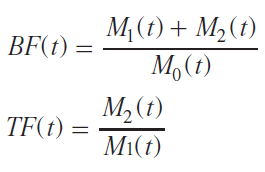
Fig. 3 shows the results of calculation of parameters (5) for moderate accumulators depending on the metal uptake rate λ1. The higher the metal uptake rate by the roots from the soil, the higher BF, while TF remains virtually unchanged.
![[{"id":"mkdCXDJ20h","type":"paragraph","data":{"text":"Variation of the bioaccumulation and translocation factors over time upon variation of the metal uptake rate by plant roots (λ<sub>1</sub>), day<sup>–1</sup>: (1) 0.05; (2) 0.15; (3) 0.3.<sup>50</sup> Published under the CC BY-NC-ND 4.0 licence."}}]](/storage/images/resized/cpTelMQbriXpBCOyadbM3sFBH9pBJKuo9Dn4Xypm_xl.webp)
Hyperaccumulators are characterized by higher rates of metal uptake by plant roots λ1 (Fig. 4) and higher translocation rates λ2 and by variation of the backward transfer of the metal into the soil. An increase in λ1 and λ2 results in increasing bioaccumulation factor BF, whereas an increase in λ3, conversely, leads to decreasing BF. It can be seen that BF measured throughout the growing season (150 days) is much greater than unity (50 – 70). These values are typical of plant hyperaccumulators mentioned above.
![[{"id":"Mf_zokcTC8","type":"paragraph","data":{"text":"Variation of the bioaccumulation (BF) and translocation factors (TF) over time upon variation of the metal uptake rate by plant roots (λ<sub>1</sub>), day<sup>–1</sup>: (1) 3; (2) 7; (3) 12.<sup>49</sup> Published under the CC BY-NC-ND 4.0 licence."}}]](/storage/images/resized/gC3P95k9dq4KEN1OL6ajv6EztWdjlMZsJVpTsT2t_xl.webp)
Calculations in terms of model (4) were carried out for the following set of values: A0 = 8.7 mg kg–1, λ1 = 7 day–1, λ2 = 0.04 day–1, λ3 = 0.8 day–1, α1 = 0.01 day–1, α2 = 0.005 day–1, α3 = 0.003 day–1, and growing season of 150 days.
3.2. Potential role of phytomining in the formation of coal deposits and metal accumulation
Plants periodically extract metals from the soil through the process of phytomining, and after the growing season, a large portion of the metals is returned to the soil. This should result in the accumulation of metals in the soil and may play a role in the formation of geological features with large local concentrations of metals. Time is a highly important factor for these processes. In nature, these processes have taken place over thousands and millions of years. The very high concentration of metals in naturally occurring coals serves as evidence for the important role of metal accumulation via phytomining. According to general estimations of ash content of coals (the content of metal salts and oxides after carbon removal upon combustion), the coals being produced are almost half metallic: indeed, the ash content of bituminous coal is 10 – 40%, that of brown coal is 7 – 45%, and that of anthracite is 15 – 25%. It is generally accepted that coal deposits have been formed upon plant conversion. Meanwhile, the ash dumps at coal-fired power plants contain virtually the whole set of metals (see below).
It is of interest to model the dynamics of phytomining on a macro-historical scale using numerical process parameters comparable with the experimental estimates provided above.
The kinetic Scheme 2 was chosen[49][50] as the base for analysis. Essential indicators are the metal return to the area with concentration M0 (characterized by the parameters α2 and α3) and the metal concentration in the geological substrate (A0). The calculations were performed for multiple growing seasons (annual growing cycle), with the initial conditions being set to M0 for each cycle after the previous growing period. In the case of perennial plants, the metal return is associated with the leaf fall (α3), while for annual plants, it is related to the M1 → M0 process (α3). Two key factors appear to be of fundamental importance.
1. Increase in the metal concentration (accumulation) in the soil layer. The importance of this factor was demonstrated in terms of kinetic model (4). Fig. 5 presents the results of calculations performed for variable metal concentration in the geological substrate (A0). The plots show a virtually linear rise, with a commercially significant level of metal production (2 g ton–1) being achieved after 17 – 20 thousand years (see Fig. 5).
![[{"id":"TpNaWakDrR","type":"paragraph","data":{"text":"Dependences of the concentrations M0 indicating accumulation in soil on the number of plant cultivation cycles for various metal concentrations in the geological substrate (A<sub>0</sub>), mg kg<sup>–1</sup>: (1) 4; (2) 8.7; (3) 16.<sup>50</sup> Published under the CC BY-NC-ND 4.0 licence."}}]](/storage/images/resized/w1T8PWwYeVa4tWmWRNP70T8LlfMHphEwQrbyk0GQ_xl.webp)
2. The potential effect of plants on the geological substrate. Plant growth is a complex chemical process involving the release of metabolites into the soil. It is known that, to maintain the electrical neutrality and counterbalance the absorbed metals, plants release hydrogen ions into the soil to produce organic acids such as malic and citric acids.[51] A considerable role belongs to microbiological processes, which activate the geological substrate and give soluble metal salts. In terms of mathematical description, this is reflected by the introduction of an additional positive term γA0M0 into the equation for the variation of the metal concentration M0. When the concentration A0 is relatively high, this factor can markedly change the kinetic behaviour of the system (Fig. 6).
![[{"id":"BdcGqWB4iM","type":"paragraph","data":{"text":"Dynamics of variation of the concentration M<sub>0</sub> in the soil vs. the number of cultivation cycles for A<sub>0</sub> = const in the presence of leaching caused by weather conditions, which results in a decrease in M<sub>0</sub> by 80% (mg kg<sup>–1</sup>). When γA<sub>0</sub> > λ<sub>1</sub>, the parameters for different types of accumulation were as follows: (1) hyperaccumulation: λ<sub>1</sub> = 0.005, λ<sub>2</sub> = 8 × 10<sup>–4</sup>, λ<sub>3</sub> = 0.016, α<sub>1</sub> = 0.01, γ = 1.55 × 10<sup>3</sup>; (2) moderate accumulation: λ<sub>1</sub> = 5 × 10<sup>–4</sup>, λ<sub>2</sub> = 8 × 10<sup>–5</sup>, λ<sub>3</sub> = 1.6 × 10<sup>–3</sup>, α<sub>1</sub> = 10<sup>–3</sup>, γ = 1.3 × 10<sup>3</sup>; (3) weak accumulation: λ<sub>1</sub> = 5 × 10<sup>–5</sup>, λ<sub>2</sub> = 8 × 10<sup>–6</sup>, λ<sub>3</sub> = 1.6 × 10<sup>–4</sup>, α<sub>1</sub> = 10<sup>–4</sup>, γ = 1.25 × 10<sup>3</sup>. Other parameters: A<sub>0</sub> = 8.7 mg kg<sup>–1</sup>, α<sub>2</sub> = 0.005 day<sup>–1</sup>, α<sub>3</sub> = 0.003 day<sup>–1</sup>, the growing season was 150 days.<sup>42</sup> Published under the CC BY-NC-ND 4.0 licence."}}]](/storage/images/resized/zQdlyAPGjrn1MlWnl4TUh7g0rWmtsNg6T0PvidBu_xl.webp)
In some cases, it is possible to observe ‘an exponential explosion’ of metal accumulation, with the times of origin of deposits being substantially different and dependent on the nature of the plant, that is, whether it is weak, moderate, or hyper accumulator. When A0, α1, and λ1 are relatively high, metal accumulation is fast.
4. Accumulation of toxic metals in plants
The metal accumulation plays a dual role for plants. Heavy metals such as cadmium, lead, mercury, arsenic, and other become toxic at high concentrations.[52][53] The bioaccumulation of metals triggers a number of adverse consequences for plants ranging from disruption of fundamental physiological processes at the cellular level to stunted growth, reduced crop yields, and even death.
The ability of plants to effectively absorb metals from the environment results in accumulation in the biomass of not only elements essential for metabolism (Mg, Fe, Mn, Cu),[51] but also associated components such as heavy metal ions (Hg, Cd, V, Cr, Pb, etc.). This feature of plants forms the basis of bioremediation effect, that is, an environmentally acceptable method for purification of soils from contaminants such as crude oil and oil products, pesticides, and heavy metals. Metals are often toxic and detrimental to normal biochemical reactions in plant metabolism.
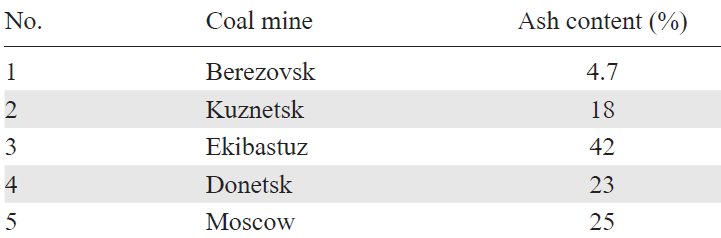
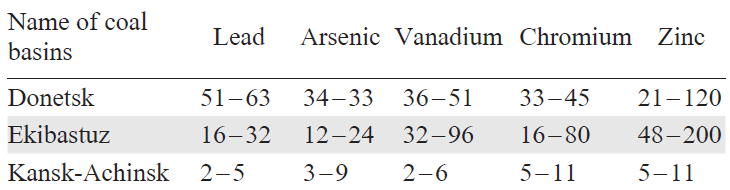
The accumulation of heavy metals in the environment (soil, waterways, and gases formed upon combustion) is particularly characteristic of coal due to its widespread use. It should be emphasized once again that natural coal currently used in the energy sector contains high concentrations of mineral components; this is demonstrated in Table 5[54] in relation to coals from five coal deposits in Russia. In particular, natural coals contain high concentrations of heavy metals (Table 6).
It is necessary to emphasize the environmental hazards posed by both raw natural coal and the ash dumps of coal-fired thermal power plants.[55] The accumulation of heavy metals in natural coal is related, to a certain extent, to metal accumulation due to the formation of plant litter (peat formation).
Of high importance are studies dealing with the contents of heavy metals in plants that grow in highly contaminated areas, first of all, in those areas where natural coal is mined and used.[56-59] It was shown that metal concentrations in coal mining areas exceed the threshold values by large factors: eight times for Cu, 2.8 times for Pb, 3.6 times for Mn, 12.8 times for Ni, 9.6 times for Cd, and 15.4 times for Zn.[56] The same publication describes determination of heavy metals in fireweed (Chamaenerion), polar willow (Salix polaris), and dwarf birch (Betula nana). The heavy metal content in plants was found to be very high and to exceed maximum allowable concentrations (MAC) for Cd, Ni, and Pb. In addition, these metals tend to be accumulated in both plant leaves and stems and plant roots.[6]
The concentrations of toxic metals (Cd, Ni, Pb) in the leaves of the willow, birch, and fireweed growing near coal mining areas in the Vorkuta region are markedly higher than those in coal dumps.[56] In the soil of the area adjoining the Minusinsk combined heat and power plant (CHP), MAC values for metals were found[60] to be exceeded by 50 – 60% for mobile lead species, by 30 – 40% for cadmium, and by 30% for zinc, with the regulatory values being 6, 1, and 23 mg kg–1, respectively. It is noteworthy that the concentrations of certain heavy metals in coals from major basins can be considerably different. Thus the concentration of toxic metals in the Kansk-Achinsk basin is an order of magnitude lower than that in the Donetsk basin.[54] Analysis of the contents of toxic elements in several coal basins of Russia revealed values above MAC. It was shown that arsenic predominates in the Kuznetsk and Sakhalin basins, while cadmium is predominant in the Chelyabinsk, South Ural, Pechora, and Kuznetsk basins.[55]
It is of interest to consider the mechanisms of influence of both heavy metals and relatively inert elements on plants. The effects of metals on the biochemical processes in plant cells are diverse and consist of multiple stages.[51][61][62] Metals form complexes with the functionally significant SH groups of proteins incorporated into enzyme active sites, which thus lose the catalytic activity. This is typical of silver and copper. The replacement of zinc in the active sites of zinc enzymes was reported[5] to cause complete inhibition of the enzyme activity.
Metals can initiate chain oxidation reactions that generate reactive oxygen species, that is, superoxide (O2– •) and hydroxyl (HO•) radicals, singlet oxygen, and hydrogen peroxide.[63] These reactions break lipid membranes (e.g., lipid peroxidation), critical enzymes, and transport proteins. It is known that roots release large amounts of organic acids, first of all maleic and citric acids, into the environment and that heavy metals bind to acids, which ensures metal transport into plant cells.[64][65]
It should be noted that plants have developed mechanisms to combat the adverse effects of heavy metals. Sirgedaitė-Šėžienė et al.[52] investigated the effects of arsenic, cadmium, and lead in various concentrations on a number of biochemical markers. The authors studied the effect of metals on the contents of phenols, soluble sugars, and lipids and on the lipid peroxidation and the activity of antioxidant enzymes, including catalase, superoxide dismutase, guaiacol peroxidase, ascorbate peroxidase, and glutathione reductases. Also, the change in the content of basic chemical elements (P, S, Vg, K, Ca, Mn, Zn, Cu, Fe) in plants was studied. A number of unexpected effects were discovered and described. For example, lead present in certain concentrations increased chlorophyll synthesis and stimulated plant growth. Cadmium and arsenic inhibited plant growth in all cases. Metals stimulated enzymatic antioxidant processes. The phosphate ions that are released by plant roots and can bind heavy metal ions into insoluble compounds provide an effective way for plant protection from heavy metals.[53][66]
Thus, in the presence of excess toxic metals, plants activate a multilevel protective system. First, a considerable part of metals is accumulated in the root system.[52] Second, to neutralize metals that have already penetrated, the plant cells synthesize special chelators (e.g., phytochelatins or the amino acid proline), which strongly bind metals and isolate them in the cell wall and vacuoles, which represent a sort of ‘cellular waste containers’.[53] Third, to cope with oxidative stress, plants considerably increase the activity of their own antioxidant enzymes.[52][53]
There is a group of plants in which extremely high concentrations of metals can be accumulated without apparent harm to the plant.[51] Metal hyperaccumulators are used in phytoremediation to clean up soil and water from pollutants.[51][52] For example, the local plants of northern Colombia, Spondias Mombin and Cecropia peltata (BF = 8.3) have a substantial phytoremediation potential for removing mercury from soils contaminated with toxic metals.[67]
Heavy metals have a pronounced effect on the expression of various plant genes. El Sappah et al.[53] described the effects of cadmium on 26 genes of various plants, arsenic on eight genes, copper on 22 genes, and lead on two genes. The expression of relevant proteins (both defensive and stress-related ones) has a pronounced effect on the plant metabolism, which is changed toward adaptation or inhibition.
It is of interest to consider the behaviour of gold in plants. The ionic species of gold occur in the leaves and stems of Arabidopsis thaliana, while (metallic) gold as nanoparticles is found only in the roots.[68] It was found that exposure in culture media containing gold leads to the activation of proteins responsible for combating oxidative stress, such as cytochrome P450, glutathione transferase, peroxidases, and glycosyltransferases. When gold is present in the culture medium, the transport proteins responsible for metal transport are inhibited in the plant. Meanwhile, copper, cadmium, iron, and nickel transport proteins are downregulated. The authors conclude that plants absorb gold in an ionic form and the defence against adverse impacts is due to inhibition of ion transport processes for toxic metals and activation of antistress effects.[68]
5. Metals in natural coals of Russia
Considering the generally accepted concept of the organic origin of coal, it should be assumed that the chemical elements that were present in ancient plants during their life were preserved in some form in the existing coal deposits. The metal content of natural coals may represent, to some extent, a physical ‘imprint’ of the activity of ancient plants.[69-71] The subsequent development of a coal seam can markedly change the ratio between metals that entered coal through phytomining and the metals adsorbed during the period of formation and compositional transformation throughout the history of coal existence.[72-77]
It is fairly complicated to identify phytomining as a process of accumulation of noble metals and to identify the metal species present in a particular plant. Nevertheless, it is necessary to take into account the described features, the formation mechanisms, and the role of this phenomenon in natural coals and in coal combustion products. Brown coal from the Moscow coal basin[78-81] formed in the Paleozoic (Carboniferous period, or Carbon). Coals with a high ash content (45 – 55%) account for about 10% of the total proven reserves in this basin. The coal deposits located in the western part of the Tula Region and the eastern part of the Kaluga Region are characterized by high ash content (35 – 45%). The lowest ash content is mainly found in coals located in the central and eastern parts of the basin.
Most of the Pechora coal basin[82] is located above the Arctic Circle and borders the western slopes of the Subpolar Urals and the Pai-Khoy. The basin covers an area of more than 90 000 km2, and coal reserves are estimated to be above 344 billion tons. The coals vary in composition in which bituminous coal predominates, but brown coal and anthracite are also present. The particular value of coal reserves is due to the presence of coking coal. The material and petrographic composition of these coals includes 70 – 85% trace components of the vitrinite group. In terms of ash content, the coals are classified into medium-ash (12 – 18%) and high-ash (20 – 40%) coals; in terms of the sulfur content, they are subdivided into low-sulfur (up to 1.0%) and high-sulfur (1.5 – 4.0%) coals. The content of water is up to 11% and the content of volatile components is up to 28%. Table 7, Table 8, Table 9, Table 10[83] list the chemical elements present in the coal seams of the mentioned coal basins and the contents of elements.
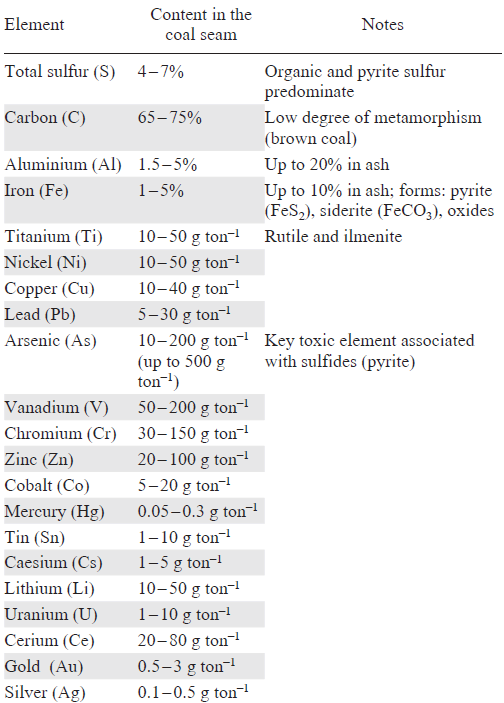
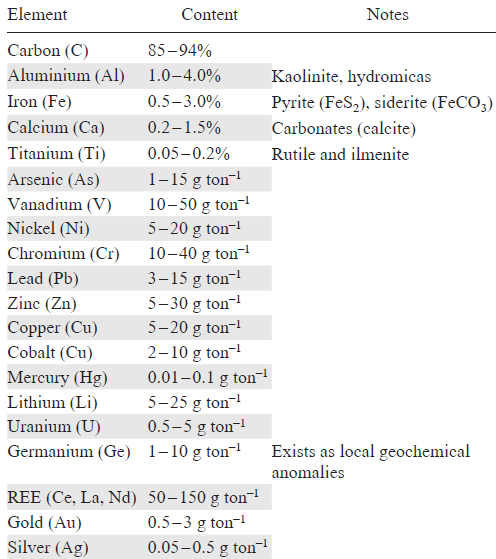
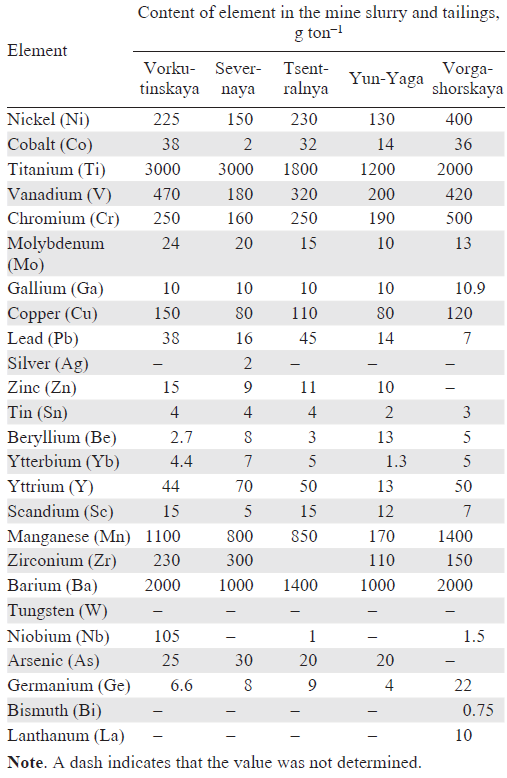
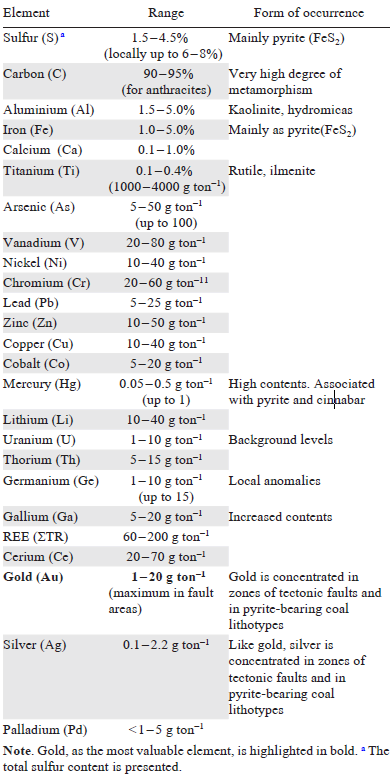
Coal of the Vorkuta region is characterized by a high titanium content (see Table 9), while large amounts of aluminium, iron in this coal are traditional (see Table 7, Table 8 and Table 10).
The Donetsk coal basin is one of the largest coal basins in Europe. Mention should be made of high content of gold in the coals of this basin (see Table 10). The ash content of coal ranging from 10 to 30% (on average, 15 – 25%) is due to the presence of terrigenous components and sulfides.
In most cases, dry biomass does not contain high levels of toxic metals such as arsenic or mercury (seeTable 7, Table 8, Table 9, Table 10). Nevertheless, there is the problem of bioremediation of soils contaminated with these elements, with some plants being capable of accumulating them.[84-86]
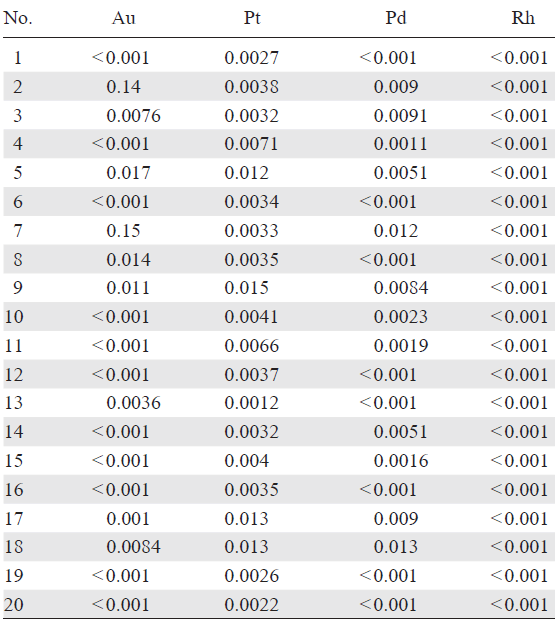
The coal-bearing capacity of the Chelyabinsk basin is associated with Permian and Triassic deposits. The whole range of noble metals (Pt, Pd, Rh, Ru, Ir, Au, Ag) is present in the coals of the South Ural brown coal basin (Table 11[87], Table 12[88], Table 13).
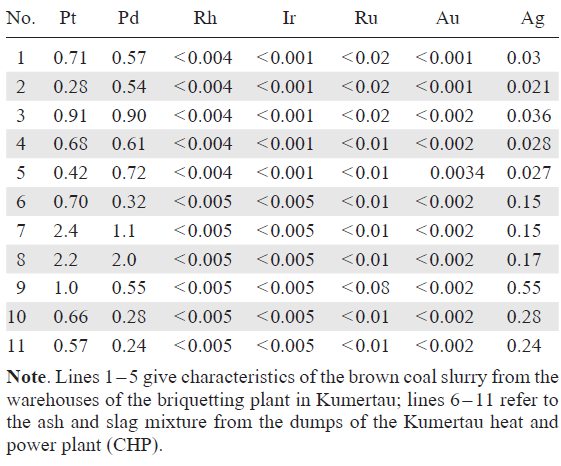
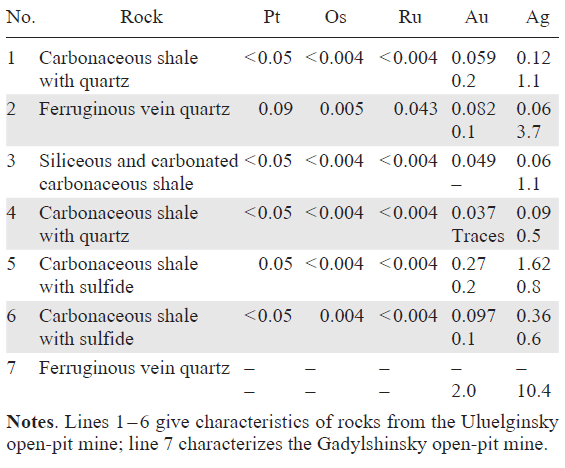
The northern Asia coals contain lanthanides in amounts comparable with the average estimates for the U.S. coals, although the former are slightly higher. The difference is due to the somewhat higher average ash content of these coals (18.4%) compared to U.S. coals (13.1%). On an ash basis, the total contents of the seven studied rare earth elements (La, Ce, Sm, Eu, Tb, Yb, Lu) in coals of northern Asia and in U.S. coals are similar: 283 and 278 g tons–1, respectively. These results are higher than the global average data for coal and coal ash.[89] Lanthanum and lanthanides and also uranium are characteristic components of coals from the Kansk-Achinsk and Lena coal basins (Table 14[90], Table 15[91]).
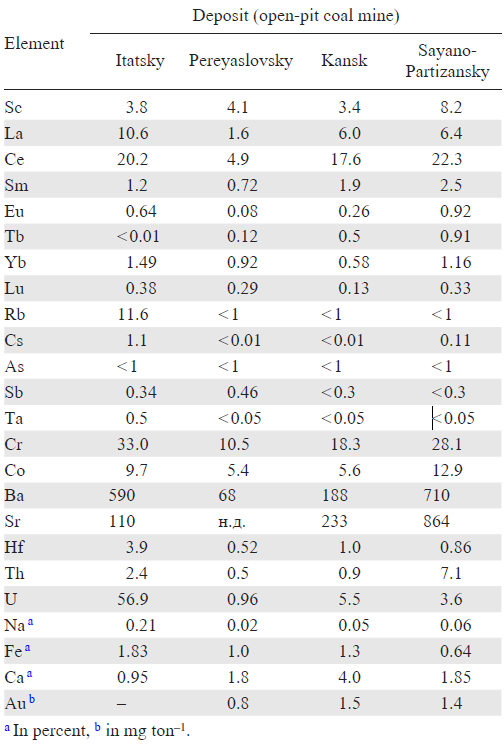
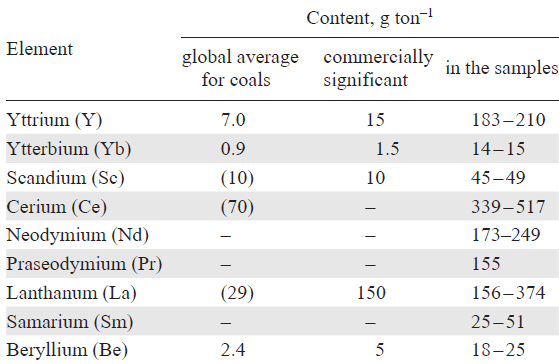
The total geological coal reserves of the Lena coal basin amount to 1 647 billion tons, of which 945 billion tons are brown coal.
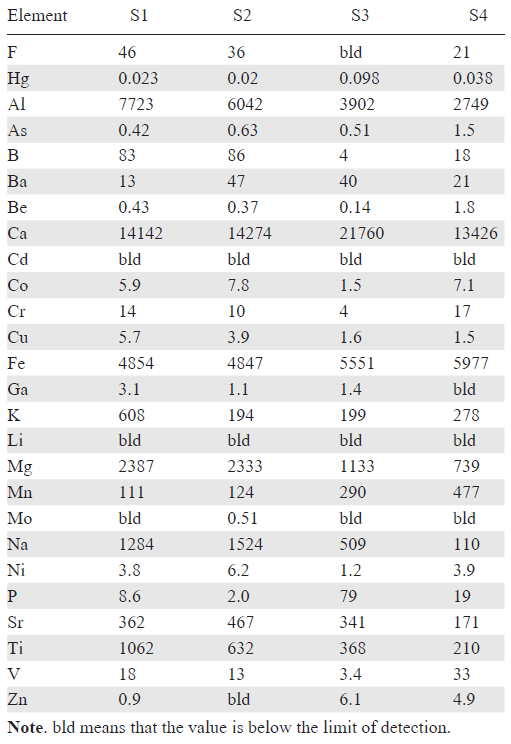
It has been found that Yakutia brown coal is rich in iron, aluminium, calcium, and titanium (Table 16)[92]. The concentrations of these metals were investigated at four sites: S1 is Kangalassky coal mine, Verkhniy formation; S2 is Kangalassky coal mine, Nizhniy formation; S3 is Kirovsky coal mine (4U site); S4 is Kempendyai coal mine (17V and 18V blocks).
A paradoxical fact in the geochemistry of natural coals is the exceptionally high ash content. Up to 40 – 45 mass % of the extracted coal material (see Table 5) is represented by metal salts and oxides, with the metals being homogeneously distributed throughout the weight and volume of the coal samples. At least two mechanisms of coal saturation with metals can be conceived:
— deposition of metal salts from seawater on the plant biomass matrix during the evolution of the deposit;
— metal accumulation in plant biomass as a result of plant growth on a particular geological substrate, with metals being transferred to the biomass through phytomining.
Apparently, depending on the natural conditions, both processes of metal saturation of coal are possible.
The substantial role of phytomining is supported by the following facts. The metal content in coal is markedly higher than that in seawater. Consider gold as an example. The concentration of gold in coal can reach 20 g ton–1 (in the Donetsk basin; see Table 10), while the concentration of gold in seawater is ~ 50 μg ton–1, which is 400 000 times lower. Hence, to obtain 1 ton of carbon material saturated with gold, it is necessary to pump 400 000 m3 of seawater.
In many coal basins, sulfur is virtually absent. Meanwhile, it is known that seawater contains sulfates as the major salt component. Coal deposits are often located in mountain areas that are far from classic sea regions.
Of considerable interest are data on the relationship between the metal content and coal age. S.I.Arbuzov[93] reported data on the contents of rare earth metals in the coals of northern Asia. On average, Devonian coal (~ 350 million years) contains ~ 145 g ton–1 of REE (total content of La, Ce, Sm), Carboniferous – Permian coal (~ 250 million years) contains ~ 40 g ton–1, and Mesozoic coal (~ 80 million years) contains ~23 g ton–1. The data presented in Fig. 7 indicate that the metal content increases exponentially depending on the number of growing seasons (coal age). This is in line with theoretical calculations (see Fig. 6).
![[{"id":"GQjK1SsfwC","type":"paragraph","data":{"text":"Ash content (1) and rare earth metal concentration (2) in natural coals vs. age.<sup>42, 93</sup> Published under the CC BY-NC-ND 4.0 licence."}}]](/storage/images/resized/d10NzD5ihZhByxcZX7pr0CodiLhBf3QhIwI56jQw_xl.webp)
The combination of the above facts suggests that plant phytomining may play an important role in the geogenesis of coal deposits.
6. Technogenic mineral deposits: ash waste from coal-fired power plants
The high ash content of natural coal leads to an enormous accumulation of metals in the ash landfills of coal-fired thermal power plants (TPPs). There are more than 600 large thermal power plants operating within the Unified Energy System of Russia. In large cities, ash dumps are often located near thermal power plants, and they cannot be expanded due to their proximity to residential areas. The problem of coal ash and slag waste disposal is most acute in the Ural, Siberian, and Far Eastern regions, where the largest coal-fired power plants are concentrated.
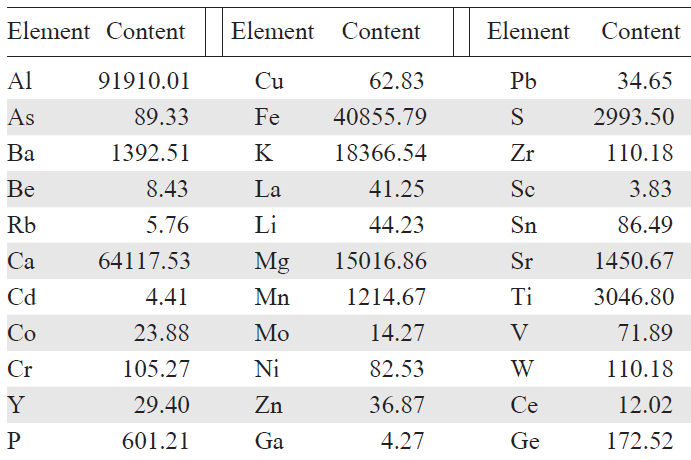
Russia has accumulated a huge number of landfills of ash and slag waste, which represents the non-combustible part of coal left over after use at TPPs; this number continues to increase year after year[94][95] and has an adverse impact on the environment. Due to the presence of a considerable fraction of hazardous compounds, storage of ash and slag waste (ASW) has a harmful effect on the ecosystem, thus posing a potential risk of human poisoning and environmental contamination by toxic substances and heavy metals. This waste has an increased contents of aluminium, iron, chromium, and manganese compounds. In addition, ASW contains rare earth and trace elements such as vanadium, gallium, and germanium. This highlights the need to develop effective methods for the disposal and recycling of ash and slag waste in order to reduce its negative impact on the environment and recover valuable components.
During coal combustion, organic matter and volatile compounds are removed, leading to the accumulation of both trace elements and radionuclides in the ash and slag. The level of accumulation is determined by the initial ash content of the fuel, the chemical speciation of the elements, and the volatility of the compounds formed upon high-temperature action and the movement of flue gases.[96]
Contamination of the biosphere can result from the dispersion of ash from thermal power plants and ash dumps, as the combustion products concentrate radioisotopes of the uranium and thorium series that have been present in the initial coal. In the ash and slag waste, these elements are not diluted by carbon mass; therefore, they are concentrated and more hazardous.[96]
Study of ASW from thermal power plants shows that they contain much higher concentrations of radioactive elements than ordinary soils: the specific activity of radionuclides is 7 to 10 times higher. In particular, the content of potassium-40 (40K) varies from 40 to 400 Bq kg–1, while the levels of uranium-238 (238U) and uranium-235 (235U) reach 150 Bq kg–1.[69] For example, the ash dump at the Blagoveshchensk TPP contains approximately 20 tons of uranium-235, 18 tons of thorium-232, and 7 kg of radium-226.[96]
Inductively coupled plasma atomic absorption spectrometry confirms the high contents of various chemical elements in ash and slag waste, including iron, calcium, potassium, magnesium, aluminium, manganese, strontium, zinc, lead, nickel, and cobalt.[96] In the order of decreasing percentage in the ash and slag waste, the elements can be arranged as follows:
K > Fe > Al > Mg > Ca > Mn > Sr > Pb > Co > Zn > Cu > Sn > As > Ni > Cd > Hg
Thus, in view of its chemical composition and physical and mineralogical properties, ash and slag waste presents a contradictory problem: on the one hand, it is a source of potential soil contamination, while on the other hand, it can be regarded as a cost-effective and promising raw material for recycling.
The chemical composition of ash and slag dumps depends on the type of coal; therefore, dumps in different regions contain different combinations of metals. For example, in the southern part of the Far Eastern region, noble metals were found in ten coal deposits. Deposits containing germanium are of particular interest. It was established that the content of noble metals in the waste dumps of the Pavlovsky, Bikinsky, Rakovsky, and Luzanovsky coal basins can reach hundreds of milligrams per ton of coal. Gold and platinum recovered from ash and slag waste are the most promising elements for profitable and sustainable production.[97] The bituminous and brown coals produced in Siberia and Far East were found to contain increased concentrations of germanium, tungsten, gold, and silver as well as platinum group metals and rare earth metals.[97]
Pilot and industrial tests on the gravity beneficiation of ash and slag raw materials confirmed the potential possibility of recovery of fine gold particles from ASW followed by the production of an intermediate concentrate containing 500 – 600 g of gold per ton.[97] The subsequent treatment of this intermediate using magnetic and flotation methods may concentrate gold up to 1.5 kg ton–1. It was shown[98][99] that the extraction of gold from ASW is economically feasible provided that the gold content is at least 0.2 g ton–1.
It was shown that the ash and slag dumps of CHPs located near the cities of Khabarovsk, Birobidzhan, and Vladivostok are characterized by high gold contents (Table 17, Table 18). According to studies, gold in is mainly present in ASW in finely dispersed (5 – 40 μm) and dust-like forms.[97] The gold morphology was found to change during storage: in fresh ash, the particles show signs of fusion and are intergrown with other minerals, whereas in old ash dumps, the gold particles are larger (up to 0.5 × 1.0 mm2) and pure, which attests to post-diagenetic coarsening processes.[70]
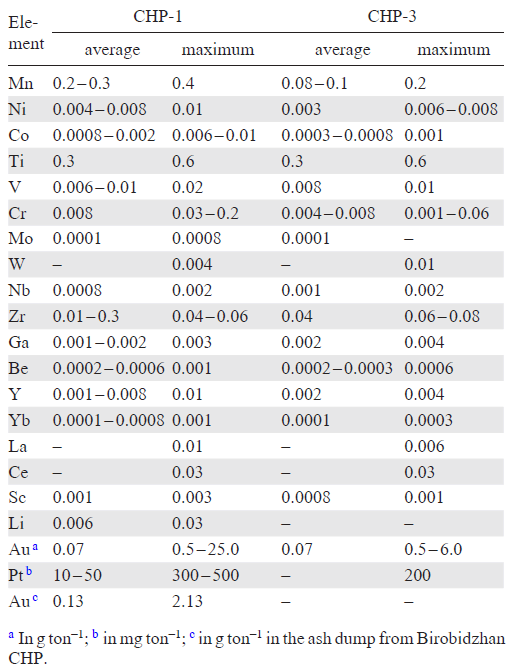
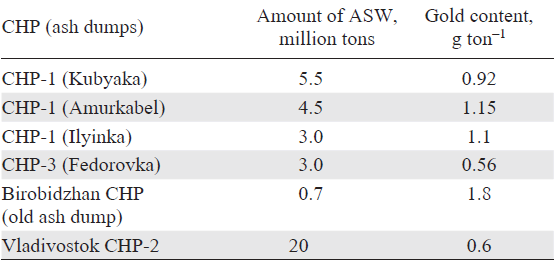
The total amount of ASW that enters the ash dumps of thermal power plants in the Far East region every year is approximately 3 million tons, and the total amount of accumulated waste exceeds 60 million tons. The reserves of gold in this waste are estimated as 33 – 38 tons, with the resource base being increased every year. Indeed, in inspected TPPs alone, the ash and slag material (ASM) that annually enters ash dumps in a quantity of 500 – 600 thousand tons provides a 300 – 400-kg annual gain in gold resources.[97]
Far East ASW represents a unique type of technogenic raw material the gold content of which (0.2 – 1.8 g ton–1) provides cost efficiency of the potential industrial recovery.[97] Organization of mining operations at such man-made deposits could become a new focus for the mining industry in the region.
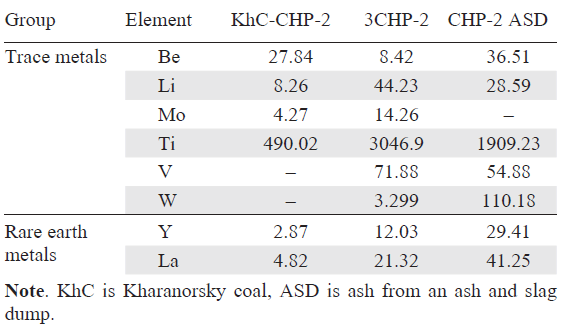
The commercial coals at the ore sites of the Transbaikal deposit[100] contains low concentrations of beryllium, arsenic, mercury, fluorine, vanadium, and other potentially toxic elements (Table 19). With relatively low contents of these metals in coals and ash dumps of TPPs, the contents of rare and rare earth metals are several times higher: 10 times for La, 14 times for Y, and 4 and 3.5 times for Li and Ti, respectively (Table 20)[101].
In the Kuznetsk basin, two methods used in the chemical, mining, and coal industries for beneficiation of various types of waste containing rare earth elements were employed to produce a concentrate rich in REE. One method includes successive precipitation of impurities from the extract obtained by ash dissolution and subsequent isolation of a mixture of precipitated rare and rare earth metal oxalates. The second method is based on ash beneficiation using ion flotation.
Ash and slag waste of the Kemerovo regional power station is characterized by high contents of silica (63.5%) and alumina (23.5%) as well as the presence of REE (La, Ce, Pr, Nd). Chemical leaching and ion flotation methods have been tested to produce concentrates enriched in rare earth elements (Table 21).[102]
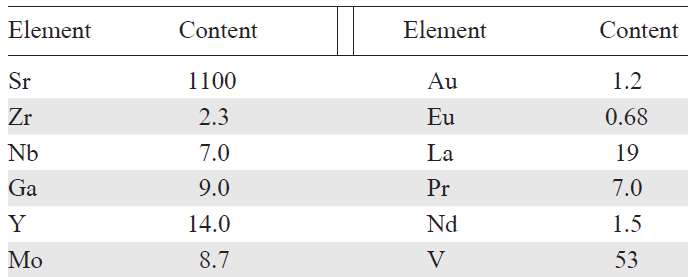
In the town of Omsk, electricity and heat are generated by thermal power plants that use bituminous coal from the Ekibastuz coal basin located in the Pavlodar Region (Republic of Kazakhstan). The ash content of this coal reaches 40%, resulting in high ASW discharge. The annual yield of ASW amounts to 450 thousand tons and 1150 thousand tons in TPP-4 and TPP-5, respectively. Altogether, more than 75 million tons of ash and slag waste have been accumulated in the ash dumps near Omsk.[103]
Under the action of precipitates, As, Se, Pb, and Hg are leached from the ash. They get into soil and groundwater and thus make them unsuitable for the economic use. The ash dump is located in the close vicinity (300 – 350 m) of the Irtysh river. During the spring flood, the river level substantially rises, which may break the ash dump dam and result in millions of tons of ash waste being released into the river.[103]
The ash contains 20 to 35% Al2O3; therefore, most of studies focus on various methods for the production of alumina.[104]
A study on the technological products of ASW processing and a coal mine tailing pile in the Tula Region has been reported.[105] The composition of samples was investigated using a set of process mineralogy techniques, which included visual and optical mineralogical analyses, in particular computer image analysis, inductively coupled plasma mass spectrometry (ICP-MS), and electron probe microanalysis. The major components in all ore beneficiation products are silica, alumina, and iron oxides. Low concentrations of chromium, strontium, zirconium, and barium compounds were detected among minor components. A direct correlation between the chromium and iron oxide contents was found, indicating that chromium occurs in iron-bearing minerals. Strontium, zirconium, and barium are associated with rock-forming minerals.
A high vanadium content (> 90 g ton–1) compared to that in the starting materials was detected in ASW processing products and in the tailing pile; the REE concentrations were also somewhat elevated.[105] The beneficiation products were found to contain high concentrations of noble metals. Gold was found[105] in amounts of 2 – 4 and 0.22 g ton–1 in ASW concentrate and its magnetic fraction, respectively, and in amounts of 1.7 and 0.43 g ton–1 in the tailing pile and its magnetic fraction, respectively. Platinum group metals (particularly, rhodium) were found in the ASW concentrate and discharge and in the tailing pile concentrate and magnetic fraction. No platinum group metals were detected in the tailings.
The major components of ASW and products of tailing pile processing at the Moscow basin[105] are silica, alumina, and iron and calcium oxides. In ASW, the maximum iron oxide content (60.5%) was found in the magnetic fraction, while the discharge and tailings are enriched with silica (58.33 – 60.81%) and alumina (26.4 – 29.0%). An extract from the tailing pile contains up to 88.54% silica, while the magnetic fraction contains 62.6% iron oxide; tailings comprise 75.29% SiO2 and 16.1% Al2O3.
In ASW, aluminium is concentrated as aluminosilicates (Al2O3 · 2 SiO2), while silicon is present as quartz and aluminosilicates; iron occurs as magnetite and haematite. In the tailing pile products, silicon is associated with quartz, aluminium is associated with aluminosilicate phases, and iron is bound in oxide minerals (magnetite, haematite) and in iron-bearing aluminosilicates in the tailings. All of ASW products contain organic carbon (up to 1.6% in the tailings) as a result of incomplete combustion of coal.[105]
In the Donetsk region,[106] virtually all electricity is generated by thermal power plants that run on locally mined power plant coal. Since coal always contains non-combustible mineral impurities, coal combustion inevitably results in the formation of ash waste. Despite the preliminary beneficiation of coal, the ash content remains rather high.
The physicomechanical properties, the chemical and trace component composition of the mineral fraction of fly ash, slag, and ash and slag waste depend on the thermophysical characteristics of the initial fuel, combustion process used, and the employed ash removal system. The results of sample analysis indicate that the major ash-forming components of the coal mineral matter and combustion products are oxygen compounds: SiO2, Al2O3, CaO, and Fe2О3. The small proportion of metals is present as sulfates: СаSO4, MgSO4, FeSO4.
According to other authors,[99] the ash content on the dry weight basis in the power plant coal of the Donetsk basin amounts to 17 – 23%. The major components of the ash and slag waste are SiO2, Al2O3, and Fe2O3 (50 – 58, 18 – 25, and 11 – 17% respectively); other oxides are present in minor amounts: CaO and MgO (1.5 – 3.0% each), TiO2 (~ 1.0%), and alkali metal oxides (Na2O, K2O), phosphorus(V) oxide Р2О5, and sulfur oxide (totally 3 – 5%).
7. Conclusion
Phytomining, accumulation of metals in plants, is a general phenomenon based on the ability of plants to absorb considerable amounts of water from the soil and the geological substrate. Along with metals that are essential for survival and growth of plants (enzyme cofactors), a large number of other metals enter the plant biomass in ionic or colloidal form. The nature of the adsorbed metals is diverse and, as experience shows, includes virtually all metals found in the Periodic Table. Most metals and their derivatives occur in nature in a fairly dispersed form and rarely exist as classic deposits. For example, gold is found in low concentrations in geochemical samples in virtually all regions and water bodies. Academician V.I.Vernadsky noted the ‘ubiquity’ of gold.[107] While absorbing water in large amounts in a non-specific manner, plants accumulate metals, and accumulation factors (the ratio of metal concentrations in the biomass and in soil) can exceed 100. Hyperaccumulation of metals in plants has lately attracted the attention of researchers and engineers as regards the potential practical applications of this phenomenon. A well-developed kinetic model of phytomining, supported by experimental detection of the two-compartment mechanism of the process, could serve as a quantitative basis for industrial processes.
The accumulation of heavy metals in high concentrations by plants in the areas of natural coal mining and in ash dumps at coal-fired power plants has adverse consequences for both the plants themselves and the environment. The concentration of toxic metals (Cd, Pb, Ni, etc.) in the aerial parts of plants (leaves, stems) exceeds the maximum allowable concentration near coal mining areas, while the metal concentration in the roots is above MAC in the industrial ash dumps.
As a result of a prolonged (hundreds of millions of years) phytomining, high accumulated levels of metals can be found in natural coal. Natural coal deposits are the products of compression and dehydration of the biomass of ancient plants. It is clear that phytomining makes a large contribution to the ash content of natural coals. The review presents an analysis of the metal contents in the main coal basins of Russia. Despite some quantitative differences in the concentrations of particular components, virtually the whole spectrum of metals is present in all deposits.
The large-scale use of natural coals leads to a considerable accumulation of metals as fuel components. The estimated metal accumulation factors in ash waste from coal-fired power plants are quite impressive: 5 – 50 times at the stage of geological substrate of the plant biomass (phytomining); 5 – 20 times at the stage of the biomass compression and removal of biological water (coal formation); and 5 – 10 times at the stage of combustion (formation of the ash and slag waste). The total ratio is 100 – 10 000 times. This review analyzes the metal content in ash and slag waste from the most important power plants located in various regions of Russia.
The accumulation of ash waste from coal-fired power plants has several significant consequences. As a rule, energy facilities are located near large residential areas. The known chemical mobility of dumps containing substantial amounts of toxic metals, due to their exposed nature and large surface area, poses a clear environmental hazard. Meanwhile, the technogenic mineral deposits formed over decades are a source of highly demanded metals, including gold, platinum group metals, other noble and rare earth elements.
8. List of abbreviations and symbols
ASM — ash and slag material,
ASW — ash and slag waste,
BF — bioaccumulation factor,
CHP — combined heat and power plant,
MAC — maximum allowable concentration,
TF — translocation factor,
TPP — thermal power plant,
А0 — metal concentration in the geological substrate of the plant cultivation area,
M0 — metal content in soil,
M1 — metal concentration in the plant roots,
M2 — metal concentration in the aerial parts of the plant,
tk — growing season (time in days),
α, λ3 — rate constant for the backward transfer of metal from plant roots into the soil,
α1 — rate constant for the metal uptake from the environment,
α2 — rate constant for the transfer of metal into the soil after the growing season,
α3 — rate constant for the metal translocation from the aerial to underground part of a plant after the growing season,
λ1 — rate constants for metal transfer from the soil to the roots,
λ2 — rate constant for metal translocation from the roots to the aerial part of a plant.
References