Keywords
Abstract
Cyanoguanidine, or dicyandiamide, is a bifunctional, nitrogen-rich compound that acts as both an electrophile and a nucleophile in organic reactions due to the presence of cyano and guanidino groups. Rapid developments in cyanoguanidine-based transformations during the last five years have significantly increased its synthetic value in organic synthesis. It has been used as a building block in the synthesis of various nitrogen-rich heterocycles, including pyrimidines, triazines, imidazoles, benzimidazoles, and tetrazoles. Cyanoguanidine′s reactivity and structural flexibility make it a desirable choice for synthetic chemists seeking low-cost, environmentally safe, and atom-efficient methods. This review brings together the expanding synthetic utility of cyanoguanidine as a multifunctional, eco-compatible reagent, which may open new avenues of research in organic synthesis. Additionally, this article highlights the use of cyanoguanidine-derived structures to medicinal, polymer, and materials chemistry.
The bibliography includes 82 references.
1. Introduction
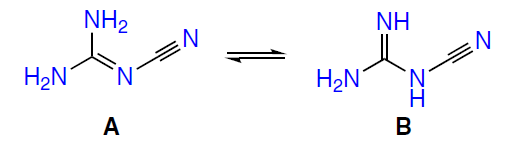
Cyanoguanidine, commonly known as dicyandiamide, is a nitrogen-rich compound that contains cyano and guanidine functional groups.[1] Cyanoguanidine’s molecular framework contains two major reactive centers: an electrophilic cyano group, and a nucleophilic guanidino group.[2] At ambient temperature, it is a white, crystalline substance that usually has no smell or a slight ammonia-like odor. The substance is somewhat soluble in water and in polar organic solvents such as methanol and ethanol, and it shows excellent thermal stability. Cyanoguanidine was discovered through research in the field of cyanamide.[3] It was prepared in 1905 by the German chemist Wolfgang Manchot, by the controlled reaction of cyanogen chloride with ammonia or by the thermal decomposition of ammonium dicyanamide.[4] It is also synthesized by treating cyanamide with a base and produced in soil by the decomposition of cyanamide.[5] The two tautomeric forms of the nitrogen-based compound exist due to a difference between the bond states of nitrogen atoms (Scheme 1). Although they are both in a planar structural conformation, the form A has two terminal amine groups, while the form B has one terminal amine group with two imine groups in the center. The amino tautomer A is more stable as it allows better delocalization of electron density across guanidine moiety. It was historically introduced as an intermediate used to produce melamine and urea-formaldehyde resins,[6][7] and later found widespread use in the fertilizer,[8][9] flame-retardant and polymer industries.[10-12]
Cyanoguanidine can undergo selective and sequential reactions with a diverse range of substrates, including amines, ketones, aldehydes, isothiocyanates, aromatic diamines, and α-halocarbonyl compounds.[13-15] This allows cyanoguanidine to form heterocyclic frameworks under mild reaction conditions. The electron-rich nitrogen atoms support hydrogen bonding and conjugation, while the cyano carbon can undergo nucleophilic addition to form new, stable ring systems via intramolecular cyclization pathways.[16] Being highly rich in nitrogen, cyanoguanidine also contributes to the synthesis of molecules with enhanced hydrogen bonding abilities and improved pharmacokinetic profiles, yielding cyanoguanidine-derived scaffolds as crucial candidates in drug discovery and development.[17-19] In medicinal chemistry, the guanidine scaffold has long been known for its potent hydrogen-bonding and ionic interactions, as well as its usefulness as a bioisosteric replacement for urea and thiourea moieties.[20] Cimetidine (Fig. 1), a cyanoguanidine-derived medication that uses the C≡N guanidine functionality as a thiourea bioisostere in the creation of H2-receptor antagonists, is a noteworthy example.[21] Similarly, another cyanoguanidine-based drug pinacidil exemplifies the structural versatility of cyanoguanidine in K+ channel opening gates.[22] Additionally, cyanoguanidine is an essential precursor in the production of metformin. It produces metformin hydrochloride by a one-step reaction with dimethylamine hydrochloride, usually heated in a solvent. The biguanide structure of metformin is created by combining the two molecules in this process.[23] Considering the increasing academic interest in heterocyclic chemistry and the design of bioactive compounds, the synthetic applicability of cyanoguanidine has become more relevant than simply industrial application.[24-26]
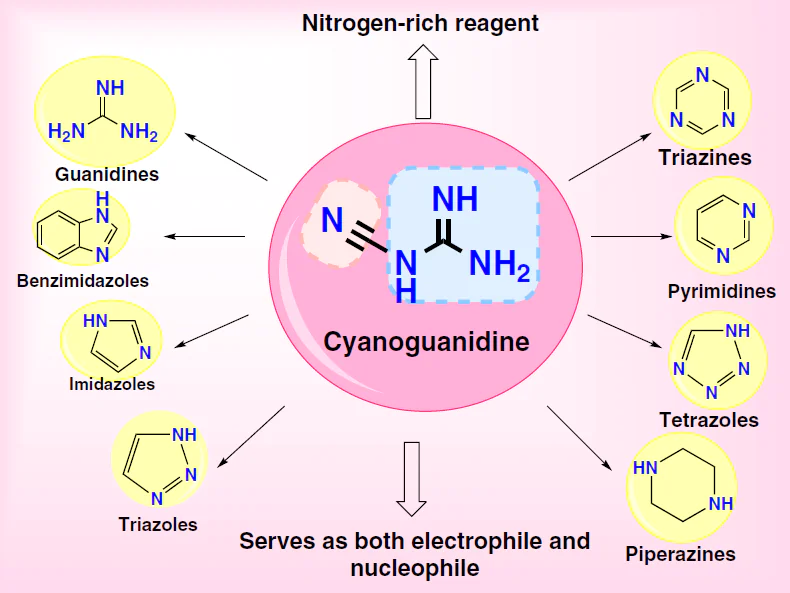
![[{"id":"bxvFL9uAm1","type":"paragraph","data":{"text":" Overview of reactivity of cyanoguanidine"}}]](/storage/images/resized/oqXRKFAdhuMJDJJ7LGqlOGV3v4pUmi4mfmrEEwfW_xl.webp)
Cyanoguanidine enables various transformations, including metal-catalyzed and metal-free reactions, such as condensations, multicomponent assembly, cyclization, and functionalization, which exploit its bifunctional nature to produce diverse compounds (see Fig. 1).[27] Even though cyanoguanidine has great promise as a versatile synthetic building block, to the best of our knowledge, a comprehensive review summarizing its synthetic applications has not yet been reported. Existing reviews are generally focused on broader classes of guanidines, amidines,[28-30] or on specific reactions, such as cyanamide-based cyclization strategies.[31] Therefore, a review outlining the recent synthetic methodologies (2020 – 2025) that have employed cyanoguanidine as a primary building block remains valuable. This article focuses mainly on cyanoguanidine as a building block for the synthesis of small organic molecules. Additionally, it highlights a few applications which these derivatives extend into medicinal, polymer, and materials chemistry.
2. Synthesis based on cyanoguanidine
2.1. Synthesis of five-membered heterocycles
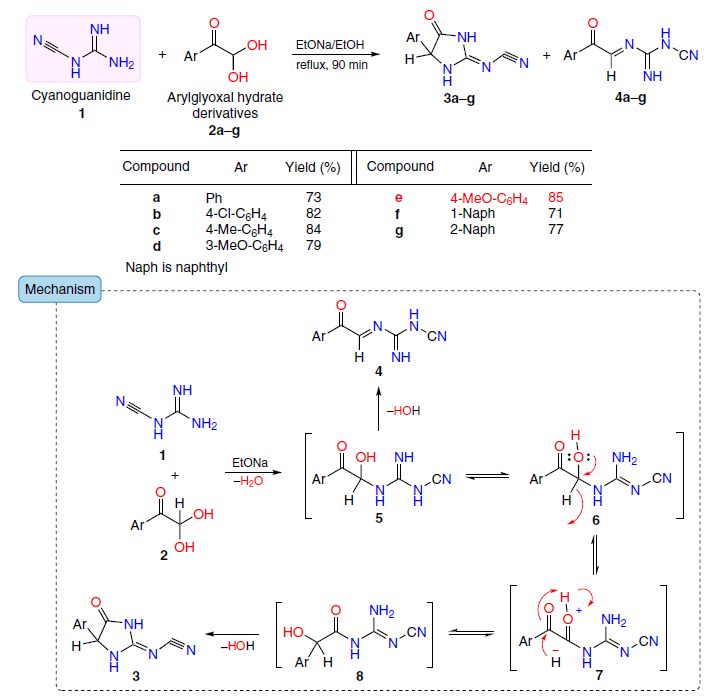
Cyanoguanidine-derived five-membered heterocycles belong to one of the most significant and most structurally variable classes of cyanoguanidine-based frameworks. It can readily form various five-membered heterocycles via condensation, rearrangement, and cycloaddition pathways, thereby providing a simple method for rapidly preparing imidazoles and triazole-type heterocycles. In the past few years, several synthetic strategies, such as benzilic rearrangements, base-mediated condensations, dipolar cycloadditions, and multiple annulation reactions have been developed for the synthesis of five-membered heterocycles using cyanoguanidine. Moustafa and Hussein[32] utilized cyanoguanidine (1) to synthesize a library of oxoimidazolidin-cyanamides (3a – g) (Scheme 2). Arylglyoxal hydrates (2) were reacted with 1 through a benzilic rearrangement pathway. Firstly, 2 underwent dehydration to form a reactive intermediate (7) followed by intramolecular cyclization and hydride elimination to form imidazolidinylidene cyanamides (3a – g). Here, cyanoguanidine is acting as a nucleophile due to base-activated NH2 attacking the electrophilic carbonyl carbon. Initial reactions of (2a – g) and (1) in water with triethylamine (TEA) produced only a 15% yield of the desired product and a by-product. Modifying the stoichiometry of cyanoguanidine and employing different solvents somewhat improved the yield. Optimization studies revealed that sodium ethoxide in EtOH was preferable for the reaction. When optimized under these conditions, compounds (3a – g) were isolated in 71 – 85% yields in 90 min. Using NaOH instead of NaOEt resulted in a significant improvement in yield because strong bases make the amino group of cyanoguanidine more nucleophilic and more reactive towards electrophilic substrates.
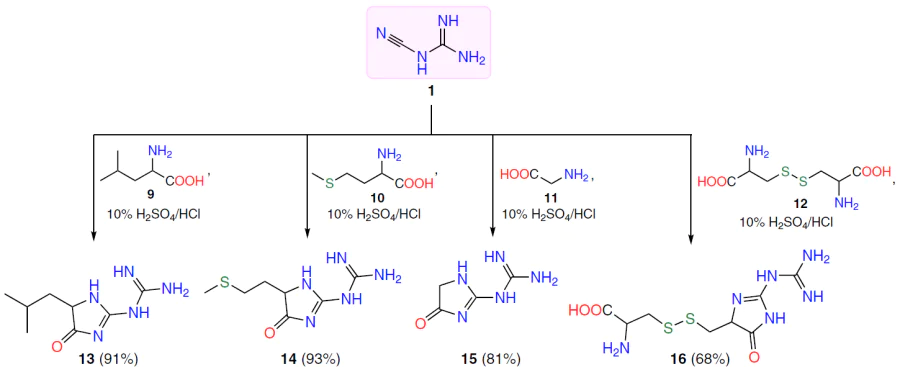
El-Remaily et al.[33] reported the synthesis of a series of guanidine-based analogs 13 – 16 employing cyanoguanidine as a key precursor (Scheme 3).[33] The reaction took place in an acidic medium, where 1 reacted with amino acids such as L-tyrosine (9), L-cysteine (10), glycine (11) and L-methionine (12). In this example, cyanoguanidine is an electrophile and the NH2 group of other substrates acts as a nucleophile.
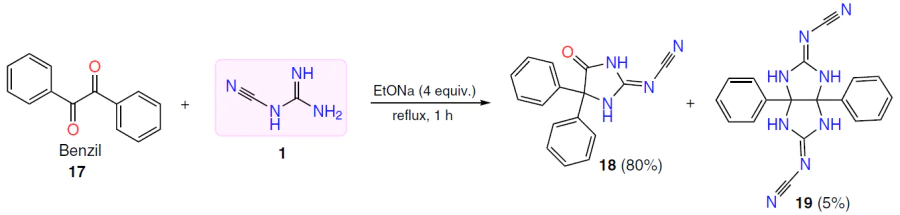
A notable example highlighting how varying reaction conditions can impact product selectivity was reported by Mabied et al.[34] They synthesized 2-cyanoguanidinophenytoin (18) from benzil (17) and 1 (Scheme 4). Under optimized conditions, in the presence of sodium ethoxide under reflux for 1 h, (18) was obtained in 80% yield with only 5% of byproduct (19) being formed. Increasing the base concentration by more than four equivalents or altering the stoichiometry of 1 reduced the efficiency by favoring the side reaction. However, the formation of byproduct (19) reveals that the reaction is quite sensitive to base and stoichiometric conditions. Slight variations in base concentration led to the formation of side products.
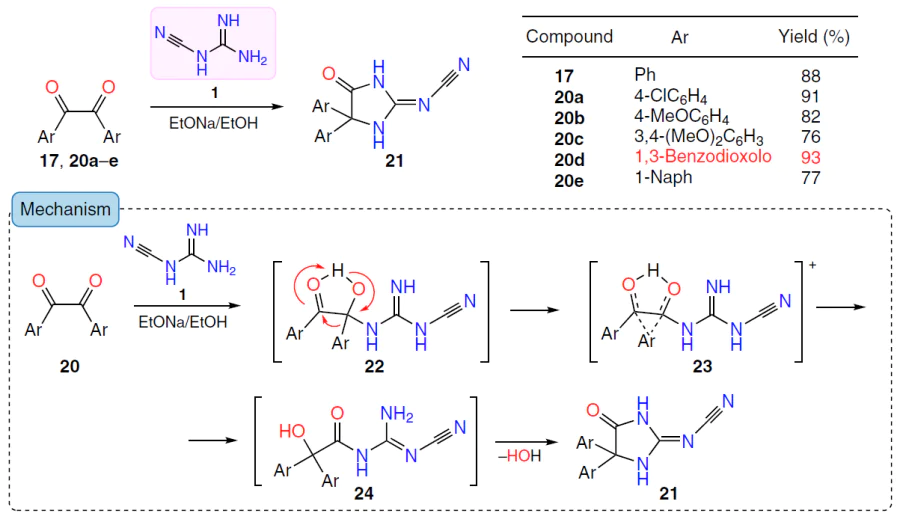
Hussein and Moustafa[35] synthesized [5-oxo-4,4-diarylimidazolidin-2-ylidene]cyanamides (21) from benzil derivatives (Scheme 5). Benzils (17,20a – e) were reacted with 1 under basic conditions to give a second series of the diarylimidazolidincyanamides (21) via a rearrangement, affording products in very high yields (up to 93%). The mechanism involves the base-catalyzed nucleophilic attack of 1 on the activated diketone (20), which gives rise to an intermediate (22) that further undergoes intramolecular cyclization followed by dehydration to form compounds 21.
Cyanoguanidines can also be directly converted to triazoles with excellent yields under mild conditions in a single synthetic step. One example was demonstrated by Wang et al.[36] The authors described the synthesis of bis-triazole following a condensation and nitration (Scheme 6, reaction a). The neutral ligand 3,3',3''-triamino-1,1'-bi(1,2,4-triazole) (26) was obtained in 56% yield by heating 3-hydrazinium-4-amino-1H-1,2,4-triazolium dichloride (25) with compound 1. The protonated ligand (27) was prepared by reacting (26) with either nitric or perchloric acid producing the nitrate and perchlorate salts in 95% yield. Further derivatization of 26 was achieved by nitration to give the dinitroamine-type derivative (28) in 71.5% yield. Further, salt exchange delivered (29) in 95% yield. This example shows the importance of 1 in the synthesis of high nitrogen-containing energetic molecules.
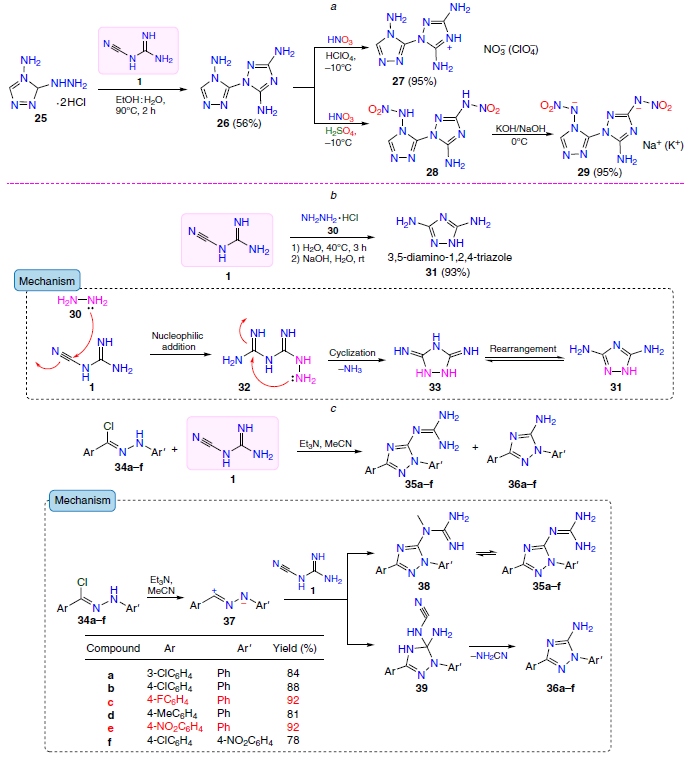
Fu et al.[37] synthesized 3,5-diamino-1,2,4-triazole (31) from 1 and hydrazine dihydrochloride by heating the reactants in the presence of deionized water at 38 – 40°C for 180 min to afford (31) as a white crystalline solid in 93% yield (see Scheme 6, reaction b). Later, Yavari et al.[38] developed a simple synthetic approach to 3-amino-1,2,4-triazoles (see Scheme 6, reaction c).[38] They used a regioselective [3 + 2] dipolar cycloaddition to obtain N,N-dimethyl-1,3-diphenyl-1H-1,2,4-triazol-5-amine (36a – f) by reacting N-phenylbenzohydrazonoyl chloride (34a – f) with 1 and triethylamine in MeCN at room temperature. They evaluated several possibilities and found MeCN and TEA to be preferred solvent and base, respectively. Under these optimum conditions, they obtained triazoles in 78 – 92% yield, whereas slight variations in electron-donating and electron-withdrawing groups indicate that substituent electronic effects play only a minor role in determining the reaction efficiency. Cyanoguanidine 1 reacts as an electrophile, in which the cyano carbon is subjected to attack by the nucleophilic nitrogens of hydrazine salts (see Scheme 6, reactions a, b), while, on the other hand, Scheme 6, reaction c represents the nucleophilic behavior of 1.
The formation of five-membered N-heterocycles by cyanoguanidine has been shown to occur primarily via nucleophilic addition and subsequent cyclization, demonstrating that, in most cases, the first bond-forming reaction involves one of the guanidino nitrogen atoms. The above-discussed examples in this section suggest that compound 1 consistently gives moderate to high yields with different substrates under optimal reaction conditions. However, most procedures require either a high concentration of alkali or elevated temperatures, hence, there is potential for developing methods which will use mild basic condition, and can be performed at room temperature. The formation of triazole and imidazole cores suggests that 1 exhibits consistent reactivity toward activated electrophilic and nucleophilic systems such as 2a – g, 17, 20a – e, 25 and 34a – g. However, competing nucleophilic sites within the molecule can lead to regioselectivity issues, which remain underexplored.
2.2. Synthesis of six-membered heterocycles
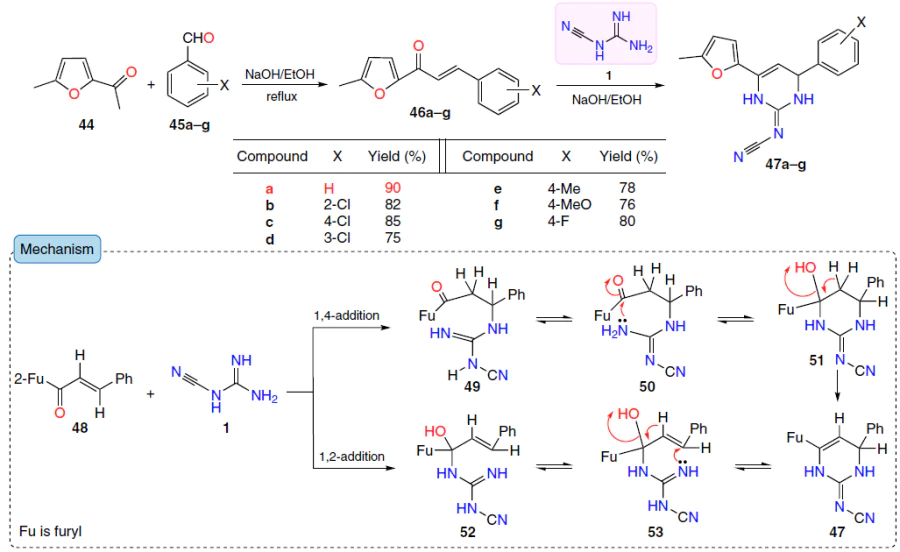
Various examples of the synthesis of pyrimidine-based derivatives of cyanoguanidine (1) to form have been reported. For example, Badran et al.[39] reported a condensation reaction between 3-formylchromone (40) and 4-hydroxycoumarin (41) to give coumarin-chalcone intermediate (42) (Scheme 7). This chalcone intermediate underwent a nucleophilic addition with cyanoguanidine 1 under reflux in DMF, yielding pyrimidine derivatives (43). The addition of amidinyl functionalities from 1 to the scaffold boosted hydrogen bonding interactions of the final compound (43), leading to improved binding affinity and stabilization of the protein – ligand complex. The utility of 1 as a nucleophile for converting a bulky chalcone intermediate to a pyrimidine compound highlights its versatility as a building block for complex heterocycles from multi-ring systems. In the same year, Vignesh and Ingarsal[40] described an easy and low-cost two-step procedure for the synthesis of furyl derivatives of 2-cyanoimino dihydropyrimidines (47a – g) (Scheme 8). The first step was the Claisen – Schmidt condensation of 2-acetyl-5-methylfuran (44) with the appropriate substituted benzaldehydes (45a – g) in ethanol and aq. NaOH, which gave the chalcone intermediate (46). These intermediates underwent cyclization with 1, wherein the nucleophilic amino groups participated in Michael (1,4-) or direct (1,2-) addition pathways followed by intramolecular cyclization and dehydration. This furnished substituted dihydropyrimidines, (47a – g) in 75 – 90% yields. The best yield was achieved using unsubstituted substrate (R = H), and other substituted derivatives gave slightly lower yields.

Another example using 1 as a precursor for a pyrimidine-based framework was reported by Farouk et al.[41] Dipyrimidinylamine (55) was formed by reacting chloroacrolein intermediate (54) with 1, which serves as 1,3-N,N-binucleophile (Scheme 9, reaction a). Compound (54) underwent nucleophilic substitution by 1, as it is an electrophilic substrate, to generate the corresponding dipyrimidinylamine derivative (55).
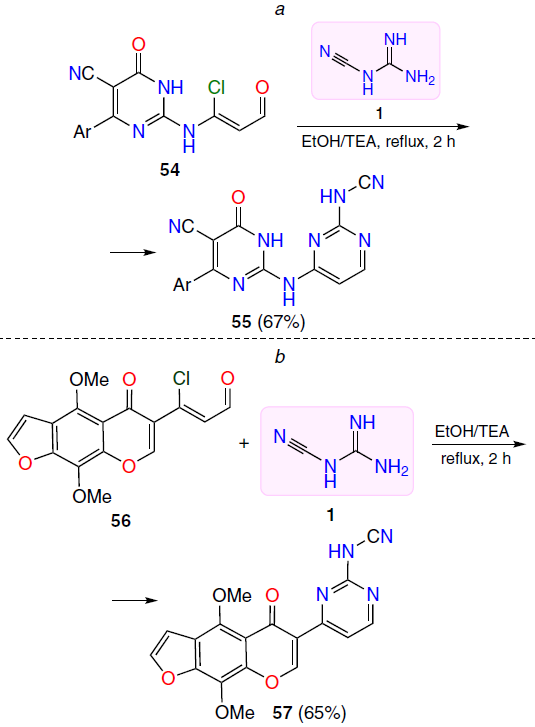
Another similar synthetic protocol has also been developed for the synthesis of pyrimidinyl-furo[3,2-g]chromene derivative (57) from the highly reactive chloroacrolein intermediate (56) (see Scheme 9, reaction b).[42] In this transformation, chloroacrolein 56 was treated with 1 in absolute ethanol containing a catalytic amount of triethylamine and refluxed for 2 h, affording the corresponding pyrimidinyl chromene (57) in 65% yield.
Hamid and Attia[43] prepared a number of pyrimidine derivatives (59a – h), starting from chalcones (58a – h) (Scheme 10, reaction a). The first step involved the preparation of chalcone derivatives, which were subsequently reacted with 1 in ethanol under basic conditions. This base-mediated condensation is reported to promote cyclization, thereby leading to the formation of the pyrimidine nucleus. The same year, Sivagami et al.[44] reported a one-pot multicomponent reaction to synthesize dihydropyrimidines (62a – g) (see Scheme 10, reaction b). It involved a condensation between substituted acetophenones (61a – g), compound 1 and 6-methoxy-2-naphthaldehyde (60) in ethanol using aq. NaOH as a base.[40] The aforementioned protocols confirm that basic conditions in ethanol are a reliable standard for promoting the condensation of 1 with unsaturated carbonyls for the synthesis of the pyrimidine nucleus.
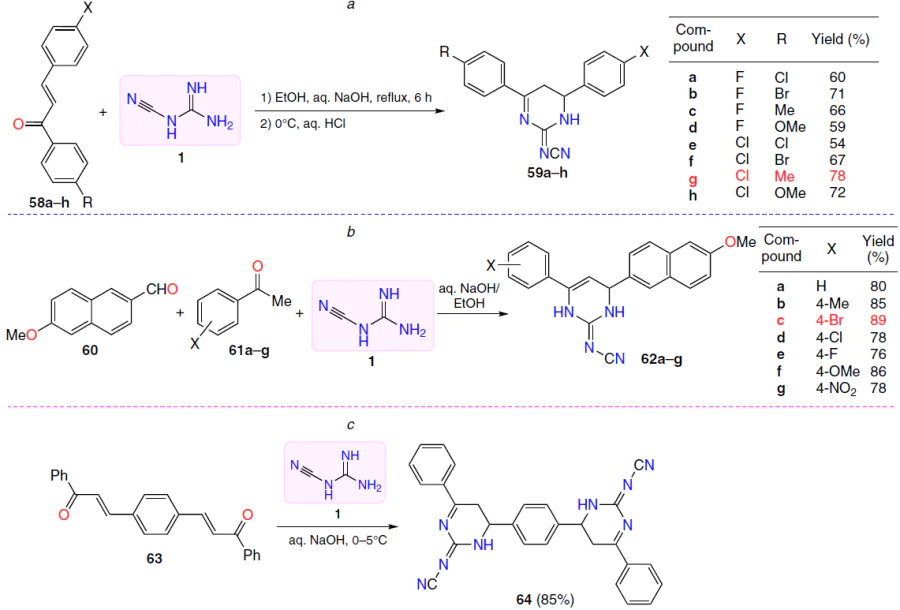
Farhan et al.[45] synthesized a bis-heterocyclic compound, phenylene-bridged bis(pyrimidine) dicyanamide (64), through a condensation – cyclization reaction involving bis-chalcone (63) and 1 under basic ethanolic conditions (see Scheme 10, reaction c).
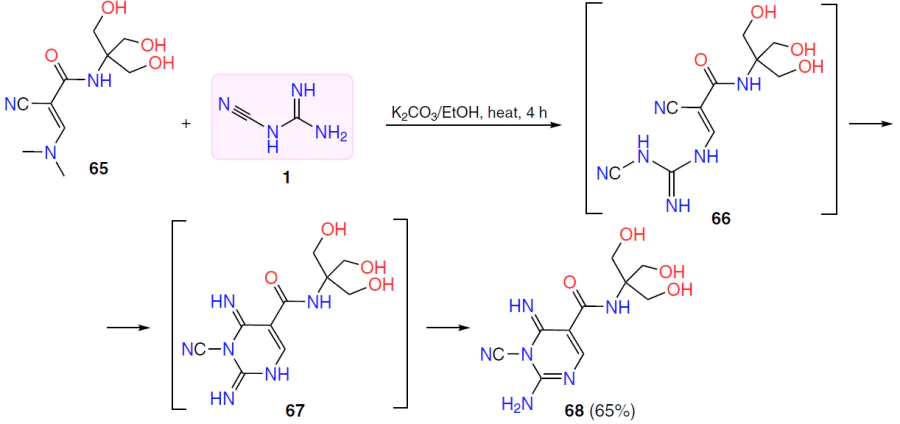
Metwally and Saad[46] demonstrated the pivotal role of compound 1 as a cyclizing nitrogen-rich reagent in the synthesis of pyrimidine derivative (68) (Scheme 11). Treatment of (65) with 1 in boiling ethanol gave pyrimidine-5-carboxamide (68).
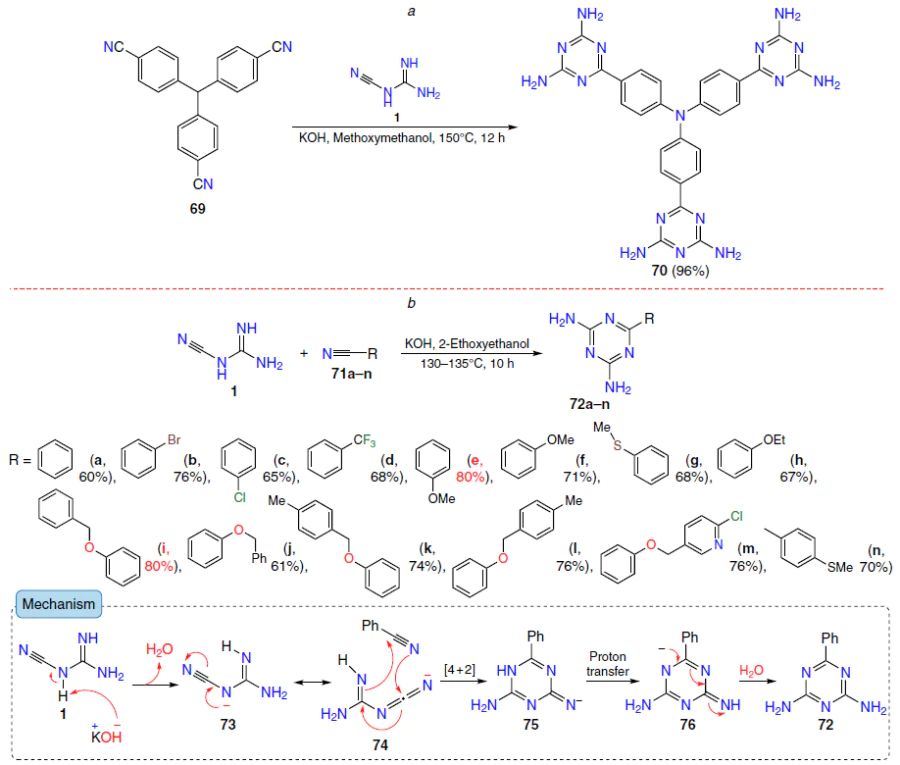
Apart from pyrimidines, a nitrogen-rich hexamine monomer has also been synthesized using cyanoguanidine (1). In particular, Liu et al.[47] reported a two-step procedure using (1) and 4,4',4''-tricyanotriphenylamine (69) to synthesize a highly nitrogen-rich hexamine monomer (70) in 96% yield (Scheme 12, reaction a). The same year, another research group[48] reported a one-step route to 6-substituted 2,4-diamino-1,3,5-triazines (72a – n) in 60 – 80% yield by reacting various aromatic nitriles (71a – n) with (1) in the presence of aq. KOH (see Scheme 12, reaction b).[4] The plausible mechanism includes deprotonation of cyanoguanidine by KOH to generate resonant diene-like species (73) that undergoes a [4 + 2] cycloaddition with nitrile to form triazinylidene intermediate (75), which gives (76) via proton transfers. Once the cyclization process is complete, intermediate (76) undergoes re-aromatization to yield 1,3,5-triazine core (72).
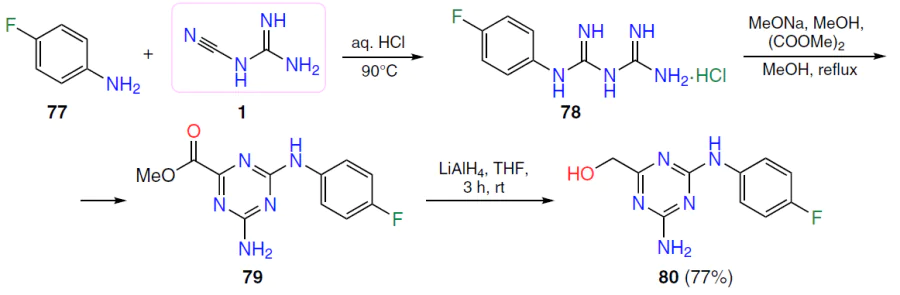
Padilla-Salinas et al.[49] synthesized an alcohol (80) as a hcGAS inhibitor by a two-step procedure starting from 1 as a primary reagent (Scheme 13).[49] In the first step, 1 undergoes acid-mediated condensation with 4-fluoroaniline (77) to form the aryl-biguanide hydrochloride salt (78). Further, this intermediate underwent one-pot cyclocondensation when heated with dimethyl oxalate in dry methanol at 35°C followed by refluxing overnight to afford intermediate (79), which was then selectively reduced with LiAlH4 to give a primary alcohol (80).
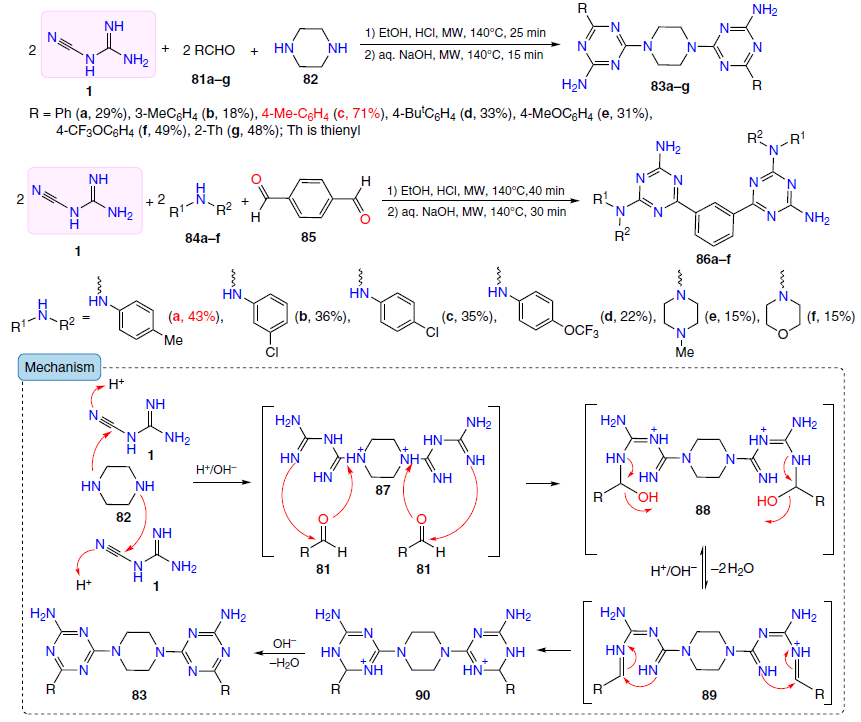
Shahari et al.[50] developed a one-pot multicomponent procedure to synthesize bis(diamino-1,3,5-triazines) (83a – g) by reacting cyanoguanidine 1, aldehydes (81a – g) or amines (84a – f) under microwave irradiation (MW) (Scheme 14). Two types of products were formed, where the first were symmetrical piperazine-based bis-triazines (83a – g) and the second were p-phenylene-based bis-triazines (86a – f). In the latter case, terephthaldehyde (85) was used as a bifunctional aldehyde, enabling the construction of triazines with a central phenylene linker (86a – f). Various amines, both aromatic and aliphatic, provided structural diversity. The proposed mechanism involves the formation of bis(biguanides) (87) from 1 followed by condensation with aldehydes/amines. Further MW-promoted cyclization in the presence of a base provided bis(dihydrotriazines) (83a – g). Ethanol was found to be superior to other solvents (PrOH, MeCN, DMSO, ethoxyethanol, ethylene glycol), providing the highest yield (71%). The reaction was found to be optimal at 140°C; lower temperatures reduced yield, while higher temperatures led to decomposition. The identification of bis(biguanide) (87) as an intermediate provides a plausible rationale for the progress of the reaction, utilizing 1 as a building block, which forms a linear nitrogen-rich chain. This cyclizes to yield (83a – g). It was found that the product bearing a methyl group at the para-position showed the best yield among all synthesized compounds, indicating that an electron-donating group is favorable for the reaction.
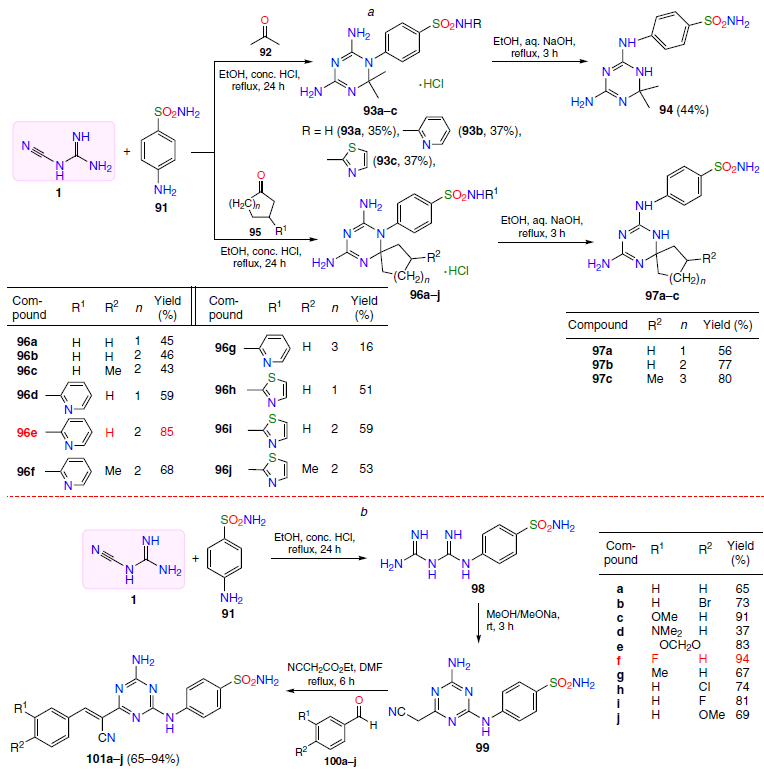
Zain-Alabdeen et al.[51] reported the synthesis of two series of benzenesulfonamide derivatives incorporating s-triazine linkers. For the first series of compounds, the synthesis involved one-pot condensation of sulfanilamide (91), 1, and acetone (92) or cyclic ketones (95) under acidic conditions in boiling ethanol for 24 h (Scheme 15, reaction a). By this method, dihydrotriazines (93a – c) were isolated and characterized. Although the one-pot condensation protocol is straightforward, the 24 h reflux period suggests that the formation of the dihydrotriazines 93a – c is slow. Selected analogs underwent Dimroth rearrangement under alkaline conditions to yield isomeric triazines, (94) and (97a – c), with altered orientation of the sulfonamide group. For the synthesis of aromatic 1,3,5-triazines (101a – j), the initial formation of biguanide (98) was accomplished by nucleophilic addition of sulfanilamide 91 to 1 under acidic conditions followed by cyclocondensation with ethyl cyanoacetate to afford cyano-substituted triazine intermediate (99) (see Scheme 15, reaction b). Subsequent aldol condensation of triazine intermediate with various benzaldehydes (100a – j) in the presence of triethylamine gave the final 1,3,5-triazine compounds (101a – j) bearing a cyanoethenyl spacer and substituted phenyl groups.
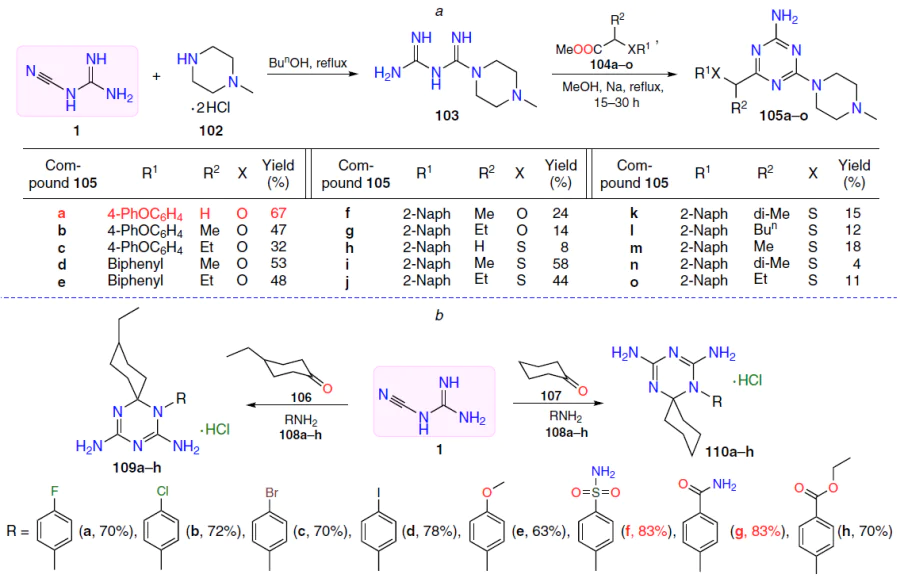
Kucwaj-Brysz et al.[52] synthesized triazine-based compounds by treating 4-methylpiperazine (102) with 1 under controlled basic conditions to yield 4-methylpiperazin-1-yl biguanide (103) (Scheme 16, reaction a). The cyclocondensation of the biguanide intermediate (103) with activated esters (104a – o) in methanol under reflux conditions for 15 – 30 h resulted in the regioselective formation of 1,3,5-triazine with 4-(4-methylpiperazin-1-yl) substituents (105a – o). Gungor and Kose[53] obtained a new series of cyclic biguanidine derivatives (Scheme 16, reaction b).[53] The reaction was performed using cyanoguanidine (1), equimolar amounts of para-substituted anilines (108a – h) and cyclohexanone (107) or 4-ethylcyclohexanone (106). This reaction occurred in boiling ethanol in the presence of aqueous HCl to give products (109a – h, 110a – h) in 55 – 90% yield.
Hussein and Moustafa[54] synthesized spiro-barbiturate derivatives (112a – l) by reacting arylidene barbituric acids (111a – l) with 1 in dry pyridine for 2 – 3 h in 77% and 92% yields (Scheme 17, reaction a).[54] The mechanistic pathway was rationalized via an initial Michael addition of the amino group of 1 to the activated olefinic bond of arylidene barbituric acid (111a – l) generating a keto-enol intermediate (113a – l). Further, it involved the cyclization of the nitrile carbon, resulting in the observed regiospecific spiro-barbiturates. Two cyclization routes were proposed, first an intramolecular nucleophilic addition at the carbonyl carbon, leading to pyrimido[4,5-d]pyrimidines (116a – l), second, cyclization at the nitrile carbon, producing the observed regiospecific spiro-barbiturates 112a – l. Spectroscopic analyses confirmed that route B predominated, yielding the spirocyclic framework.
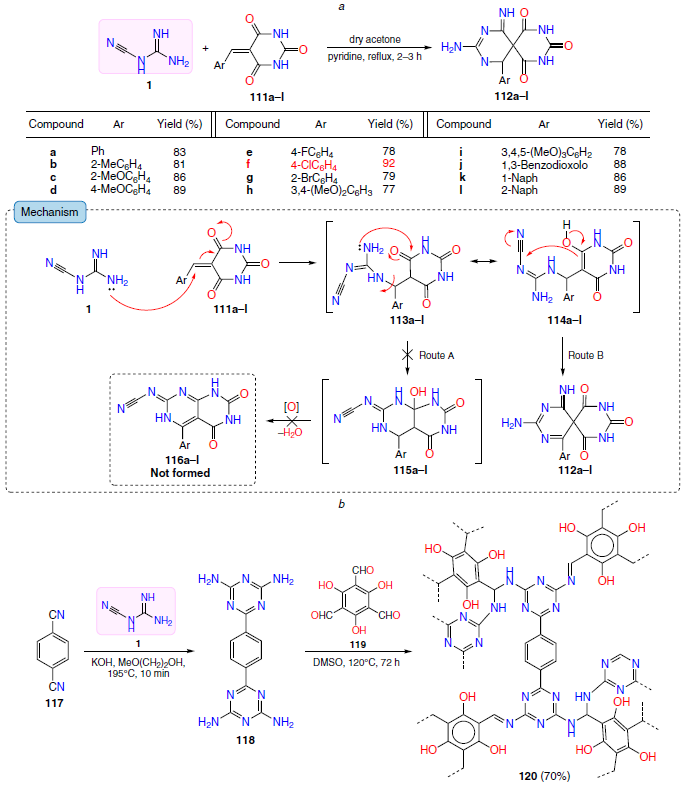
Extending the scope of cyanoguanidine-based framework in the formation of polymers, a nitrogen-rich polyphenolic porous organic polymer (120) was synthesized (Scheme 17, reaction b).[55] They started by reacting (117) and 1 in 2-methoxymethanol and a base, which gave bis(triazine)-substituted benzene (118). Then, polycondensation of (118) with triformylphloroglucinol (119) produced the desired compound (120). The reaction was carried out under solvothermal conditions in dimethyl sulfoxide, providing a highly crosslinked framework which exhibited extensive secondary amine and imine linkages and showed exceptional stability when exposed to acidic, basic, and aqueous environments.
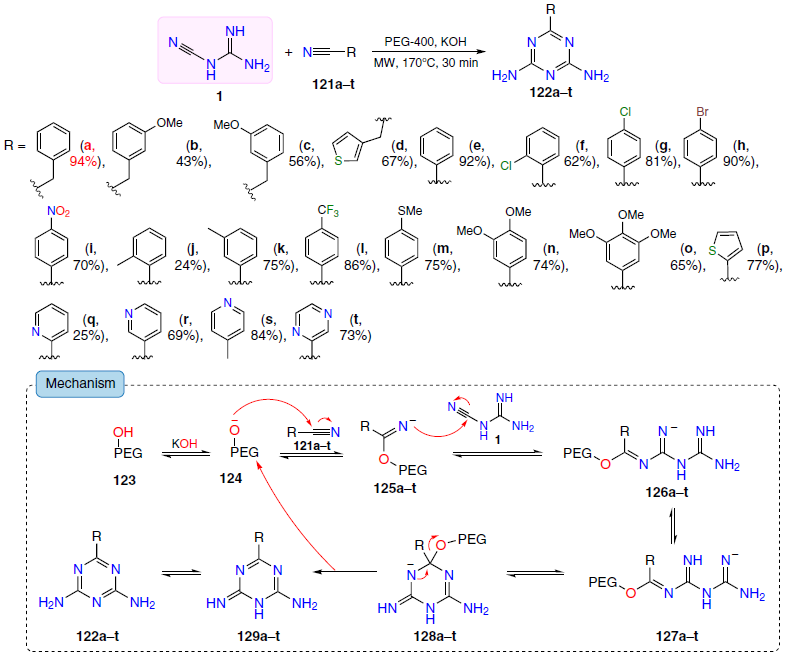
Lim and Dolzhenko[56] used a green solvent, PEG-400, to carry out the MW-assisted synthesis of guanamines (1,3,5-triazine-2,4-diamines) (122a – t) (Scheme 18). They performed the condensation of 1 with nitriles (121a – t) using aq. KOH as base. Among the solvents tested, PEG 400 and 2-ethoxyethanol gave yields of 90 – 95%, while other solvents (DMSO, ethylene glycol, glycerol) were less effective. As per our analysis, PEG 400 serves as both a solvent and reactive participant. In the presence of aq. KOH, the deprotonated PEG (124) attacks the nitrile (121a – t) to give an activated intermediate (125), which condenses with 1 and leads to coupling tautomerization with intramolecular cyclization to generate the triazine ring (128). Removal of the PEG and final tautomerization gives the stable guanamine product 122a – t. The combination of microwave irradiation and the high-boiling solvent PEG-400 probably generates heat required to accelerate the tautomerization and intramolecular cyclization reaction significantly more than with conventional heating.
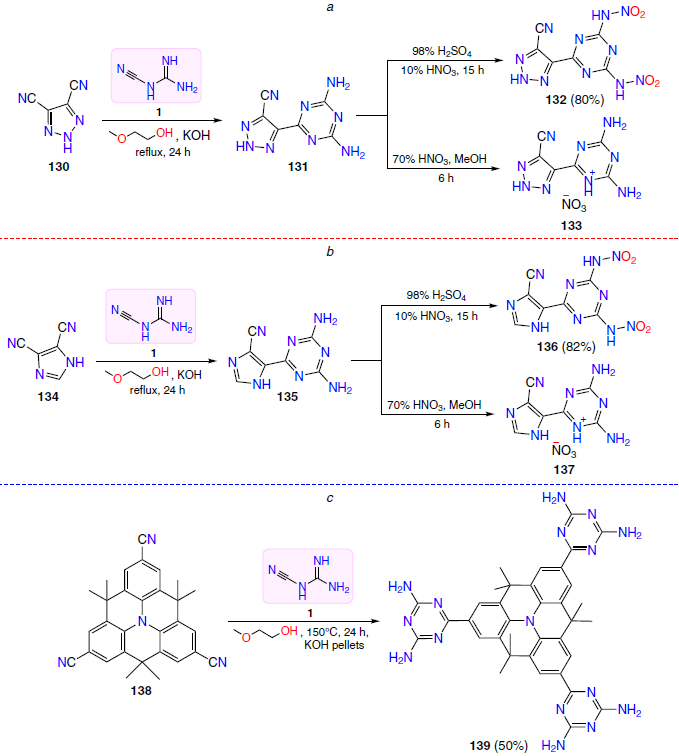
Yadav et al.[57] produced triazinyl-triazole derivative (131) through cyclocondensation of 2H-1,2,3-triazole-4,5-dicarbonitrile (130) and 1 in boiling 2-methoxyethanol, in the presence of base (Scheme 19, reaction a).[57] The product was isolated in 80% yield in the form of yellow crystalline solid. Further, the authors extended the same cyanoguanidine-based approach to imidazole systems to prepare triazinyl-imidazole derivative (135) (see Scheme 19, reaction b). 1H-Imidazole-4,5-dicarbonitrile (134) was utilized as a substrate, which was reacted with 1 in 2-methoxyethanol using reflux conditions to afford compound (135) in 82% yield. Borstelmann et al.[58] synthesized a diaminotriazinyl-substituted N-heterotriangulene (139) using compound1 as a triazine precursor (see Scheme 19, reaction c).[58] The synthetic pathway consisted of condensation reaction between tricyano-substituted N-heterotriangulene (138) and (1) under basic conditions. The product (139) was obtained in 50% yield as a thermally stable yellow crystalline material.
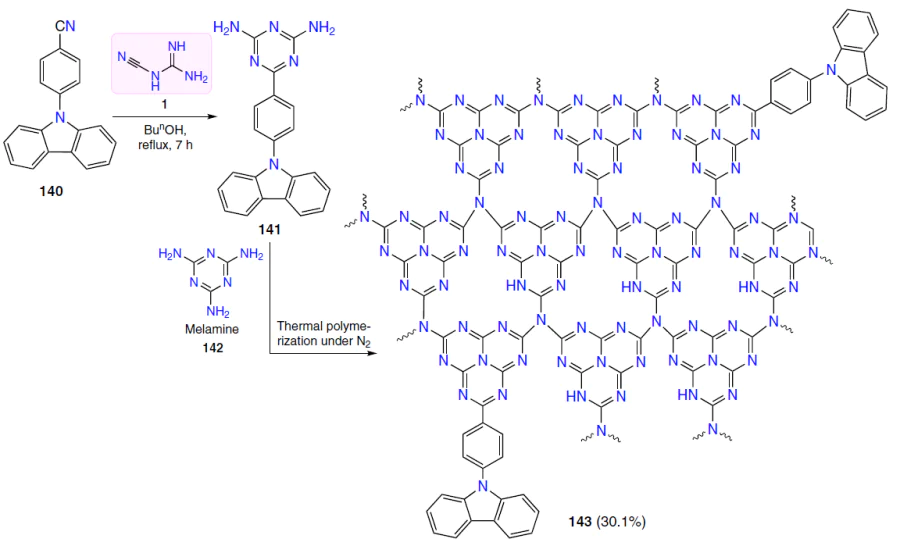
Cyanoguanidine (1) was used to prepare carbazole-functionalized triazine (141), which was further polymerized to graphitic carbon nitride (143) bearing a 9-phenylcarbazole moiety via a three-step synthetic procedure (Scheme 20).[59] The synthesis began with 4-(9H-carbazol-9-yl)benzonitrile (140), which was treated with 1 and aq. KOH in n-butanol to produce carbazole functionalized triazine (141), which was isolated as a white solid (80.3% yield). Finally, melamines (142) and (141) were thermally reacted at various molar ratios (20 : 1 – 40 : 1) at 350 – 550°C, for 1 – 3 h under nitrogen, producing (143) as a yellow powder.
Apparently, during the formation of triazine derivatives, cyanoguanidine displays dual reactivity. It acts as a nucleophile during base-catalyzed cycloaddition reactions with nitriles (see Scheme 12, Scheme 17, Scheme 18, Scheme 19, reaction c, Scheme 20) whereas it acts as an electrophile in biguanides formation wherein nucleophilic amines attack the cyano carbon of cyanoguanidine (see Scheme 13, Scheme 14, Scheme 15, Scheme 16 and Scheme 19, reactions a, b).
2.3. Synthesis of fused heterocycles
Cyanoguanidine 1 was found to be is an excellent precursor for the assembly of fused heterocyclic compounds via rearrangement processes and can provide novel heterocycle-based nitrogen-rich scaffolds. In this context, Tamoradi et al.[60] reported the use of La/THH-CO2H@Fe3O4 (THH-CO2H is tetrahydroharman-3-carboxylic acid) nanocatalyst in a four-component multicomponent reaction (MCR) between 1, sodium azide (144), aldehydes (145) and β-ketoesters (146) to provide fused pyrimidotetrazoles (147a – j) in 90 – 92% yields (Scheme 21, reaction a). The reaction commenced with cyanoguanidine 1 and sodium azide (144) in PEG-600 at 120°C and smoothly progressed to form the 5-aminotetrazole intermediate. The aromatic aldehydes and β-ketoesters were added in situ to facilitate cyclocondensation of the intermediate. The yields of the reaction products varied slightly (90 – 92%), suggesting that substrates with both electron-withdrawing and donating groups were compatible with the reaction conditions. The optimization studies confirmed that PEG-600 was indeed the optimal solvent as it provided higher yield than water, ethanol, DMF, or acetonitrile.
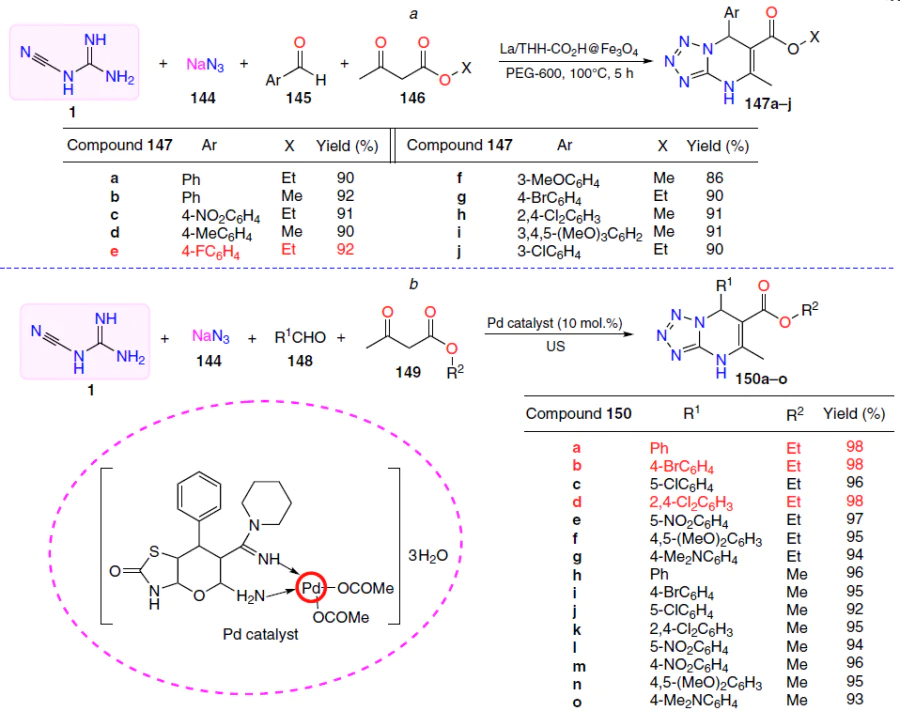
El-Remaily et al.[61] followed a similar MCR approach to synthesize fused tetrazolo-pyrimidines derivatives (150a – o). A recoverable Pd(II) – thiazole complex was used as a catalyst. The reaction proceeded under ultrasonic (US) irradiation in aqueous media (see Scheme 21, reaction b).[61] Ultrasonic irradiation was beneficial to the process since it substantially speed up the reaction via cavitation-induced microenvironments and resulted in reaction times as low as 10 min. It was observed that electron-withdrawing substituents provided higher yields.
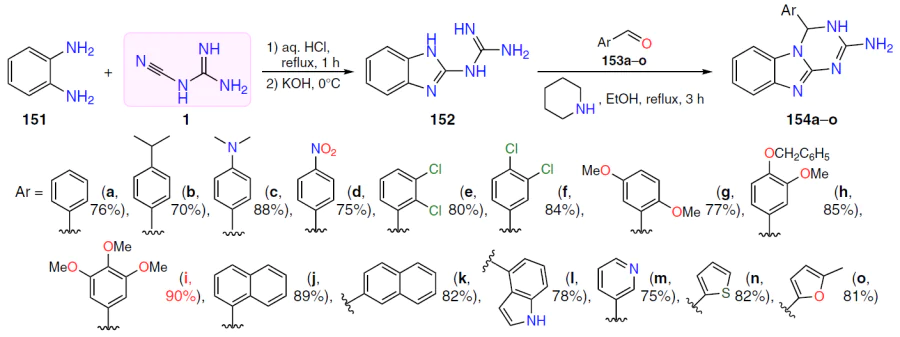
Cyanoguanidine was also employed for the synthesis of fused imidazole-triazines. Al-Karmalawy et al.[62] obtained fused imidazotriazine derivatives (154a – o) via a two-step reaction sequence using compound 1 as a versatile precursor (Scheme 22). In the first step, 2-guanidinobenzimidazole (152) was synthesized by refluxing o-phenylene diamine (151) and 1 in acidic conditions to give the intermediate (152) in 70% yield. In the second step, compound (152) was reacted with substituted aromatic aldehydes (153a – o) to afford the desired 2-amino-4-aryl-3,4-dihydro-[1,3,5]triazino[1,2-a]benzimidazole derivatives (154a – o) in yields ranging from 75 – 90%. Substrates containing both types of functional groups were tolerated, with electron-withdrawing groups giving slightly higher yields than electron-donating groups.
Moustafa and Hussein[63] synthesized a series of substituted cyanoimino-quinazoline derivatives (158a – k) by using 1 as a key reactant (Scheme 23, reaction a). This involved two different strategies, a one-pot four-component reaction in the presence of NaOEt and a two-component method. In the first case, 1, cyclohexanone (155) and 2 moles of aromatic aldehydes (156) were reacted, yielding (158a – k). In the second method, a pre-formed 2,6-diarylidene-cyclohexanones (157) were condensed with (1) under the same conditions. Both methods afforded the desired products in good yields, although the two-component approach proved more efficient, delivering higher yields (67 – 85%) compared to the four-component route (59 – 78%).
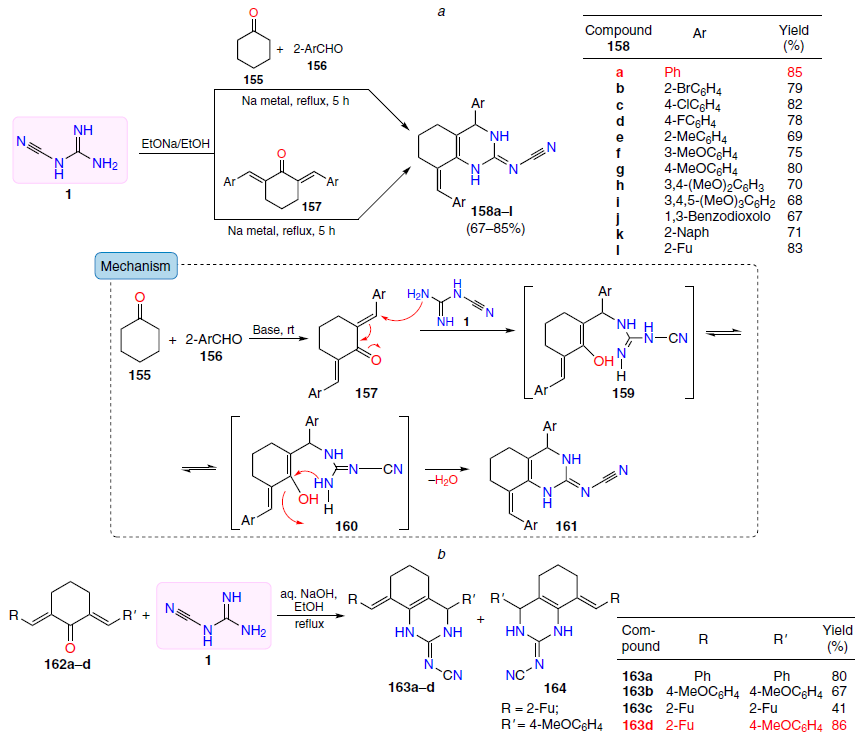
As for the reaction mechanism, the reaction proceeds via the Knoevenagel condensation of cyclohexanone (155) with aldehydes (156a – k) to give the enone intermediate (157) followed by a nucleophilic Michael addition of (1), intramolecular cyclization, and then elimination of water to give the quinazoline derivatives (158a – k). Optimization studies revealed that the addition of sodium ethoxide to the reaction mixture is crucial for increasing the nucleophilicity of cyanoguanidine. The same year, a base-catalyzed condensation reaction was performed to synthesize hexahydroquinazolinylidene cyanamides (163a – d) (see Scheme 23, reaction b).[64] Diarylmethylidene cyclohexanones derivatives (162a – d) were heated with 1 in ethanolic solution for 3 – 4 h under basic conditions to give the target compounds (163a – d) in 67 – 86% yields.
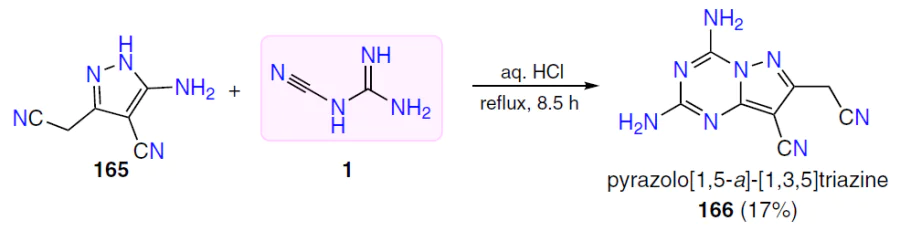
Semenova et al.[65] studied the reactivity of 5-amino-3-(cyanomethyl)-1H-pyrazole-4-carbonitrile (165) toward compound 1 as part of heterocyclization strategies (Scheme 24).[65] The substrate cyclizes with (1) in aqueous acidic medium to afford pyrazolo-triazine derivatives (166) in 17% yield. The pyrazole substrate (166) contains several nitrogen atoms. Competing polymerization and other side reactions are likely to occur in the strong acidic media. In our opinion, protection – deprotection strategies and less acidic Lewis acid catalysts are necessary to achieve regioselectivity.
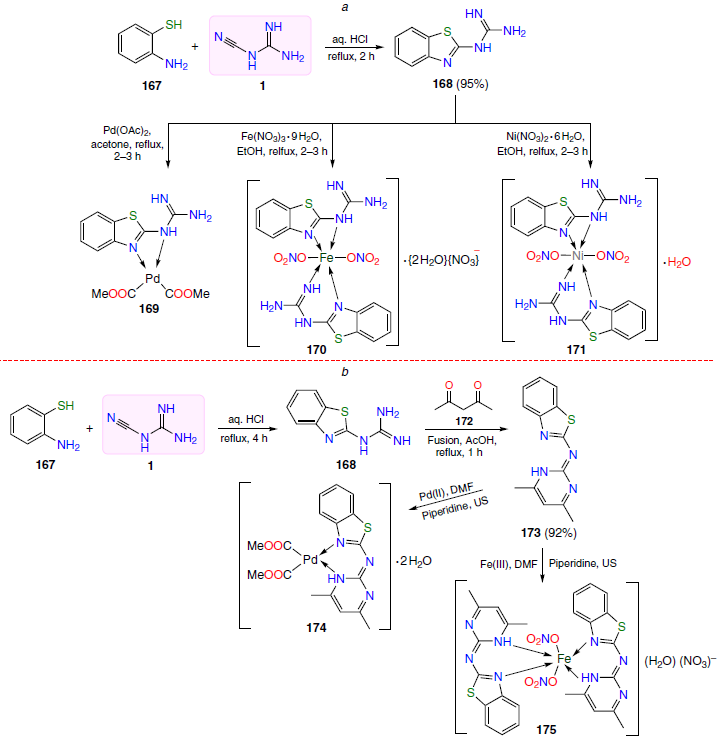
Abu-Dief et al.[66] carried out the synthesis of N-benzothiazol-2-yl-guanidine (168) along with its Pd(II), Fe(III) and Ni(II) complexes 169 – 171 utilizing a simple solution-phase method (Scheme 25, reaction a). A mixture of o-aminothiophenol (167) and (1) was refluxed in aqueous HCl for 4 h to give the ligand, followed by neutralization with aq. NaOH and recrystallization from chloroform to obtain pure 168 in 95% yield. The metal complexes were then obtained using 168 and the appropriate metal salts in alcoholic media. Specifically, 168 was dissolved in warm ethanol and reacted with Pd(OAc)2, Fe(NO3)3 · 9 H2O or Ni(NO3)2 · 6 H2O for 2 – 3 h under reflux conditions in acetone to get the corresponding metal complexes in 80 – 90% yields. El-Remaily et al.[67] used a reaction between 1 and o-aminothiophenol (167) in an aqueous acidic medium to carry out a straightforward condensation of N-benzothiazol-2-yl-guanidine (168) (see Scheme 25, reaction b). The intermediate product (168) was then condensed with acetylacetone (172) in the presence of glacial acetic acid to give benzothiazol-pyrimidin-2-ylidene ligand (173) in 92% yield. Here, cyanoguanidine acts as an electrophile, where the cyano group at the carbon atom is attacked by the nucleophilic thiofunctionality, followed by cyclization. The ligand was coordinated to Pd(OAc)2 and Fe(NO3)3 · 9 H2O in DMF under ultrasonication using piperidine as the base to provide complexes (174) and (175) within 4 h.
Thabet et al.[68] developed a class of fused thiazolotriazine compounds via a three-component, one-pot cyclocondensation of 1, thioglycolic acid (176), and aromatic aldehydes (177) to yield the desired compounds (178a – c) (Scheme 26).

El-Saghier et al.[69] synthesized a series of triazolotriazine derivatives (181a – j) by a straightforward one-pot three-component process (Scheme 27, reaction a).[69] The reaction involved the condensation of 1 and thiocarbohydrazide (179) with various cyclic or acyclic ketones (180a – j). The mixture was refluxed in ethanol with several drops of concentrated HCl at 60 – 80°C for 2 – 5 h to form a crystalline precipitate of (181a – j). The yields were consistently high (90 – 96%). Reaction mechanism includes the nucleophilic attack by amino group on the cyano group of (1) to form biguanide intermediate 182, which undergoed intramolecular nucleophilic addition to generate another intermediate (183) by eliminating H2S. The NH groups are then attacked the carbonyl carbons of the ketones (180a – j) to spirocyclize while also eliminating water to afford the spirocyclic intermediate (184). Finally, proton transfer occurs to form the final triazolotriazine scaffold (181a – j).
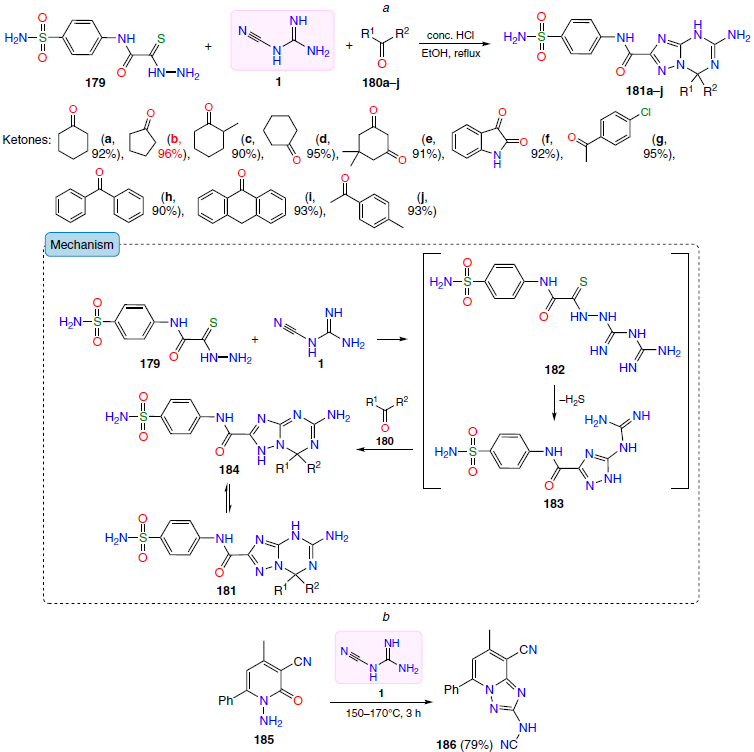
The same year, Hassan et al.[70] reported the synthesis of triazolopyridinyl cyanamides (186) by reacting 1-amino-4-methyl-2-oxo-6-phenyl-1,2-dihydropyridine-3-carbonitrile (185) with 1 under solvent-free fusion conditions (see Scheme 27, reaction b). The reaction was performed neat to furnish the yellow crystalline product in 79% yield.
The dual-nucleophile nature of compound 1 has been effectively exploited to assemble structurally rigid fused nitrogen heterocycles via both stepwise and annulation approaches. In one approach, a series of metformin-anchored 5,6-dihydrobenzo[h]quinazoline derivatives (190a – g) were synthesized (Scheme 28, reaction a).[71] Firstly, aniline (187) was reacted with 1 in boiling 1-propanol under acidic conditions to form 1-phenylbiguanidine hydrochloride (188) in 65 – 85% yield. Further, the latter compound is cyclized with chalcones (189a – g) using sodium methoxide as the catalyst to produce quinazoline derivatives (190a – g) in 75 – 90% yield.
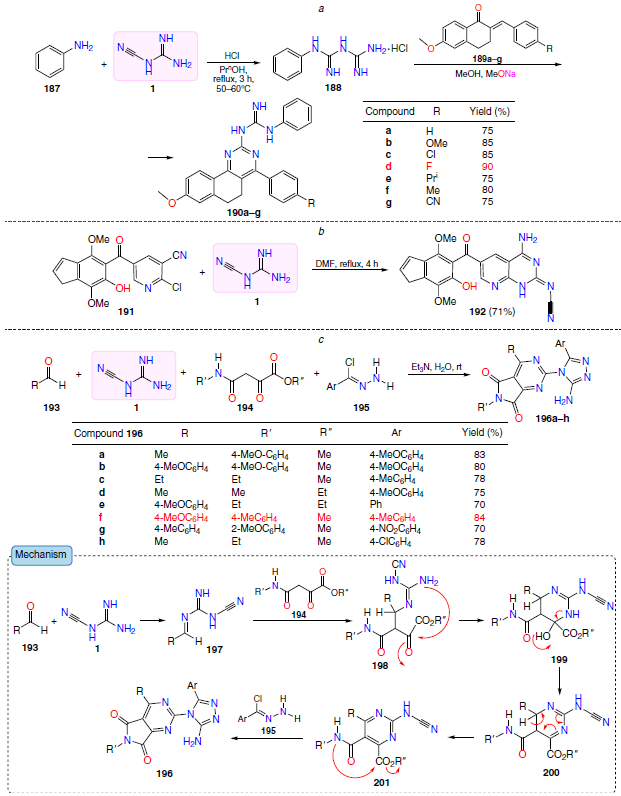
In addition to the stepwise approach, compound 1 has been used as a direct annulating reagent to assemble fused pyrimidine structures. For example, Alshaye and Ibrahim[72] carried out the annulation of chlorocarbonitrile precursor into a fused pyrimidine system using 1 as a binucleophilic reagent (see Scheme 28, reaction b).[72] Chlorocarbonitrile precursor (191) was reacted with 1 in boiling DMF for 4 h. Nucleophilic attack, ring closure, and removal of the chlorine group afforded the pyrido[2,3-d]pyrimidine derivative (192). The same year, Avarsaji et al.[73] carried out the synthesis of 1,2,4-triazolopyrimidine derivatives (196a – h) via a four-component reaction (see Scheme 28, reaction c).[73] The aldehydes (193) were reacted with 1 under basic conditions, followed by the addition of alkyl (2,4-dioxo-4-arylamino)butanoate (194) and hydrazonoyl chloride (195). This reaction occurred at room temperature for 3 h to furnish the fused triazolpyrimidine heterocycles (196a – h) in 70 – 83% yields. The authors presented a simple mechanistic pathway, beginning with an imine condensation between the aldehyde 193 and 1 to provide intermediate (197), which then underwent nucleophilic addition with β-dicarbonyl substrate to provide intermediate (198). This intermediate underwent intramolecular cyclization, providing intermediate (200), which were reacted with (195) to afford the fused triazole-pyrimidines 196a – h in a one-pot fashion via nucleophilic attack of the hydrazonoyl chloride, followed by ring annulation.
Among the approaches employed for the synthesis of cyanoguanidine-based compounds, a stepwise method provides greater control over the formation of intermediates than a multicomponent approach. However, a multicomponent route can give rise to a greater atom-economy and structural diversity than a stepwise approach. Therefore, multicomponent reactions are likely to play a significant role in the development of cyanoguanidine-derived heterocycles.
2.4. Synthesis of biguanides and cyanoguanidyl containing compounds
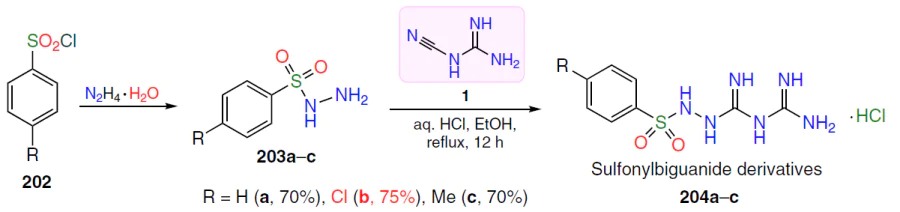
Cyanoguanidine 1 demonstrates an ability to act as a nucleophile with respect to acid chlorides, isothiocyanates, benzils and sulfonyl derivatives. This property helps to form diverse types of molecules, such as biguanides and cyanoguanidyl frameworks. A number of sulfonylbiguanide derivatives 204a – c was synthesized by Basyouni et al.[74] in more than 70% yield by refluxing arylsulfonohydrazides (203a – c) and 1 in acidic ethanolic solution (Scheme 29). The reaction follows a condensation mechanism.
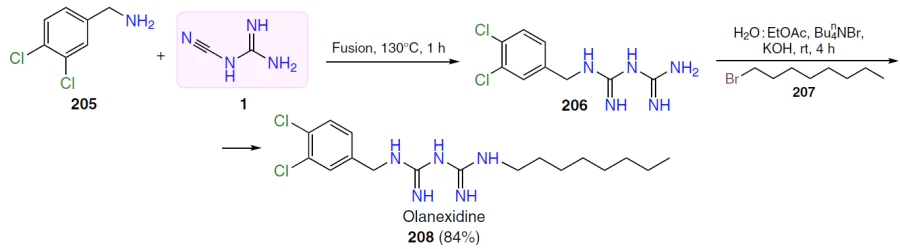
Cyanoguanidine 1 also contributed to the development of an environmentally friendly synthetic route to olanexidine (208). Instead of the traditional hazardous reagents, sodium dicyanamide and octylamine, Khare et al.[75] utilized 1 under phase-transfer catalysis (PTC) conditions to accelerate the reaction and improve the yield. In the first step, N1-(3,4-dichlorobenzyl)biguanide (206) was prepared in 89% yield by reacting 3,4-dichlorobenzylamine hydrochloride (205) with 1 (Scheme 30). Further, olanexidine 208 was synthesized by alkylating biguanide 206 with 1-bromooctane (207) in the presence of Bu4NBr as PT catalysis and aq. KOH as a base at room temperature for 4 h. This led to formation of olanexidine (208) in 84% yield and 99% HPLC purity. This method eliminated the need for toxic reagents, avoided a decrease in yield due to by-products, and may enable scaling-up of olanexidine production.
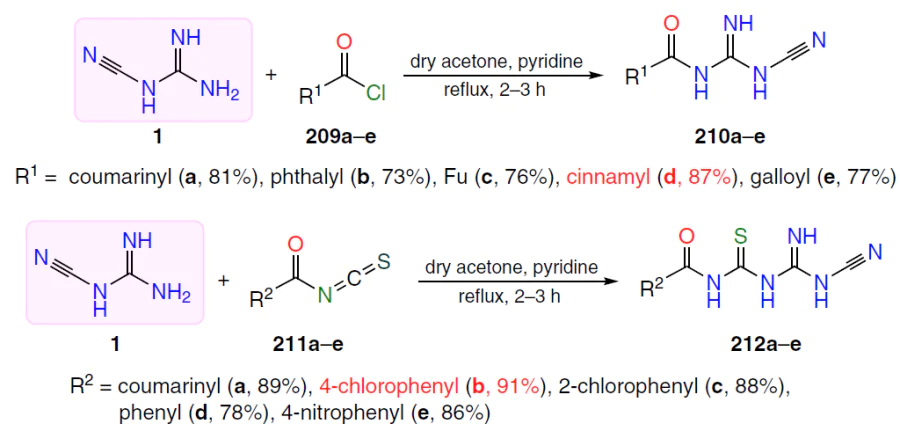
Structural variations in cyanoguanidine derivatives has also been achieved using acylation and thiocarbonylation approaches, which provide access to a diverse N-cyanoguanidyl derivatives. Khodairy et al.[76] synthesized a series of N-cyanoguanidyl derivatives (210a – e, 212a – e) by reacting 1 with acid chlorides or aroyl isothiocyanates (Scheme 31). In the first method, 1 was treated with acid chlorides (209a – e) in dry acetone in the presence of a catalytic amount of pyridine. This reaction afforded various N-(N-cyanocarbamimidoyl)aryl-2-carboxamides (210a – e). The second approach consisted in the reaction of 1 with aroyl isothiocyanates (211a – e) under the same conditions to afford N-[(N-cyanocarbamimidoyl)carbamothioyl]benzamides 212a – e. All products were obtained in 73 – 92% yields.
Cao et al.[77] synthesized phenformin derivatives (214a – o) via an intermediate-derivatization strategy, modifying the phenyl portion of the parent biguanide scaffold (Scheme 32, reaction a).[77] Phenethylamines were used as the substituted intermediates (213a – o), which were reacted with 1 in DCM at 80°C using trimethylsilyl trifluoromethanesulfonate (TMSOTf) as a promoter. This method provides efficient access to a variety of derivatives with both electron-donating and electron-withdrawing substituents at the ortho-, meta-, and para- positions of the benzene ring. Yields vary between 30 – 80%, depending on the electronic and steric nature of the substituents, with electron-withdrawing substituents providing the highest yield.
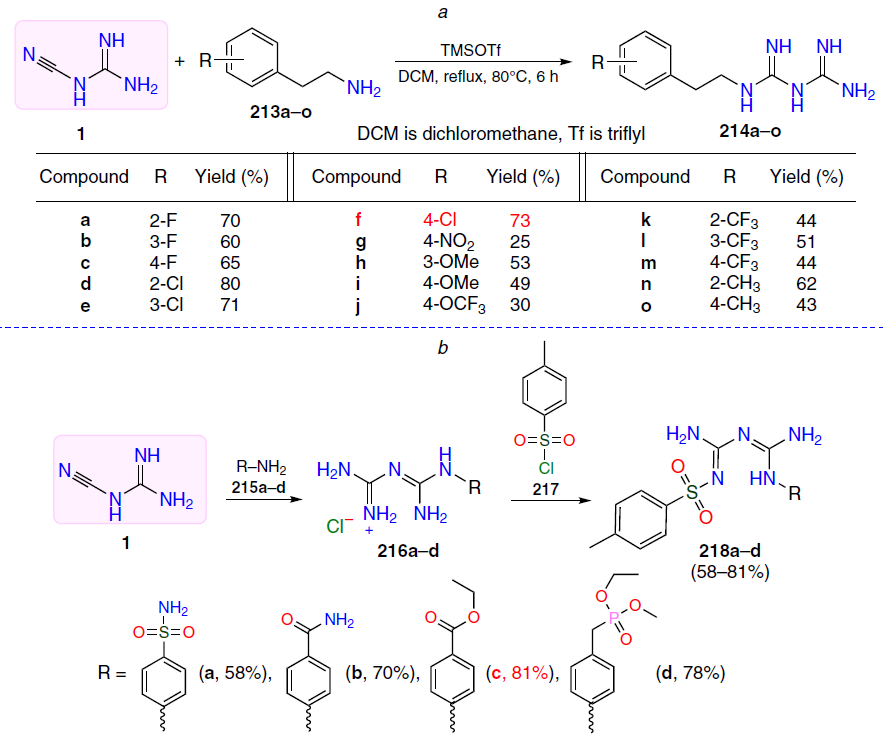
The same year, Güngör and Koese[78] synthesized a series of biguanidine derivatives (216a – d) and their sulfonamide analogs (218a – d) (see Scheme 32, reaction b). Initially, a condensation between (1) and aniline derivatives (215a – d) was performed in n-butanol and conc. HCl for approximately 18 h to obtain the desired biguanides (216a – d) as the hydrochloride salts. The corresponding sulfonamide derivatives were obtained by sulfonylation of (216a – d) with p-toluenesulfonyl chloride (217) in the presence of K2CO3 under reflux conditions. The product was purified by column chromatography, producing biguanide-sulfonamide derivatives (218a – d) in 58 – 81% yield.
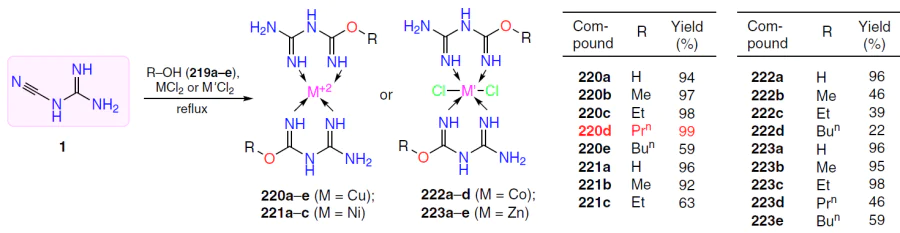
Moghaddam et al.[79] synthesized a series of 1-amidino-O-alkylurea metal complexes (220a – e, 221a – e) by the reaction of 1 with metal salts, including Cu(II), Co(II), Ni(II), and Zn(II), in 2 : 1 stoichiometric ratio (Scheme 33).[79] After refluxing for several hours, pure crystalline products were obtained. Except for Zn(II), all the resulting complexes were colored.
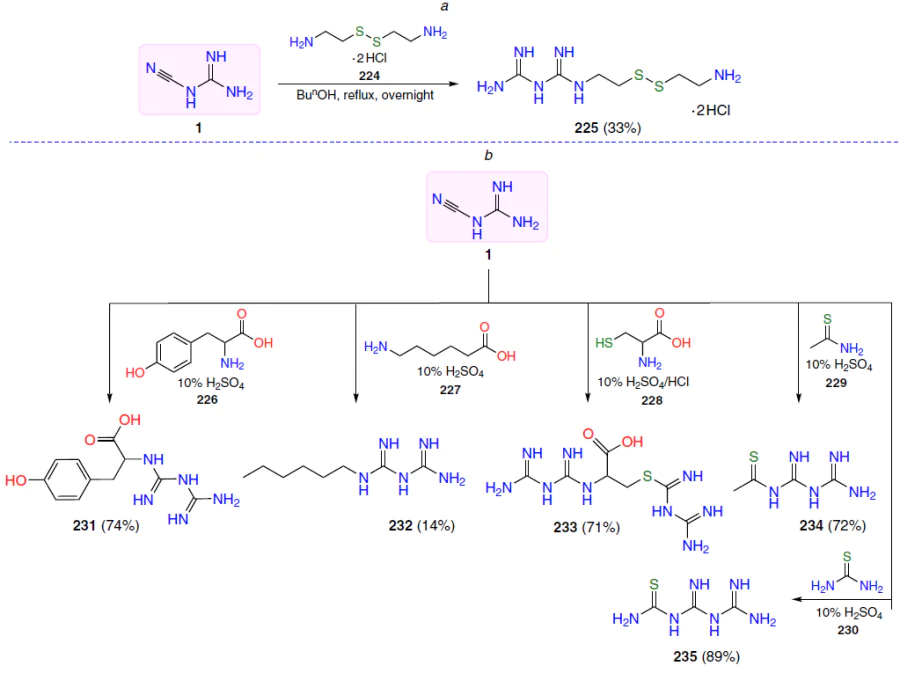
Fu et al.[80] synthesized N-cystaminylbiguanide (225) using 1 and cystamine (224) (Scheme 34, reaction a). The reaction occurred in boiling butanol overnight to yield (225) in 33% yield. The same year, El-Remaily et al.[33] carried out a series of reactions of cyanoguanidine 1 with carboxylic acid (226) to yield (231), with an aliphatic aminocarboxylic acid (227) to afford (232), with cysteine (228) under mixed-acid conditions to produce the thioether-linked product (233), and also with thioacetamide (229) and thiourea (230) to give methyl biguanidyl thion (234) and N-carbamothioyl imidodicarbonimidic diamide (235), respectively (see Scheme 34, reaction b).
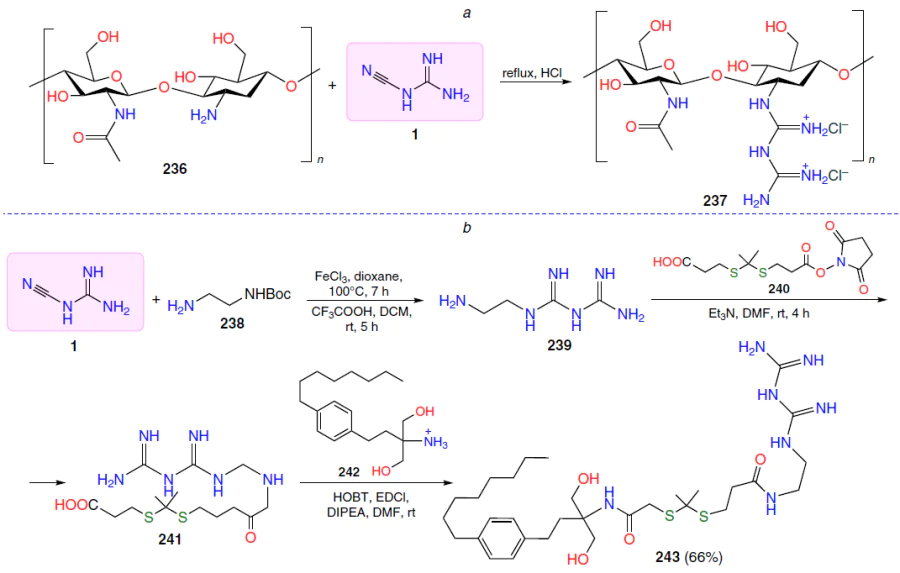
Saber et al.[81] prepared a biguanidylated chitosan (237) using 1 as a reagent to modify the polymer 236 (Scheme 35, reaction a). The reaction occurred at room temperature for 3 h in an acidic medium. The same year, cyanoguanidine 1 was used for surface modification in a one-step condensation reaction to synthesize a guanidine conjugated fingolimod (243) (see Scheme 35, reaction b).[82] Firstly, 1 was treated with an aminoalkyl carbamate (238) in the presence of FeCl3 , which resulted in the conversion of 1 to an amine-terminated biguanide (239). This amine was then coupled to the linker (240) to form the carboxylate-terminated biguanide-linker intermediate (241). The amide coupling of carboxylic acid with fingolimod (242) was completed using 1-ethyl-3-(3-dimethylaminopropyl)carbodiimide (EDCI), hydroxybenzotriazole (HOBt), and diisopropylethylamine (DIPEA), yielding the target cyanoguanidine-conjugated fingolimod derivative (243) in 66% yield.
3. Conclusion
Cyanoguanidine (also known as dicyandiamide) is a bifunctional, nitrogen-rich compound that is used as a versatile building block in organic synthesis. The presence of cyano and guanidino groups in this molecule allows it to act as both an electrophile and a nucleophile, and it is therefore used in the synthesis of different small molecules. Some of the cyanoguanidine-derived structures are further used in medicinal, polymer, and materials chemistry. As compiled in Table 1, cyanoguanidine has been used as a nucleophile in condensations with chalcones, enones, arylglyoxals, and dicarbonyl compounds, providing access to pyrimidine, triazole, triazine, and imidazole derivatives. As an electrophile, it reacts with amines, nitriles, and hydrazine salts to form biguandines, imidazoles and triazine-based compounds. As per our analysis, among the reported transformations, the synthesis of six-membered heterocycles, particularly pyrimidines and triazines, represents a promising area of development due to the broad substrate scope, high yields and the availability of multiple synthetic strategies, such as base-mediated condensations, multicomponent reactions, cyclization reactions, metal-catalyzed annulations, microwave-assisted transformations, and solvent-free reactions. Also, we noted that the synthesis of biguanides is one of the most straightforward applications of cyanoguanidine. Analysis of the reported methodologies reveals that cyanoguanidine provides several advantages over other amidine- and guanidine-based reagents. The presence of both a cyano functional group and a guanidine group together allows reactions to proceed sequentially without the need for pre-functionalization of the substrate to produce nitrogen-containing rings and biguanides.
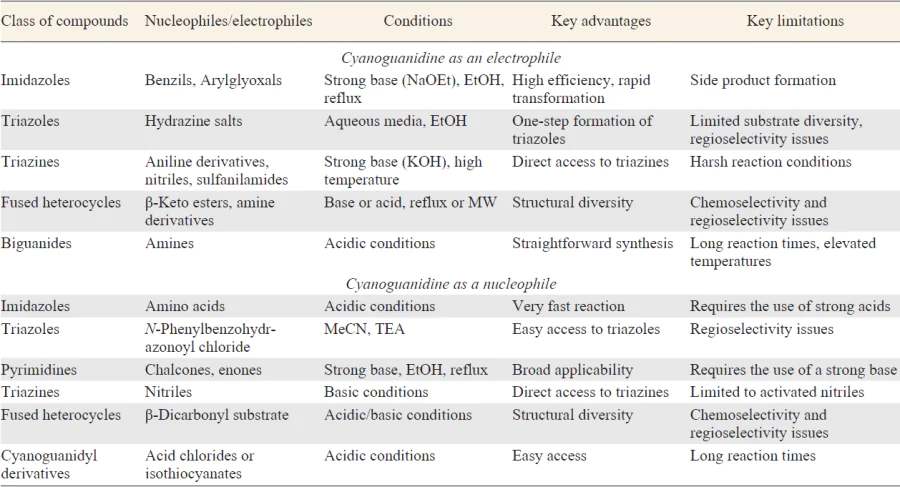
Despite these advances, several limitations still exist. Many transformations still involve the use of a strong base and high temperatures, which restrict the green chemistry aspects of the reaction. Also, regioselectivity and chemoselectivity issues persist in some cyclization and annulation reactions. This is due to the presence of multiple nucleophilic nitrogen atoms capable of participating in bond formation. Furthermore, although various methods for cyanoguanidine-based synthesis have been reported, very few studies have explored asymmetric variations, catalytic formation of C – N bonds, and cyanoguanidine-containing reagents for late-stage functionalization. The limited number of such reports suggests that the challenge lies not in the lack of synthetic utility of cyanoguanidine but in difficulties associated with controlling its multiple reactive sites and achieving selective synthesis under mild conditions. Therefore, future advancements in this field will most likely focus on catalytic methods that allow control over chemo- and regioselectivity. This especially applies to asymmetric cyanoguanidine-mediated cyclization and C – N bond formation reactions, which would help overcome severe reaction conditions.
The author SB is thankful to Delhi Technological University for fellowship.
The authors declare no conflict of interest.
No funding from any external agency involved.
4. List of abbreviations
Ac — acetyl;
DABCO — 1,4-diazabicyclooctane;
DBU — 1,8-diazabicycloundec-7-ene;
DMF — N,N-dimethylformamide;
Fu — furyl;
MCR — multicomponent reaction;
Naph — naphthyl;
OPD — o-phenylene diamine;
PEG — polyethylene glycol;
PTC — phase transfer catalysis;
TEA — triethylamine;
Tf — triflyl (trifluoromethanesulfonyl);
TMS — trimethylsilyl;
US — ultrasonic irradiation.
References