Keywords
Abstract
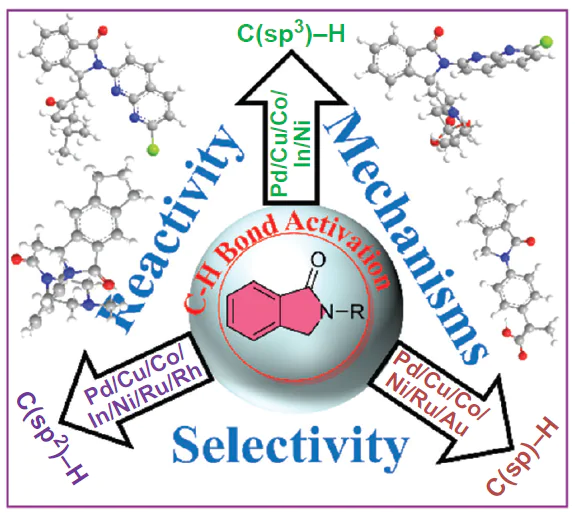
Isoindolinones are privileged nitrogen-containing heterocycles widely found in bioactive molecules, natural products, and functional scaffolds. Compared with conventional approaches based on prefunctionalized substrates, transition-metalcatalyzed cascade C–H functionalization provides a more direct and step-economical strategy for isoindolinone construction. This review summarizes recent advances in isoindolinone synthesis through C(sp3)–H, C(sp2)–H and C(sp)–H activation, with emphasis on Pd-, Rh-, Ru-, Ir-, Co-, and Cu-catalyzed annulation systems. Key coupling partners, including alkenes, alkynes, diazo compounds, isocyanides, nitriles, CO surrogates, strained rings and multicomponent reagents, are discussed in relation to substrate scope, regioselectivity, stereoselectivity and product topology. Particular attention is given to mechanistic features such as cyclometalation, migratory insertion, β-hydride elimination, reductive elimination, carbonylation, radical relay, hydrogen atom transfer and cascade cyclization. Complementary photochemical, electrochemical, mechanochemical and metal-free strategies are also considered. By comparing metal-dependent reactivity and persistent limitations, this review highlights current challenges and future opportunities in directing-group economy, redox sustainability, substrate generality and asymmetric control.
The bibliography includes 220 references.
1. Introduction
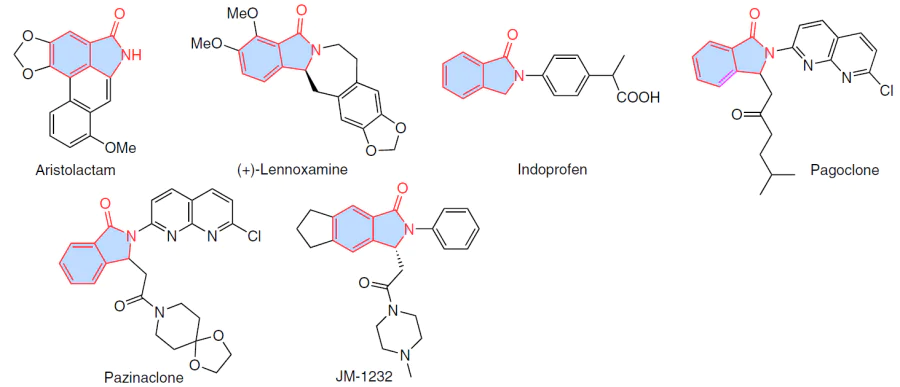
Isoindolinones are privileged nitrogen-containing heterocycles that are widely present in natural products, pharmaceutical candidates, and functional molecular scaffolds.[1-3] Their fused lactam architecture, tunable substitution pattern and conformationally restricted cyclic amide unit make them valuable motifs in medicinal chemistry and synthetic methodology, and thus have always attracted much attention (Fig. 1).[4-8] Therefore, the development of efficient, modular and selective methods for constructing isoindolinone frameworks remains an important topic in contemporary organic synthesis.
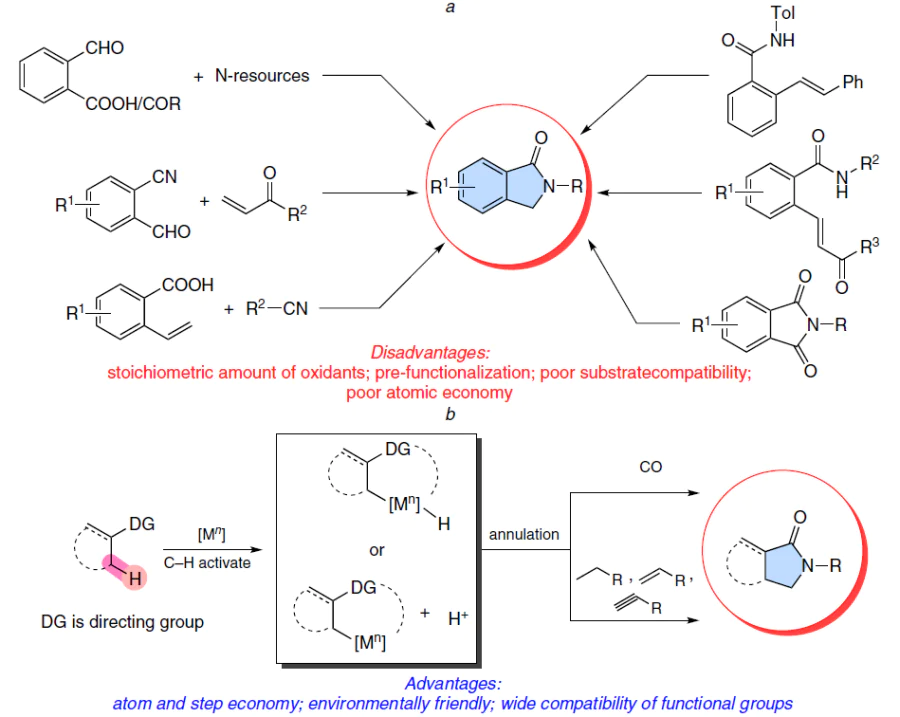
Conventional synthetic approaches to isoindolinones mainly rely on phthalimide reduction,[9-11] condensation of ortho-functionalized aromatic carbonyl compounds,[12] nucleophilic addition to cyclic imines or hemiaminals,[13] cross-coupling/cyclization sequences,[14-20] and multicomponent assembly from prefunctionalized substrates[21][22] (Fig. 2a). Although these methods are reliable, they often require substrates bearing adjacent functional groups, aryl halides, carbonyl handles, nitriles, alkynes or activated imine precursors.[23] These requirements increase substrate preparation steps, generate stoichiometric byproducts, and limit late-stage diversification. In this context, C – H functionalization provides a more direct and step-economical strategy by converting native C – H bonds into C – C, C – N, C – O or C – heteroatom bonds.[24-26] When combined with annulation or cascade cyclization, C – H functionalization enables rapid access to isoindolinone scaffolds from relatively simple arene, alkylbenzamide, carboxamide or terminal alkyne precursors (see Fig. 2b).
Recent advances have significantly expanded the catalytic landscape of C – H functionalization-based isoindolinone synthesis. Palladium, rhodium, ruthenium, iridium, cobalt, copper and nickel catalysts have enabled diverse annulation manifolds involving alkenes, alkynes, diazo compounds, isocyanides, nitriles, carbon monoxide or its surrogates, strained rings and multicomponent partners. These transformations demonstrate that metal identity, oxidation state, ligand environment, directing group and coupling partner structure collectively determine reactivity, regioselectivity, stereoselectivity and product topology. Several recent reviews have discussed isoindolinone synthesis from broader perspectives, including one-pot C – C bond-forming reactions,[27] transition-metal-free methods,[28] 3-hydroxyisoindolinone chemistry,[29] and C3-substituted isoindolinones.[30] In particular, Savela and Méndez-Gálvez[27] reviewed one-pot type transition-metal-catalyzed C – C bond-forming reactions for isoindolinone synthesis, covering the literature from 2010 to 2020 and including C – H activation, carbonylation, cross-coupling, addition, condensation, formal cycloaddition, and annulation strategies. However, the central theme of that review is the formation of new C – C bonds as a general synthetic logic for isoindolinone construction, rather than a mechanistic and comparative discussion of cascade C – H functionalization. Thus, a focused and critical review centered on C – H functionalization as the unifying logic for isoindolinone construction remains necessary, especially one that compares C(sp3) – H, C(sp2) – H and C(sp) – H functionalization together with metal-dependent mechanisms and non-classical activation modes.
This review summarizes recent advances, with emphasis on studies published since 2020, in isoindolinone synthesis through C – H functionalization/annulation. The discussion is organized first according to metal-catalyzed systems, covering C(sp3) – H, C(sp2) – H and C(sp) – H functionalization, and then extended to complementary photochemical, electrochemical, mechanochemical, and metal-free strategies. Rather than simply listing individual reactions, this review highlights how catalyst design, substrate electronics, steric effects, directing-group strategy and coupling-partner selection govern reaction outcomes. Particular attention is given to key mechanistic pathways, including cyclometalation, migratory insertion, β-hydride elimination, reductive elimination, carbonylation, radical relay, hydrogen atom transfer, carbene insertion and cascade cyclization. Despite remarkable progress, persistent challenges remain, including dependence on directing groups, activated coupling partners, stoichiometric oxidants, expensive noble metals and narrowly optimized conditions. Future development should therefore focus on native or traceless directing groups, earth-abundant catalysts, milder redox regulation, broader substrate compatibility, predictable site- and selectivity, and scalable late-stage applications.
2. C – H activation/annulation strategies
2.1. Metal-catalyzed C(sp3) – H functionalization
Transition – metal – catalyzed construction of isoindolinone scaffolds through C(sp3) – H functionalization represents an attractive but challenging strategy. Compared with aryl C(sp2) – H bonds, aliphatic C(sp3) – H bonds generally exhibit higher bond dissociation energies, lower polarity, and weaker directing effects, making their selective activation more difficult. Moreover, the coexistence of multiple chemically similar C(sp3) – H bonds within a single molecule further complicates site-selective functionalization. Consequently, although C(sp3) – H activation offers a direct route to saturated or benzylic lactam frameworks, its application in isoindolinone synthesis remains less developed than C(sp2) – H annulation.
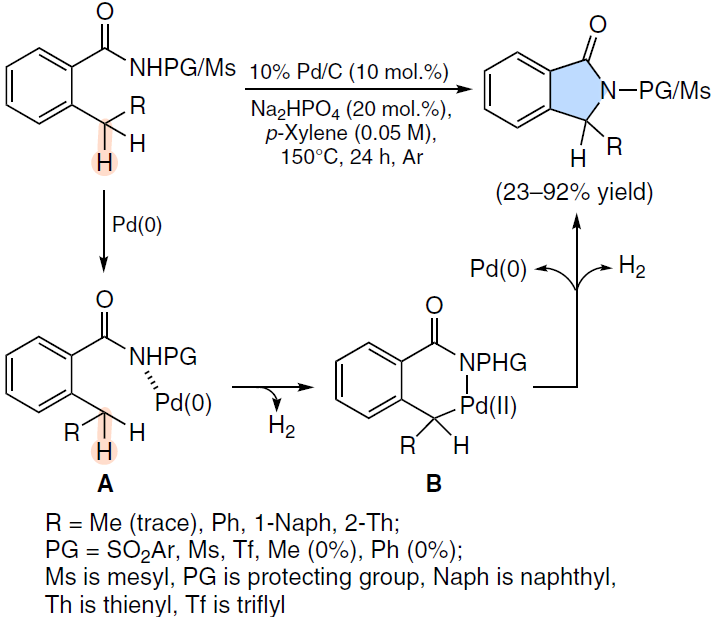
Within this context, benzylic C(sp3) – H bonds provide a more accessible entry point because their relatively lower bond strength and proximity to amide directing groups can facilitate intramolecular cyclization. As an oxidant-free alternative to Cu-mediated benzylic amidation, Abe et al.[31] developed a Pd/C-catalyzed intramolecular dehydrogenative C(sp3) – H cyclization of 2-benzylbenzamides to isoindolinones (Scheme 1). The N-protecting group exerted a pronounced influence on the reaction efficiency, with N-mesyl substrates (86%) outperforming N-tosyl and other sulfonyl or aryl analogs (6 – 75%). Electron-rich benzyl arenes bearing Me or OMe groups reacted more efficiently (86 – 92%) than fluoro-substituted substrates (44%), whereas thiophene (37%) and indole (23 – 95%) units were compatible under the acceptorless dehydrogenative conditions. In contrast, alkyl C(sp3) – H substrates were ineffective, indicating that the method remains largely restricted to activated benzylic positions. Mechanistic studies suggested amide coordination to palladium, benzylic C – H palladation, possible H2 evolution, and reductive elimination as key steps.
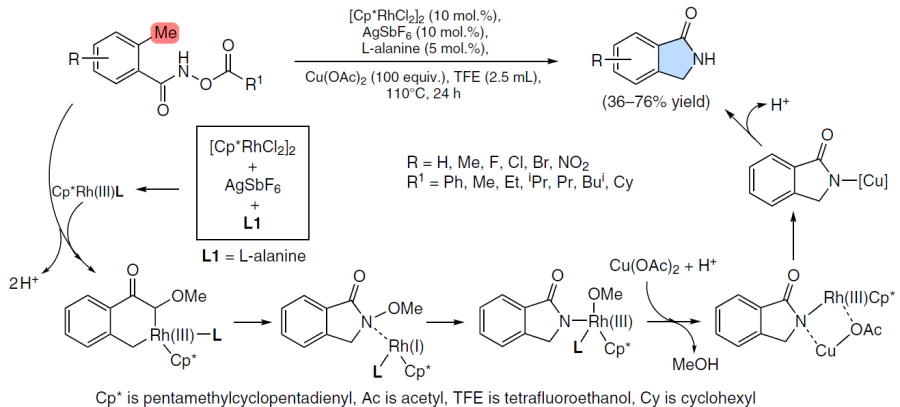
Zhao and co-workers[32] developed a Rh(III)-catalyzed intramolecular benzylic C(sp3) – H amidation of 2-methylbenzamides, providing direct access to N-unprotected isoindolinones (Scheme 2). Methyl-substituted substrates reacted smoothly (70 – 74%), whereas dimethyl substitution reduced efficiency because of steric hindrance (44%). Halo- and nitro-substituted benzamides were tolerated with moderate yields (50 – 76%), but heteroaryl substrates failed, reflecting the limited reactivity of heteroarene-tethered methyl C – H bonds. N-Acyloxy benzamides also served as viable precursors (51 – 62%). Mechanistic experiments excluded a dominant radical pathway and suggested Rh-mediated benzylic C – H activation, C – N bond formation, N – O cleavage, and Cu – assisted catalyst regeneration.
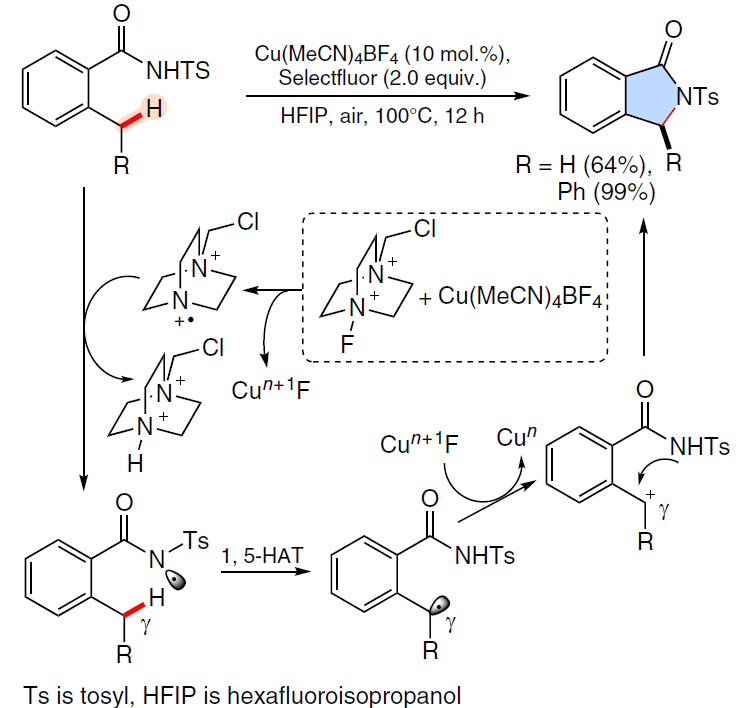
More recently, efforts have shifted toward the development of catalytic systems capable of directly engaging unactivated C(sp3) – H bonds under milder and more controlled conditions. For instance, copper-catalyzed γ-C(sp³) – H lactamization strategies have demonstrated that nitrogen-centered radical cations can undergo 1,5-hydrogen atom transfer (1,5-HAT), thereby enabling remote C – H functionalization and efficient cyclization to isoindolinone frameworks (Scheme 3).[33] These approaches represent a significant conceptual advance by decoupling site-selectivity from substrate pre-functionalization and instead leveraging predictable hydrogen atom transfer processes. Nevertheless, such strategies are still largely limited to substrates with well-defined geometric and electronic requirements that favor selective HAT pathways. As a consequence, their applicability to structurally complex or highly functionalized molecules remains to be fully established. Moreover, the mechanistic intricacies associated with radical relay processes continue to pose challenges for rational reaction design.
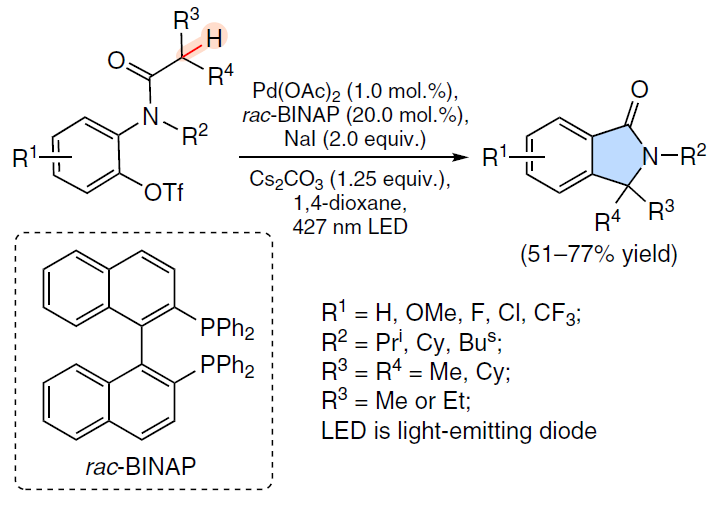
In contrast to thermally driven benzylic C(sp3) – H amidation, Gevorgyan and co-workers introduced visible-light/Pd catalysis to generate aryl Pd-radicals from aryl triflates for intramolecular arylation (Scheme 4).[34] Benzamides bearing alkyl (69%), methoxy (77%), halogen (47 – 71%), CF3 (72%) and naphthyl substituents (51%) afforded isoindolinones in moderate to good yields, and cyclohexyl (71%) or isobutyl amides (73%) were also compatible. Mechanistic studies support C(sp2) – O cleavage, hybrid aryl – Pd radical formation, 1,5-HAT, intramolecular cyclization, and rearomatization. The method tolerates base-sensitive motifs but still relies on preinstalled triflates and light activation.
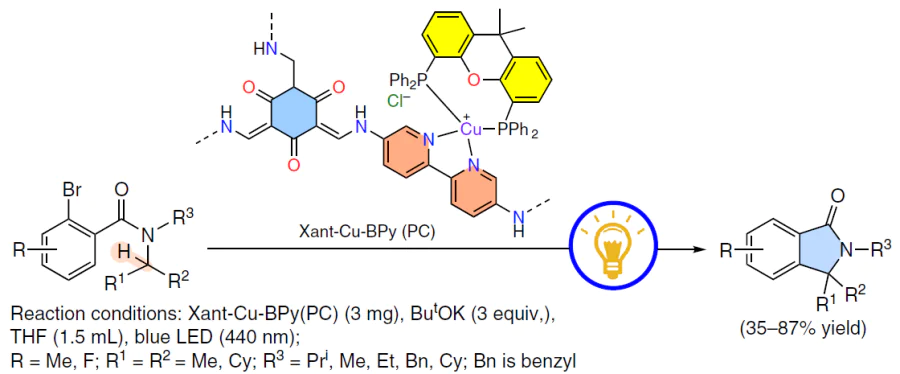
Moving beyond thermally driven benzylic C(sp3) – H activation, Xantphos – Cu-decorated covalent organic frameworks (COFs) were developed as recyclable heterogeneous photocatalysts for isoindolinone synthesis via intramolecular C – H arylation (Scheme 5).[35] 2-Bromo-N,N-diisopropylbenzamide gave high efficiency, whereas its chloro analog was less reactive because of more difficult C – Cl cleavage. N-Methyl (82%), N-ethyl (83%) and N-benzyl amides (87%), spirocyclic substrates (78 – 81%), tolyl-substituted arenes (76 – 83%) and pyridyl bromides (76%) were tolerated. Mechanistic studies support energy-transfer sensitization, electron-transfer-induced C – Br cleavage, aryl radical formation, 1,5-HAT, cyclization, and oxidation/deprotonation. This system combines single-site Cu photocatalysis with COF recyclability, although preinstalled aryl bromides and partial Cu loss remain practical limitations.
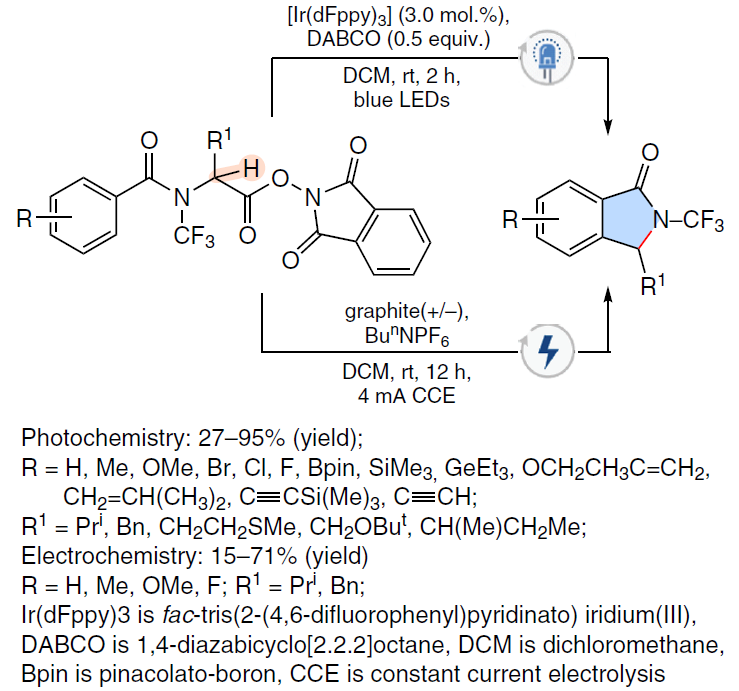
In a distinct redox-triggered manifold, Schoenebeck and co-workers[36] used amino acid-derived N-CF3 redox-active esters to access cyclic N- CF3 isoindolinones under photo- or electrochemical activation (Scheme 6). Valine- and phenylalanine-derived substrates (19 – 78%), aryl halides (50 – 80%), boronic ester (55%), silane (77%), germane (77%), electron-rich methoxy/methyl arenes (37 – 91%), alkenes (20 – 73%) and alkynes (27 – 50%) reacted smoothly, whereas thiophene showed limited efficiency (21%). Mechanistic and computational studies indicate single-electron reduction, decarboxylation to an α-NCF3 radical, rapid syn/anti interconversion, aryl cyclization, oxidation, and deprotonation. The N – CF3 group promotes conformational flexibility and suppresses overoxidation, but direct electrolysis requires prolonged operation, and sensitive substrates benefit from mediated conditions.
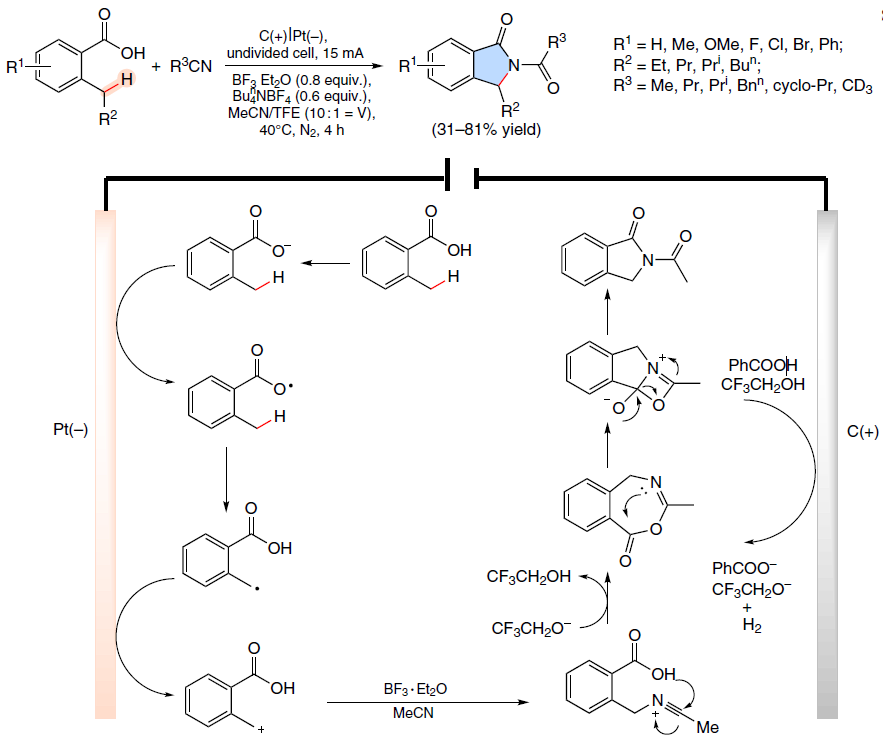
Extending radical C(sp3) – H functionalization from photochemical to electrochemical activation, Lei and co-workers[37] developed a metal-free benzylic C – H amination of o-alkylbenzoic acids with nitriles for isoindolinone synthesis (Scheme 7). Methyl-substituted benzoic acids showed moderate yields (41 – 65%), whereas halogenated and fluorinated substrates, including those containing F, CF3 and OCF3 groups, were more effective (46 – 77%). Methoxy-substitution and thiophene decreased efficiency (31% vs. 35%), revealing sensitivity to electronic and heteroaromatic effects. Mechanistic studies indicate preferential anodic oxidation of the carboxylate to an aroyloxy radical, followed by 1,5-HAT, benzyl radical oxidation, nitrile trapping, cyclization, and the Mumm rearrangement. This protocol avoids the use of metals and external oxidants, but remains substrate-dependent.
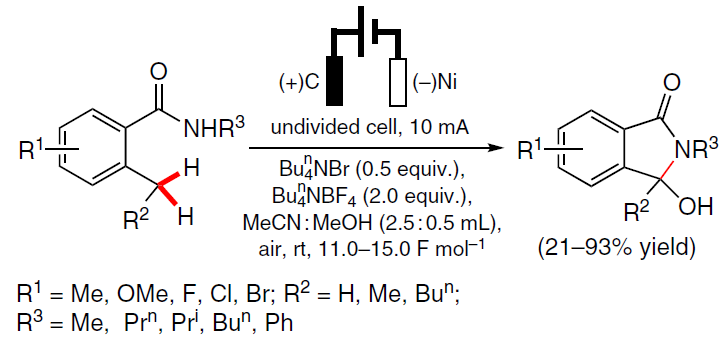
Electrochemical activation has also been extended from C – N bond construction to oxidative C(sp3) – N/C(sp3) – O difunctionalization. Park and co-workers[38] reported an aerobic electrochemical cyclization of 2-alkylbenzamides to 3-hydroxyisoindolinones (Scheme 8). Both primary and secondary benzylic C(sp3) – H substrates were compatible with the reaction (27 – 78%), addressing a limitation of earlier photochemical and copper-mediated methods. N-Alkyl and N-benzyl amides, as well as Me, OMe, F, Cl and Br substituents on the arene, were tolerated (21 – 85%), although some halogenated substrates gave regioisomeric products (41 – 93%). Mechanistic studies support bromide-mediated anodic radical generation, benzylic radical formation, oxygen trapping, hydroperoxide formation, and cyclization. The method is operationally simple but may suffer from overoxidation/reduction equilibria.
Recent metal-free strategies have provided complementary platforms for C(sp3) – H functionalization and isoindolinone construction. These approaches mainly rely on photochemical, electrochemical, base-promoted, or radical-mediated activation modes rather than classical metal insertion into C – H bonds. In photochemical systems, aryl radicals can be generated from ortho-halogenated benzamides through halogen-bonding, charge-transfer complexes, organic photoredox catalysts, or dye-based super-reducing agents, followed by 1,5-HAT, radical cyclization, oxidation, and deprotonation to furnish isoindolinones.[39-45] Electrochemical methods further replace stoichiometric oxidants with anodic/cathodic redox events, enabling aerobic C(sp3) – H oxidation/cyclization under mild and metal-free conditions. In parallel, thermal or microwave-assisted radical cascades using oxygen, persulfate/TEMPO (2,2,6,6-tetramethylpiperidine-1-oxyl), or strong base systems expand access to hydroxy-, methylene-, and polysubstituted isoindolinones.[22][44][46-48] Although these protocols avoid the use of transition metals and often show improved operational simplicity or sustainability, their efficiency remains highly dependent on substrate preorganization, C – halogen bond activation, radical stability, and electronic effects. Therefore, they should be viewed not as replacements for metal-catalyzed C – H functionalization, but as mechanistically distinct and synthetically valuable complements that broaden the accessible isoindolinone chemical space.
2.2. Metal catalyzed C(sp2) – H activation
2.2.1. Pd-Catalyzed
Palladium-catalyzed directed C – H functionalization has emerged as one of the most versatile and extensively developed platforms for the construction of isoindolinone frameworks.[49-51] Owing to its well-defined reactivity and tunable coordination environment, palladium catalysis enables precise control over site-selectivity and reaction pathways under relatively mild conditions. Over the past decades, significant advances have been achieved in Pd-mediated C – H activation of arenes, establishing a robust foundation for the synthesis of diverse heterocyclic architectures.[52]
Palladium-catalyzed C – H functionalization reactions generally involve the following four reaction mechanisms. (Scheme 9).[53] The first and most classical pathway involves a reductive elimination sequence. A Pd(II) species undergoes directed C – H metalation, typically via a concerted metalation – deprotonation (CMD) pathway, to generate a cyclopalladated intermediate. This higher-coordinate complex then undergoes reductive elimination to form the desired functionalized product, while simultaneously reducing the metal center to a Pd(0) state. To sustain the catalytic cycle, an external oxidant must be employed to reoxidize the Pd(0) species back to the active Pd(II) state. This pathway is widely utilized but frequently necessitates stoichiometric oxidants, which can compromise overall step economy.
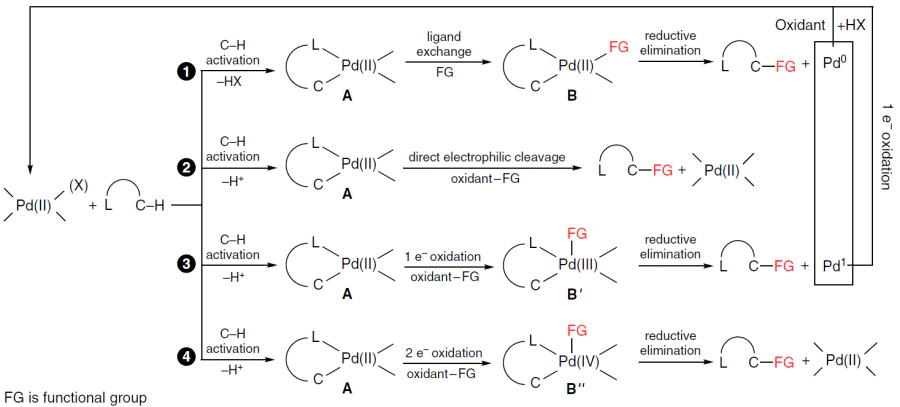
The second pathway involves the direct functionalization of the palladacycle by an electrophilic reagent, without any alteration to the oxidation state of the metal center. In this direct electrophilic cleavage mechanism, the electrophile directly attacks and cleaves the palladium-carbon bond. The defining characteristic of this route is that the palladium catalyst remains strictly in its Pd(II) state throughout the entire bond-forming event. This transformation is highly dependent on the intrinsic electrophilicity of the incoming reagent and is primarily driven by the interaction between the reactive electrophile and the electron-rich organometallic bond.
The third pathway operates through a single-electron oxidation trajectory. In this scenario, the initially formed Pd(II) cyclopalladated complex loses one electron to a suitable oxidant, thereby generating a radical intermediate that triggers subsequent transformations. This single-electron transfer process significantly expands the boundaries of traditional palladium chemistry by facilitating radical-based coupling reactions. This mechanism typically requires the presence of specific monovalent oxidants or cooperative photoredox catalytic systems to achieve unique chemical reactivity and selectivity profiles that remain inaccessible through conventional double-electron processes.
The fourth pathway emerges when robust double-electron oxidants are present in the reaction environment, leading to a high-valent catalytic cycle. Upon undergoing double-electron oxidation, the Pd(II) palladacycle rapidly transforms into a highly electrophilic high-valent intermediate. Depending on the specific electronic and steric properties of the ancillary ligands, this oxidative step can yield either a mononuclear Pd(IV) species or a dinuclear Pd(III) dimer. These highly reactive intermediates subsequently execute an exceptionally fast reductive elimination to construct the target bond and regenerate the Pd(II) catalyst. This high-valent mechanism effectively alters the electronic environment of the metal center and overcomes the intrinsic kinetic barriers that often inhibit direct reductive elimination in standard Pd(II) systems.
Early Pd-catalyzed C(sp2) – H functionalization substantially expanded isoindolinone synthesis through olefination/annulation,[54-60] isocyanide insertion,[61][62] aldehyde coupling,[63] carboxylate-mediated annulation,[64][65] and decarboxylative processes.[66] These studies established the feasibility of using alkenes, isocyanides, aldehydes, carboxylic acids, and related C1/C2 partners to construct diverse C3-substituted or fused isoindolinone scaffolds. However, most of these protocols relied on predesigned directing groups, stoichiometric oxidants such as benzoquinone, Cu(OAc)2/O2 , tert-butyl hydroperoxide (TBHP) or persulfates, and were often sensitive to steric and electronic effects.[67-69] In particular, ortho-substitution, strongly electron-withdrawing groups, heteroaryl substrates, or meta-substitution frequently reduced efficiency or regioselectivity. These early studies established Pd-catalyzed olefination/annulation, isocyanide insertion, aldehyde coupling, and decarboxylative processes as powerful routes to structurally diverse isoindolinones, but they also revealed persistent challenges associated with oxidant dependence, directing-group installation, and sensitivity to steric and electronic effects. Building on this foundation, more recent Pd-based strategies have focused on enhancing regioselective control, improving oxidant economy, exploiting Lewis-acid cooperation, and expanding the synthetic utility of isoindolinone construction in more complex molecular settings.
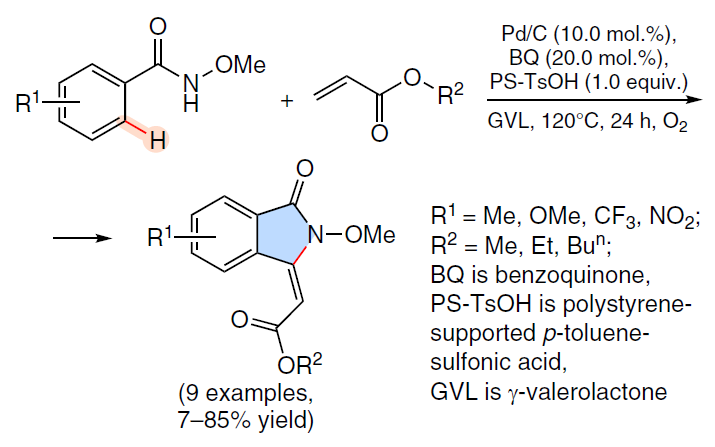
To improve the sustainability of Pd-mediated olefination/annulation, heterogeneous Pd/C catalysis has been applied to the N-methoxybenzamide-derived isoindolinone synthesis (Scheme 10).[70] Acrylates act as effective alkene partners, and methyl (60 – 85%), methoxy (60%), trifluoromethyl (42%) and nitro substituents (40%) on the arene are tolerated, although electron-withdrawing groups generally reduce the process efficiency. In anilide substrates, para-methyl substitution is more favorable than para-methoxy or halo groups, while crotonate-type alkenes are ineffective. Mechanistically, the reaction proceeds through the directed C – H palladation, olefin insertion and β-hydride elimination, followed by aza-Michael or aza-Wacker cyclization. This system improves catalyst recyclability and oxidant economy, but remains dependent on activated alkenes and acidic additives.
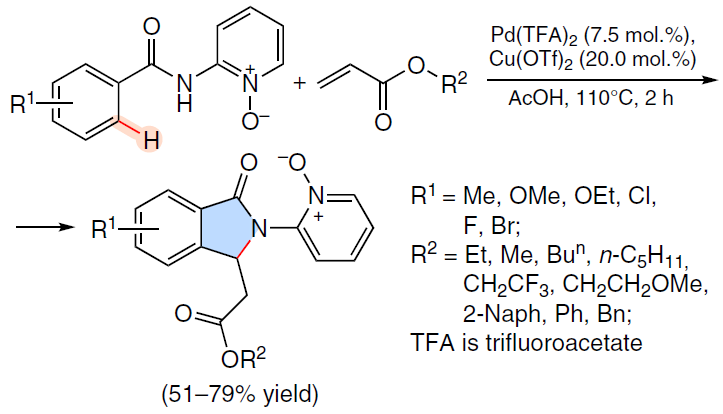
Lewis-acid cooperation has further refined Pd-catalyzed oxidative olefination/annulation by enhancing catalyst electrophilicity and stabilizing key organometallic intermediates. In the Pd(II)/Cu(II)-catalyzed annulation of 2-benzamidopyridine N-oxides with acrylates, ortho-methyl and ortho-chloro substrates are tolerated (70% vs. 60%), whereas strongly electron-withdrawing nitro and cyano groups are ineffective (Scheme 11).[71] Meta-substituted substrates react preferentially at the less hindered C – H site, and para-alkyl or alkoxy groups (69 – 79%) outperform halides (51 – 60%). Alkyl, fluoroalkyl, benzyl, mesityl and naphthyl acrylates are compatible (62 – 77%). Mechanistic experiments support irreversible C – H activation, acrylate insertion, β-hydride elimination and intramolecular aza-Michael addition, with heterobimetallic Pd/Cu species improving efficiency but not eliminating directing-group dependence.
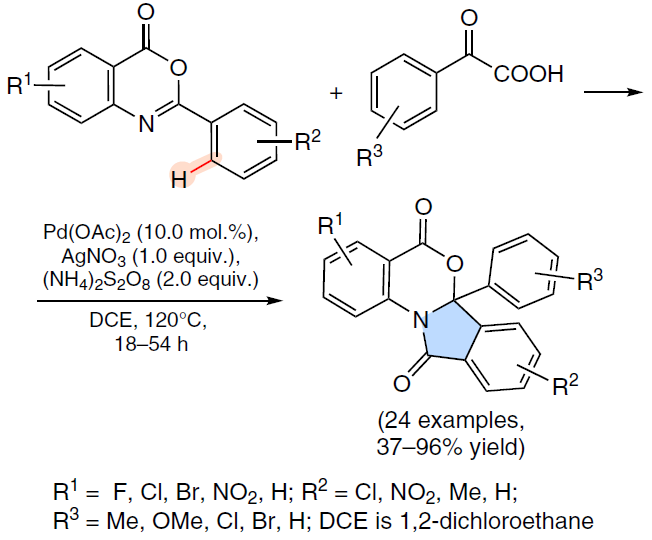
Besides olefination-based annulation, Pd catalysis can also promote the construction of fused isoindolinone frameworks through decarboxylative acylation of benzoxazinones with α-oxo carboxylic acids (Scheme 12).[72] Both electron-rich and electron-deficient substituents are tolerated on the benzoxazinone and acyl donor components (47 – 96%), but α-oxo acids bearing methyl or methoxy groups (48 – 54%) generally perform better than their chloro or bromo analogs (37 – 59%), while nitro-substituted benzoxazinones give only moderate yields (44%). Mechanistic studies indicate initial ortho-palladation, Ag-mediated generation of an acyl radical from the α-oxo acid, radical capture by the palladacycle, reductive elimination, and subsequent intramolecular cyclization. This strategy efficiently expands fused isoindolinone synthesis, although it still relies on external oxidants and silver salts.
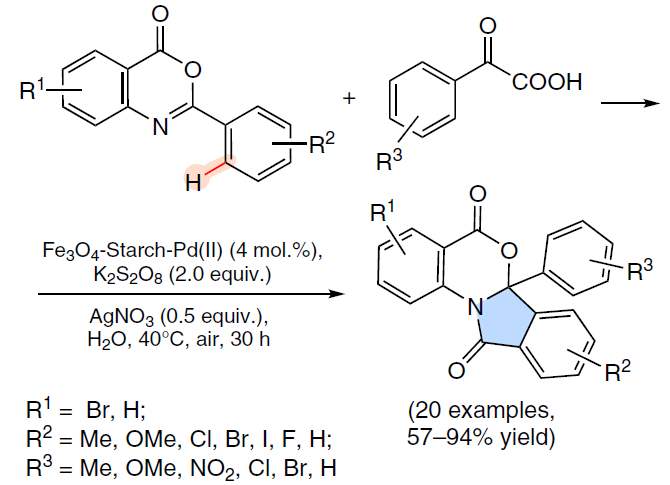
The same decarboxylative acylation logic has also been adapted to a more environmentally benign heterogeneous platform using a magnetic Pd catalyst in an aqueous medium (Scheme 13).[73] Aryl benzoxazinones bearing methyl, methoxy, fluoro, chloro, bromo, iodo and nitro groups react with substituted phenylglyoxylic acids to afford fused isoindolinones in generally good yields (57 – 94%), and iodo-containing products provide useful handles for post-functionalization. Lower-temperature control enables isolation of ortho-acylated intermediates, indicating a stepwise acylation/cyclization sequence. Mechanistic experiments support C – H palladation, acyl-radical formation, oxidative coupling, and acid- or surface-assisted cyclization. The catalyst is magnetically recoverable and reusable, but the method still depends on persulfate/silver-mediated radical generation.
Recent advances in palladium-catalyzed C – H functionalization have progressively shifted the field from racemic scaffold construction toward enantioselective and stereo-defined isoindolinone synthesis. Despite significant methodological diversity, these strategies can be broadly unified into three conceptual paradigms: ligand-controlled asymmetric induction, chiral pool enabled diastereocontrol, and tandem relay catalysis for point-to-point stereochemical transfer. The earliest advances in this area established that enantioinduction in Pd-catalyzed C – H activation is feasible through chiral ligand environments, as exemplified by aza-Wacker-type cyclizations. These studies demonstrated that stereocontrol can be imposed during the C – N bond-forming step; however, such systems are often highly sensitive to substrate electronics and coordination geometry, suggesting that enantioselectivity arises from a narrow and finely balanced catalytic window rather than broadly transferable stereochemical control.
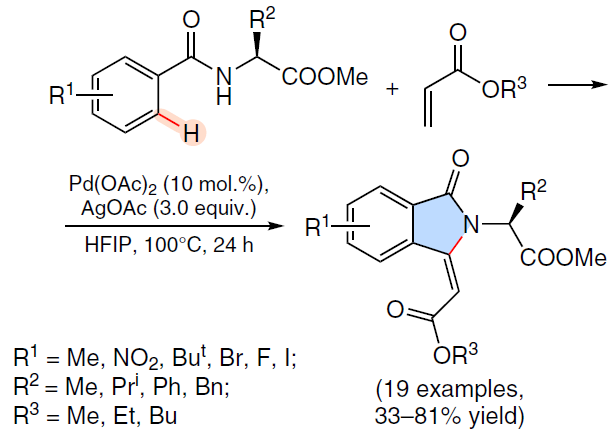
Utilizing the inherent advantages of amino acid stereochemistry, Gupta et al.[74] reported a Pd-catalyzed C(sp²) – H olefination and cyclization of aryl amides derived from amino acid esters for the synthesis of N-alkylated 3-methenyl isoindolinone scaffolds (Scheme 14). In this transformation, the amino acid ester moiety functions as an intrinsic directing group to promote ortho C – H activation of the benzamide ring, followed by acrylate insertion and intramolecular cyclization. Benzamides derived from glycine, alanine, valine, phenylalanine, and phenylglycine were compatible (59 – 81%), while methyl, ethyl, and butyl acrylates afforded the corresponding isoindolinones in moderate to good yields (53 – 76%). The chirality originates from the pre-existing L-amino acid ester unit and is retained in the products, but no new stereocenter or axial chirality is generated during annulation. Substrate electronics strongly influence reactivity. Methyl-substituted benzamides gave cyclized products, whereas their nitro-, fluoro-, bromo-, iodo- and tert-butyl-substituted analogs were ineffective or diverted to alternative olefination products (33 – 81%). The proposed pathway involves amino acid-assisted palladacycle formation, acrylate coordination and insertion, β-hydride elimination, second intramolecular C – H activation and reductive C – N bond forming cyclization. This work demonstrates the utility of amino acid-derived amides in isoindolinone synthesis, although the method remains sensitive to aryl substitution and oxidant-dependent conditions.
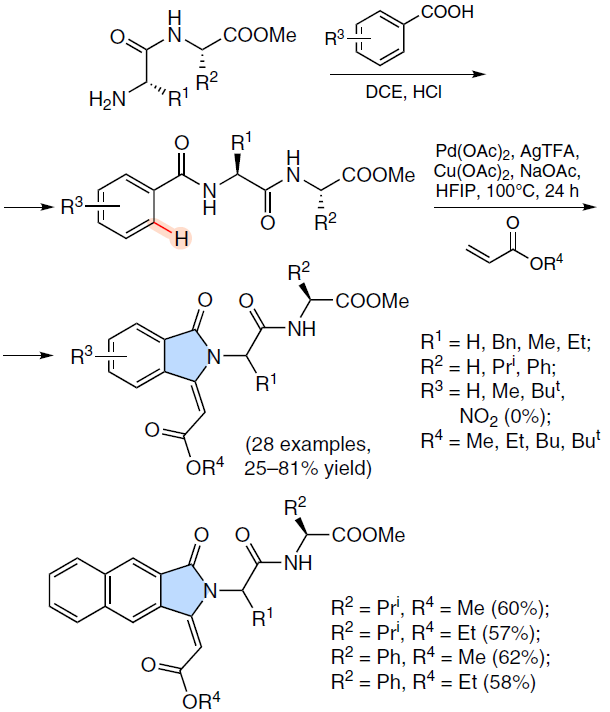
This chiral method was subsequently extended from amino acid esters to peptide substrates, linking isoindolinone synthesis with conformational control. In a follow-up study, Gupta et al.[75] reported a Pd-catalyzed C(sp²) – H olefination/annulation strategy for the late-stage installation of isoindolinone units into peptides (Scheme 15). N-Benzamide dipeptides derived from glycine, valine, phenylglycine and phenylalanine reacted with methyl, ethyl, n-butyl and tert-butyl acrylates to afford N-isoindolinonyl peptides, generally in moderate to good yields (55 – 81%). Naphthyl and biphenyl arylamide substrates were also tolerated (57 – 64%), whereas nitro-substituted benzamide and tripeptide substrates showed markedly reduced efficiency (25 – 28%). Notably, olefination occurred selectively on the benzamide ring rather than on phenyl-containing amino acid residues, indicating strong directing effects from the benzamide amide unit. Mechanistically, the reaction involves amide-assisted palladacycle formation, acrylate insertion, β-hydride elimination, and intramolecular cyclization. Beyond synthesis, NMR and computational studies showed that the isoindolinone carbonyl can participate in intramolecular hydrogen bonding, influencing γ-turn or helical peptide conformations.
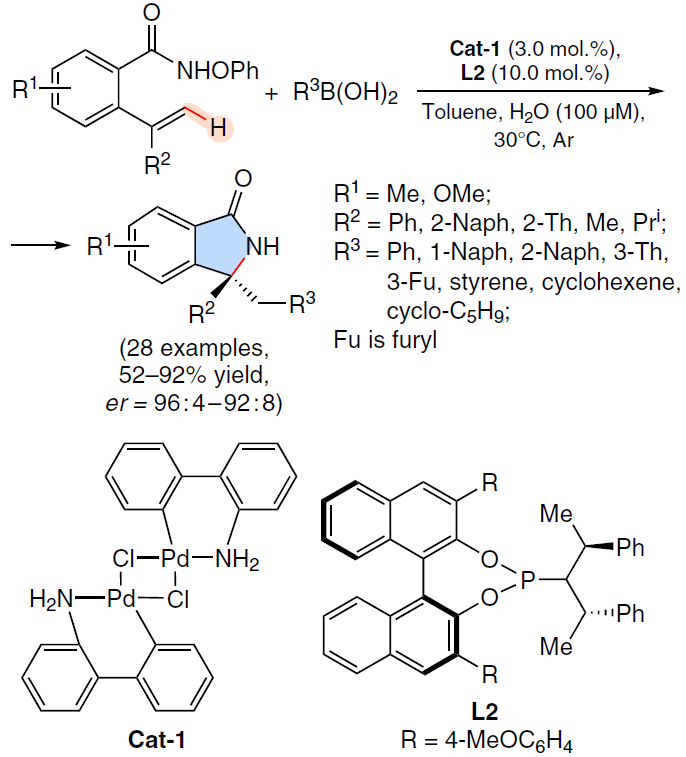
More recently, ligand-controlled asymmetric catalysis has provided a direct route to enantioenriched isoindolinones. Zhang and co-workers[76] developed a Pd-catalyzed aza-Heck/Suzuki tandem reaction between O-phenyl hydroxamic ethers and aryl or alkenyl boronic acids using chiral phosphoramidite ligands (Scheme 16). Electron-rich, electron-poor, naphthyl, heteroaryl and alkenyl boronic acids were compatible (63 – 90%, enantiomeric ratio (er) > 84 : 16), while ortho-substituted alkenyl hydroxamic ethers suffered lower reactivity despite high enantioselectivity (30%, er = 95 : 5). Alkylalkenyl substrates gave diminished stereocontrol, indicating substrate-dependent asymmetric induction (er = 92 : 8 – 96 : 4). Mechanistic studies support N – O oxidative addition, enantioselective migratory insertion, transmetalation and reductive elimination. This strategy expands stereochemical control beyond chiral-pool transfer, although its generality remains closely tied to ligand architecture and activated hydroxamic ether substrates.
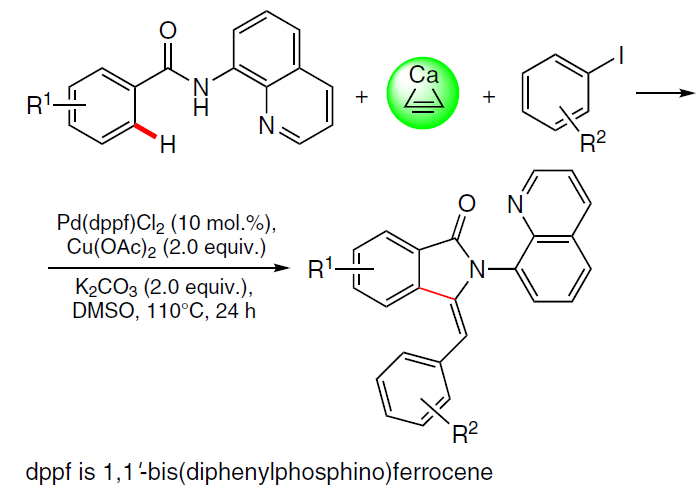
Subsequently, simple and readily available substrates were employed to directly construct the isoindolinone scaffold via a multicomponent C – H functionalization strategy, thereby further improving the step economy. Wen et al.[77] developed a one-pot synthesis of Z-3-benzylidene isoindolinones from benzamides, aryl iodides and calcium carbide (Scheme 17). Aryl iodides bearing Me, OMe, F, Cl, Br and CF3 groups were broadly tolerated (43 – 73%), whereas heteroaryl and alkyl iodides were ineffective. Benzamides containing Me, EtO, Cl or F groups reacted smoothly (53 – 71%), but nitro and cyano substituents suppressed the product formation. Mechanistic studies suggest in situ acetylene generation, Sonogashira coupling, copper acetylide formation, amide-directed C – H activation, reductive elimination, and intramolecular cyclization. This strategy avoids the use of acetylene gas, but remains dependent on quinolinyl directing groups and Pd/Cu cooperation.
Among Pd-catalyzed routes to isoindolinones, carbonylative C(sp2) – H functionalization has laid an important foundation by merging directed ortho-C – H palladation, CO insertion, intramolecular nucleophilic cyclization and Pd(0)/Pd(II) reoxidation into a concise lactam-forming sequence.[78-88] Subsequent studies expanded this manifold from pre-functionalized substrates to benzylamines, oximes and fused arene systems, and further introduced CO surrogates, CO2-based carbonylation and asymmetric desymmetrization strategies.[89] These developments demonstrated the versatility of Pd catalysis in constructing five-membered and fused isoindolinone scaffolds, but also revealed recurring limitations, including dependence on toxic CO or complex carbonyl equivalents, stoichiometric oxidants, strong directing groups, and pronounced sensitivity to steric congestion and electronic effects. Building on this mechanistic foundation, later Pd-based methodologies have increasingly focused on safer carbonyl sources, improved regioselective control, ligand-enabled stereocontrol, and more practical cascade designs for structurally complex isoindolinones.
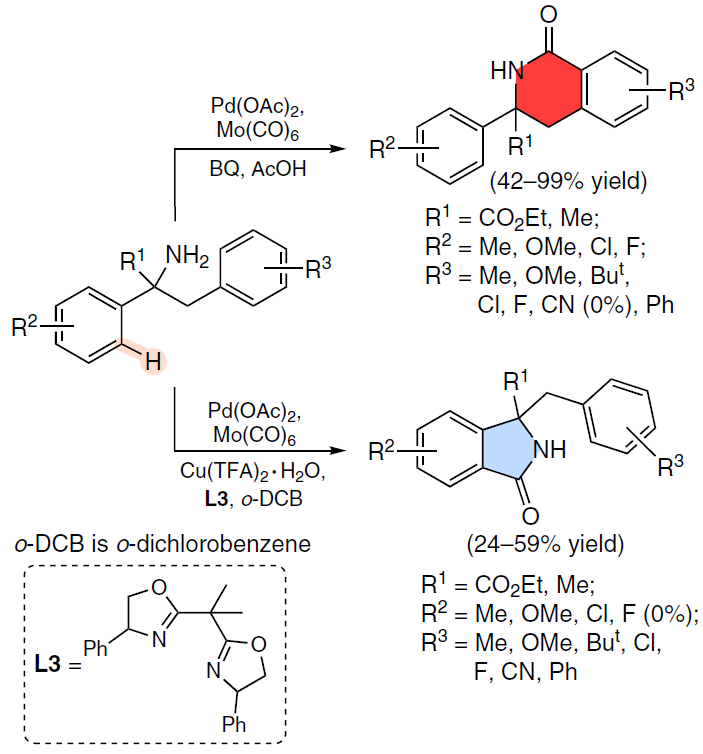
To address the safety and regioselectivity issues associated with classical Pd-catalyzed C – H carbonylation, Hu et al.[90] employed Mo(CO)6 as a solid CO surrogate to achieve divergent benzolactam synthesis from free-amine substrates (Scheme 18). Electron-rich benzyl arenes favored six-membered dihydroisoquinolinones (46 – 59%), whereas para-Cl, F, and CN substituents weakened or reversed this preference toward five-membered isoindolinones (43 – 48%). In the isoindolinone-selective pathway, Bn, Me, OMe, But, and electron-withdrawing substituents were tolerated with high regioselectivity (29 – 58%). Mechanistically, ligand and oxidant effects alter the competition between five- and six-membered palladacycles, followed by CO insertion and reductive cyclization. This strategy avoids the use of gaseous CO and enables ring-size control, although steric and electronic effects remain decisive.
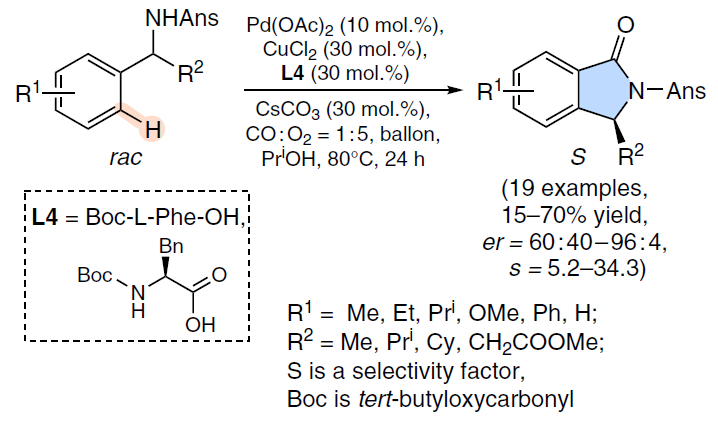
The development of approaches to stereodefined isoindolinones has further advanced Pd-catalyzed carbonylation from ring-size control to asymmetric C – H activation. Xu and co-workers[91] developed a Pd/Cu-cocatalyzed kinetic resolution of sterically hindered benzylamines to access chiral isoindolinones (Scheme 19). Sulfinyl protecting groups were essential, with 8-anilino-1-naphthalenesulfonyl (Ans) outperforming Ms, nosyl (Ns), Tf, and Ts analogs, whereas Boc-protected substrates were unreactive. Electron-rich, halogenated, ester-containing, and sterically congested aryl substrates were compatible (15 – 70%, er = 60 : 40 – 95 : 5), and both enantiomers could be accessed through ligand configuration switching. Density functional theory (DFT) studies indicate preferential C(sp2) – H activation over C(sp3) – H activation and rationalize the favored S-configured product. The method provides an effective asymmetric entry, but protecting-group dependence remains evident.
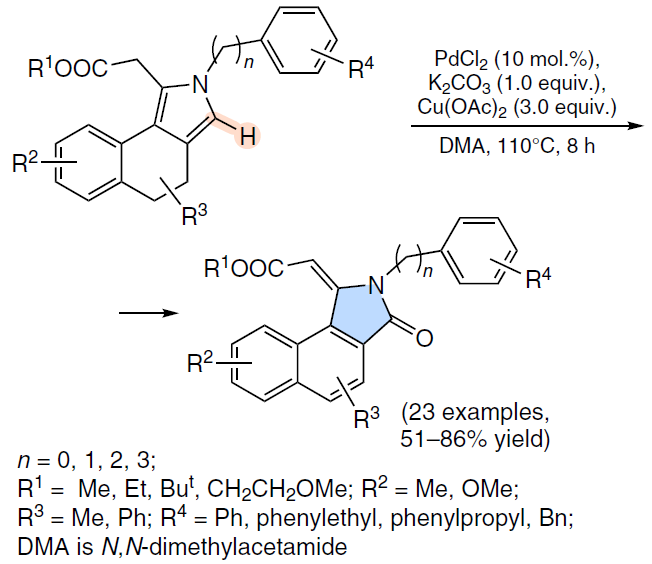
The preceding study focused on asymmetric carbonylative C – H functionalization, Das and co-workers[92] extended Pd/Cu cooperative catalysis to oxidative dearomatization of cyclohexyl-fused pyrrole derivatives, followed by rearomatization to furnish functionalized isoindolinones (Scheme 20). Variation of the ester alkyl group had little influence on efficiency, and methoxy substitution on the fused arene was well tolerated (51 – 86%). A methyl group at the C4 position retained good reactivity, whereas a bulky aryl group reduced the yield (64 – 66%). On the N-substituted aryl ring, electron-withdrawing groups such as F, Cl and Br generally gave higher yields than electron-donating Et and OMe groups. Control experiments showed that a C4 hydrogen, a dihydronaphthyl unit, and N-substitution are essential. DFT studies indicated that oxidative dearomatization is favored over conventional intramolecular C(sp2) – H activation because rearomatization and conjugation provide strong thermodynamic stabilization.
Palladium-catalyzed C – H functionalization has established itself as a powerful platform for the synthesis of isoindolinone frameworks, offering unparalleled flexibility in reaction design and substrate scope. Nevertheless, several key challenges remain to be addressed. These include the reliance on directing groups and stoichiometric oxidants, limited generality in asymmetric variants, and difficulties in achieving predictable site-selectivity in complex molecular settings.
2.2.2. Rh-Catalyzed
Rhodium-catalyzed C – H activation has evolved into a cornerstone strategy for the construction of isoindolinone frameworks, owing to its high reactivity, predictable selectivity, and broad functional-group tolerance.[93-100] Notwithstanding these advantages, the reactivity landscape remains highly dependent on directing group design and substrate coordination modes. A diverse repertoire of directing groups, including amides, pyridines, carbamates, sulfonamides, imines, and esters, has been developed to modulate reactivity and selectivity, often enabling complementary annulation pathways.[101-110] However, this reliance on directing groups inherently compromises step economy and limits substrate generality, representing a persistent challenge for future development.
Rh(III)-catalyzed C(sp2) – H functionalization with alkenes has emerged as a representative strategy for isoindolinone construction, distinct from Pd-catalyzed carbonylative pathways. In these reactions, benzamides or related DG-enabled substrates typically undergo ortho-C – H rhodation, alkene insertion, β-hydride elimination or olefination, followed by intramolecular aza-Michael cyclization to furnish 3-substituted, 3,3-disubstituted, alkylidene or functionalized isoindolinones.[111-117] The use of electron-deficient, internal and specially designed alkenes has broadened structural diversity and enabled access to sulfonyl fluoride-, difluoroalkene- and other handle-bearing products.[118-122] However, this manifold remains strongly dependent on alkene electronics and sterics. Electron-deficient alkenes generally favor complete annulation, whereas less activated or sterically hindered alkenes often lead to simple olefination, reduced conversion or divergent products. Therefore, Rh-catalyzed alkene annulation offers high modularity, but its broader application still requires improved control over oxidant demand, pathway divergence and product selectivity.
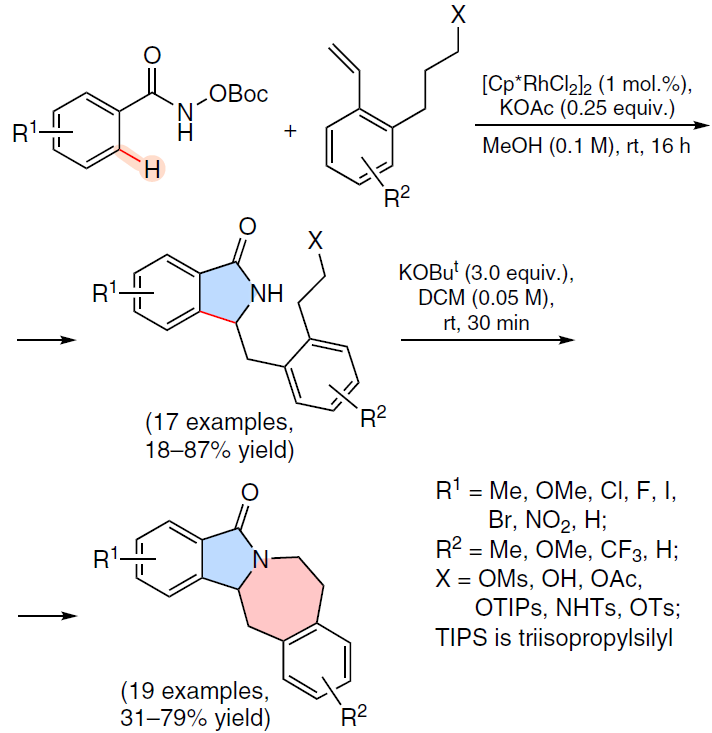
A representative advance in styrene-controlled Rh catalysis was reported by Waldmann and co-workers,[123] who achieved five-membered isoindolinone formation from aryl hydroxamates and ortho-substituted styrenes (Scheme 21). Styrenes bearing OMs, NHTs, OAc, OTIPS or free alcohol side chains showed good reactivity (40 – 81%), while simple ortho-Br or ortho-Me styrenes favored six-membered products unless the hydroxamate protecting group was adjusted. Aryl hydroxamates bearing Cl, F, Me, OMe and NO2 groups were tolerated (28 – 81%), although nitro substitution lowered efficiency (18%). Mechanistic studies indicate directed C – H rhodation, styrene insertion, β-H elimination, reinsertion and reductive elimination. This strategy enables access to isoindolobenzazepines, but remains dependent on matched hydroxamate and styrene substitution.
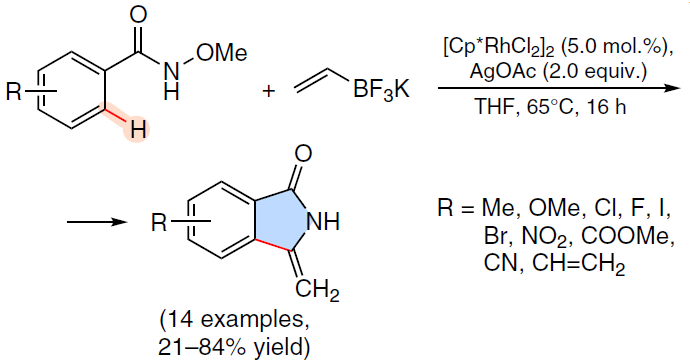
Vinyl boron reagents provide a complementary entry to unsubstituted 3-methyleneisoindolinones. Kumar and Gandeepan[124] employed potassium vinyltrifluoroborate as a vinyl transfer reagent in Rh(III)-catalyzed C – H/N – H activation of N-methoxybenzamides (Scheme 22). Para-substituted Me and OMe substrates reacted less efficiently than their halogenated analogs (46 – 48% vs. 45 – 70%), while electron-withdrawing NO2, CO2Me and CN groups were tolerated with moderate efficiency (21 – 73%). Meta-substituted benzamides reacted at the less hindered ortho C – H bond, whereas sterically demanding or heteroaryl amides preferentially furnished 2-vinylamides. Mechanistic experiments support reversible rhodation and subsequent intramolecular cyclization. The method directly accesses NH-free methylene products, but pathway divergence remains substrate-dependent.
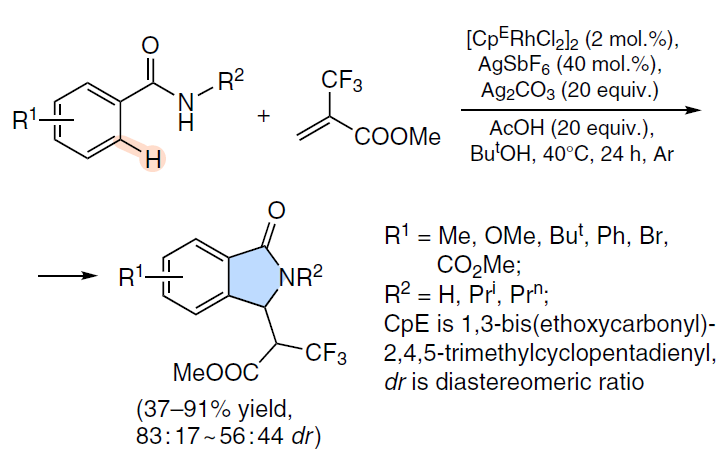
Fluorinated acrylates further demonstrate how alkene electronics can redirect Rh-mediated annulation. Satoh and co-workers[125] used methyl 2-trifluoromethylacrylate to access CF3-containing isoindolinones from benzamides (Scheme 23). Electron-rich benzamides bearing Me, OMe or Ph groups generally afforded higher yields than their bromo- or ester-substituted analogs (77 – 87% vs. 37 – 55%), while ortho-Me and benzo[b]thiophene substrates were less reactive (48 – 69%). The strong electron-withdrawing CF3 group is crucial because it promotes intramolecular nucleophilic addition after C – H rhodation, alkene insertion, and β-H elimination. The catalyst framework also influences oxidative vs. redox-neutral outcomes. This approach introduces valuable CF3 motifs, but product formation depends strongly on acrylate activation and amide substitution.
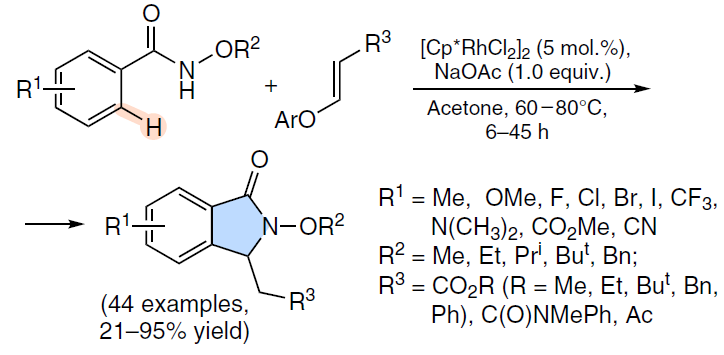
Redox-neutral [4 + 1] annulation has expanded Rh catalysis beyond conventional oxidative olefination. Qiao et al.[126] used electron-deficient alkenes bearing phenoxy or related leaving groups as nontraditional C1 synthons (Scheme 24). Benzamides containing halogen, alkyl, alkoxy, CF3, ester, cyano and aryl substituents were broadly compatible with the reaction (21 – 95%), and meta-substituted substrates reacted at the less hindered position. Alkyl, aryl, amide and ketone variants of the alkene partner were tolerated (57 – 97%), whereas electron-rich or sterically congested alkenes failed. The reaction integrates C – H, N – H and C – O bond cleavage with C – C and C – N bond formation. It avoids external oxidants, but requires specially designed oxidizing alkenes.
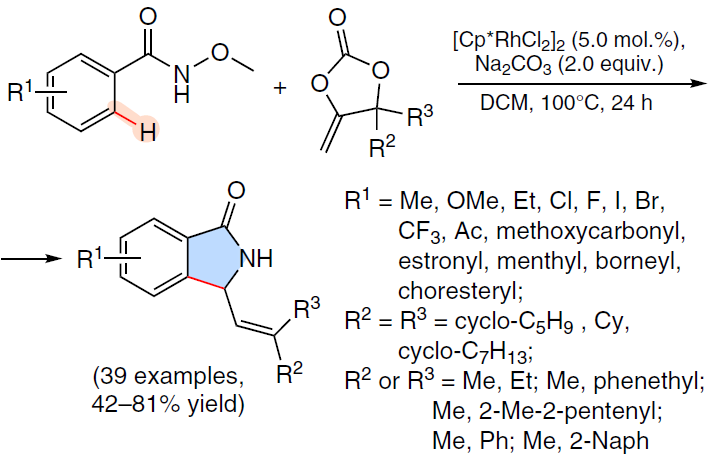
Electron-rich vinyl cyclic carbonates were later introduced as unusual one-carbon units for Rh(III)-catalyzed isoindolinone synthesis. Li et al.[127] showed that benzamides bearing alkyl, alkoxy, halogen, acyl, ester, and CF3 groups underwent [4 + 1] annulation with high regioselectivity, while meta-substituted substrates favored the reaction at the less hindered C – H site (Scheme 25). Ortho-substituted benzamides, however, diverted the reaction toward [4 + 2] annulation, and heteroaryl amides were ineffective. Cycloalkyl and aryl-substituted vinyl cyclic carbonates were suitable substrates (53 – 68%), whereas unsubstituted, monomethyl, and thienyl analogs failed. Mechanistically, C – H cleavage, alkene insertion, β-H elimination, Rh – H migration, and C – O bond fragmentation are implicated. The protocol is oxidant-free but sterically sensitive.
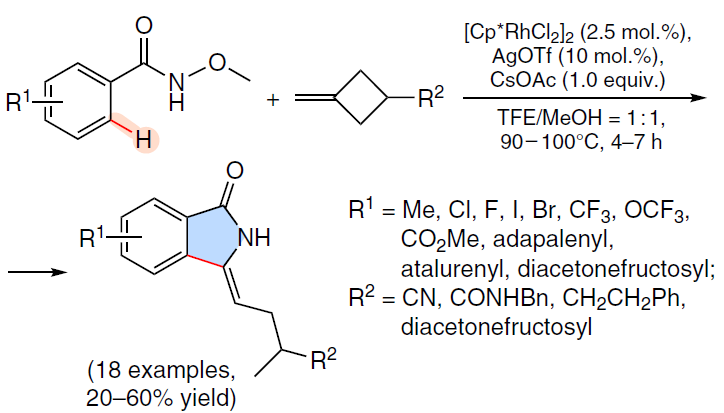
Strain-release reactivity provides another means of using alkenes as latent C1 components. Feng and co-workers[128] developed Rh(III)-catalyzed C – H alkenylation/[4 + 1] annulation of benzamides with alkylidenecyclobutanes (Scheme 26). Diversely substituted N-methoxybenzamides and ester-, amide-, or cyano-substituted alkylidenecyclobutanes are well tolerated and provided 20 – 70% yields of the products. In contrast, weakly coordinating alkylidenecyclobutanes failed, suggesting that ring opening and β-C elimination require appropriate functional group assistance. Mechanistic studies indicate a rhodacycle intermediate, an alkenylation intermediate, and a Rh – H migration process. This method offers switchable alkenylation or annulation, but moderate yields reflect the difficulty of controlling strain-release pathways.
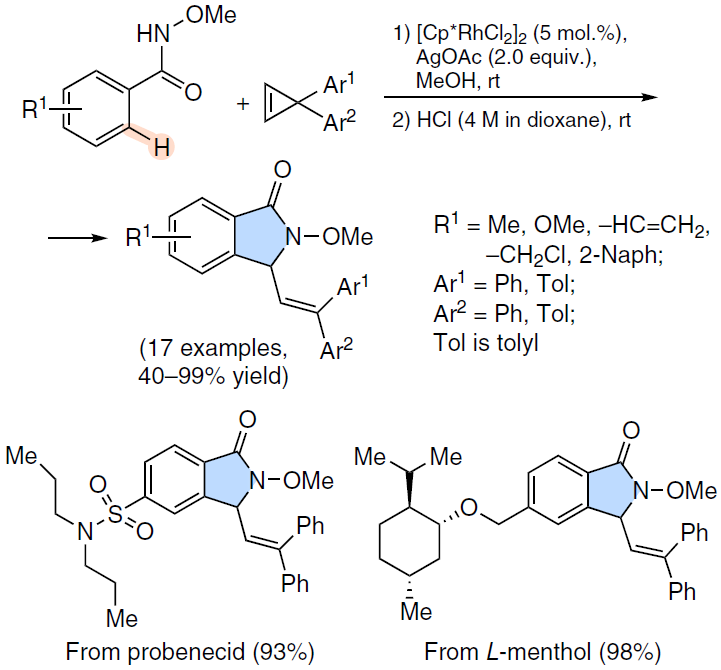
Cyclopropenes further broaden the alkene-derived reactivity manifold by enabling formal [4 + 1] ring transformation. Cao and co-workers[129] developed Rh(III)-mediated coupling of N-alkoxybenzamides with cyclopropenes, giving benzo-fused oxa-heterocycles that rearrange to N-alkoxy isoindolinones (Scheme 27). Electron-donating, electron-withdrawing, halogen, vinyl, and chloromethyl groups were tolerated (61 – 99%), while naphthyl and meta-substituted substrates showed steric or secondary coordination effects (40% vs. 38%). Diaryl cyclopropenes generally performed well, whereas some cycloalkyl variants were unsuitable (41%). Mechanistic and computational studies support sequential C – H coupling, π-allyl-Rh formation, and preferential O-attack, followed by acid-triggered O-to-N rearrangement. This work enriches ring-transformation chemistry, but selectivity depends on substrate-controlled O/N competition.
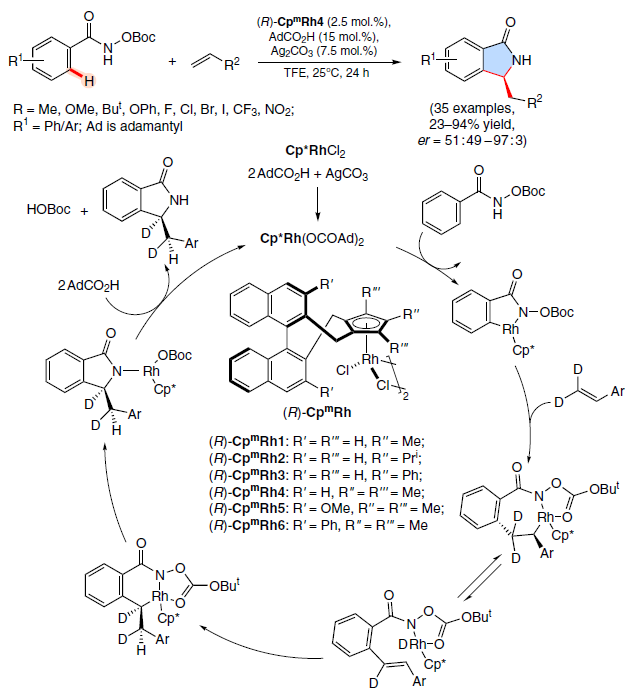
The above studies show that alkene substitution can govern ring size, regioselectivity, and pathway divergence. The next challenge is to translate this reactivity control into stereochemical control. You and co-workers[130] addressed this issue through tunable chiral CpRh complexes for enantioselective [4 + 1] annulation of O-Boc hydroxamates with styrenes (Scheme 28). Various para- and meta-substituted styrenes afforded products with high enantioselectivity (77 – 92%, er = 94.5 : 5.5 – 97 : 3), whereas ortho-substituted styrenes showed poor stereocontrol (er = 51 : 49 – 78.5 : 21.5). Diverse hydroxamates, including halogenated, naphthyl and indole-derived substrates, were compatible (57 – 94%). Conversely, low yields (< 60%) were recorded for the highly sterically hindered 2,6-dichlorostyrene (23%). The reaction likely involves oxidative Heck-type olefination and enantioselective intramolecular hydroamination. Its performance, however, remains sensitive to styrene geometry.
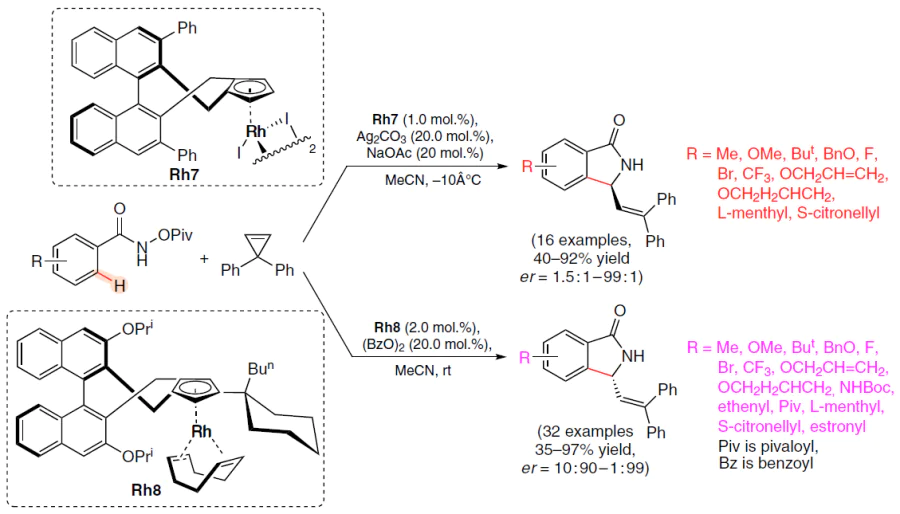
Ligand-controlled divergence offers a more advanced stereochemical design principle. Anbarasan and co-workers[131] reported chemo- and enantiodivergent Rh(III)-catalyzed annulations of aryl hydroxamates with cyclopropenes, enabling access to isoquinolones or isoindolinones from the same substrate class (Scheme 29). Alkyl, alkoxy, halo, CF3 , ester, cyano, nitro, Boc, allyl, and heteroaryl substituents were tolerated (52 – 92%), and several drug- or natural-product-derived substrates were applicable (62 – 90%). Substituted cyclopropenes also delivered products with high enantioselectivity (92%, er = 5.5 : 94.5), although unsymmetrical cyclopropenes sometimes generated E/Z or regioisomeric mixtures. Mechanistically, ligand sterics regulate C – H/C – C activation and subsequent C – C/C – N bond formation. This strategy achieves unusual selectivity divergence, but depends on sophisticated chiral Cp ligands.
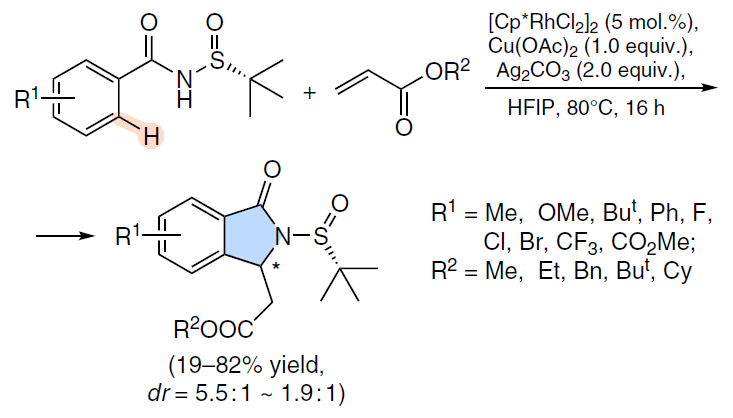
Chiral directing groups provide an alternative to chiral Cp ligand control in Rh-catalyzed asymmetric annulation. Song and co-workers[132] developed an N-sulfinyl amide-directed oxidative C – H olefination/annulation with acrylates to access chiral 3-substituted isoindolinones (Scheme 30). Diversely substituted acrylates were tolerated (67 – 76%, dr = 4.0 : 1 – 4.8 : 1). Electron-rich benzamides generally outperformed their fluoro, bromo, or chloro analogs (35 – 61%, dr = 3.3 : 1 – 5.0 : 1), while ortho-substituted substrates reacted poorly (26%). Thiophene substrates underwent simple olefination (46%), and alkenyl amides showed low efficiency (19%). Mechanistic studies suggest reversible but kinetically relevant C – H cleavage, acrylate insertion, β-H elimination, and intramolecular aza-Michael cyclization. The auxiliary is inexpensive and removable, although diastereoselectivity remains moderate.
Beyond the direct use of preformed alkenes, Rh-catalyzed isoindolinone synthesis has been further expanded by employing structurally diverse alkene surrogates and π-unsaturated partners, including in situ generated enones, strained-ring-derived alkene equivalents, and imine-type C1/N1 synthons. These developments represent an evolution from conventional alkene insertion/aza-Michael cyclization toward more flexible cascade processes involving dehydrogenation, ring opening, C – C bond cleavage, or imine generation, thereby improving substrate accessibility and structural diversity while also revealing new challenges in oxidant demand, partner substitution, regioselectivity, and pathway control.
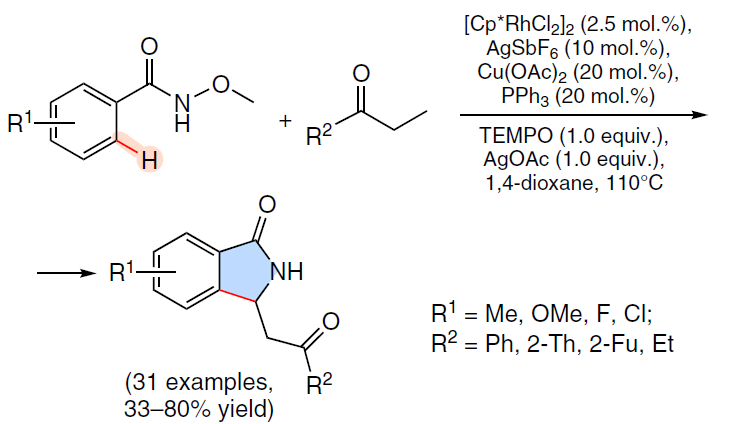
Rh/Cu cooperative catalysis provides a representative example in which saturated ketones are used as latent alkene equivalents. Du et al.[133] developed a tandem process, in which Cu-catalyzed dehydrogenation converts saturated ketones into activated enone intermediates, which subsequently participate in Rh(III)-catalyzed C – H/N – H annulation with N-methoxybenzamides (Scheme 31). The catalytic oxidative annulation exhibits a broad substrate scope with product yields primarily dictated by the electronic and steric environment of the coupling partners. High catalytic performance with 70 – 80% yields is generally achieved with benzamides and ketones bearing methyl or halogen substituents. A diverse array of derivatives incorporating various electron-donating and electron-withdrawing groups on the aromatic cores consistently afforded moderate yields ranging from 50% to 69%. Catalytic efficiency was notably curtailed by pronounced steric hindrance. Such limitations were observed with sterically demanding amides and when employing challenging substrates such as trifluoromethyl-substituted ketones and aliphatic ketones, the yields falled below 50%. Furthermore, the transformation is strictly dependent on the N-methoxy directing group. The absence of this moiety or the utilization of heteroaromatic carboxamides resulted in negligible product formation. This clearly underscores the critical role of the specific directing group in facilitating the overall catalytic cycle. This strategy avoids the need for preformed alkene substrates and highlights the synthetic value of combining in situ desaturation with directed C – H annulation. However, the overall efficiency remains closely associated with ketone dehydrogenation and compatibility between the two catalytic cycles.
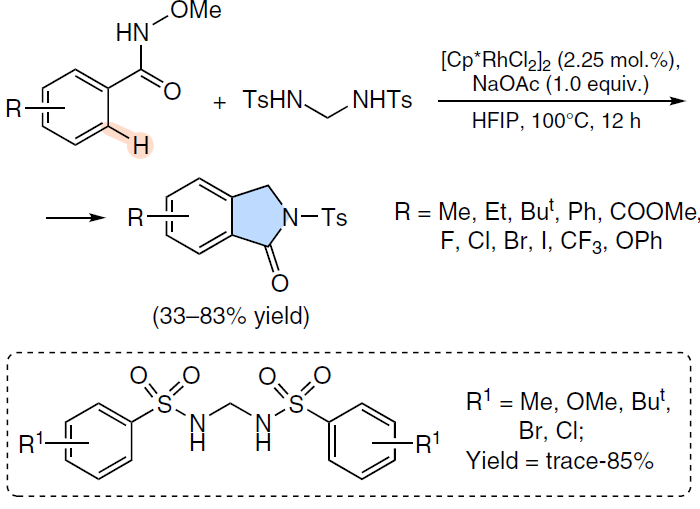
The use of bis(tosylamido)methane introduces a cyclization pattern distinct from conventional alkene insertion. Fang et al.[134] reported a Rh(III)-catalyzed [3 + 2] annulation between N-methoxybenzamides and bis(tosylamido)methane, enabling the formation of isoindolinones under oxidant-free conditions (Scheme 32). Compared with typical [4 + 1] annulation pathways, this transformation offers a different disconnection logic and shows broad functional-group compatibility. Its main contribution lies in expanding the types of C1/N-containing partners available for isoindolinone construction, although the structural diversity is still governed by the reactivity of the aminomethylating reagent.
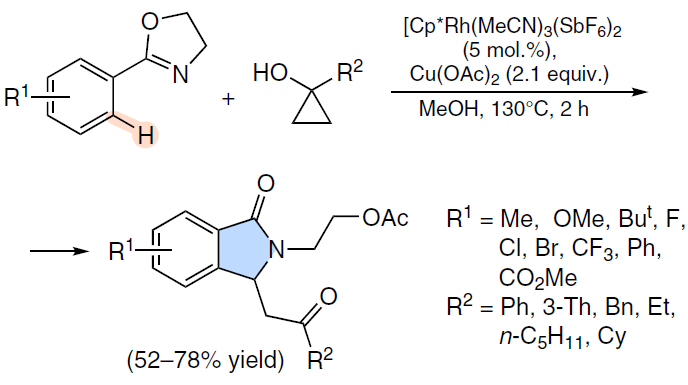
Strained small-ring alcohols represent another class of nonclassical coupling partners for Rh-catalyzed isoindolinone synthesis. Liu et al.[135] used cyclopropanols in an oxazoline-assisted oxidative cyclization, in which oxazoline acts as a bifunctional directing and nucleophilic group (Scheme 33). The reaction proceeds through C – H activation, strain-release C – C bond cleavage, and subsequent C – N/C – O bond formation, affording C3-substituted isoindolinones in a single operation. This approach benefits from the intrinsic driving force of ring opening and high atom economy, but its applicability depends on the availability and substitution pattern of cyclopropanol partners.
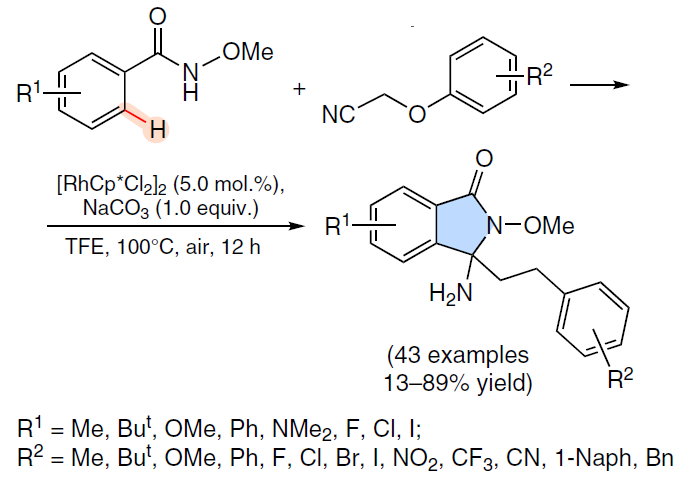
The use of inert aliphatic nitriles further broadens the coupling-partner profile of Rh-catalyzed C – H addition. Li et al.[136] developed a Rh-catalyzed C(sp2) – H addition/annulation of benzamides or acrylamides with acetonitrile analogs to access γ-lactam frameworks (Scheme 34). This reaction proceeds without external oxidants, ligands, or Lewis acids and relies on a traceless amide auxiliary to achieve high chemo- and stereoselectivity. Excellent yields (> 80%) are achieved with unsubstituted benzamides and those possessing electron-donating substituents such as methyl or methoxy at the para or meta positions. Phenoxyacetonitriles and acrylamides bearing various alkyl, halo, or naphthyl groups generally provide favorable yields, falling between 60% and 79%. By contrast, substrates with strongly electron-withdrawing functionalities including fluoro, chloro, trifluoromethyl, and nitro substituents tend to give only moderate to low yields (< 60%). Moreover, the presence of bulky meta-substituents on benzamides significantly hampers the reaction efficiency. By activating otherwise sluggish carbon-bound nitriles, this strategy expands the synthetic utility of nitrile substrates, although the reaction still requires appropriately activated nitrile analogs to ensure efficient annulation.
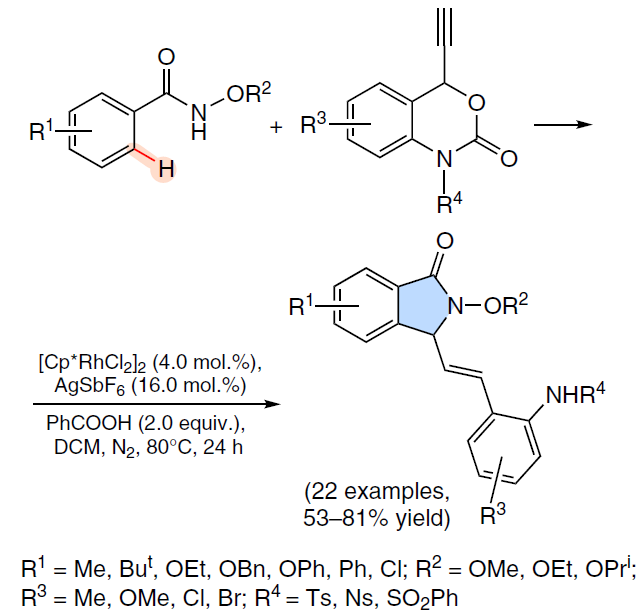
Metal-allenylidene chemistry offers a mechanistically distinct branch of Rh-catalyzed annulation. Ji and Li[137] reported a substrate-controlled decarboxylative annulation of benzamides with benzoxazinanone-derived propargylic carbamates, delivering either 1,8-naphthyridines or isoindolinones (Scheme 35). This transformation combines C – H activation with capture of reactive allenylidene-type intermediates, thereby enabling divergent heterocycle formation from related starting materials. The method illustrates how nonclassical propargylic coupling partners can regulate product topology, although precise product selectivity remains strongly dependent on the substrate design and the balance between competing cyclization pathways (53 – 81%).
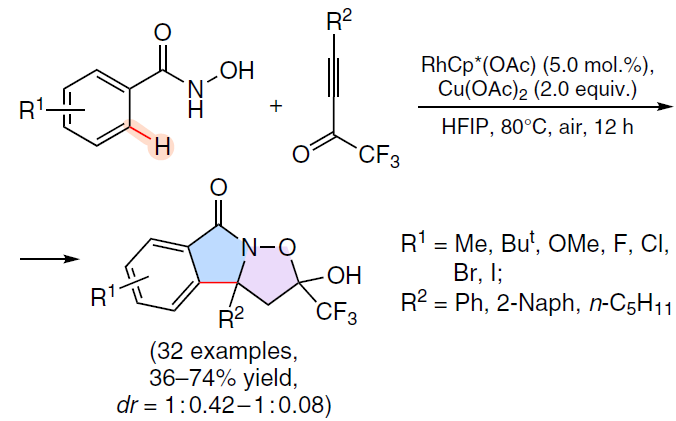
CF3-ynones further demonstrate the potential of Rh catalysis for rapid assembly of fused polycyclic isoindolinone frameworks. Sun et al.[138] disclosed a cascade annulation of N-hydroxybenzamides with CF3-ynones to construct CF3-isoxazolidine-fused isoindolin-1-ones (Scheme 36). The reaction proceeds through aryl C – H metalation, alkyne insertion, protodemetalation, intramolecular aza-Michael addition, and O-nucleophilic cyclization. Notably, the N-hydroxyamide group plays a triple role as directing group, N-nucleophile, and O-nucleophile. This one-pot strategy efficiently merges two privileged heterocyclic motifs but its scope is closely linked to the electrophilicity of the ynone partner (36 – 74%).
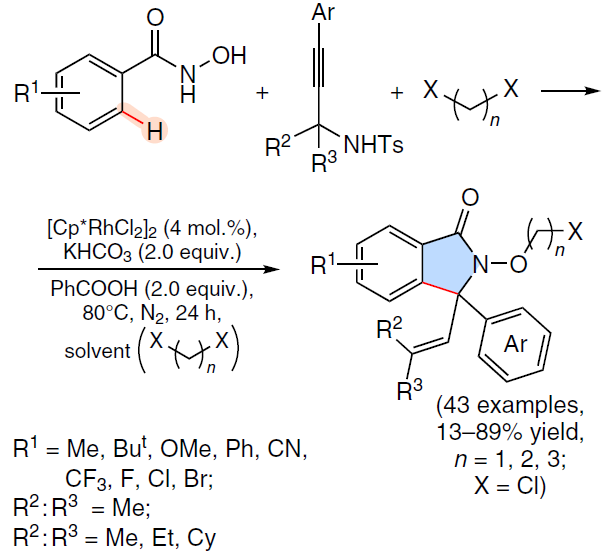
Propargylamine-triggered multicomponent annulation highlights the modularity of Rh-catalyzed cascade processes. Hu et al.[139] developed a three-component reaction involving N-hydroxybenzamides, propargylamines, and 1,2-dichloroethane to access N-alkoxylated 3-arylisoindolin-1-ones bearing a tetrasubstituted carbon center (Scheme 37). The modular assembly of isoindolinones demonstrates a broad substrate scope, wherein product yields are markedly governed by steric and electronic factors. Unsubstituted benzamides and those bearing alkyl or methoxy groups consistently give high yields (> 70%), and para‑halogenated analogs likewise show superior performance. Moderate yields (50 – 69%) are typically obtained with substrates that contain strongly electron‑withdrawing groups or ortho steric hindrance. Conversely, highly electron‑deficient cyano‑substituted substrates and aliphatic alkynes lead to low yields (< 50%) or complete reaction failure. The reaction sequence forms C – C, C – N, and C – O bonds in one operation and enables rapid generation of highly substituted isoindolinone products. This method shows advantages in modular substrate assembly and downstream derivatization, although the cascade nature of the transformation requires careful control of competing annulation and etherification events.
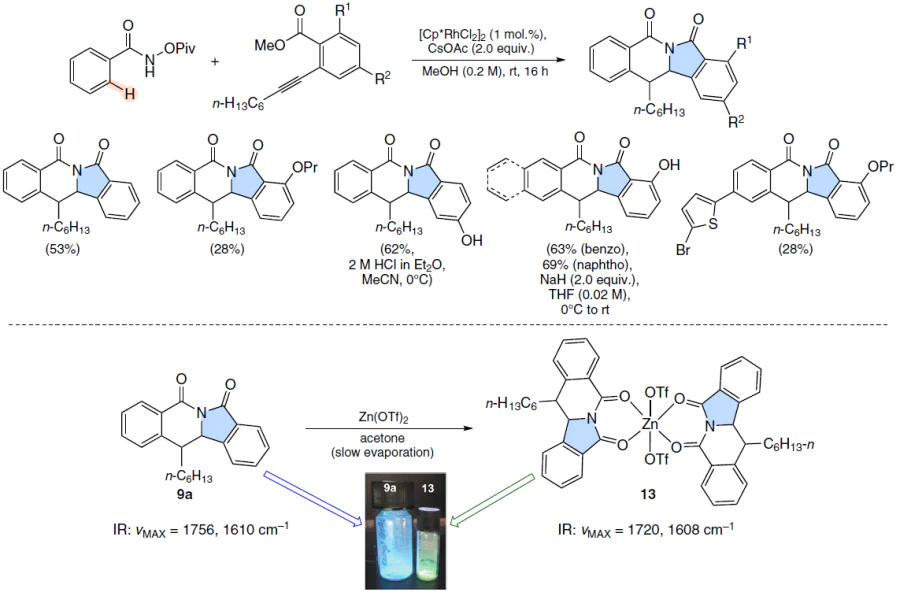
Ortho-alkynylbenzoate esters provide a convergent platform for constructing fused fluorescent isoindolinone-derived frameworks. Marsden and co-workers[140] developed a Rh(III)-catalyzed C – H activation/annulation of I-pivaloyl benzoylhydroxamates with ortho-alkynylbenzoate esters, giving isoindolo[2,1-b]isoquinoline-5,7-dione cores (Scheme 38). This strategy enables rapid access to rigid fused imide structures and extends isoindolinone chemistry from medicinal scaffolds to functional fluorophores (28 – 69%). The work is particularly valuable because it links annulation methodology with photophysical properties, although the synthesis relies on suitably designed ortho-alkynyl ester substrates.
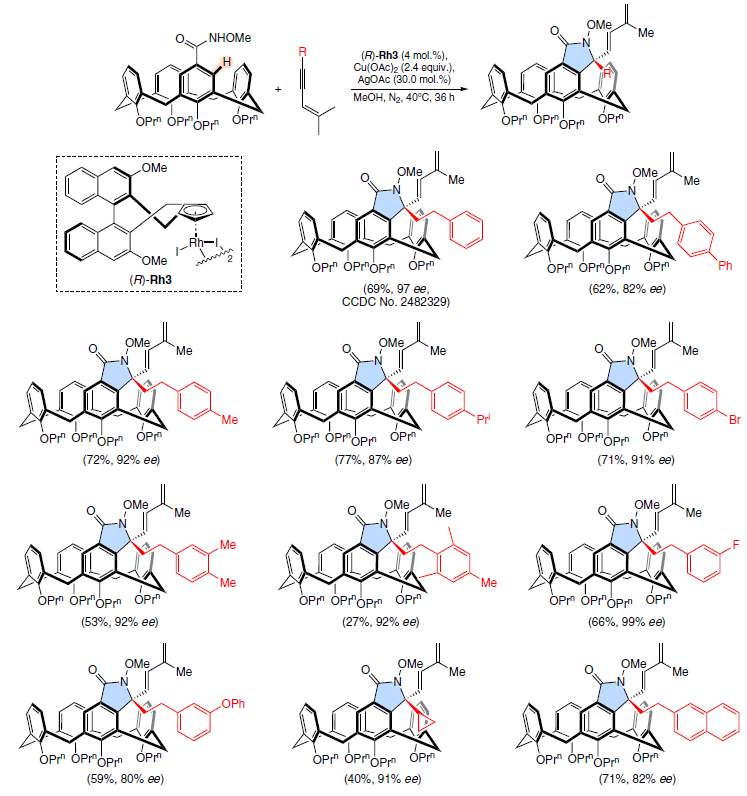
When Rh-catalyzed C – H activation is applied to calix[4]arene-based substrates, the reaction can be used to construct higher-order chiral architectures rather than simple heterocycles. Li and co-workers[141] developed an enantioselective Rh-catalyzed functionalization of calix[4]arene carboxamides using alkenes, alkynes, and 1,3-enynes as coupling partners. (Scheme 39). Under nearly unified conditions, this strategy affords inherently chiral calix[4]arenes and calixarene-fused heterocycles, including isoindolinone-related products (40 – 92%). The method expands Rh catalysis from small-molecule annulation to macrocyclic stereochemical design, although the substrate platform is structurally specialized.
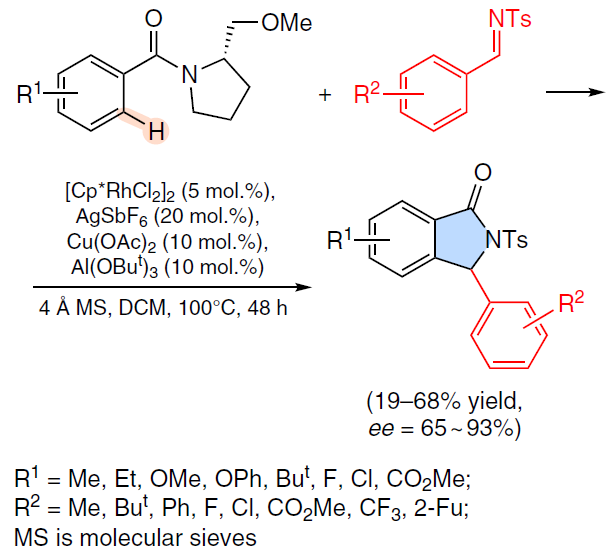
The development of stereocontrolled isoindolinone synthesis has also benefited from chiral directing-group strategies. Wang and co-workers[142] achieved Rh(III)-catalyzed asymmetric addition of arene C – H bonds to aldimines, followed by intramolecular cyclization to form chiral isoindolinones (Scheme 40). The efficiency of the asymmetric cyclization is highly dependent on substrate electronic and steric effects. Moderate yields (50 – 68%) are typically achieved with ortho/meta-substituted aldimines and amides containing para-electron-donating groups (e.g., methyl or phenoxy). In contrast, para-substituted aldimines and amides with electron-withdrawing functionalities (e.g., fluoro and ester) generally give lower yields (20 – 49%). Notably, efficiencies drop below 20% or even lead to complete reaction failure using ortho-substituted amides, heterocyclic amides, aliphatic aldimines, or bulky naphthyl derivatives. In this system, the chiral amide DG controls both site-selective C – H activation and stereochemical induction during the C – C bond formation. This approach avoids the use of preformed organometallic reagents and provides access to enantioenriched isoindolinones, although the requirement for a chiral auxiliary limits overall step economy.
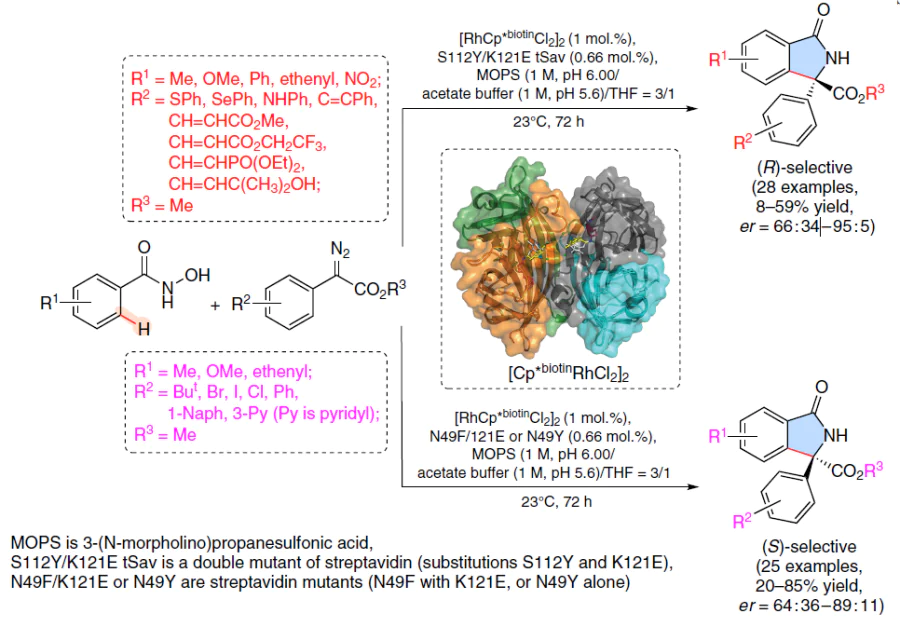
Artificial metalloenzymes provide a further level of stereochemical control by placing Rh(III)-catalyzed C – H activation within an engineered protein environment. Maiti and co-workers[143] developed a streptavidin – biotin – Rh(III) platform for the asymmetric synthesis of isoindolones from N-pivaloyloxybenzamides and aryl diazoesters (Scheme 41). Protein engineering enabled modulation and even reversal of enantioselectivity, while mechanistic studies supported directed inner-sphere C – H activation followed by diazo insertion. This hybrid catalytic system demonstrates the potential of combining organometallic reactivity with enzyme-like chiral environments, although substrate solubility and catalyst engineering remain important practical considerations.
Although Rh catalysis has delivered notable progress, general enantioselective access to diverse isoindolinone scaffolds remains underdeveloped. Future studies should therefore focus on traceless or native directing groups, oxidant-free and redox-neutral systems, less expensive catalytic platforms, broader compatibility with unbiased substrates, and more predictable control of chemo-, regio-, and stereoselectivity. Mechanistic understanding, especially of migratory insertion, β-elimination, radical or carbene pathways and post-annulation cyclization events, will be essential for transforming Rh-catalyzed isoindolinone synthesis from a powerful methodological platform into a more general, sustainable and late-stage-applicable synthetic tool.
2.2.3. Ru-Catalyzed
Compared with the more extensively developed Rh-catalyzed systems, Ru-catalyzed C – H functionalization offers a complementary platform for isoindolinone synthesis because of its lower cost, operational robustness and distinctive redox flexibility.[144-146] In this field, Ru(II) catalysis has mainly relied on directed ortho-C – H activation of benzamide-, nitrone-, benzimidate- or hydroxamate-type substrates, followed by annulation with alkenes or alkene-like coupling partners.[147-151] These transformations provide access to 3-substituted, alkylidene, spirocyclic and fused isoindolinone-related frameworks through oxidative olefination, aza-Michael cyclization, aza-Wacker cyclization, redox-neutral olefination or cascade annulation.[152] However, the outcome is often governed by the combined effects of directing-group coordination, alkene electronics, oxidant/additive selection and substrate sterics, indicating that Ru catalysis expands the synthetic scope but remains highly condition-dependent.
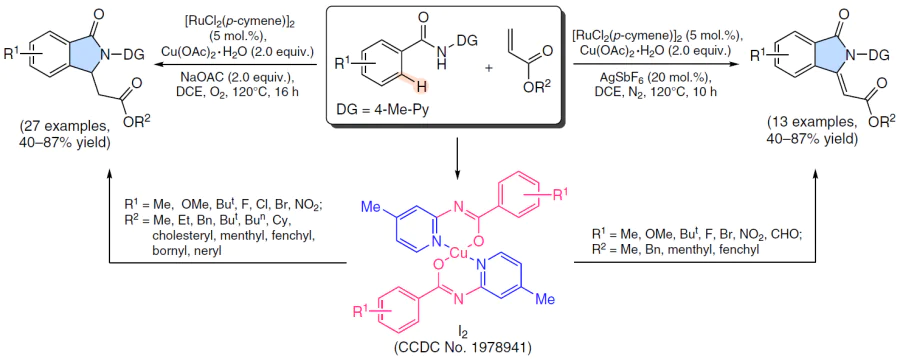
Pathway-divergent Ru catalysis was demonstrated through oxidative olefination of N-pyridylbenzamides with acrylates (Scheme 42).[153] Both electron-donating (Me, But, OMe) and electron-withdrawing (NO2 , CHO, F, Br) groups were tolerated (40 – 87%), whereas ortho-Me substitution reduced efficiency because of steric hindrance (18%). Acrylates bearing alkyl, benzyl, cyclohexyl and natural-product-derived ester groups were compatible (44 – 79%). Mechanistically, directed C – H ruthenation, alkene insertion, and β-hydride elimination generate an alkenylated intermediate, which undergoes either aza-Michael or aza-Wacker cyclization depending on the additive and atmosphere. This work provides switchable access to 3-oxoisoindolinyl and alkylidene products, although precise condition control remains essential.
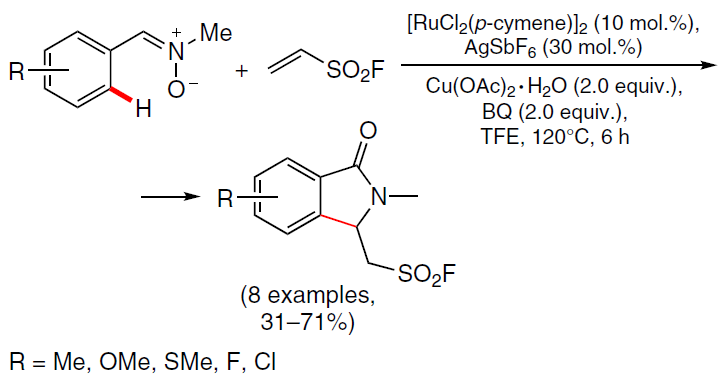
Ethenesulfonyl fluoride offers a functionalized alkene platform that links Ru-catalyzed C – H activation with sulfur(VI) fluoride exchange (SuFEx)-relevant product design (Scheme 43).[154] In the reaction of arylnitrones with ethenesulfnonyl fluoride (ESF), electron-rich OMe, SMe, and Ph substituents generally provided high efficiency (61 – 71%), while halogens and ester groups gave moderate yields (36 – 49%). Changing the N-substituent from tert-butyl to methyl redirected the pathway from linear alkenylated amides to sulfonyl fluoride-substituted isoindolinones. Mechanistic studies support reversible electrophilic C – H activation, ESF insertion, β-hydride elimination, nitrone-to-amide conversion, and intramolecular cyclization.
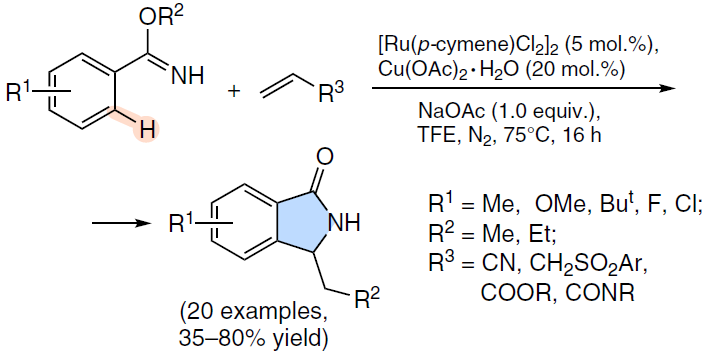
Benzimidates further reveal how directing groups reshape Ru-catalyzed alkene annulation (Scheme 44).[155] With acrylonitrile and acrylates, electron-rich MeO and Me substituents and halogenated or CF3-substituted benzimidates afforded 1H-isoindole derivatives (41 – 72%), whereas acetyl and cyano groups were ineffective. Meta-substituted substrates reacted at the less hindered C – H site. Functionalized olefins such as allyl sulfones, methyl vinyl ketone, maleimide and acrylamides were also applicable (35 – 72%), while unactivated alkenes mainly furnished ortho-alkenylated products rather than cyclized products. The proposed mechanism involves CMD-type C – H activation, alkene insertion, β-hydride elimination, and aza-Michael addition. This study broadens Ru-catalyzed alkene scope, but product formation remains strongly alkene-dependent.
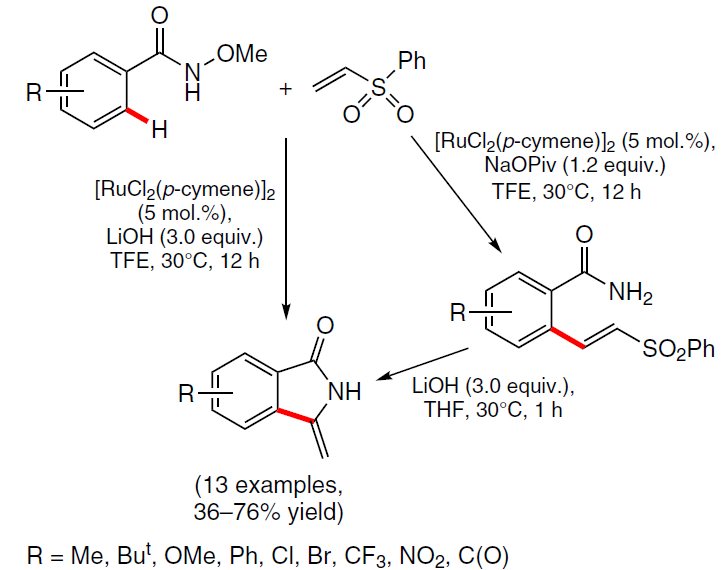
Vinyl sulfones provide a redox-neutral entry to 3-methyleneisoindolin-1-ones by exploiting sulfinate as a leaving group (Scheme 45).[156] Diversely substituted N-methoxybenzamides were well tolerated in the reaction (36 – 76%). Thiophene-based substrate showed low efficiency (62%), whereas benzothiophene and several biomolecule-derived amides were compatible (80%). Switching the additive enabled either C – H olefination or tandem olefination/cyclization/elimination. Mechanistic studies suggest Ru-catalyzed C – H activation, vinyl sulfone insertion, N – OMe oxidative turnover, intramolecular Michael addition, and sulfinate elimination. The method avoids external oxidants and silver additives, but regioselectivity remains substrate-sensitive.
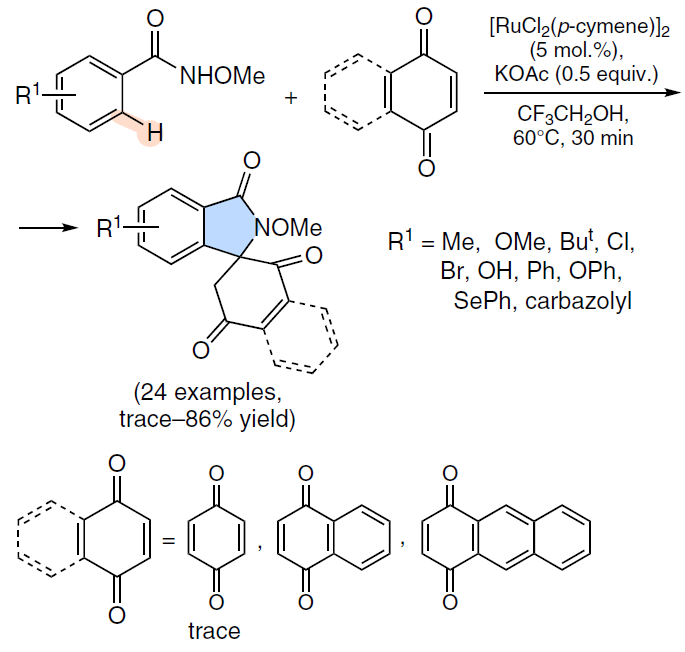
Spiroannulation with naphthoquinones represents a distinct Ru-catalyzed strategy for accessing spiro-isoindolinones (Scheme 46).[157] Hydroxamate substrates bearing alkyl, methoxy, halogen, free hydroxyl, benzyl-protected, biphenyl, aryl selenoether, and carbazole motifs reacted with benzoquinone in moderate to good yields (50 – 86%). Notably, 1,4-anthraquinone also performed good (62%). In contrast, benzoquinone, maleimide, and maleic anhydride were ineffective (traces of the products). The presence of a free N – H unit in the directing group was crucial. Mechanistic experiments indicate reversible C – H metalation, quinone insertion, hydroarylation, aerobic oxidation and 5-exo-trig Michael cyclization, with naphthoquinone acting as both coupling partner and oxidant. The spiro products can undergo base-promoted transannulation, although the reaction is largely limited to quinone-type partners.
Furthermore, isoindolinones can also be accessed via ruthenium catalysis using alkene equivalents, π-unsaturated compounds, and carbonyl-type reagents (as well as propargyl alcohols and isocyanates).[158-161] This demonstrates the remarkable compatibility of the ruthenium catalytic system with a wide array of coupling partners. After establishing Ru-catalyzed annulation with conventional electron-deficient alkenes, recent studies have increasingly shifted toward nonclassical coupling partners that do not simply undergo alkene insertion. Instead, these systems exploit in situ imine generation, strained-ring cleavage, transient directing groups (TDGs) or post-annulation derivatization to access isoindolinone frameworks through mechanistically distinct pathways.
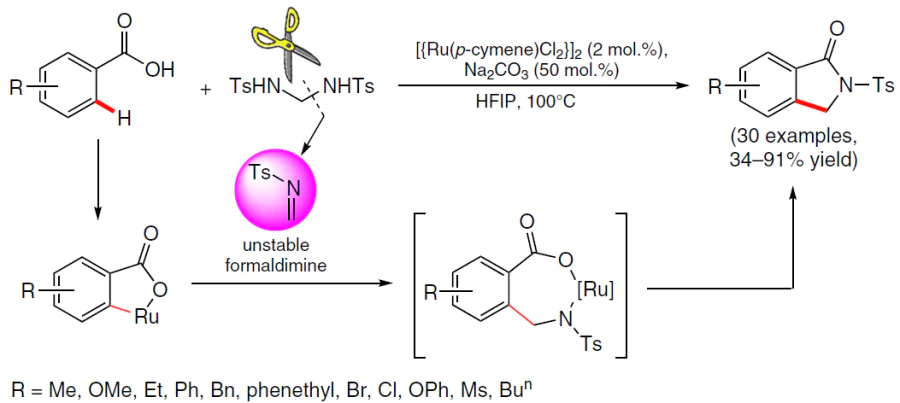
A formaldimine-based strategy provides a concise alternative to alkene annulation in Ru-catalyzed isoindolinone synthesis. Hu et al.[162] developed a ruthenium-catalyzed C – H/C – N bond activation reaction between benzoic acid and di(benzoylimido)methane for the synthesis of isoindolinones (Scheme 47). Electron-rich benzoic acids generally performed slightly better (50 – 95%), while Br, I, sulfonyl, naphthyl, and bioactive acid derivatives were less active (32 – 72%). However, 3-substituted substrates sometimes showed modest regioselectivity (C2 : C6 = 1 : 1), and triazinane-based imine surrogates were ineffective. Mechanistic studies suggest carboxylate-directed C – H activation, formaldimine coordination, migratory insertion, protonolysis, and intramolecular cyclization. This method avoids external oxidants, but relies strongly on acidic solvent and carboxylate coordination.
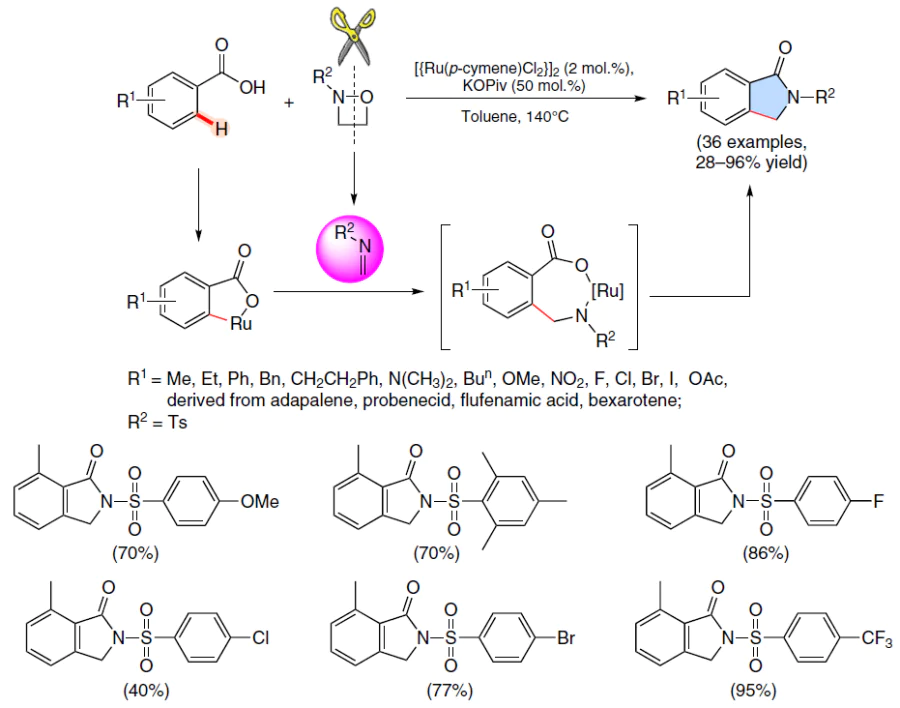
Strain-release coupling represents another nonclassical direction in Ru-catalyzed isoindolinone synthesis. Hu et al.[163] merged carboxylate-directed C – H activation of benzoic acids with ring opening of 1,2-oxazetidines, providing N-substituted isoindolinones from readily available acids (Scheme 48). Alkyl-, benzyl-, phenethyl-, halogen-, ester-, nitro- and dimethylamino-substituted benzoic acids were compatible (38 – 96%), and naphthoic acids gave structurally complex products (96%). Heteroaromatic acids and substituted oxazetidine rings, however, were not suitable. Investigation of the N‑protecting group on 1,2‑oxazetidines revealed that aryl substituents, whether electron‑donating (methoxy, trimethyl) or electron‑withdrawing (CF3, halogens), were well tolerated, affording isoindolinones in 40 – 95% yields. In contrast, substitution on the oxazetidine ring itself was not compatible with the reaction. Mechanistic experiments support reversible C – H ruthenation, oxazetidine coordination, β-carbon elimination, imine formation, migratory insertion, and intramolecular cyclization. The reaction expands strained-ring chemistry beyond three-membered systems, although elevated thermal input and substrate-specific limitations remain.
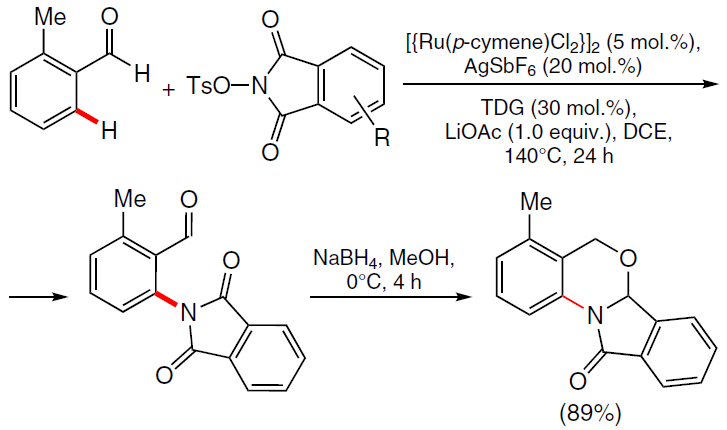
Transient directing-group-assisted imidation offers a distinct route from aldehydes to fused isoindolinone scaffolds. Zhang and co-workers[164] identified 2-fluoro-5-trifluoromethylaniline as an effective monodentate TDG for Ru-catalyzed ortho-C – H imidation of benzaldehydes using N-tosyloxyphthalimide (Scheme 49). The amidated products could be converted into quinazolines or fused isoindolinones through simple derivatization. Mechanistically, imine formation, Ru-mediated ortho-C – H activation, imidating reagent coordination, N – O cleavage, and hydrolysis are proposed. This strategy reduces directing-group installation, but still depends on TDG optimization and derivatization.
Ru-catalyzed C – H activation chemistry for isoindolinone synthesis has evolved from DG-dependent oxidative cascades to more diversified redox-neutral and TDG strategies. However, a consistent theme persists: many transformations still rely on either pre-functionalized substrates, external oxidants, or carefully engineered directing systems. Consequently, the current state of Ru catalysis should be viewed not as a fully general platform, but as a strategically complementary toolkit whose true potential will depend on further advances in substrate-unbiased activation, auxiliary-free control, and intrinsically redox-efficient design.
2.2.4. Ir-Catalyzed
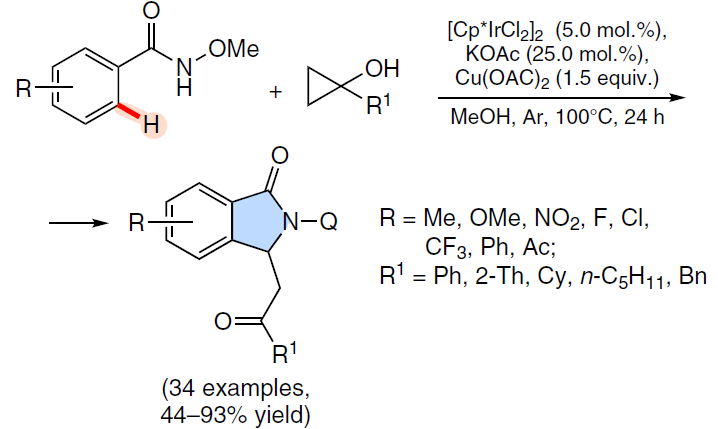
Although Ir-catalyzed isoindolinone synthesis remains less developed than that using Rh or Ru catalytic analogs, strained-ring-enabled C – H annulation has shown its ability to generate distinct bond-forming patterns. Wu and co-workers[165] reported an Ir-catalyzed formal [4 + 1] annulation of benzamides with cyclopropanols, in which cyclopropanols serve as one-carbon partners rather than conventional three-carbon synthons (Scheme 50). Electron-rich benzamides and aryl cyclopropanols generally afforded higher efficiency (61 – 85%), whereas strongly electron-withdrawing or sterically congested substrates gave lower yields or regioisomeric mixtures (44 – 83%). Mechanistic studies indicate C – H cleavage, Ir-cyclopropoxide formation, β-carbon elimination, β-hydride elimination, migratory insertion, and intramolecular Michael addition. This method broadens strained-ring chemistry, but oxidant dependence and substrate sensitivity remain evident.
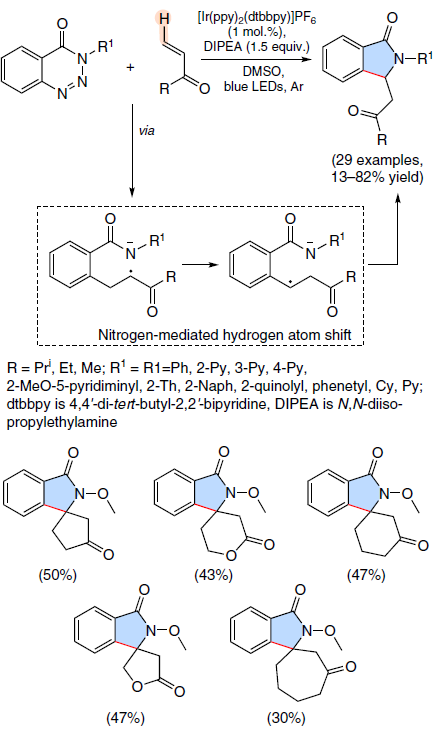
Distinct from thermally driven Ir-mediated C – H activation, photoredox Ir catalysis provides a radical pathway for regioselective isoindolinone formation. Keaveney and co-workers[166] developed a visible-light-mediated denitrogenative alkene insertion of 1,2,3-benzotriazin-4(3H)-ones, giving 3-substituted isoindolinones (Scheme 51). N-Aryl substrates bearing Me, OMe, halogen or CF3 groups were well tolerated (71 – 82%), whereas simple N-alkyl substrates showed poor denitrogenation efficiency. Activated acrylates and cyclic α, β-unsaturated carbonyl compounds were suitable alkene partners (49 – 60%), while styrene failed. Mechanistic and computational studies support single-electron reduction, N2 extrusion, radical addition, nitrogen-mediated hydrogen atom shift, and C – N bond formation. These studies establish reactivity control in Ir catalysis, while enantioselective variants remain largely unexplored.
2.2.5. Co-Catalyzed
Cobalt-catalyzed C – H functionalization represents an important first-row transition-metal strategy for isoindolinone synthesis. Compared with noble-metal catalysis, Co catalysis offers advantages in catalyst abundance, cost, and redox flexibility, while also enabling oxidative annulation pathways that are not always directly transferable from Rh, Ru, or Pd systems. In isoindolinone construction, Co-catalyzed protocols have mainly relied on directing-group-assisted ortho-C – H activation of benzamide-type substrates, followed by coupling with activated unsaturated partners. These reactions demonstrate that cobalt can mediate C – H olefination, migratory insertion, and subsequent intramolecular cyclization to generate lactam frameworks. The scope of Co-catalyzed isoindolinone synthesis has progressively evolved from direct annulation with simple activated alkenes to more diverse alkene-related variants, including in situ generated enones,[167] allenes,[168] and isocyanide-mediated C1 partners.[169-175] These systems demonstrate that cobalt catalysis can merge C – H activation with olefination, migratory insertion, β-hydride elimination, hydroamination or transamidation to diversify isoindolinone construction. However, most examples still rely on strongly coordinating directing groups, external oxidants, electrochemical assistance or cooperative metal systems, and their efficiency is often affected by steric congestion and electron-withdrawing substituents. These limitations provide the context for developing more general alkene variants in cobalt-mediated annulation.
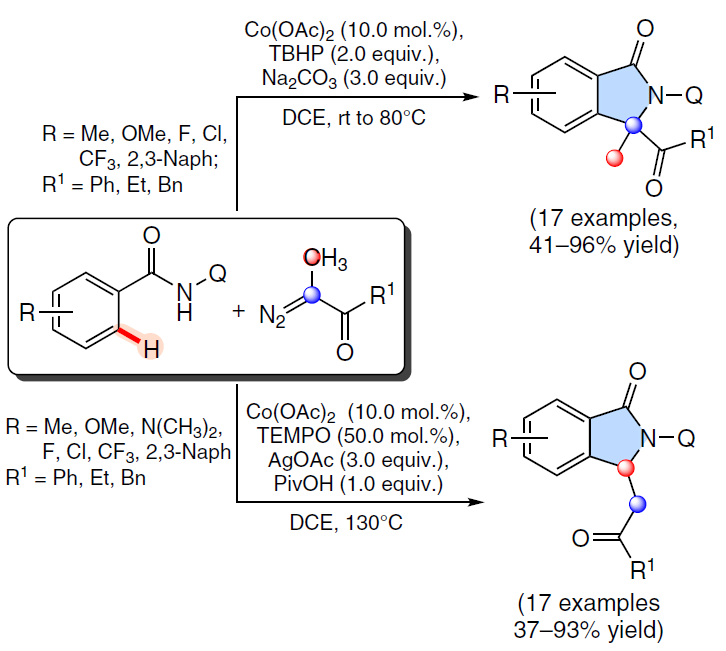
Regioselective functionalization of α-diazoketones represents an early attempt to replace classical alkenes with more versatile unsaturated equivalents. Li et al.[176] developed a cobalt-catalyzed C – H activation of quinolinyl benzamides with α-diazoketones, in which the same diazo partner could deliver either α- or β-functionalized isoindolinones depending on the catalytic system (Scheme 52). Electron-rich benzamides generally reacted more efficiently, while halogen, CF3 , ortho-substituted and naphthyl substrates showed variable regioselectivity (37 – 97%). Mechanistically, β-functionalization likely proceeds through diazoketone-to-enone conversion, migratory insertion and intramolecular hydroamidation, whereas α-functionalization involves cobalt – carbene formation and direct migratory insertion. This work demonstrates tunable regioselectivity, although catalyst-controlled divergence remains condition-sensitive.
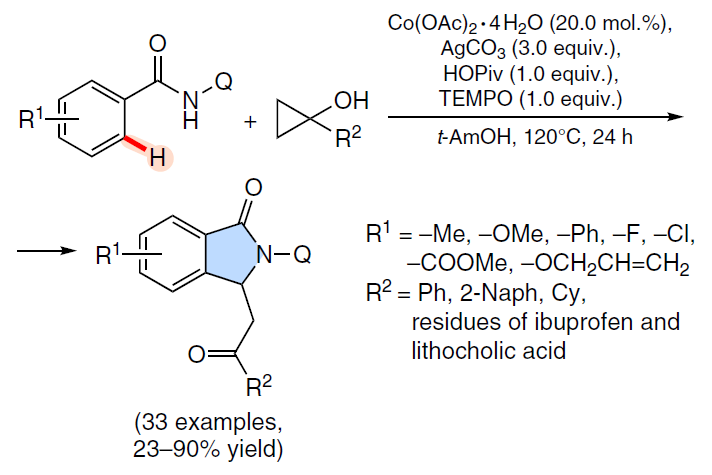
Cyclopropanols provide a strain-release alternative to activated alkenes in cobalt-mediated annulation. Yu and co-workers[177] reported Co(II)-catalyzed C – H/N – H functionalization of N-(quinolin-8-yl)benzamides with cyclopropanols to access isoindolin-1-ones (Scheme 53). The substrate scope demonstrates a strong dependence on substituent effects. Unsubstituted benzamides and those para-substituted with electron-donating groups as well as cyclopropanols containing para-substituted aryls provide high yields (> 80%). Moderate yields (50 – 79%) are common for ortho-substituted derivatives and meta-substituted benzamides that give regioisomeric mixtures. Low yields are observed for ortho-methoxy benzamide (25%), meta-fluoro benzamide (47% and 24% for isomers), thiophene (40%), vinyloxy (23%), and lithocholic acid-derived cyclopropanol (27%). Steric congestion and electronic deactivation are responsible for these diminished outcomes. Mechanistic experiments suggest oxidative ring opening of cyclopropanols to enone intermediates, followed by cobaltacycle formation, enone insertion, β-H elimination, and intramolecular Michael addition. The strategy broadens strained-ring chemistry, but depends strongly on bidentate directing groups and oxidant combinations.
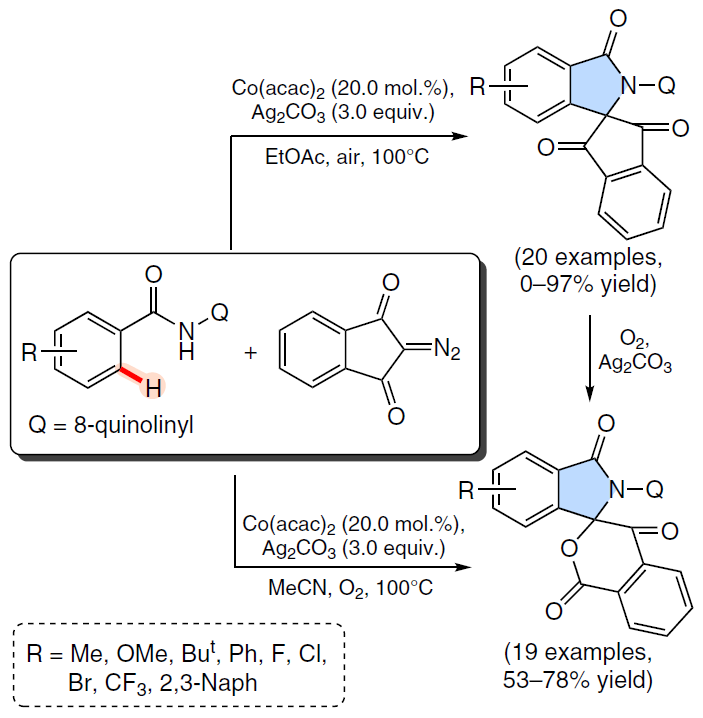
Spirocyclization with diazo-derived partners further expands cobalt-catalyzed isoindolinone synthesis toward three-dimensional scaffolds. Li and co-workers[178] developed a condition-controlled reaction of aromatic amides with 2-diazo-1H-indene-1,3(2H)-dione, affording either spiro indene-isoindolinones or spiro isochroman-isoindolinones (Scheme 54). Para-, meta- and ortho-substituted benzamides bearing methoxy, alkyl, phenyl, halogen and CF3 groups generally performed well (37 – 96%), whereas oxygen-coordinating heteroaryl substrates and less suitable diazodicarbonyl partners were ineffective. The proposed mechanism involves quinoline-directed C – H activation, cobalt–carbene formation, migratory insertion and reductive elimination; under oxygen, the initially formed spiro product undergoes Ag-promoted Baeyer-Villiger oxidation. This system improves scaffold diversity, although product divergence relies heavily on atmosphere and solvent control.
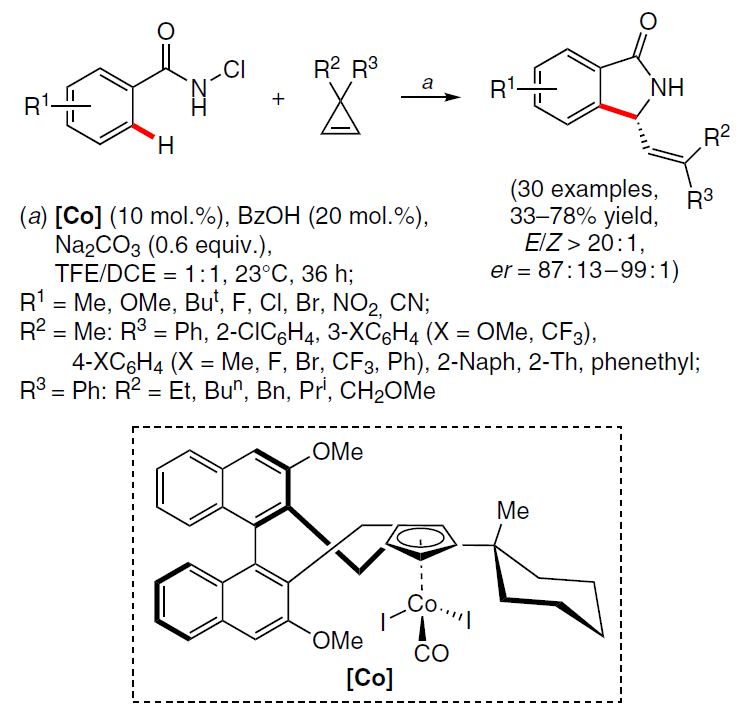
Cyclopropenes mark a more advanced stage in cobalt-catalyzed nonclassical alkene chemistry by combining strain release with stereochemical control. Cramer and co-workers[179] reported a chiral Cp*Co(III)-catalyzed enantioselective [4 + 1] annulation of N-chlorobenzamides with cyclopropenes, in which cyclopropenes behave as one-carbon synthons rather than conventional two-carbon alkenes (Scheme 55). Electron-rich, electron-poor, halogenated, meta-, ortho-substituted and naphthyl benzamides reacted with high enantioselectivity (42 – 71%, E/Z > 20 : 1, er = 89 : 11 – 98 : 2); aryl, heteroaryl, alkyl and sterically demanding cyclopropenes were also effective (59 – 78%, E/Z > 20 : 1, er = 90.5 : 9.5 – 96.5 : 3.5), although E/Z selectivity could decrease for bulky or ortho-substituted partners. Computational studies indicate C – H activation, cyclopropene insertion, cobalt-promoted ring opening, oxidative addition, and nitrene insertion. This work links nonclassical alkene activation to asymmetric isoindolinone synthesis, while ligand design remains crucial.
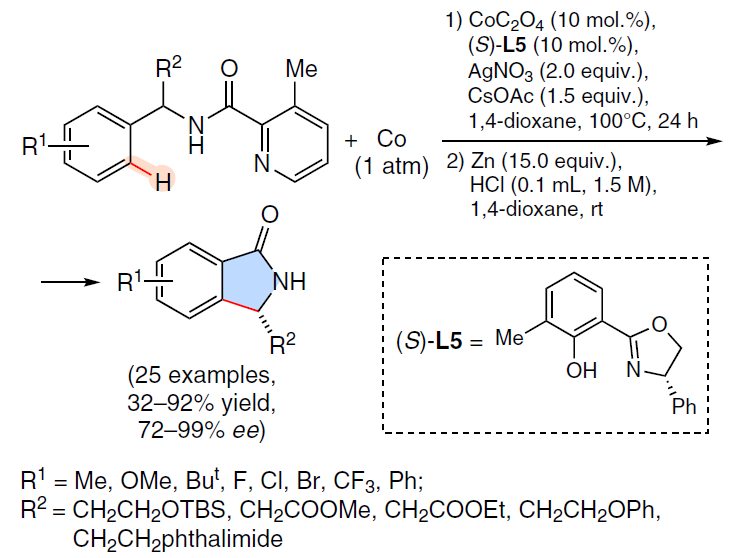
In addition to alkene-, strained-ring- and diazo-derived C1 variants, carbon monoxide represents the most direct one-carbon source for constructing the lactam carbonyl unit in isoindolinone synthesis. Shi and co-workers[180] developed a Salox ligand-enabled asymmetric carbonylative annulation using CO as the C1 source (Scheme 56). Through desymmetrization, kinetic resolution and parallel kinetic resolution, diverse chiral isoindolinones were obtained with excellent enantioselectivity. The synthesis of bioactive molecules and the use of products as chiral ligands further highlight the value of this strategy for stereochemical construction.
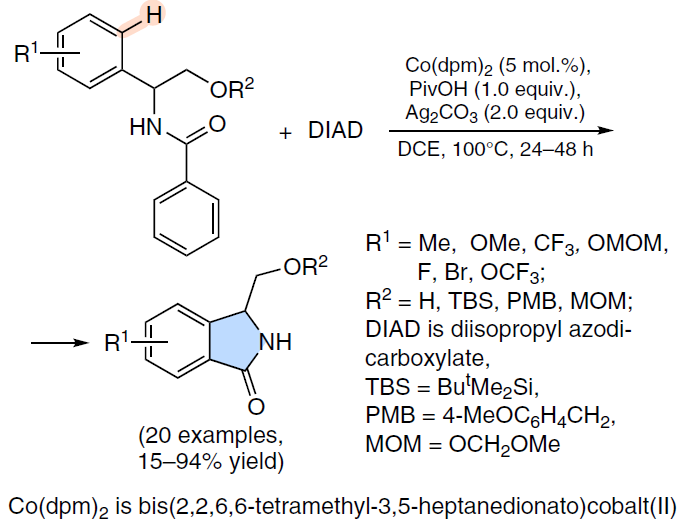
To overcome the practical limitations of gaseous CO, Grigorjeva and co-workers[181] introduced diisopropyl azodicarboxylate (DIAD) as an operationally convenient CO surrogate in cobalt-catalyzed C(sp2) – H carbonylation of phenylglycinol derivatives (Scheme 57). Picolinamide served as a traceless directing group, the cobalt-catalyzed carbonylation affords 3‑hydroxymethyl isoindolinones in 15% to 94% yields with broad substrate scope and excellent regioselectivity. Electronic and steric effects of substituents are clearly reflected in the yields. TBS-protected phenylglycinol, β‑phenylalaninol, and halogenated derivatives give high yields exceeding 80%. MOM-protected and thiophene (major regioisomer) provide moderate yields from 50% to 79%. PMB-protected, sterically hindered amide, and the minor thiophene regioisomer deliver low yields (< 50%), while unprotected phenylglycinol fails. Importantly, the original stereochemistry was fully retained, making this method a useful bridge from CO replacement to enantiopure isoindolinone synthesis.
Moving beyond carbonylative C1 incorporation, Ghosh and co-workers[182] merged visible-light photocatalysis with cobalt-catalyzed C – H activation to construct isoindolone spirosuccinimides from benzamides and maleimides at room temperature (Scheme 58). Eosin-Y replaced stoichiometric metal oxidants by modulating cobalt oxidation states under aerobic conditions. The method tolerated diverse functional groups and enabled spirocyclic scaffold formation (32 – 92%), showing how non-CO oxidative annulation can expand cobalt catalysis toward three-dimensional structural and stereochemical diversity.
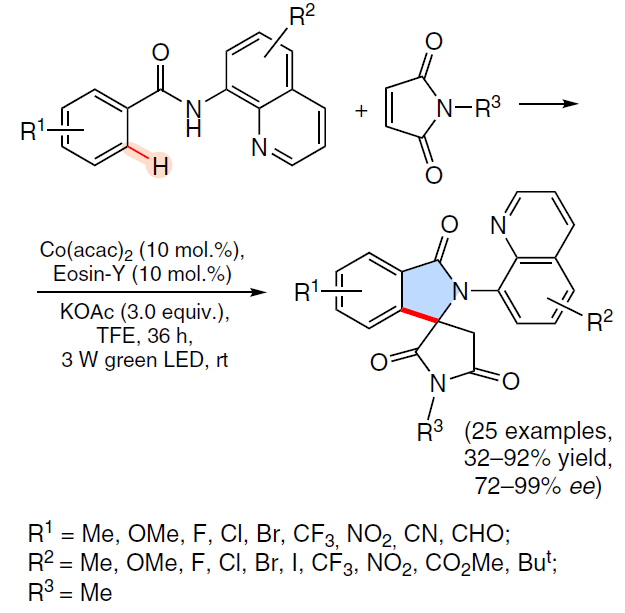
Co-catalyzed C – H activation has evolved from peroxide-driven oxidative cascades to photoredox, carbonylative and enantioselective manifolds for isoindolinone construction. Nevertheless, cobalt reactivity remains highly condition-dependent, with product selectivity and efficiency being often governed by carefully tuned ligands, oxidants, additives and directing groups rather than by broadly general catalyst control. Future advances should therefore focus on more transferable catalytic systems, milder redox regulation, traceless directing groups and improved control of chemo-, regio- and stereoselectivity.
2.2.6. Cu-Catalyzed
Copper-mediated isoindolinone synthesis remains less mature than Rh-, Ru- or Pd-based C – H activation, but it offers a complementary entry through oxidative coupling, alkyne annulation and radical relay cyclization.[183] These reactions highlight copper’s redox flexibility while also revealing its dependence on strongly directing auxiliaries, activated substrates and external oxidizing systems.
A C(sp2) – H/C(sp3) – H oxidative coupling strategy was introduced by Punniyamurthy and co-workers[184] using aromatic amides and dialkyl malonates (Scheme 59). Various ortho-, meta- and para-substituted benzamides bearing both electron-donating and electron-withdrawing groups reacted with moderate yields (55 – 65%), whereas furyl-, thienyl- and pyridyl-substituted amides were almost unreactive, likely due to competitive heteroatom coordination. Various malonates performed good (51 – 59%), but diketones and acetoacetates failed. Mechanistic studies support sequential aryl C – H/malonate C – H oxidative coupling followed by intramolecular N – H/C(sp3) – H dehydrogenative cyclization. This protocol expands copper-mediated annulation beyond alkene insertion, although heteroarene compatibility and auxiliary removal remain problematic.
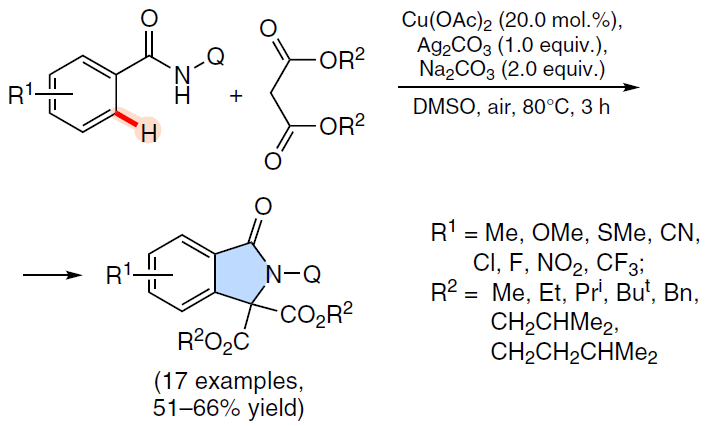
Copper-mediated alkyne annulation provides a distinct route to 3-methyleneisoindolinones through removable hydrazide assistance. Ackermann and co-workers[185] employed N-2-pyridylhydrazides to direct oxidative C – H/N – H functionalization with terminal alkynes (Scheme 60). Electron-rich, electron-poor, halogenated, cyano-, amino-, ester- and heteroaryl-substituted hydrazides were compatible with the reaction conditions (27 – 99%), and unsymmetrical arenes reacted at the less hindered ortho position. Aryl and heteroaryl terminal alkynes performed well (54 – 99%), with electron-rich alkynes generally outperforming electron-poor analogs, whereas aliphatic terminal alkynes gave complex mixtures and internal alkynes were unreactive. Mechanistic experiments indicate irreversible, rate-limiting CMD-type C – H cleavage, followed by alkynylation and intramolecular hydroamination. The removable auxiliary improves practicality, but the alkyne scope remains structurally biased.
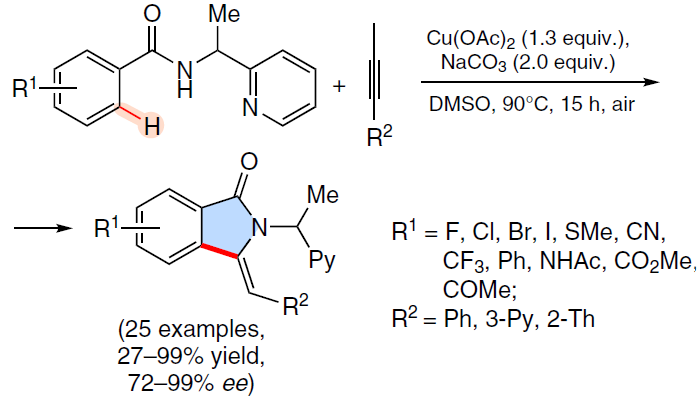
A radical-relay aza-Wacker manifold further extends copper chemistry from directed C – H activation to intramolecular alkene amination. Yang et al.[186] developed a synergistic Cu/TEMPO-catalyzed cyclization of alkenylated carbamates and amides using N-fluorobenzenesulfonimide (NFSI) as an oxidant (Scheme 61). Electron-donating aryl carbamates were more effective than their electron-withdrawing analogs, while terminal and cyclic alkenes in amide substrates outperformed acyclic internal alkenes. Ortho-alkenylated benzamides rapidly afforded alkenyl isoindolinones, and cyclohexenyl substrates were superior to give cyclopentenyl analogs. Mechanistic studies support imidyl radical generation, N – H homolysis, nitrogen-centered radical addition to alkene, carbon-radical trapping, and TEMPO-assisted oxidation. The method is mild and modular, but still relies on preinstalled alkenes and NFSI-mediated radical initiation.
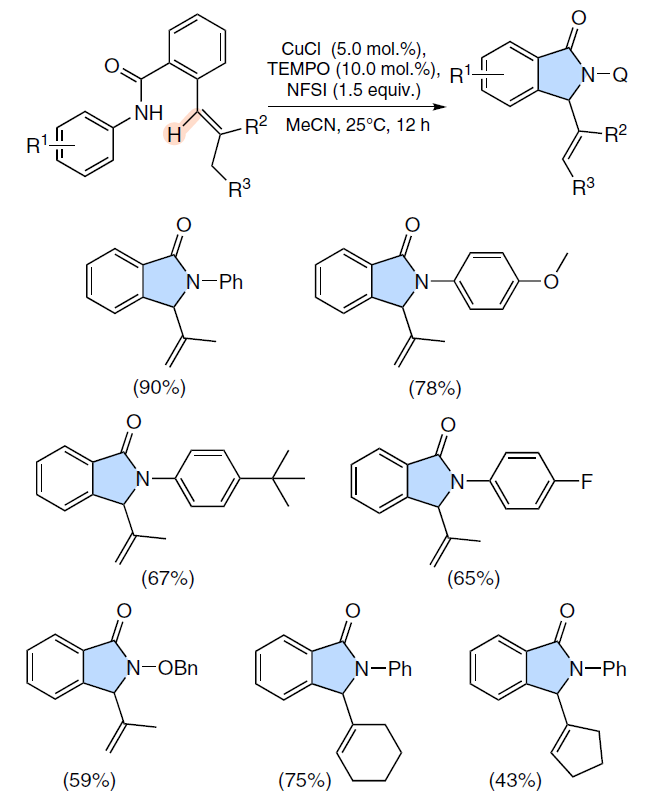
These copper-mediated examples demonstrate that isoindolinone synthesis can proceed through oxidative C – H/C – H coupling, terminal alkyne annulation and radical aza-Wacker cyclization rather than classical noble-metal C – H insertion alone. However, limited catalyst control, strong auxiliary dependence, and substrate-specific reactivity remain major constraints. These limitations naturally lead to the next question of whether ligand design, chiral auxiliaries, or radical-polar crossover control can translate copper catalysis into stereodefined isoindolinone synthesis.
2.2.7. Other methods
In addition to transition-metal-catalyzed C(sp2) – H functionalization, several non-classical strategies have been developed for isoindolinone synthesis, including metal-free organocatalysis, visible-light-promoted radical processes, electron – donor – acceptor (EDA)-complex-mediated annulation and mechanochemical activation. These methods provide complementary solutions to the limitations of metal catalysis, especially in terms of metal residue, redox economy and operational sustainability.
Metal-free organocatalytic and material-promoted approaches mainly rely on preactivated carbonyl, nitrile or alkyne substrates to trigger tandem cyclization.[187] Fluorous phosphine-catalyzed reactions of 2-cyanobenzaldehydes with activated alkenes offer recyclable catalyst/solvent systems and simple product isolation (Scheme 62, reaction a),[23] HNTf2-promoted alkyne cyclization further expand access to N-acyl or fused isoindolinones (see Scheme 62, reaction b).[188] However, these methods are generally substrate-design-dependent and often require preinstalled reactive motifs such as cyanoaldehydes, benzoisofurans, or tethered alkynes.
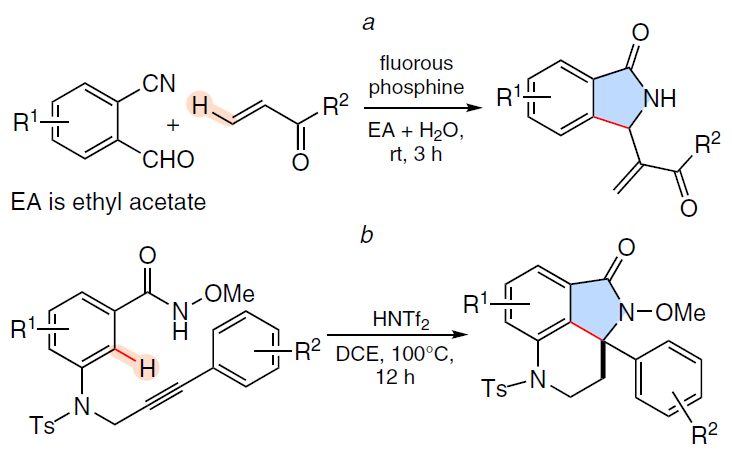
Visible-light-promoted strategies have expanded isoindolinone synthesis through radical or oxidative pathways. Olefinic amides can undergo aerobic oxidative cleavage/cyclization selective N/O-cyclization under light irradiation, allowing access to hydroxy isoindolinone products (Scheme 63, reaction a).[189] Similarly, isocyanide insertion (see Scheme 63, reaction b)[190] and EDA-complex-enabled denitrogenative annulation (see Scheme 63, reaction c)[191] use light to generate radical intermediates without relying on classical metal-catalyzed C – H activation. These reactions show improved sustainability and functional group tolerance, but their efficiency is still strongly influenced by alkene activation, protecting groups, radical stability, and substrate electronics.
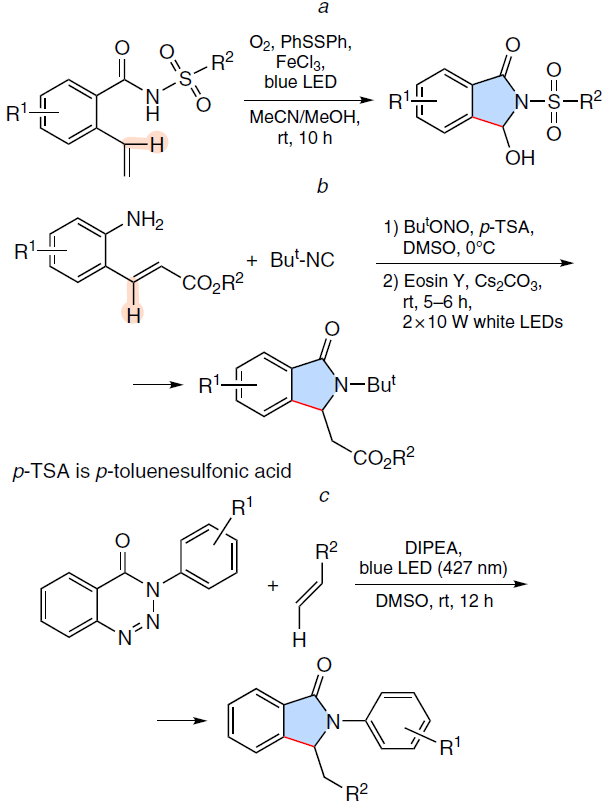
Mechanochemical approaches offer a fundamentally different paradigm for C – H functionalization by replacing thermal activation with mechanical energy input. In the context of isoindolinone synthesis, radical cascade processes under ball-milling conditions have demonstrated that bond activation and cyclization can proceed efficiently in solvent-minimized environments (Scheme 64).[192]
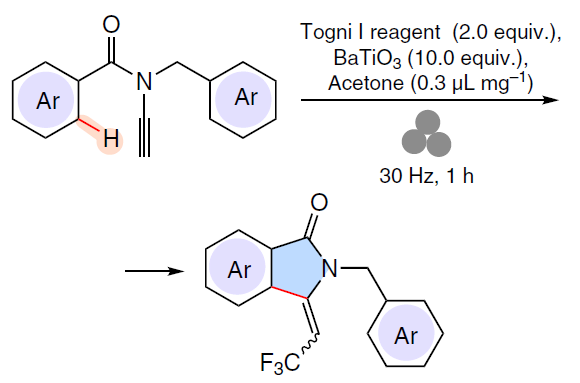
These non-classical methods do not replace metal-catalyzed C(sp2) – H functionalization, but they broaden the synthetic logic for isoindolinone construction. Their main advantages lie in greener activation modes, reduced dependence on noble metals, and access to product types that are difficult to obtain through conventional C – H annulation. Nevertheless, further progress is still needed in general substrate compatibility, late-stage applicability, mechanistic predictability and scalable reaction design.
2.3. Metal-catalyzed C(sp) – H functionalization
Metal-catalyzed C(sp) – H functionalization provides a step- and atom-economical route to isoindolinones by using terminal alkynes as direct coupling partners. Early studies mainly relied on Sonogashira-type coupling/cyclization of prehalogenated benzamides,[193-195] whereas later Co- and Ni-catalyzed systems enabled more direct alkynylation/annulation from native C(sp) – H bonds.[196-203] These advances broadened access to alkylidene, fused and highly functionalized isoindolinones, but limitations remain in directing-group dependence, oxidant requirement, substrate sensitivity, and elevated reaction temperatures, motivating the development of more general C(sp) – H annulation strategies.
D-Glucosamine-enabled Cu catalysis provided a greener entry to Z-3-methyleneisoindolinones from 2-halobenzamides and terminal alkynes (Scheme 65).[204] Aryl alkynes bearing alkyl, methoxy, fluoro, bromo, trifluoromethyl, and thienyl groups were well tolerated (52 – 88%), whereas aliphatic alkynes showed lower efficiency (36%). The reaction proceeds through Cu-assisted alkynylation followed by intramolecular hydroamination, but still requires haloarenes as electrophilic partners.
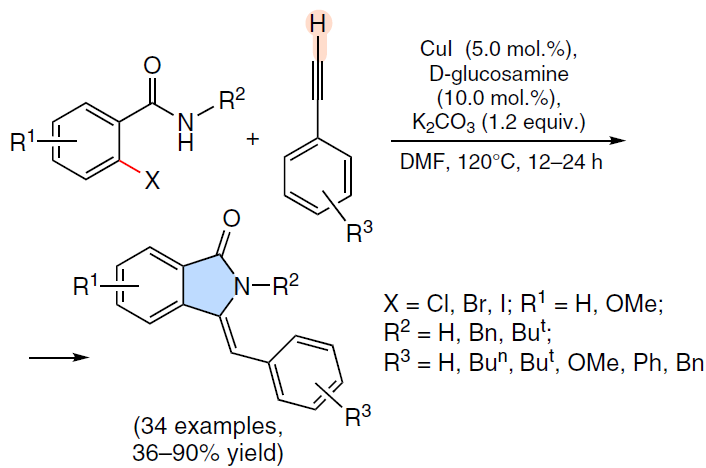
Propargyl dicarbonyl compounds further broadened alkyne-based annulation by introducing a furyl and tertiary alcohol motif into isoindolinones (Scheme 66).[205] N-Aryl benzamides generally outperformed N-alkyl or N-aralkyl analogs (62 – 81% vs. 40 – 74%), while halogen, methoxy and dimethoxy groups were tolerated (35 – 56%). Mechanistically, Cu-mediated alkyne activation, coupling, furan formation, intramolecular C – H amidation and oxygenation are involved, although side reactions and moderate yields remain evident for sulfonyl ketone substrates.
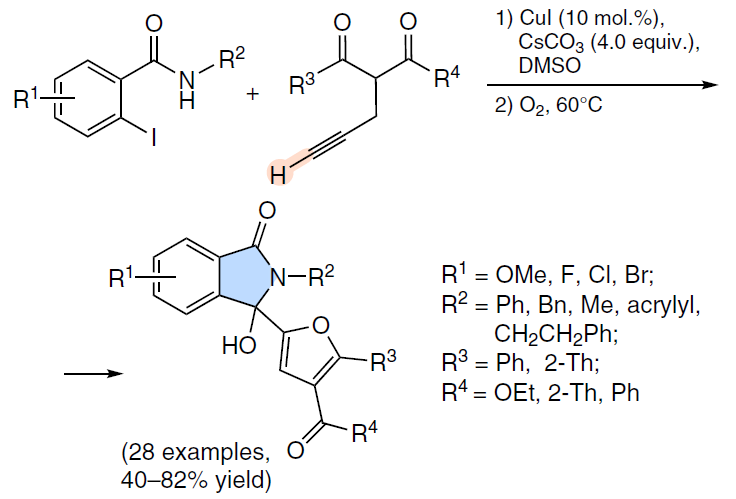
Symmetric Pd/Cu Heck/Sonogashira coupling of electron-rich enamides enabled access to 3-propargyl isoindolinones bearing quaternary stereocenter (Scheme 67).[206] Diversely substituted aryl alkynes reacted with aryl, heteroaryl, and silyl alkynes to provide moderate to good yields of the target compounds. The reaction involves oxidative addition, enantioselective migratory insertion, Cu-acetylide transmetalation, and reductive elimination, but still depends on predesigned enamides and dual-metal catalysis.
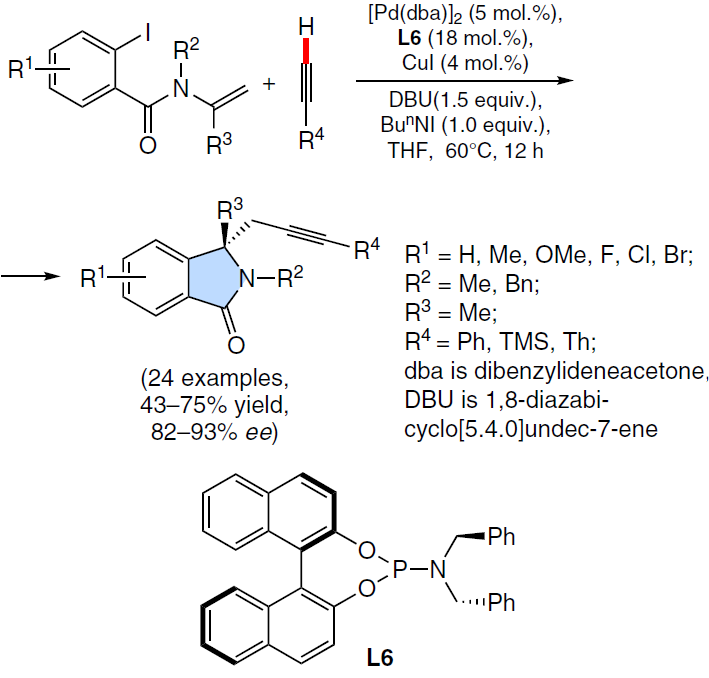
Wang et al.[207] developed a Pd-catalyzed enantioselective aminoalkynylation of O-phenyl hydroxamic ethers with terminal alkynes, providing chiral isoindolinones bearing a quaternary stereogenic center (Scheme 68). This transformation proceeds through a tandem aza-Heck and Sonogashira-type coupling sequence, allowing simultaneous C – N bond formation and alkynyl incorporation. Alkenyl hydroxamic ethers bearing para electron-donating or electron-withdrawing aryl substituents were well tolerated (44 – 82%), whereas ortho-substitution reduced efficiency because of steric hindrance (30%, 87% ee). Polycyclic, heteroaryl and alkyl substituents were also compatible, although some highly substituted substrates gave lower yields and enantioselectivities (53%, 88% ee). A broad range of aryl, heteroaryl, ferrocenyl, aliphatic and silyl alkynes afforded products with high enantioselectivity (50 – 97%). DFT studies indicated that oxidative addition is rate-determining, while chiral-ligand-controlled olefin insertion determines enantioselectivity through favorable ligand–substrate dispersion interactions.
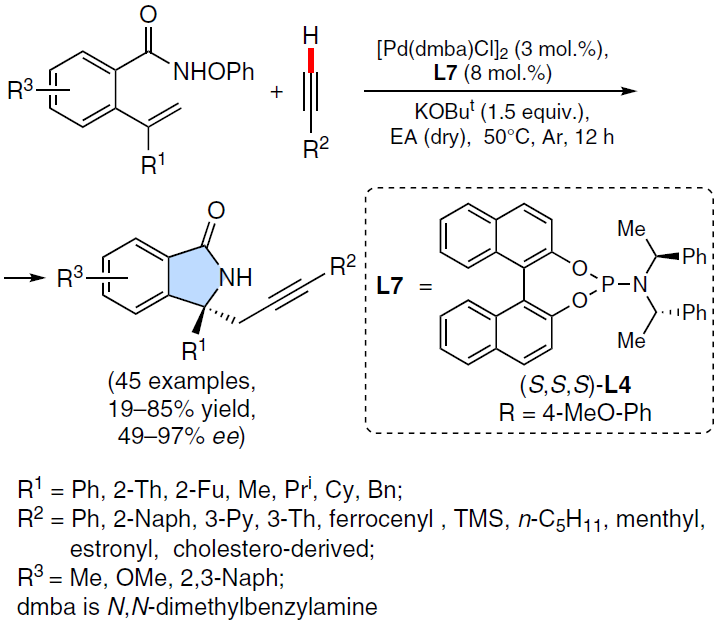
N-Mesyl-enabled Cu2O catalysis addressed regio- and stereoselectivity in terminal-alkyne annulation (Scheme 69).[208] Ethyl propiolate, phenylacetylene, and ynone partners afforded E-3-alkylideneisoindolinones, while TIPS-acetylene diverted the pathway to isoquinolinones after deprotection. The N-mesyl group promotes N-cyclization and suppresses competing O- or 6-endo pathways, although the strategy still relies on prehalogenated benzamides and a removable activating group.
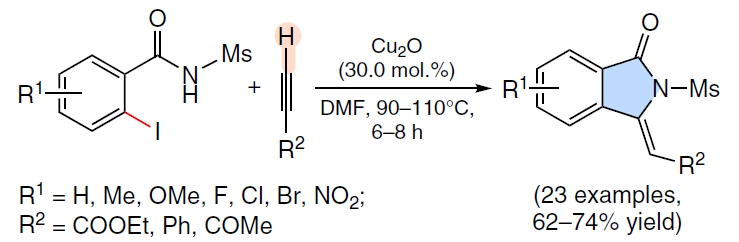
In addition, intramolecular cyclization involving alkynes has also been developed for the synthesis of indolinones. In 2022, Zhang and co-workers[209] reported a divergent catalytic system for 2-(1-alkynyl)benzaldimines, enabling switchable access to 3-methyleneisoindolin-1-ones or isoquinolinium salts via regioselective 5-exo-dig- or 6-endo-dig-cyclization (Scheme 70). The reaction thus operates as a pathway-bifurcating manifold, where a common intermediate is partitioned into two heterocyclic outcomes within a single substrate framework. Although broad substitution tolerance is observed, regioselectivity is ultimately governed by substrate-dependent electronic bias, indicating limited decoupling from intrinsic reactivity preferences.
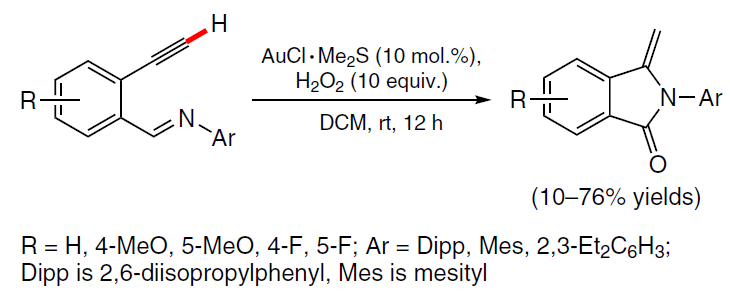
Furthermore, transition-metal-catalyzed [2 + 2 + 2] cyclotrimerization represents a complementary strategy for the synthesis of polysubstituted isoindolinones from alkyne-based precursors.[210-217] Through the integration of multiple unsaturated units into a single annulation process, this approach enables the rapid construction of highly substituted aromatic frameworks and expands the synthetic logic beyond conventional alkynylation/cyclization sequences.[218-220] Nevertheless, precise regiocontrol, limited substrate flexibility, and dependence on costly metal catalysts remain major challenges that restrict its broader applicability. However, precise regiocontrol, limited substrate flexibility, and reliance on expensive metal catalysts remain key challenges.
These studies show that terminal alkyne C(sp) – H activation is not limited to classical Sonogashira coupling, but can be merged with 5-exo-dig cyclization, protecting-group-controlled 6-endo-dig divergence, oxidative cascade annulation and asymmetric Heck/Sonogashira sequences. Nevertheless, most methods still rely on prehalogenated or prefunctionalized substrates, elevated temperatures, copper additives and polar aprotic solvents, indicating that more direct, milder and broadly applicable C(sp) – H annulation strategies remain desirable.
3. Conclusion
Transition-metal-catalyzed cascade C – H functionalization has emerged as a strategically vital approach for constructing isoindolinone frameworks. The successful incorporation of diverse coupling partners relies heavily on the judicious selection of the metal catalyst, a choice dictated by the target C – H bond type, required oxidation state, directing group, and desired selectivity. Palladium and rhodium stand out as the most versatile platforms for C(sp2) – H functionalization, offering broad scope and predictable reactivity. However, these noble-metal systems are frequently constrained by their reliance on expensive catalysts, strong directing groups, and stoichiometric oxidants. While ruthenium and iridium offer complementary condition-dependent alternatives, first-row transition metals such as cobalt and copper have garnered increasing attention due to their earth abundance and unique redox diversity. Cobalt and copper enable distinct pathways including oxidative annulation, carbene-type reactivity, and radical relay processes. Despite these advantages, first-row metal catalysis generally exhibits less mature mechanistic control, and its reactivity remains highly sensitive to ligand design, oxidation state modulation, and the presence of strongly coordinating auxiliaries.
Ultimately, no single transition metal catalyst is universally superior for isoindolinone synthesis, necessitating selections that are precisely tailored to the specific transformation. Palladium and rhodium remain the optimal choices when high reactivity and structural predictability are paramount. Ruthenium provides valuable complementary redox behavior, whereas cobalt and copper are highly attractive for cost-sensitive and specialized radical-enabled strategies. The field must overcome persistent challenges, particularly the heavy reliance on pre-installed directing groups, highly activated substrates, and narrowly optimized reaction conditions. Future development should prioritize the design of native or traceless directing strategies, the broader application of earth-abundant catalysts under milder redox regulation, and the realization of general asymmetric control to further enhance the practical synthetic utility of C – H annulation in heterocyclic chemistry.
There are no conflicts to declare.
This review was financially supported by the Research Fund of Guizhou Provincial Department of Education (No. Qianjiaoji[2024]284), Princess Nourah bint Abdulrahman University Researchers Supporting Project (No. PNURSP2026R398), and PhD Research Project of Yan’an University (No. YAU202411439).
4. List of abbreviations
Ac — acetyl;
Bn — benzyl;
BQ — 1,4-benzoquinone;
CCDC — Cambridge Crystallographic Data Centre;
CMD — concerted metalation–deprotonation;
COF — covalent organic framework;
Cp — cyclopentadienyl;
Cp* — pentamethylcyclopentadienyl;
Cy — cyclohexyl;
DABCO — 1,4-diazabicyclo[2.2.2]octane;
DCE — 1,2-dichloroethane;
DCM — dichloromethane;
DG — directing group;
DIPEA — N,N-diisopropylethylamine;
DMA — N,N-dimethylacetamide;
ee — enantiomeric excess;
er — enantiomeric ratio;
ESF — ethanesulfonyl fluoride;
Fu — furyl;
GVL — γ-valerolactone;
HAT — hydrogen atom transfer;
HFIP — hexafluoroisopropanol;
HNTf2 — trifluoromethanesulfonimide;
LED — light-emitting diode;
Ms — mesyl (methanesulfonyl);
MS — molecular sieve;
Naph — naphthyl;
NFSI — N-fluorobenzenesulfonimide;
Ns — nosyl (4-nitrophenylsulfonyl);
PG — protecting group;
Piv — pivaloyl;
PS-TsOH — polystyrene-supported p-toluenesulfonic acid;
p-TSA — p-toluenesulfonic acid;
Py — pyridinyl;
TBHP — tert-butyl hydroperoxide;
TDG — transient directing group;
TEMPO — 2,2,6,6-tetramethylpiperidine-1-oxyl;
Tf — triflyl (trifluoromethanesulfonyl);
TFA — trifluoroacetate;
TFE — 2,2,2-trifluroroethanol;
Th — thienyl;
TMS — trimethylsilyl;
Tol — tolyl (4-methylphenyl);
TPBP — tert-butyl peroxybenzoate;
Ts — tosyl;
Q — 8-quinolinyl.
References