Keywords
Abstract
Lignocellulosic bio-oil is a promising renewable feedstock the components of which can be converted to fuels and valuable petrochemicals. This review gives the first systematic summary of the modern strategies for the catalytic processing of bio-oil components in tandem and one-pot processes that combine the formation of new C–C bonds with hydrodeoxygenation/ hydrogenation. Particular attention is paid to bifunctional catalysts that have both acid/base and metal active sites. The key factors determining product yields and catalytic performance are analyzed, including the structural features of catalysts, the nature of substrates (furan derivatives, phenols, carbonyl compounds), and the composition of the reaction medium. The role of water, acting as both a solvent and a reactant, is highlighted for tandem and one-pot processes; the beneficial and adverse effects of water on bifunctional catalysts are considered. The review also compares the efficiency of conventional petrochemical methods and advanced electro- and photocatalytic approaches for the conversion of bio-oil components into hydrocarbons through C–C bond formation followed by hydrodeoxygenation.
The bibliography includes 183 references.
1. Introduction
Lignocellulosic biomass is a renewable carbon-containing feedstock consisting of natural polymers: cellulose, hemicellulose, and lignin.[1-6] The primary processing of biomass, e.g., pyrolysis, makes it possible to perform depolymerization to give a mixture of low-molecular-weight compounds, which can subsequently be converted to fuel range hydrocarbons and various valuable petrochemicals.[7-13] The products obtained from biomass include, in particular, furan derivatives [furfural (FF), furfuryl alcohol (FA), 2-methylfuran (2-MF), and 5-hydroxymethylfurfural (5-HMFF)],[14][15] aromatic compounds [guaiacol (GUA), phenol, m-cresol, etc.[16-18], and other carbonyl and carboxylic compounds [levulinic acid, acetone, cyclopentanone (CPO), etc.[19-21].
The above compounds have short carbon chains (C3–7); therefore, their hydrodeoxygenation (HDO) affords hydrocarbons in the gasoline or lower kerosene fractions. Meanwhile, production of heavier hydrocarbons requires other strategies. In particular, it is expedient to use bio-oil components as substrates for catalytic reactions giving new C – C bonds (aldol condensation, alkylation, etc.[22-25]) and thus resulting in oxygenates with elongated (C8–15+) carbon chains. The products are subjected to HDO or hydrogenation reaction to produce fuel components or value-added products with a low O/C ratio.[26-30] It is worth noting that some studies focus directly on oxygen-containing intermediates as target products (hybrid fuels, lubricants, etc.[31-36]). Thus, complete hydrodeoxygenation is not required, which decreases the resource consumption.
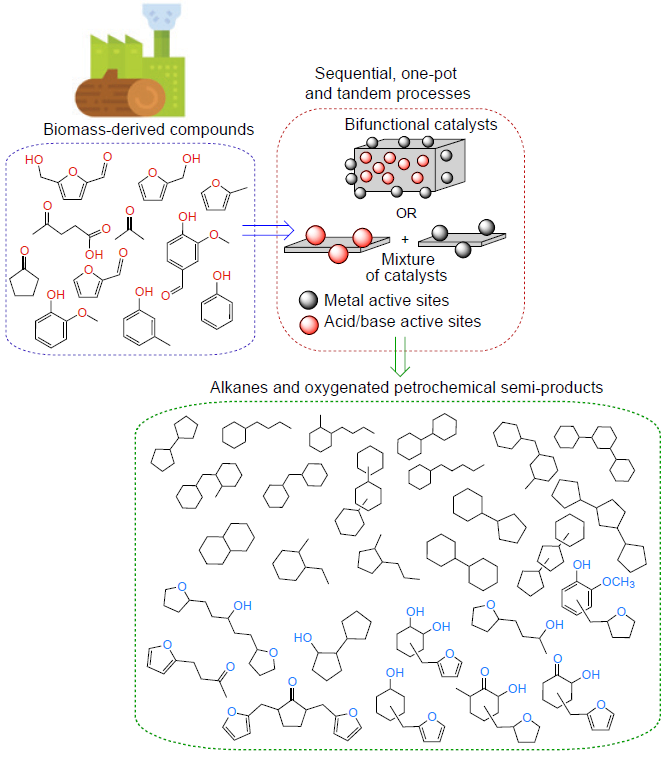
The described C – C bond formation and hydrogenation/HDO reactions can be carried out (i) sequentially using two or more catalysts in different vessels;[37-39] (ii) sequentially, but within a single catalytic unit as so-called one-pot processes; or (iii) simultaneously in a single catalytic unit, using a single catalyst or a mixture of catalysts in the so-called tandem process mode[40][41] (Fig. 1, Fig. 2). The last-mentioned option is most promising, since it markedly decreases the time and energy consumption for the conversion of biomass components.[42-45] As a rule, tandem processes use heterogeneous bifunctional catalysts that simultaneously contain acid (AS) or basic (BS) active sites (for alkylation/condensation) and metal active sites (for hydrogenation/HDO).[46-51] The tandem processes involve sequential reactions, there is the problem of diffusion of intermediates between active sites; hence, the spatial arrangement of the active sites in the catalyst plays an important role.[52][53] Thus, it is necessary to determine the optimal composition of the catalytic system.
![[{"id":"NS24wx6Kh3","type":"paragraph","data":{"text":"Processing of biomass compounds"}}]](/storage/images/resized/us4EAwdvsUrx8dBT0aRRoczMt8H6IqBU0v3PypDc_xl.webp)
![[{"id":"AQrkc_iZBM","type":"paragraph","data":{"text":"General schematic diagram of the processes of conversion of biomass components into fuel range alkanes and oxygenates"}}]](/storage/images/resized/Si3H8om25HUk6DTI3V7GR4nfnAnZgm5Wnj4ut6ji_xl.webp)
Another relevant issue is to determine the optimal conditions for tandem processes (temperature, H2/N2 pressure, reaction medium) in order to achieve the highest yield of target products and minimize side reactions, including the polymerization of substrates.[54-57] Thus, the aldol condensation is typically carried out at low temperatures (up to 180°C) to prevent the formation of macromolecular products. Conversely, hydrodeoxygenation is usually carried out at high temperatures (200 – 250°C and higher), which are necessary to achieve high conversion of oxygen-containing substrates into hydrocarbons.
The described condensation/alkylation and subsequent hydrodeoxygenation reactions are conventionally performed in the liquid phase, in particular, because of high boiling points of the reaction products and most substrates. Hence, another important aspect of the search for optimal conditions of tandem and one-pot processes for conversion of bio-oil oxygenates into fuel components is to find a suitable reaction medium that would facilitate the target reactions.[58-60] This should be done taking account of the solubility of reactants and reaction products in various media; for example, furfural is poorly soluble in alkanes.[61]
Currently, there are quite a few reviews that analyze both the reactions giving new C – C bonds between biomass components[62-66] and the hydrodeoxygenation reactions of oxygenated biomass components.[67-69] Nevertheless, the literature lacks a comprehensive review focusing on tandem and sequential one-pot processes for the production of fuel hydrocarbons and valuable petrochemical products from bio-feedstock.
The present review summarizes data on the synthesis of fuels and value-added compounds via tandem and one-pot processes giving new C – C bonds from the products of biomass processing such as furfural, 5-hydroxymethylfurfural, levulinic acid, cyclopentanone/cyclopentanol, and phenol derivatives. The main part of this review focuses on the structural features of heterogeneous bifunctional catalysts and the changes in their structure during the reaction. Also, we compared the efficiency of conventional petrochemical and modern electro- and photocatalytic methods for the conversion of biomass processing products into hydrocarbons via the formation of C – C bonds followed by hydrodeoxygenation.
2. Types of catalysts used in the conversion processes of bio-oil components
The reaction pathways in tandem and one-pot processes of the conversion of lignocellulosic feedstock are determined by the nature and properties of catalytic systems. The catalysts considered in this review can be classified in terms of the type of active sites (acid, basic, metal) and in terms of their arrangement within the catalytic system (monofunctional, bifunctional) (Fig. 3). Understanding of the catalyst structural features and compositions is the key to explaining the catalyst activity and selectivity and to developing new systems.
![[{"id":"q4lTobKzF5","type":"paragraph","data":{"text":"Types of catalysts used for the conversion of bio-oil components"}}]](/storage/images/resized/IcW1pdeiTqPg98kPjkkMqZoLj1k8TgS0atkePyr1_xl.webp)
Acid catalysts perform the C – C bond formation steps in both aldol condensation and alkylation reactions. An example of such catalysts are zeolites, that is, microporous aluminosilicates with a regular crystal structure containing Brønsted (BAS) and Lewis (LAS) acid sites. Brønsted acid sites are protons bound to lattice oxygens; they are responsible for high activity in reactions requiring proton transfer (e.g., dehydration). Lewis acid sites are coordinatively unsaturated aluminium and other cations that polarize the C=O bond thus facilitating a nucleophilic attack. The acidity of zeolites is determined by the Si/Al ratio: the lower the ratio, the higher the aluminium content in the framework and the higher the total acidity. The size of zeolite pores influences the substrate accessibility and process selectivity. Apart from zeolites, oxide supports (γ-Al2O3, SiO2 – Al2O3, NbOPO4, CePO4) and sulfated oxides (SO42–/TiO2) also refer to acid catalysts. These materials mainly contain LAS, which activate carbonyl groups. Some of the materials (NbOPO4, CePO4) possess both acid and basic sites, which allows them to perform a dual function in the aldol condensation.
Base catalysts are used in the aldol condensation reaction, where they deprotonate the α-hydrogen of ketones thus generating an enolate anion, which is an active nucleophile. The most widely used basic catalysts include alkaline earth metal oxides (MgO, CaO) and mixed oxides (Mg – Al – O). The activity of basic sites is due to the presence of surface O2– ions or OH– groups. The strength and number of the basic sites depend on the material composition and process temperature.
Bifunctional catalysts (metal – acid/metal – base) are mainly used in tandem processes. In these systems, metal sites (Pd, Pt, Ni, Ru, Cu) are responsible for hydrogenation and HDO, while the acid or basic sites of the support catalyze the formation of C – C bonds.
The activity of bifunctional catalysts is determined by several interrelated characteristics. First of all, a critical role belongs to the size and distribution of metal nanoparticles, which determine the accessibility of active sites and resistance to sintering. The pore structure of the support is of no less importance: micropores of 0.5 – 0.8 nm in size determine the reaction selectivity while limiting the diffusion of large molecules, whereas mesopores (2 – 50 nm) substantially improve mass transfer, which is particularly important for bulky substrates such as aromatic compounds and condensation products. The nature of the metal also directly affects the activity and selectivity of the hydrogenation and HDO steps. Finally, the acidity or basicity of the support affects the rate and direction of condensation reactions: in zeolites, an increase in the aluminium content (decrease in the Si/Al ratio) results in higher acidity; however, it can simultaneously intensify side reactions such as polymerization and coking.
A key factor is the spatial arrangement of the active sites: encapsulation of metal nanoparticles into the zeolite matrix (Pt@H-BEA, Pd@meso-ZSM-5) minimizes the diffusion and increases the selectivity. Conversely, the surface deposition of metal often leads to side reactions.
Physical mixtures of monofunctional catalysts provide an alternative approach in which the C – C bond formation catalyst (acid or base) and the hydrogenation/HDO catalyst (metal-containing one) are used as a physical mixture (CaO + Pd/C, Pd/C + Hβ, NbOPO4 + 5% Ru/C). The advantages of such systems are the ease of preparation and the possibility of independent optimization of each component. However, their efficiency may be lower due to the lack of close contact between the active sites.
Thus, a wide variety of catalytic systems are available for developing tandem and one-pot processes for the conversion of bio-oil components. The subsequent Sections of the review consider in detail both the capabilities and the objective limitations of each of the listed types of catalysts using particular examples.
3. Processes based on aldol condensation and hydrogenation/hydrodeoxygenation
This Section addresses processes that involve biomass components containing aldehyde and ketone groups, which are converted into alkanes and oxygenated compounds with long carbon chains through aldol condensation and subsequent hydrogen treatment processes. Furfural, which is formed from pentoses, can be converted into C8+ oxygenates via aldol condensation with ketones such as acetone or methyl isobutyl ketone (MIBK).[70-73] The condensation with acetone followed by HDO results in the formation of linear alkanes, whereas the use of branched or cyclic ketones (e.g., MIBK or cyclopentanone) gives rise to branched or cyclic C10+ alkanes, which are considered to be more valuable fuel components.[74-76] Owing to the presence of a ketone group, levulinic acid, which is also derived from biomass, can be involved in aldol condensation with furfural, similarly to the described ketones.
5-Hydroxymethylfurfural (5-HMFF) and 5-methylfurfural (5-MFF) are furan derivatives prepared from biomass, along with furfural. Both compounds contain six carbon atoms in the molecule, which makes them promising substrates for the production of fuel components with long carbon chains. Owing to the presence of an aldehyde group, they can also undergo aldol condensation, similarly to furfural.
Cyclopentanone formed upon catalytic hydrogenation of furfural[77][78] can undergo aldol self-condensation to give dimers and trimers with low oxygen content.
3.1. Conversion of furfural and ketones
Table 1[79-93] summarizes one-pot and tandem reactions involving furfural and carbonyl compounds (the conversion is presented for the limiting reactant; if the reactants are taken in equivalent amounts, the conversion is given for the furan compound). In all Tables presented in this review, the reaction conditions have been standardized. The first column gives the BET specific surface area (SBET) for those catalysts for which this value was indicated in the original publication. If the original work contains incomplete data, a footnote to the corresponding reaction is given.
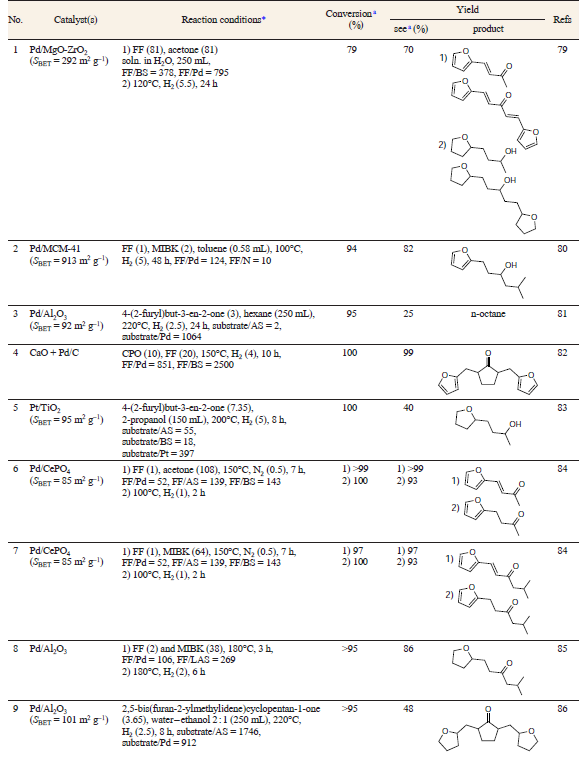
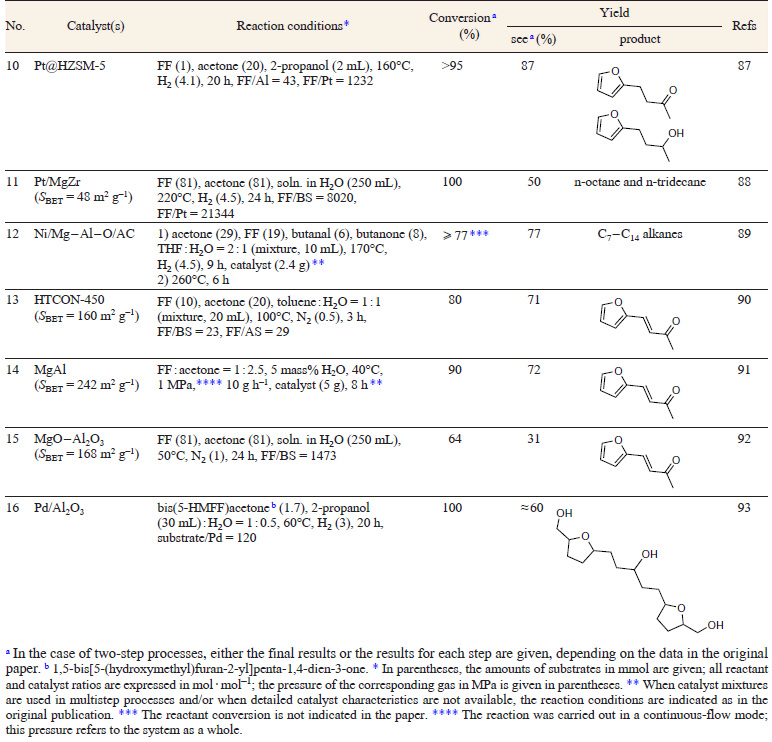
Examples of one-pot aldol condensation – hydrogenation processes were described back in 2005 – 2007.[79][94][95] A large contribution to this subject was made by Professor Dumesic’s research team;[79] for the first time, they implemented two-step aldol condensation – hydrogenation process involving furfural and acetone in the presence of Pd/MgO – ZrO2 catalyst containing metal and basic active sites (Table 1, No. 1). The authors achieved a high yield of a mixture of target products comprising 4-(tetrahydrofuran-2-yl)butan-2-ol and 1,5-bis(tetrahydrofuran-2-yl)pentan-3-ol (70% over two steps). The process involved complete hydrogenation of all unsaturated bonds without hydrodeoxygenation. A key feature of the proposed one-pot process is the change in the reaction atmosphere (from He to H2) and temperature at each step; however, this requires intermediate cooling of the reaction mixture.
Subsequently, palladium catalysts were extensively studied in tandem and one-pot condensation – hydrogenation processes involving furfural and acetone/MIBK. Hernández-Soto et al.[80] investigated the condensation of furfural and MIBK catalyzed by Pd/MCM-41 (Table 1, No. 2). The catalyst support was modified with propylamine groups, which acted as basic active sites. The product, 1-(furan-2-yl)-5-methylhexan-3-ol, was formed in 82% yield, with the furfural conversion being 94%. Hydrogenation of the furan ring did not take place, despite the larger surface area of the Pd/MCM-41 catalyst compared to the Pd/MgO – ZrO2 catalyst used in the first study and the lower substrate to Pd ratio. Presumably, the catalyst activity in the hydrogenation is influenced by the reaction temperature (120 vs. 100°C). It was shown that the degree of hydrogenation and HDO of the products formed upon the condensation of furfural with ketones depends on temperature (Table 1, No. 3).[81]
As an alternative to the bifunctional metal/basic catalysts, it is possible to use a physical mixture of two catalysts, one containing a metal that can catalyze hydrogenation/HDO and the other, correspondingly, containing basic/acid active sites. Thus, there is no need to carry out a multistep synthesis of a bifunctional material. Wang et al.[82] studied the synthesis of 2,5-bisfuran-2-methylcyclopentanone from furfural and cyclopentanone in the tandem aldol condensation – hydrogenation (Table 1, No. 4). When a CaO + Pd/C physical mixture was used, the product yield was 99%. Despite the high temperature (150°C), no hydrogenation of the furan ring was observed in this process. An important difference of the CaO + Pd/C mixture from the systems considered above is the absence of a solvent able to promote hydrogenation, as was observed, for example, in the Pt/TiO2-catalyzed hydrogenation of 4-(2-furyl)but-3-en-2-one in 2-propanol (Table 1 No. 5).[83] This indicates that the degree of hydrogenation depends not only on the temperature but also on the nature of the reaction medium.
In the described works, the furfural condensation was carried out both with acetone and with more complex ketones (MIBK, CPO). A comparison of reactions using the same catalyst but different ketones as substrates would make it possible to elucidate the effect of the nature of the carbonyl compound on the process. Kumar et al.[84] described the aldol condensation of furfural with acetone/MIBK followed by the Pd/CePO4-catalyzed hydrogenation of the aliphatic double bond (Table 1, No. 6, No. 7). The yields of 4-(furan-2-yl)-2-butanone or 1-(furan-2-yl)-5-methyl-3-hexanone were comparable and exceeded 90%.
The support of the Pd/CePO4 catalyst contain similar concentrations of the acid (≈103 μmol g–1) and basic (≈100 μmol g–1) active sites. It is assumed that both types of active sites present in CePO4 participate in the catalysis[96] (Scheme 1): the Lewis acid sites (LAS) polarize the carbonyl group of the ketone, which facilitates the elimination of α-hydrogen on the basic sites. The resulting enolate attacks the furfural carbonyl group adsorbed on another Lewis acid site, while the Brønsted acid sites (BAS) catalyze the dehydration of the resulting intermediate.
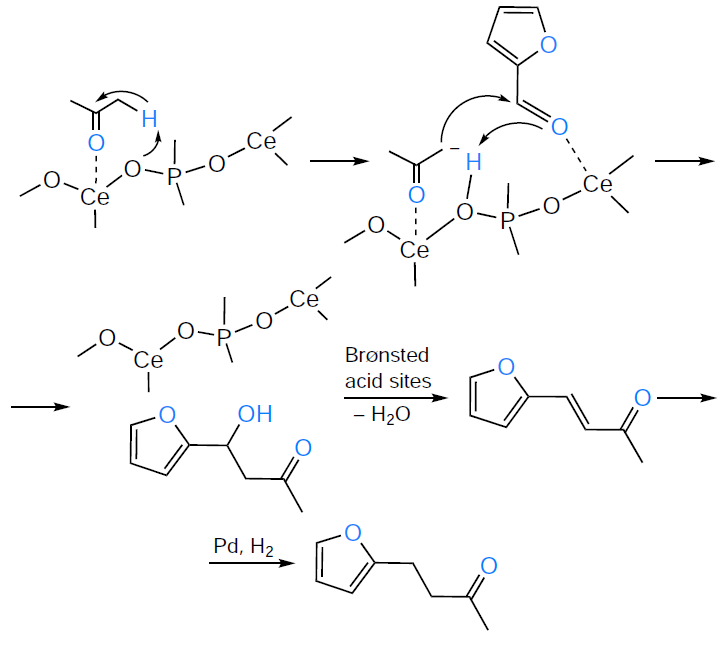
In the presence of the Pd/CePO4 catalyst, no C13+ products were formed in the furfural condensation with acetone, as opposed to the above-considered study of Professor Dumesic and co-workers,[79] who performed condensation in the presence of the Pd/MgO – ZrO2 catalyst. This distinction may be due to different specific surface areas of the catalysts (85 vs. 292 m2 g–1). Furthermore, the lower activity of Pd/CePO4 in the hydrogenation, despite the higher palladium content (FF/Pd of 52 vs. 795 mol mol–1), can be attributed to milder reaction conditions (second hydrogenation step: 100°C, 1 MPa H2, 2 h vs. 120°C, 5.5 MPa H2, 24 h).
In the case of palladium catalyst supported on alumina with LAS, complete hydrogenation of the furan ring in the condensation product was achieved. Gao et al.[85] developed a Pd/Al2O3 catalyst for the one-pot synthesis of longer-chain tetrahydrofuran derivative from furfural and MIBK. The yield of 1-(tetrahydrofuran-2-yl)-5-methylhexan-3-one was 86% under optimal reaction conditions (Table 1, No. 8). It should be borne in mind that water formed in the aldol condensation, even when present in a small amount, may cause hydration of Lewis acid sites, which are thus reversibly converted into Brønsted acid sites. The authors noted that the strongest acid sites are only partially poisoned during the process, since the Pd/Al2O3 catalyst is resistant to water. The hydrogenation of the furan ring is provided by both the high process temperature (180°C) and the properties of the catalyst. It is noteworthy that Pd/Al2O3, similar in composition, which was studied by Cueto et al.,[86] exhibited a high activity toward hydrogenation of the product of furfural condensation with cyclopentanone (Table 1, No. 9).
Apart from palladium, platinum and nickel are also used as active phases for the hydrogenation and hydrodeoxygenation of condensation products of furfural with ketones.[86][97] In relation to platinum supported on acidic zeolite, the authors demonstrated the effect of the spatial distribution of metal nanoparticles within the support on the selectivity of the tandem process.[87] The Pt@HZSM-5-catalyzed aldol condensation – hydrogenation reaction afforded a mixture of 4-(furan-2-yl)butan-2-one and 4-(furan-2-yl)butan-2-ol in a yield of 87% (Table 1, No. 10). Conversely, in the presence of the Pt/HZSM-5 catalyst in which the platinum nanoparticles were arranged on the support surface, hydrogenation and decarbonylation of furfural predominated. In the former case, the distribution of platinum nanoparticles throughout the bulk of the zeolite support restricts the access of furfural to the metal active sites, thus facilitating the initial acid-catalyzed aldol condensation. However, the spatial arrangement of the active sites may hinder the subsequent hydrogenation of the intermediate compounds, which accounts for the low degree of hydrogenation even at 160°C.
Platinum and nickel catalysts make it possible to perform one-step synthesis of alkanes via tandem processes. Under conditions similar to those reported previously,[79][87] Faba et al.[98] implemented a tandem process for the synthesis of n-alkanes from furfural and acetone in the presence of the bifunctional Pt/MgZr catalyst containing metal and basic active sites. The yield of n-alkanes was 50% (Table 1, No. 11). For comparison, the yield of oxygenates in the two-step process catalyzed by Pd/MgO – ZrO2 at the same concentrations of substrates was 70% (Table 1, No. 1).[79][98] It is worth noting that a 50% yield of alkanes was achieved despite the relatively small catalyst surface area (48 m2 g–1 for Pt/MgZr vs. 292 m2 g–1 for Pd/MgO – ZrO2) and small number of active sites (FF/BS = 8020 mol mol–1, FF/Pt = 21344 mol mol–1 vs. FF/BS = 378 mol mol–1, FF/Pd = 795 mol mol–1); this attests to the predominant role of the process conditions and the nature of the solvent. Thus, a high temperature of 220°C promotes complete HDO. The decrease in the yield of alkanes observed when using organic solvents or a physical mixture of monofunctional catalysts (basic MgZr + metal Pt/Al2O3) confirms the promoting effect of water in the aldol condensation and the importance of the close proximity of active sites of different nature in a bifunctional catalyst, which is not achieved with a mixture of monofunctional catalysts.
Special mention should be made of the studies by Shao et al.,[89] who obtained alkanes in 77% yield from a complex mixture of aldehydes and ketones using a sequential one-pot process on a nickel catalyst in a hydrogen atmosphere (Table 1, No. 12). Presumably, the pronounced increase in the temperature at the second step (from 170°C to 260°C) is favourable for complete hydrodeoxygenation. The THF/H2O solvent mixture (2 : 1), which promoted both reaction steps, that is, condensation and hydrodeoxygenation, proved to be the optimal medium for this reaction.
Thus, the most efficient processes of alkane production from furfural and ketones (acetone, MIBK, CPO) were implemented in the presence of water. Note that all of the considered systems contain some amount of water, as water is a product of aldol condensation. The influence of water is ambiguous: water may promote the reaction, modify the adsorption of reactants on the catalyst surface, and lead to structural degradation of the active sites and deactivation of the catalyst.[99-102] Gaining a deeper understanding of the role of water in tandem processes requires detailed analysis of the behaviour of catalysts of various types in the presence of water.
This Section described two types of supports used in bifunctional catalysts: acid and basic ones; the functional groups of the supports are responsible for aldol condensation. The acid supports include materials containing Lewis acid sites (such as alumina), Brønsted acid sites, or their combinations (zeolites, etc.). The basic supports are, first of all, metal oxides (MgO, CaO, Mg – Al – O).
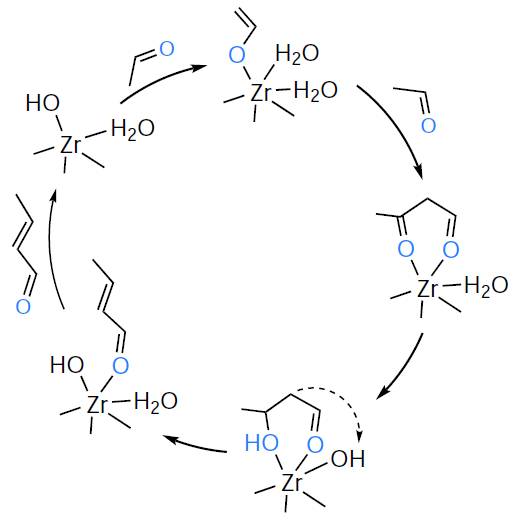
In the case of supports containing Lewis acid sites, an aqueous medium can lead to their hydration, accompanied by heterolytic dissociation of H2O and the formation of surface OH groups; in other words, some of LAS are converted into Brønsted acid sites. This process is reversible, and redistribution of acid sites occurs if water is present in the system. Nevertheless, at high temperatures, this process may be exaggerated by a decrease in the specific surface area and in the total acidity.[103] However, the encapsulation of metal nanoparticles can slow down this process.[104] It is noteworthy that water does not always have a clearly adverse effect on the activity of these catalysts.[105] Theoretical modelling for LAS in the Zr-BEA zeolite has shown[106] that water can change the activation energies of particular steps of the aldol condensation and affect the reaction pathway; in particular, adsorbed water molecules can promote dehydration of the condensation product (Scheme 2).
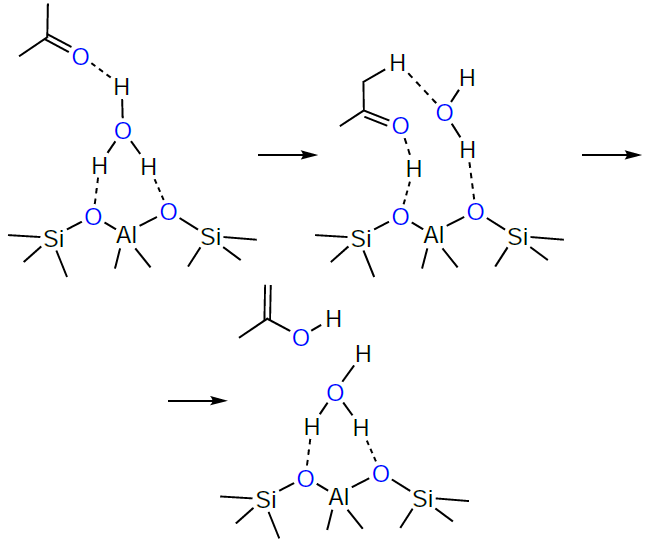
The effect of water on catalysts containing BAS or BAS + LAS is generally beneficial. For example, water accelerates the keto – enol tautomerization of acetone on the H-BEA zeolite.[107] In this case, water, being adsorbed in the molecular form, is converted into hydronium ion in a stable co-adsorbed configuration in the presence of a substrate (Scheme 3). It was also noted that the O-demethylation of guaiacol on the H-BEA catalyst was accelerated when both water and the reactants were present in the vicinity of the active site.[108] Conversely, in the case of H-FAU zeolite, the high mobility of hydronium ions impedes the reaction with guaiacol.[108] This fact illustrates the ambiguous effect of water on structurally and compositionally different zeolites: hydronium ions can migrate into the liquid phase, thus shifting the reaction into the homogeneous mode.
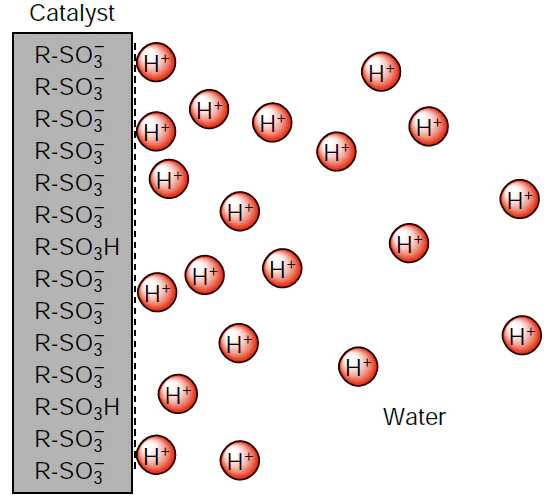
When the reaction occurs in a fully aqueous medium, it is necessary to take into account the formation of an electrical double layer at the catalyst – water interface. The ionization of surface BAS gives rise to local high concentrations of hydronium ions in the near-surface layer. This effect can initiate proton-catalyzed reactions even for substrates that cannot be directly adsorbed on the catalyst surface.[109][110] This concept (Scheme 4) accounts for the high activity of solid acid catalysts in an aqueous medium and supplements the homogenization picture considered above. Thus, for the hydrolysis of cellulose, it was shown that zeolites (H-MFI, H-BEA, H-FAU, H-MOR) catalyze the reaction exclusively through the formation of extra-crystalline H3O+ ions in solution, rather than in the active sites inside the pores or on the outer surface.[111] This allows for the conversion of even bulky substrates such as cellulose, which are unable to penetrate into the zeolite micropores. However, since active species are released into the solution, neither the pore structure nor the zeolite composition has a crucial influence on the reaction rate, which is determined solely by the concentration of the arising H3O+ ions. It was also noted[112] that the larger the cluster of water molecules, the greater the probability of proton transfer from BAS to the cluster and the higher the proton affinity of the cluster because of the increased electron density on oxygen atoms. Thus, while using catalysts with BAS, it is necessary to take into account the ability of water to shift the process to a homogeneous regime.
In the case of catalysts with basic active sites, in particular metal oxides (MgO, CaO, Mg/Al – O), the conversion in the condensation reaction of furfural with acetone was found to increase with increasing water content in the water – toluene two-phase system (Table 1, No. 13).[90] The promoting effect of water in the condensation of furfural with acetone was demonstrated for the TiO2-catalyzed reaction.[113] However, for basic catalysts, an adverse effect of water is also possible (Table 1, No. 14);[91] the major cause for deactivation is a change in the physicochemical properties of the catalyst upon the reaction with water (Table 1, No. 15).[92] In particular, the basic active sites can migrate to the liquid phase, thus making the process homogeneous. Although in the cited study, this had only a minor effect on the overall yield, this factor still should be taken into account in the development of tandem processes.
The presence of water in the system also considerably affects the course of hydrogenation and hydrodeoxygenation in tandem processes[86][114] In particular, for palladium catalyst,[93] the addition of water to 2-propanol promoted hydrogenation of the condensation products of 5-HMFF with acetone (Table 1, No. 16). In a review by Zhang and Li,[115] surface modification of catalysts with acidic or basic functional groups was proposed as a general strategy for increasing the stability of heterogeneous catalysts in aqueous media. It is believed that these groups generate a barrier that restricts the contact of water with metal sites, which, in turn, increases water resistance of the catalyst and suppresses catalyst deactivation.[116] This approach can also be applied to bifunctional catalysts.
Thus, the effect of water on catalytic systems markedly varies depending on the nature of the active sites (Fig. 4). For catalysts with basic sites, the effect is mainly beneficial, being manifested as promotion of the condensation reaction. In the case of acid sites, the situation is more complex: the possible decrease in the activation energy in an aqueous medium is accompanied by LAS hydration and reversible transformation into BAS, which changes the distribution of acid sites; in addition, there is a risk that the process would shift to a homogeneous regime due to the migration of BAS protons into the solution. Analysis of studies on tandem and one-pot processes involving furfural and carbonyl compounds confirms that the use of basic catalysts in the presence of water (Pt/MgZr and Ni/Mg – Al – O/AC) provides high yields in the synthesis of alkanes. The first step (condensation) is presumably promoted by water, whereas the influence of water on the HDO efficiency is peculiar to each catalytic system.[83] The process temperature is also a key factor: a clear correlation between the temperature rise and increase in the degree of hydrogenation and HDO was observed in all of the studies. Conversely, no clear correlation was found between other parameters such as hydrogen pressure or the reaction time and the process efficiency.
![[{"id":"rNLJdJZK5L","type":"paragraph","data":{"text":"Effect of water on the C – C bond formation and hydrogenation/HDO reactions"}}]](/storage/images/resized/j3leB9m606fR9M5pXULXWua12zXf2e4dYsn2Ymj0_xl.webp)
3.2. Conversion of furfural and levulinic acid
The aldol condensation of furfural with levulinic acid, which has a ketone group in the molecule, has been poorly studied in tandem and one-pot processes.[117] The situation with dimerization of levulinic acid is similar.[118] The little attention paid by researchers to these reactions may be due to the high acidity of levulinic acid, which can promote undesirable side reactions.[119] Nevertheless, a successful example of a sequential condensation –hydrodeoxygenation process for these substrates has been reported in the literature (Scheme 5).
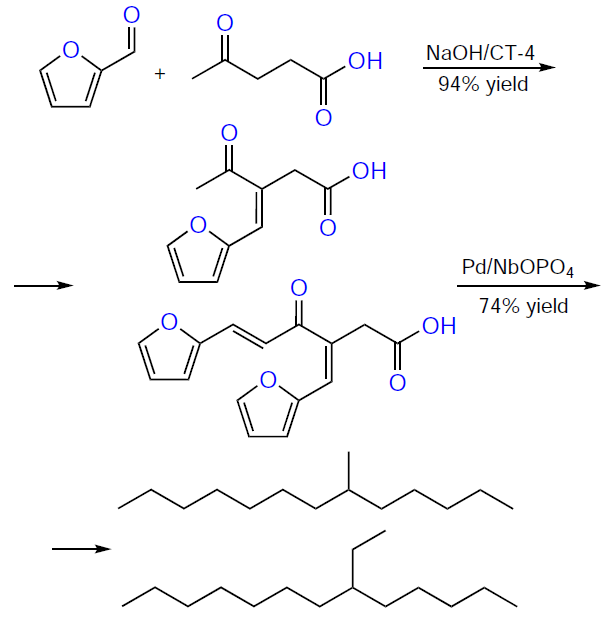
The furfural condensation with levulinic acid in the presence of the NaOH/CT-4 catalyst resulted[120] in the formation of C10 and C15 products in 16 and 78% yields, respectively, with the conversion being 98% (2 mmol of furfural, 1 mmol of sodium levulinate, 4 mL of H2O, 25°C, 3 h, 150 mg of the catalyst). The subsequent hydrodeoxygenation of the C15 oxygenate on a Pd(5%)/NbOPO4 catalyst yielded a mixture of C14 – C15 alkanes in a 74% yield upon complete conversion (0.1 g of the condensation product, 25 mL of cyclohexane, 250°C, 6 MPa H2, 24 h, 200 mg of the catalyst). The hydrodeoxygenation to alkanes is due to high activity of the Pd(5%)/NbOPO4 catalyst, which may be attributable to the fact that the support contains NbOx species, which promote cleavage of the C – O bond.[121]
3.3. Conversion of 5-hydroxymethylfurfural and 5-methylfurfural
The one-pot condensation–hydrogenation of 5-HMFF with acetone in the presence of bifunctional metal – base Cu/MgAl2O4 catalyst gave 3-hydroxybutyl-5-methylfuran (Table 3, No. 1).[122-124] The reaction product retained the unsaturated furan ring, but the C – O bond in the hydroxyl group of 5-HMFF was cleaved. Despite the drastic reaction conditions, the yields of the target products were lower (<90%) than those in similar reactions involving furfural, which is likely due to steric constraints caused by the more branched structure of the condensation product of 5-HMFF with acetone.
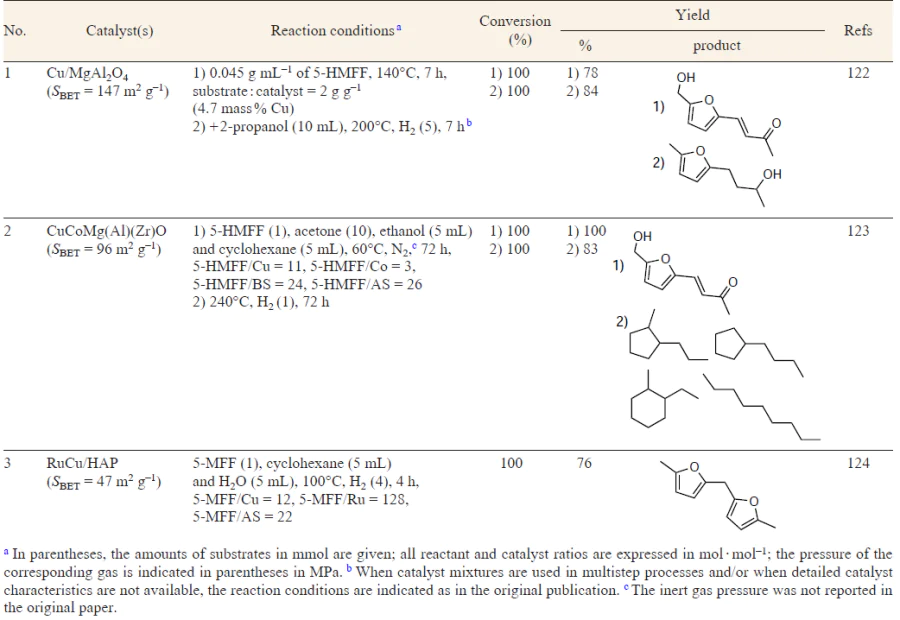
Zhu et al.[123] implemented a one-pot process to prepare alkanes, including valuable cyclic compounds (30% yield), using the bimetallic acid – base CuCoMg(Al)(Zr)O catalyst (Table 3, No. 2). The C9 cycloalkanes used as jet fuel components were formed upon cyclization of the corresponding monohydric alcohol intermediates, which was due to the synergistic interaction between acid and CuCo bimetallic sites of the catalyst. The reaction was carried out in a two-phase ethanol – cyclohexane system, which could potentially increase the efficiency of both the aldol condensation, which proceeds more readily in a polar medium, and HDO, which better proceeds in nonpolar solvents. It should be noted that a similar approach using a THF + H2O solvent mixture, in which each component promoted a separate reaction, was successfully applied to the synthesis of alkanes from furfural and carbonyl compounds in the previously considered study by Shao et al.[89]
Comparison of two studies dealing with the conversion of 5-HMFF shows that the complete hydrodeoxygenation of the condensation products of 5-HMFF with acetone requires drastic conditions (72 + 72 h vs. 7 + 7 h) and the use of a two-phase reaction medium. This is consistent with data on furfural conversion, where drastic conditions and the nature of the solvent are also determining factors for the production of hydrocarbons.
5-Methylfurfural has been much less studied than 5-hydroxymethylfurfural, although it is more stable, less prone to polymerization, and has the same number of carbon atoms in the molecule.[125][126] An example of 5-MFF conversion in a tandem process is the synthesis of bis(5-methylfuran)methane, a promising intermediate for the production of biofuels, using the RuCu/HAP bimetallic catalyst based on hydroxyapatite (Table 3, No. 3).[124] This process, like a number of processes discussed above, takes place in a two-phase solvent system consisting of water and cyclohexane. Presumably, the aqueous phase promotes higher conversion, while the organic phase minimizes side reactions through the efficient extraction of the target products. These conclusions are in line with the data on furfural and 5-HMFF conversion, suggesting that the use of aqueous or water-containing two-phase systems can be considered to be the optimal strategy for developing processes for the conversion of furan components in bio-oil. Despite the limited degree of hydrogenation and the absence of hydrodeoxygenation, this process occurs under milder conditions compared to the 5-HMFF-involving processes discussed in this Section.
3.4. Conversion of cyclopentanone
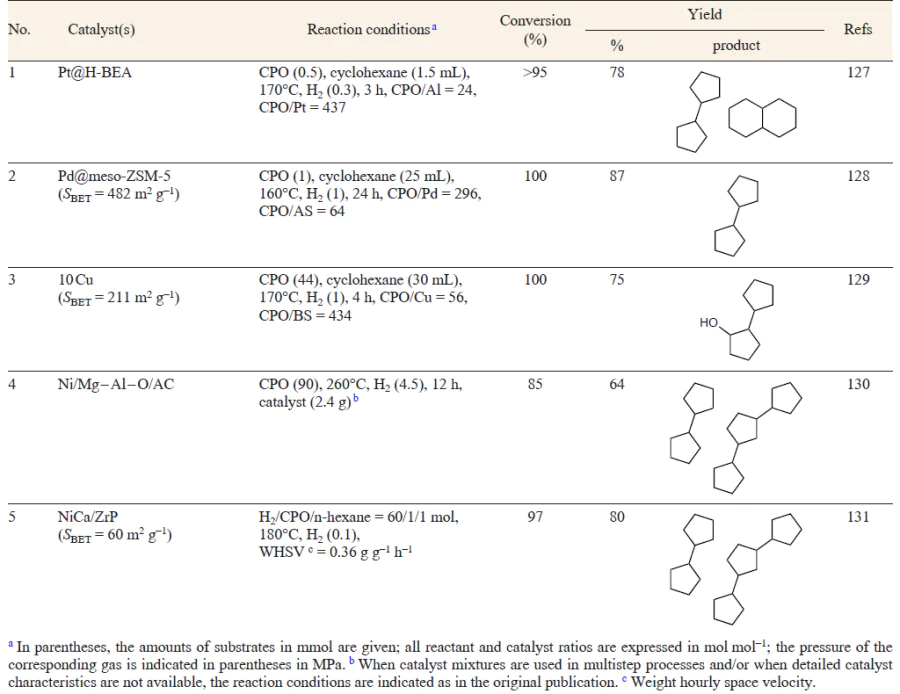
Comparative analysis of tandem processes involving cyclopentanone as the only reactant (Table 4)[127-131] demonstrates the possibility of selective production of alkanes with different structures and carbon chain lengths. It is important to note that the considered tandem processes are, most often, carried out in cyclohexane or without a solvent. The aldol condensation gives water as a product, and the reactions addressed in this Section indicate a beneficial effect of water on the formation of C – C bonds.
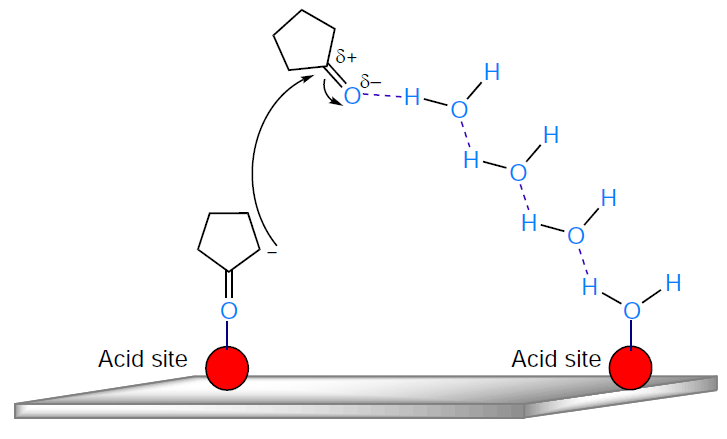
Li et al.[132] established that water molecules act as bridges between a substrate molecule adjacent to the activated enol and a free acid site of the catalyst (Scheme 6). A similar promoting effect of moderate amounts of water was reported by Ngo et al.,[133] who found that a chain of water molecules forms a linkage between the Mg2+ acid site and the cyclopentanone electrophile near the surface cyclopentenolate. The results indicated that water formed in the reaction may be beneficial for the cyclopentanone condensation, which may potentially account for the high conversions and high product yields in the processes presented in Table 4.
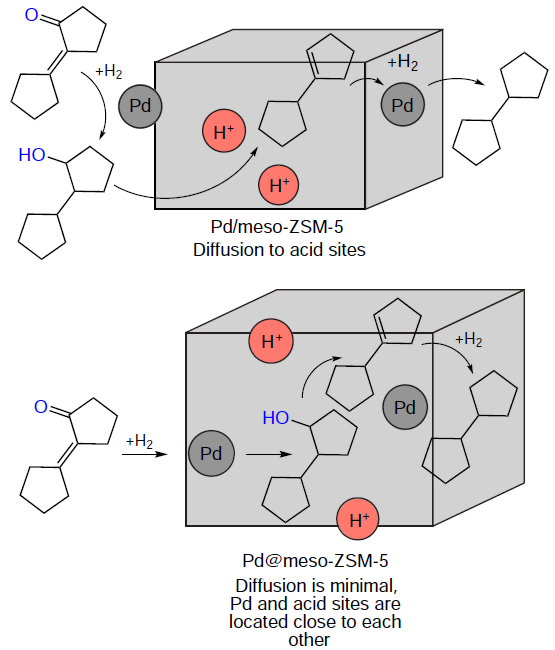
In relation to tandem reactions involving CPO, it was shown that the arrangement of active sites in the catalyst is important for achieving high yields of hydrocarbons. Cho et al.[127] showed that encapsulation of platinum nanoparticles in BEA zeolite results in the formation of C10 alkanes, decalin and bicyclopentane, in 78% yield, whereas a catalyst with surface localization of metal particles ensures the predominant formation of cyclopentane (∼60%) under identical conditions (Table 4, No. 1).
Similarly, Deng et al.[128] obtained bicyclopentane in a high yield (87%) via tandem process owing to the optimal arrangement of the metal and acid sites (Table 4, No. 2). According to the proposed mechanism (Scheme 7), 2-cyclopentylcyclopentanol formed on the metal sites is rapidly converted on the neighbouring acid sites; this is facilitated by the shortest diffusion pathway between the two types of active sites. In both studies, the mesopores in the bifunctional Pd@meso-ZSM-5 and Pt@H-BEA catalysts facilitated the formation of large intermediate molecules. The differences in the product distribution between the processes carried out under similar conditions are mainly due to the nature of the supports and active metals, whereas the reaction duration appears to have a minor effect on the selectivity of alkane formation.
Schiaroli et al.[129] carried out condensation – hydrogenation of cyclopentanone on a copper catalyst containing basic sites to give C10 and C15 alcohols and ketones (Table 4, No. 3). Comparison with the studies discussed above,[127][128] in which similar reaction conditions were used (cyclohexane as the solvent), revealed a fundamental difference for the products of CPO conversion on the copper catalyst: unlike noble metal-based systems, which yield alkanes, the copper-containing catalyst did not ensure HDO to hydrocarbons.
The aldol condensation of cyclopentanone, like processes involving furfural and ketones, can be effectively carried out using nickel catalysts. Li et al.[130] converted CPO to bi- and tricyclic alkanes in 64% yield using the Ni/Mg-Al – O/AC bifunctional catalyst (Table 4, No. 4). Although the yield of alkanes in this process is lower than the yields achieved with platinum and palladium catalysts, a distinctive feature of this process is the selective formation of tricyclic hydrocarbons. Nickel catalyst modification with calcium (NiCa/ZrP: calculated, 12 mass % Ni, 3 mass % Ca, 267 μmol g–1 AS, 3.4 μmol g–1 BS)[131] increased the concentration of basic active sites in the material compared to the non-modified Ni/ZrP catalyst (calculated, 12 mass % Ni, 304 μmol g–1 AS, 0.9 μmol g–1 BS); thus, the reaction was driven by the deprotonation of the ketone and the formation of a carbanion. (Table 4, No. 5).
Analysis of catalytic systems used in tandem and one-pot processes based on aldol condensation and hydrogenation/HDO reveals clear patterns for the selection of active metals and supports, depending on the target products and the nature of the substrates. The processes designed for the production of partially hydrogenated oxygenates with elongated carbon chains from furfural are most often performed using palladium catalysts supported on materials with basic or acid properties. Currently, the production of alkanes from furfural and carbonyl compounds has been implemented with platinum and nickel catalysts with basic active sites (Pt/MgZr and Ni/Mg – Al – O/AC). Palladium systems, as well as catalysts with acid active sites, have not been described in the literature for such processes.
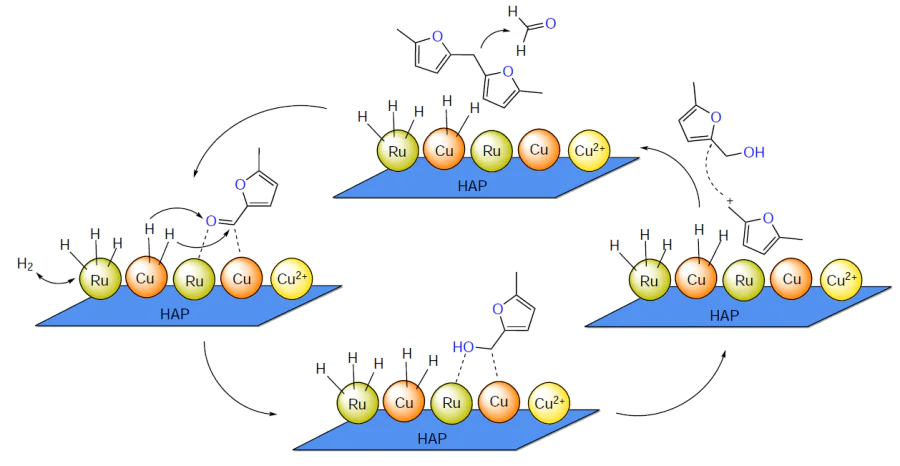
The catalytic conversion of 5-HMFF and 5-MFF via one-pot and tandem processes is implemented using copper catalysts, including bimetallic ones (copper – ruthenium and copper – cobalt). Unlike processes involving furfural, no data on the use of palladium catalysts in these reactions are available in the literature. Presumably, more branched molecular structure of C6 furan molecules compared to furfural requires the use of bimetallic systems to ensure the efficiency of reactions (Scheme 8).
Among the reaction conditions that influence the efficiency of processes discussed in this Section, the most clear-cut correlation is observed for temperature: higher temperatures provide a higher degree of hydrogenation/HDO. Meanwhile, parameters such as hydrogen pressure, reaction time, reactant ratio, and the specific surface area of the catalyst do not exhibit clear correlations, indicating the need for individual optimization for each catalytic system.
The lack of stability of bifunctional catalysts is a major obstacle to the practical implementation of tandem processes. The main causes of deactivation include coking, hydration of the support in an aqueous medium, and leaching and sintering of active metals. A number of publications proposed methods for preventing these adverse processes. The annealing at 400 – 600°C effectively restores the activity of catalysts deactivated by coke deposition (Pd/MgO – ZrO2, Al2O3, MgAl2O4). The problem of hydration can be solved, for example, by adding hydrophobic solvents. It was shown that the encapsulation of metal nanoparticles into a zeolite matrix (Pt@H-BEA, Pd@meso-ZSM-5) suppresses sintering and leaching.
Comparison of sequential, one-pot, and tandem processes is difficult due to variability of reaction conditions reported in various studies. Nevertheless, direct comparison of the efficiency of various flow diagrams under identical conditions is made in some cases. It was shown that the one-pot condensation – hydrogenation of furfural with acetone in the aqueous phase catalyzed by Pt/MgZr gives alkanes in a yield of ~50%,[88] which is comparable with the yield of ~70% achieved in optimized two-step processes. For the conversion of cyclopentanone over the Ni/Mg–Al – O/AC catalyst, a one-pot design was proposed involving low-temperature condensation (170°C) followed by high-temperature hydrogenation (260°C); this provided a higher yield of the target alkanes (70.7%) compared to that in the tandem process (64.4%).[130] These examples illustrate the need for a customized approach for each system when the process design is selected. There are virtually no systematic quantitative assessments of energy efficiency (TON, TOF, energy consumption). It is also worth noting that the development of one-pot/tandem processes for the conversion of levulinic acid into alkanes could be a promising line for future research, since currently this problem has been solved only for a sequential process.
The vast majority of the studies discussed in this Section were conducted using particular model components of bio-oil. Only in a few studies, have attempts been made to use mixtures that closely mimic the actual composition of the bio-feedstock. Shao et al.[89] investigated one-pot condensation – hydrogenation process for a four-component mixture (furfural, acetone, butanal, butanone) that modelled the distribution of major carbonyl products of pyrolysis of cellulose and hemicelluloses. It was noted that the presence of several carbonyl compounds leads to the formation of a broader range of products and complicates the selectivity control compared to the conversion of single substrates. The effect of impurities (acids, phenols, nitrogen compounds), which are inevitably present in real bio-oil, on the stability and activity of bifunctional catalysts in condensation processes has not yet been systematically studied.
A variety of noble and non-noble metals can be used as bifunctional catalysts (Pd, Pt, Ni, Cu) in tandem processes to prepare alkanes from cyclopentanone. The reaction conditions such as temperature, hydrogen pressure, and reaction time vary over a broad range depending on the chosen catalytic system. Both acid and basic catalysts have been reported in the literature, with the balance and spatial arrangement of the active sites playing a key role. A promising trend is to use the accumulated data to implement similar processes for the considered furan substrates for which much fewer tandem processes leading to the production of hydrocarbons have been described to date.
4. Processes based on alkylation and subsequent hydrodeoxygenation
This Section addresses processes involving aromatic components of biomass that are capable of undergoing alkylation reactions; first of all, this refers to phenol derivatives obtained upon processing of lignin. Of particular interest are tandem alkylation – HDO processes in which the alcohols formed as intermediates from phenols participate in the alkylation. Another promising area is the alkylation of phenols with alcohols formed upon processing of the cellulose fraction of biomass, such as furfuryl alcohol and 5-HMFF, which enables integrated processing of various components of lignocellulosic feedstock.
2-Methylfuran (2-MF) is a key furan compound present in bio-oil, which considerably differs from furfural, 5-HMFF, and 5-MFF considered above by the absence of an aldehyde group. 2-Methylfuran can undergo hydroxyalkylation and alkylation of the furan ring with carbonyl compounds, especially furfural. These processes open up the way for carbon chain elongation and the subsequent synthesis of valuable branched alkanes.
4.1. Conversion of phenols and alcohols
The alkylation of phenols with alcohols may serve for the synthesis of long-chain alkanes (Table 5)[133-141]. In addition, the hydroalkylation of phenolic compounds is a promising method for the synthesis of bicyclic hydrocarbons; the process includes hydrogenation, dehydration, and alkylation reactions occurring in parallel. A characteristic feature of this process is that hydrogenation, HDO, and dehydration reactions result in in situ formation of reactive intermediates (cyclohexanol, cyclohexene, and their derivatives), which then participate in electrophilic aromatic substitution. In a number of studies addressing hydroalkylation of oxygenated components of bio-oil, incomplete hydrogenation and HDO of the alkylated products took place. For example, zeolite-catalyzed hydroalkylation of m-cresol[134] affords 3-methylcyclohexene, which alkylates unreacted m-cresol; however, no further hydrogenation of the products takes place (Table 5, No. 1). Similarly, the hydroalkylation of phenol catalyzed by Co2P/Beta[49] gives cyclohexylphenol (Table 5, No. 2).
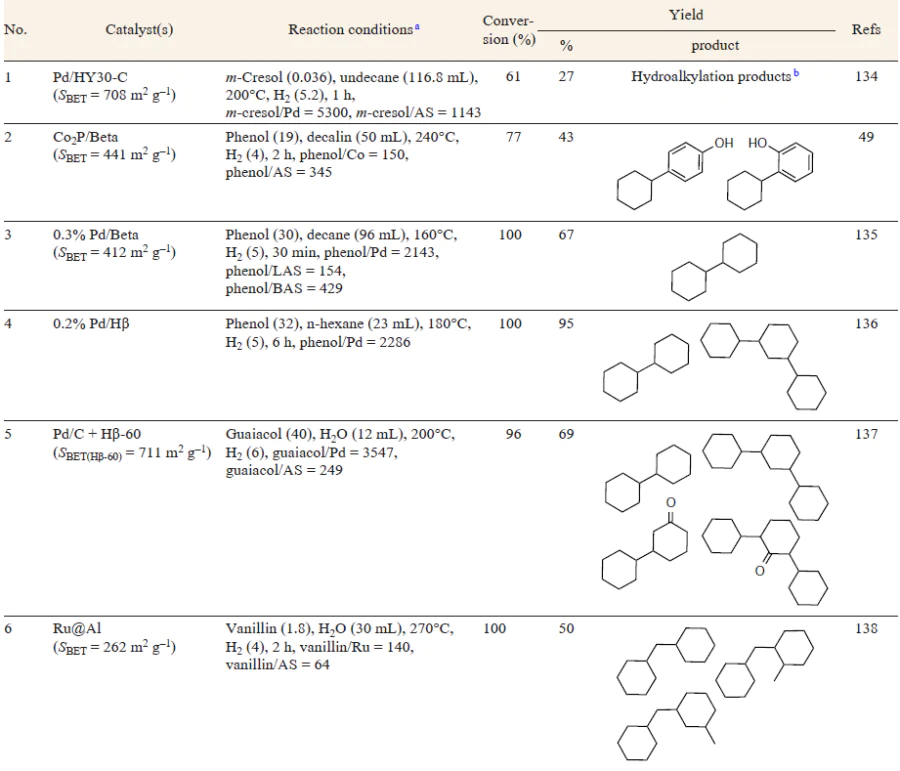
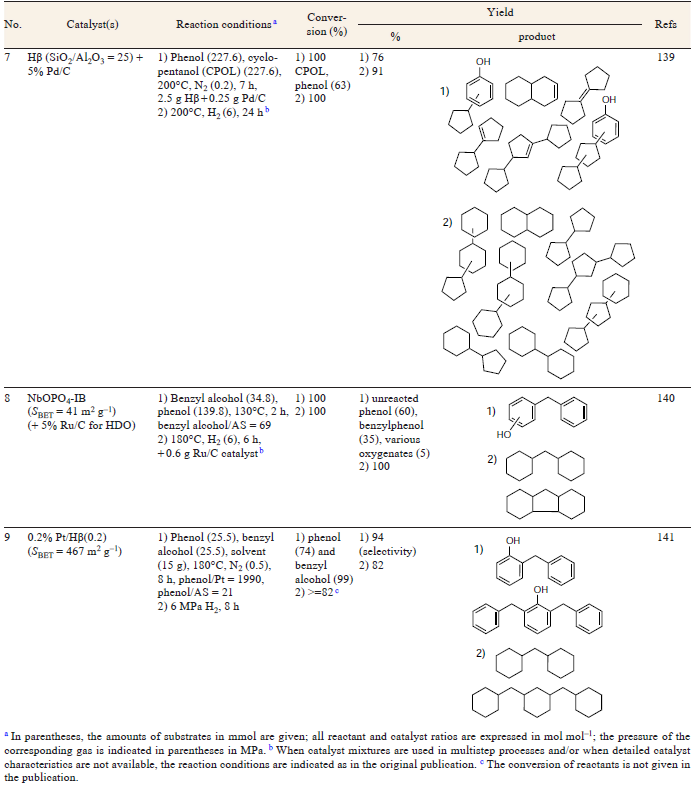
Below in this Section, the primary attention is paid to systems that provide complete hydrodeoxygenation of phenols to bi- and tricyclic alkanes (see Table 5).
Akhmetzyanova et al.[135] carried out hydroalkylation of phenol in the presence of bifunctional 0.3Pd/Beta metal – acid catalyst, which gave bicyclohexane in 67% yield (Table 5, No. 3). Similarly, Yu et al.[136] obtained bi- and tricyclic alkanes in a 95% yield from phenol and its derivatives in a tandem process using 0.2% Pd/Hβ (Table 5, No. 4). In both studies, the reaction mechanism and side processes were investigated in detail and were found to be similar (Scheme 9).
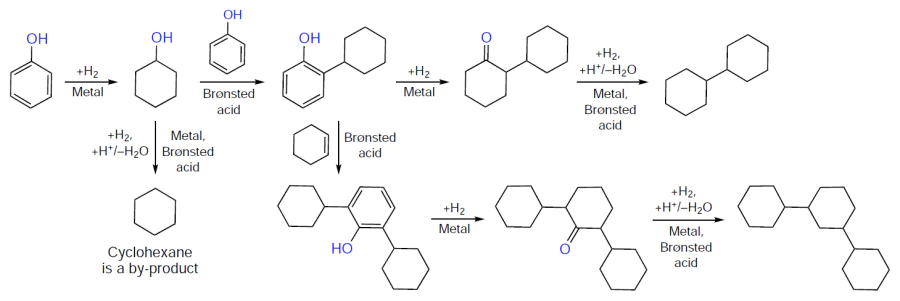
According to the proposed mechanism, the reaction includes two main steps: first, phenol is hydrogenated at the metal active sites of the catalyst to form cyclohexanol, which then alkylates unreacted phenol, and this is followed by hydrodeoxygenation to bicyclohexane. The alkylation resulting in the formation of a tricyclic compound takes place in parallel. The main side reaction is the direct hydrodeoxygenation of cyclohexanol to cyclohexane, which, unlike the target alkanes, does not contain an elongated carbon chain.
The contents of cyclohexane in the reaction products reported in the above studies are markedly different: the yield is 24% in the former case and < 5% in the latter case. The key operating conditions (the nature of the alkanes used as solvents, temperature, and pressure) are similar, with the exception of the reaction time (0.5 h vs. 6 h), which, however, does not have a pronounced effect on the selectivity. Hence, the distribution of products is determined by the properties of the catalytic system. Although the latter study does not give detailed characteristics of the catalyst, an earlier publication of the same authors[141] describes a similar Hβ material with an acidity of 870 μmol g–1. It can be assumed that the Pd (0.2%)/Hβ catalyst has a similar acidity. In this case, the phenol/AS ratio is ≈49, which is relatively low. Therefore, the alkylation potentially proceeds faster than HDO, which leads to a decrease in the selectivity for cyclohexane. Thus, the results indicate that the number of active sites has a pronounced effect on the process selectivity, particularly on the ratio of the alkylation and hydrogenation/HDO rates.
This research was followed up by a study by Shen et al.,[137] who investigated the alkylation – hydrodeoxygenation of guaiacol, a more complex phenolic compound, which is a major component of lignin bio-oil (Table 5, No. 5). Unlike the systems considered earlier, this process was carried out in a fully aqueous medium, which corresponds more closely to the actual conditions of processing of bio-oil, which always contains water. Instead of the bifunctional catalyst, the authors used a physical mixture of metal and acid catalysts.
The proposed reaction mechanism is more complex than the mechanism of phenol hydroalkylation (Scheme 10). The main side reaction is still the conversion of the substrate to monocyclic alkanes and oxygenates in up to 30% yield. Calculations based on density functional theory identified two possible pathways for the formation of the target products, one involving 2-methoxycyclohexanone and one involving 2-hydroxycyclohexanone, with the former being energetically more favourable, which is consistent with experimental data.
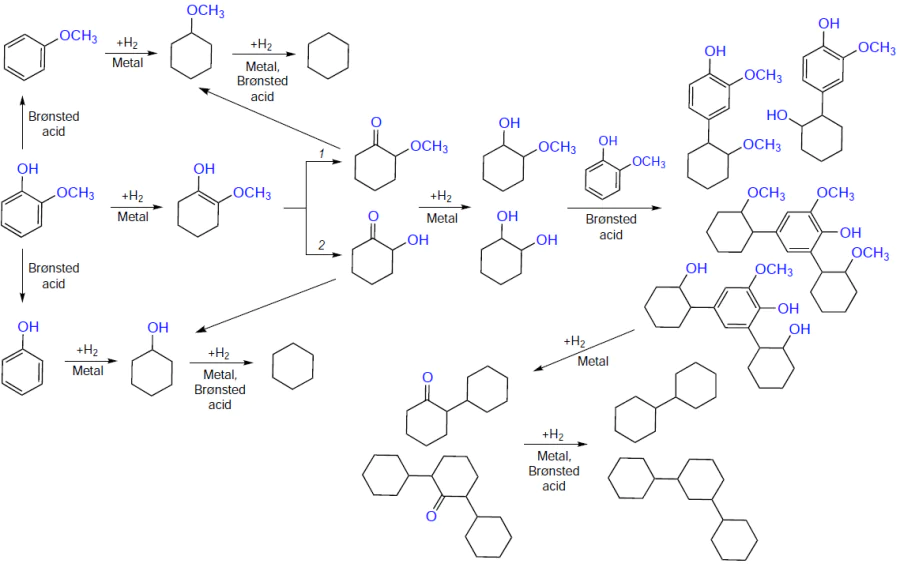
The yields of the target products in the guaiacol process were found to be relatively low: 69% for guaiacol vs. 95% for phenol reported by Yu et al.[136] In addition, in the case of guaiacol, the hydrodeoxygenation of the hydroalkylation products was incomplete. It is noteworthy that, due to considerable differences between the conditions of the tandem processes in the two studies being compared, it is difficult to draw an unambiguous conclusion regarding the advantage of the bifunctional catalyst over the mixture of metal and acid catalysts.
In the case of the physical mixture of catalysts, the interaction between the metal and acid sites may be less effective and does not necessarily promote the reaction.[142-145] However, as discussed above, in an aqueous medium, the structure of the catalyst plays a secondary role due to the formation of hydronium ions in the liquid phase.
Unlike the phenolic components of bio-oil discussed above, vanillin contains an aldehyde functional group; therefore, it can undergo aldol condensation in tandem processes in addition to the alkylation reactions. Yati et al.[138] studied the tandem condensation – hydrodeoxygenation of vanillin to give alkanes (Table 5, No. 6). When the substrate conversion was 100%, the yield of oxygen-free dimers reached 50%; and this was accompanied by 38% yield of oligomers. The high selectivity of the bifunctional Ru@Al catalyst to the target alkanes is attributable to the synergistic interaction of the acid sites of the support with the metal active sites. The authors noted the catalyst deactivation during the process, which is related to its partial conversion to boehmite, probably caused by the action of the aqueous medium of the reaction.
Nie et al.[139] studied the alkylation of phenol with cyclopentanol followed by HDO in the presence of Hβ + Pd/C catalyst mixtures (Table 5, No. 7). The second step of the process is also hydroalkylation of phenol to polycyclic alkanes. The resulting product distribution (91% yield of polycyclic alkanes in the second step of the process) indicates the nearly complete conversion of phenol into the target products. Liu et al.[140] investigated the conversion of phenol and benzyl alcohol in a two-step process (Table 5, No. 8). The alkylation was catalyzed by NbOPO4-IB; then the Ru/C catalyst was added to perform the second step (HDO). Meanwhile, when a mixture of catalysts was used in the alkylation reaction, the product yield was low, indicating that Ru/C inhibited the reaction of NbOPO4-IB with the reactants in the first step. A distinctive feature of this system was the absence of a solvent: phenol being converted to cyclohexane served simultaneously as the reaction medium, facilitating hydrodeoxygenation. However, in this process, unlike the process considered above,[139] the authors did not notice the hydroalkylation of phenol. Shen et al.[141] reported a one-pot process involving phenol and benzyl alcohol on a bifunctional metal – acid Pt/Hβ catalyst to give a mixture of fuel range alkanes, including tricyclic ones (Table 5, No. 9). Presumably, the high specific surface area of the catalyst (467 m2 g−1) promotes the formation of tricyclic compounds, similarly to the processes involving furfural. The shorter total time of the two-step process using NbOPO4-IB + Ru(5%)/C catalysts compared with the process time in the presence of the Pt/Hβ bifunctional catalyst (8 h and 16 h, respectively) suggests that for these processes, a mixture of two catalysts is not inferior to the bifunctional catalyst.
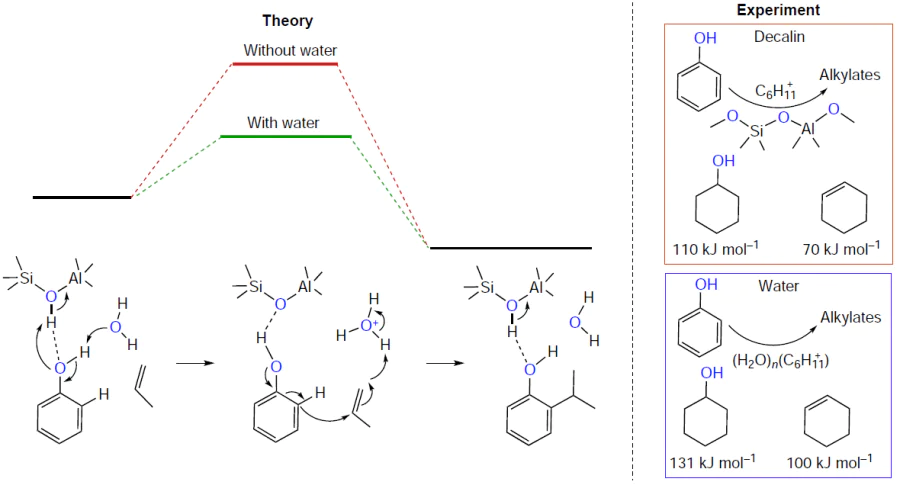
The effect of water on acid catalysts in alkylation reactions, like in the case of aldol condensation, can be either negative or positive.[146-148] On the one hand, in the alkylation of phenol with propylene on H-BEA zeolite, the presence of water lowers the energy barrier of the reaction.[149] On the other hand, the rate of phenol alkylation with cyclohexanol is substantially lower in water than in decalin. This is due to the fact that the formation of the cyclohexyl cation from cyclohexanol is more energy-consuming in the aqueous phase, and the olefin protonation with a hydronium ion requires overcoming a higher energy barrier compared to the protonation at BAS of the support.[150]
The difference in the results can be attributed to differences in the design of the study (Scheme 11). In the former study,[149] an alkene served as an alkylation agent, the study was devoted to theoretical modelling, and no solvents other than water were considered. The latter (experimental) study[150] showed the advantage of decalin, a non-polar solvent, over water. This finding is supported by the data discussed in detail in this Section: high yields of the target products of phenol alkylation–hydrodeoxygenation are generally achieved when alkanes are used as solvents.
4.2. Conversion of phenols and furan compounds
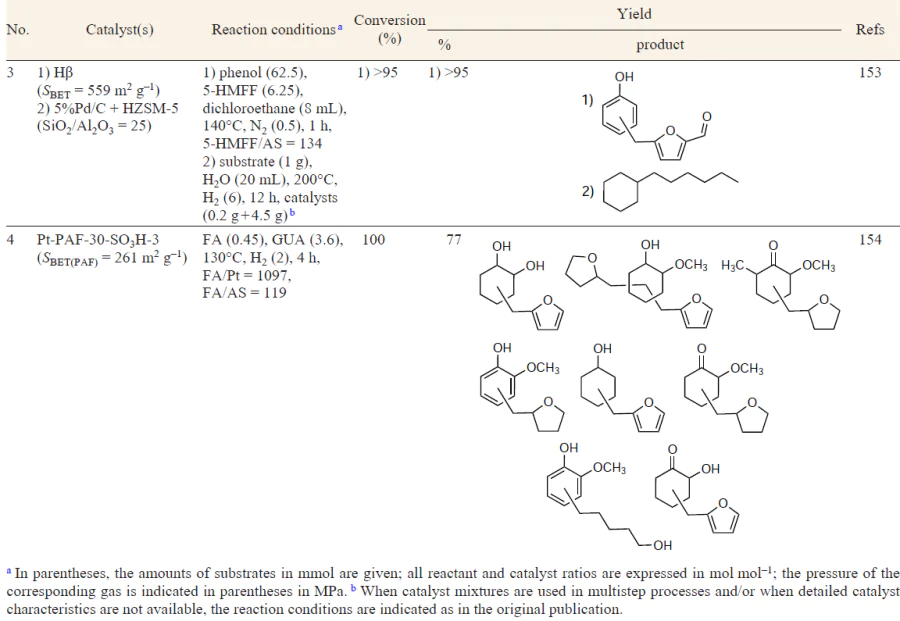
The alkylation of phenols with furan derivatives is a growing trend in the catalytic processing of bio-feedstock, which allows simultaneous conversion of various components of bio-oil; however, tandem and one-pot processes involving these groups of substrates have not been adequately studied (Table 7)[151-154]. The efficiency of these reactions is determined not only by the process conditions and catalyst parameters, but also, to a considerable extent, by the reactivity and steric characteristics of the substrates.
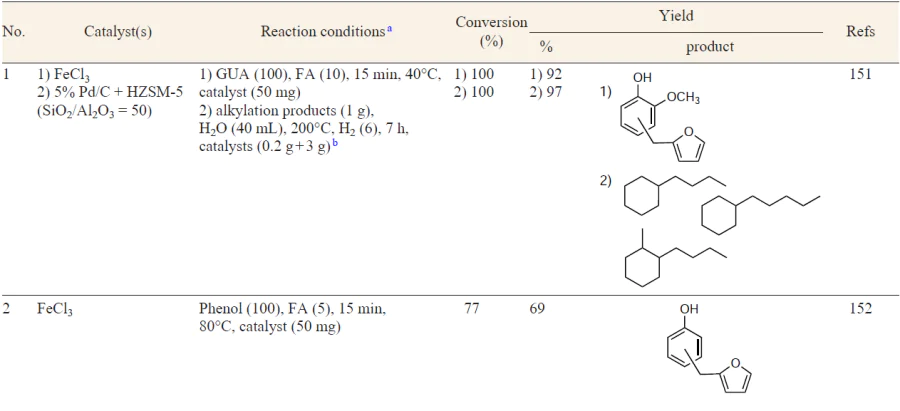
Han et al.[151] investigated the alkylation of guaiacol with furfuryl alcohol followed by HDO to give alkanes. A 92% yield of the monoalkylated product was obtained within 15 min by using iron(III) chloride as a catalyst (Table 7, No. 1). In a study by Kumar et al.,[152] the alkylation of phenol with furfuryl alcohol under similar conditions resulted in a 69% yield of the monoalkylated product (Table 7, No. 2). This difference between the yields of alkylation products under similar conditions of synthesis may be attributed to both the different reactivity of the aromatic substrates and the unequal contributions of side reactions, primarily the polymerization of furfuryl alcohol.[155][156]
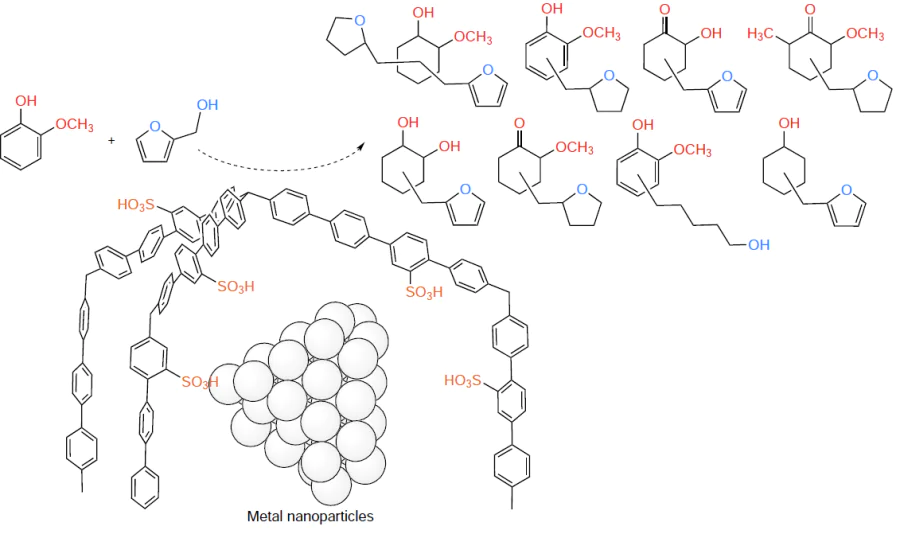
The activity of heterogeneous catalysts considerably depends on the textural and acidic characteristics of the support,[157-160] which is particularly evident in the alkylation of phenols with furan compounds. In the case of alkylation of phenol with 5-HMFF, the Hβ zeolite with an acidity of 2330 μmol g–1 proved to be the optimal catalyst,[153] whereas the use of HZSM-5 with a higher acidity (2550 μmol g–1), but lower specific surface area (413 vs. 559 m2 g–1) and smaller pore size (0.54 vs. 0.67 nm) resulted in a sharp decrease in the conversion of 5-HMFF (<10%) (Table 7, No. 3). Thus, the efficiency of processes involving furan and phenolic compounds depends on both the nature of the reactants and characteristics of the catalytic system. A study of tandem alkylation – hydrogenation[154] using catalysts based on porous aromatic frameworks (Scheme 12) identified the pair of substrates that provided the highest yields of alkylation – hydrogenation products (77%): furfuryl alcohol and guaiacol (Table 7, No. 4). As in the previously considered studies, the best result was achieved in the presence of a catalyst in which, presumably, metal nanoparticles and acid active sites (sulfonic groups of the support) promoted the reaction by interacting with one another. However, despite the high yield, the reactions gave a complex mixture of oxygenated compounds with virtually no hydrodeoxygenation, which indicates the need for further optimization of catalytic systems for the synthesis of hydrocarbons from phenols and furan derivatives.
4.3. Conversion of 2-methylfuran
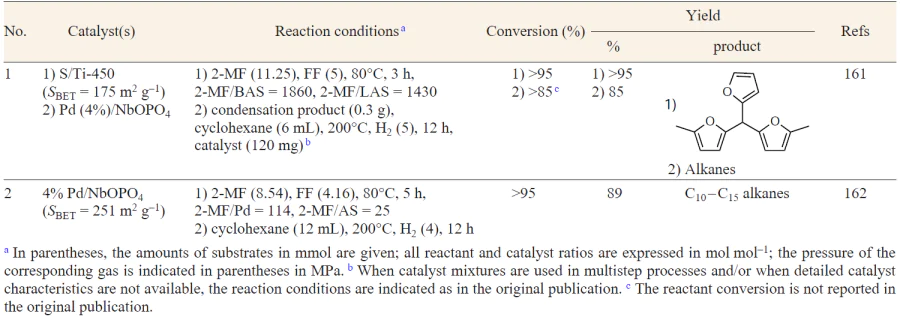
Yan et al.[161] carried out SO42–/TiO2-catalyzed alkylation of 2-methylfuran with furfural (Scheme 13) and subsequent Pd/NbOPO4-catalyzed hydrodeoxygenation (Table 9, No. 1). In turn, Xia et al.[162] implemented the one-pot alkylation – HDO process in the presence of the Pd/NbOPO4 catalyst (Table 9, No. 2). Thus, the synthesis of alkanes from 2-MF and furfural has been achieved using both a sequential process and a one-pot process. It is important to note that both approaches used the Pd/NbOPO4 catalyst and cyclohexane as the solvent. Under similar conditions, the one-pot process resulted in a higher overall yield of alkanes, which is its advantage over the sequential process.
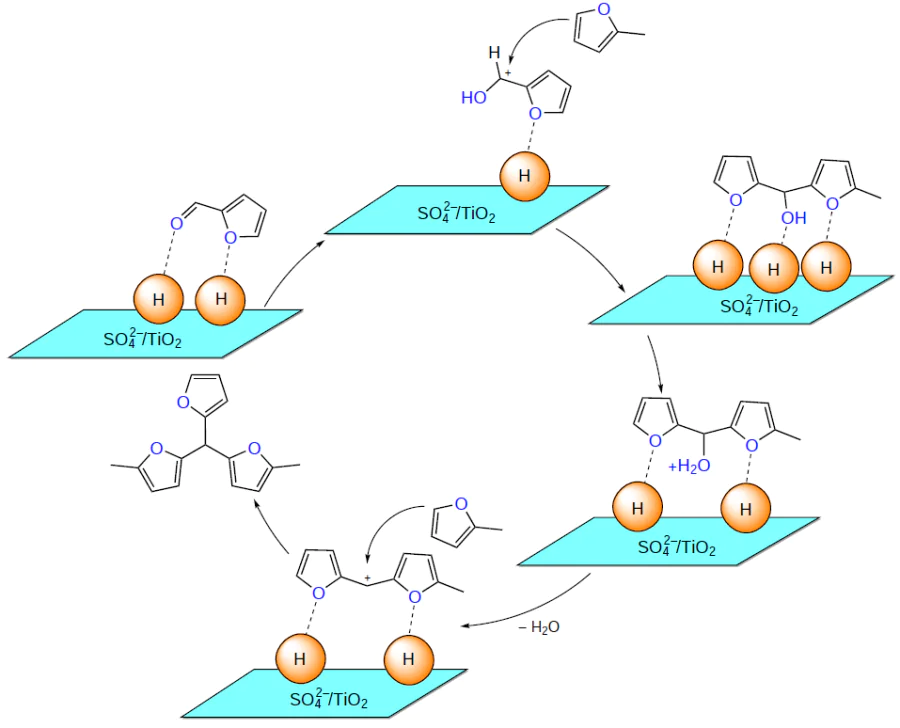
Analysis of the processes involved in the conversion of aromatic components of bio-oil reveals a number of general patterns that apply to various substrates. The yields of target products are determined not by the nature of the catalyst but rather by the balance between the hydrogenating function of the metal sites and the alkylating ability of the acid sites of the same support or a second catalyst in the case of a physical mixture.
Data on the catalyst stability in hydroalkylation and alkylation of aromatic compounds, unlike these data for aldol condensation reactions, remain fragmentary, and systematic studies on the reuse of catalysts are virtually absent. The main issues identified in a comparison of fresh and spent catalyst samples include sintering of metal nanoparticles and phase transformations in the support in an aqueous medium at elevated temperatures. Meanwhile, regarding HDO, it was shown, for example, for Pd/NbOPO4 that even after accumulation of up to 37 mass % carbon deposits and a decrease in the specific surface area from 251 to 83 m2 g–1, the activity is fully restored by annealing at 500°C for 3 h.
The studies discussed in this Section mainly address the conversion of single substrates. Exceptions are provided by recent studies that used multicomponent mixtures similar in composition to lignin-based bio-oil (guaiacol, phenol, vanillin, 4-ethylphenol, isoeugenol, etc.).[136][137] In the presence of Pd/C + Hβ and Pd/Hβ catalysts, the yields of the target products, alkanes, reached ~64% and ~89%, respectively, indicating that these catalysts are, in principle, suitable for processing complex feedstocks. The effect of impurity components in lignin bio-oil (such as acetic acid or sulfur compounds) on the deactivation of hydroalkylation catalysts remains unexplored.
It is noteworthy that this Section presents examples of processes conducted under similar conditions using both bifunctional catalysts and physical mixtures of catalysts, which indicates the relevance of both strategies for the development of tandem and one-pot processes for the conversion of aromatic compounds. It is noteworthy that sequential and one-pot processes are mainly described in the literature for the alkylation of phenols with furan compounds or alcohols, whereas the design of tandem processes may become a promising trend for future research. In relation to the conversion of 2-methylfuran on palladium catalysts, it was shown that the one-pot process provides higher yields of target products compared to the sequential process. This means that the one-pot and tandem processes may also prove effective for other substrates.
5. Processes of alkane production from bio-feedstock using photo- and electrochemical C – C bond formation reactions
The previous Sections of this review consider various methods for the synthesis of alkanes or oxygenates from bio-oil components, mainly in the presence of heterogeneous bifunctional catalysts. Currently, electro- and photochemical reactions giving new C – C bonds between the components of lignocellulosic bio-oil are being actively developed.[163-171] Potentially, these processes require little resource expenditure,[172][173] and in some cases, photoreactions do not require a catalyst.[174][175] Thus, in this review, we should consider photo- and electrochemical reactions as alternatives to conventional heterogeneous and homogeneous catalysis.
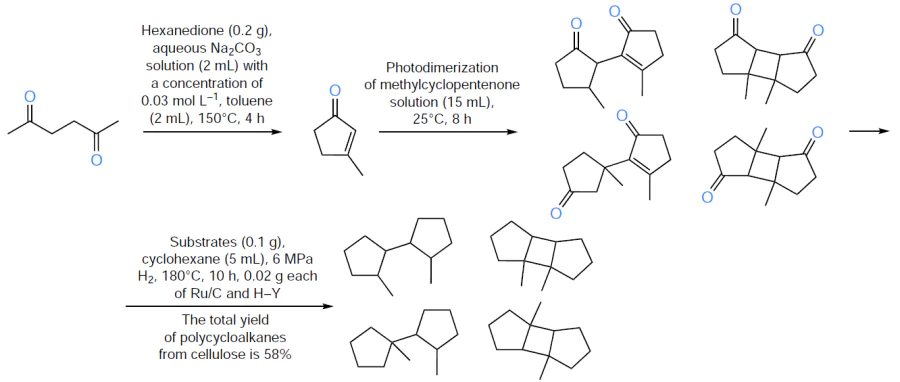
Liu et al.[176] described a three-step synthesis of alkanes from 2,5-hexanedione, which is prepared beforehand from cellulose (Scheme 14). First, hexanedione is converted almost quantitatively into methylcyclopentenone. This was followed by photodimerization of methylcyclopentenone without a catalyst in an aqueous medium to give various oxygenates. The final step is HDO using a mixture of Ru/C + H – Y catalysts. The overall yield of polycycloalkanes obtained from cellulose in a multistep process was 58%. The yield of hexanedione during the primary processing of cellulose was 66%; in all other steps, the yields ranged from 94 to 97%. Hence, a three-step process comprising photodimerization allows for the production of alkanes from bio-feedstocks in high yields.
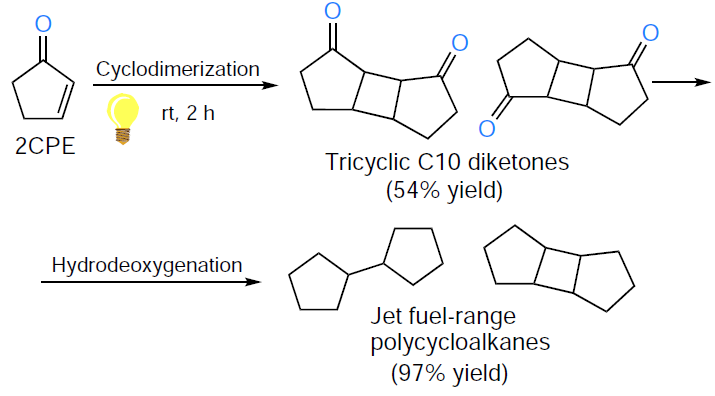
Wu et al.[177] synthesized alkanes from cyclopenten-2-one in two steps. The [2 + 2] cycloaddition was carried out under UV light to yield tricyclodiketones (Scheme 15). The reaction proceeded under milder conditions than the thermocatalytic reaction in the presence of H-ZSM-5 zeolite (room temperature, 2 h vs. 120°C, 18 h); the yield was 54% compared to 77% in the thermocatalytic process. In the hydrodeoxygenation of [2 + 2]-cycloaddition products under UV light, the yield of alkanes was 97%.[178][179]
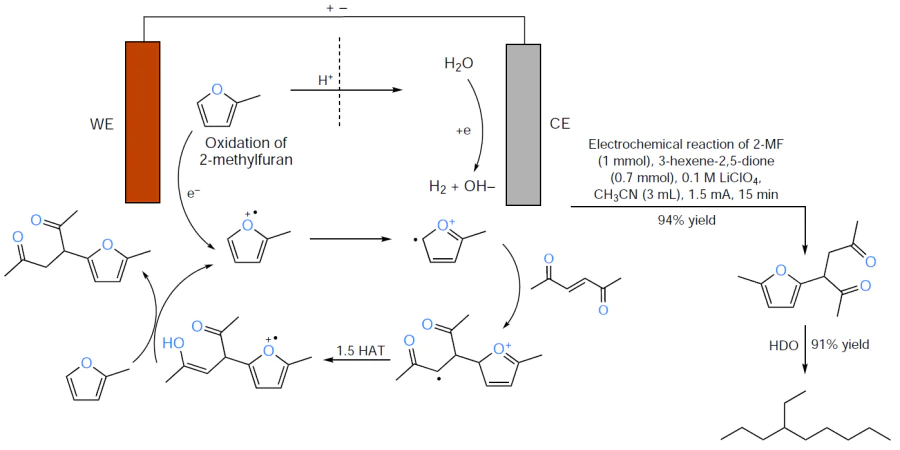
Chen et al.[180] investigated a radical electrochemical reaction between 2-methylfuran and 3-hexene-2,5-dione (Scheme 16). In this reaction, 2-methylfuran is oxidized. For a current efficiency of 4700%, the yield of the fuel precursor was 94%. It was noted that water present in acetonitrile promoted the formation of enol. Thus, the presence of water plays an important role in the electrochemical reaction, like in the above heterogeneous catalytic C – C bond formation reactions. The yield of alkanes upon hydrodeoxygenation was 91%; the reactions were carried out sequentially.
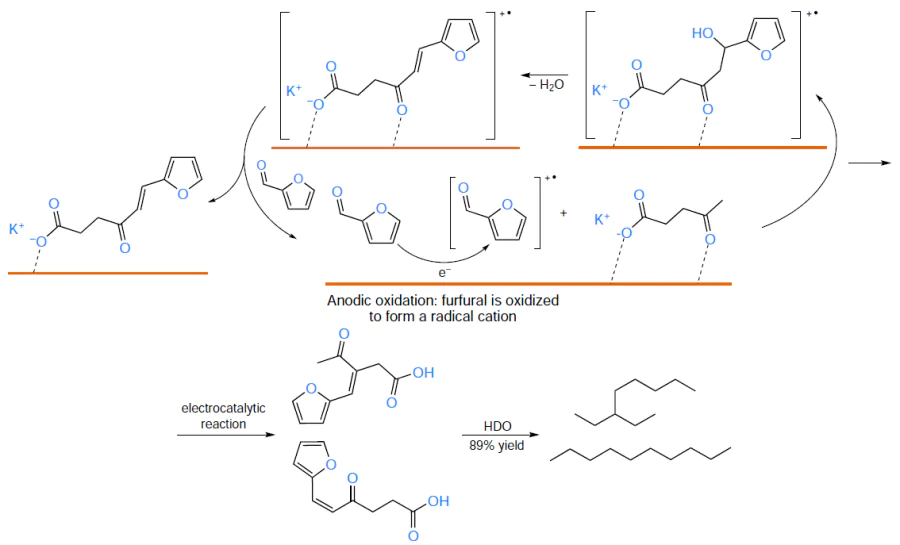
Wu et al.[181] prepared fuel precursors from furfural and levulinic acid in an electrocatalytic process (Scheme 17). The reaction took place at the anode: furfural was oxidized to form a radical cation, which then underwent a coupling reaction. A yield of ≈70% was achieved within 4 h at 60°C. The difference in the adsorption of levulinic acid and furfural molecules on the Ni3N catalyst was described: levulinic acid was adsorbed more strongly; therefore, side reactions involving furfural (such as oxidation) proceeded less intensely. The resulting intermediate was subjected to hydrodeoxygenation, to give alkanes in 89% yield.[182]
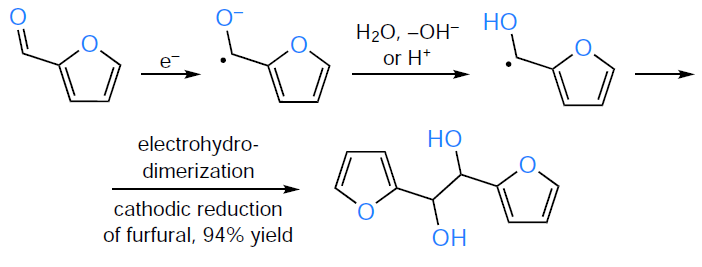
Shang et al.[183] carried out electrohydrodimerization of furfural giving hydrofuroin (Scheme 18). The process involves the cathodic reduction of furfural. The advantages of the process are described: it requires atmospheric pressure, room temperature, and water as the hydrogen source; this requires no expensive catalysts (a cheap, environmentally friendly carbon electrode and 0.1 M KOH are used). A high yield of hydrofuroin (94%) was achieved.
Thus, the electro- and photochemical reactions to form a C – C bond between the components of bio-oil represent a promising alternative to conventional catalysis, since these processes generally require shorter reaction times, atmospheric pressure, and room temperature; also in some cases, no catalyst is required. Nevertheless, most of the research addresses sequential reactions for the production of alkanes in which hydrodeoxygenation is carried out after photo- and electrochemical reactions; no tandem or one-pot processes that combine photo-/electrochemical reactions with HDO can be found in the literature.
6. Conclusion
This review addresses modern approaches to production of fuels and valuable compounds from lignocellulosic feedstocks using carbon chain elongation reactions in tandem and one-pot processes. This analysis makes it possible to identify the key factors that determine the activity of catalytic systems and the feasibility of industrial implementation of the processes.
— Comparative analysis of one-pot and tandem processes shows that one-pot processes are more widely documented in the literature and are easier to implement; however, tandem processes are more promising in terms of energy efficiency. This can be confirmed by comparing the furfural processing methods: the tandem process catalyzed by Pt/MgZr provides the preparation of alkanes, whereas one-pot furfural conversion processes most often give only partly hydrogenated oxygenated compounds with an elongated carbon chain.
— The type of catalytic system plays a crucial role in the efficiency of tandem processes. The highest activity is inherent in bifunctional catalysts in which the synergistic interaction between the metal and acid/base sites ensures the coordinated course of sequential reactions. Meanwhile, in a number of studies (first of all, those devoted to processing of aromatic compounds), physical mixtures of monofunctional catalysts have shown results comparable to those of bifunctional systems, which expands the range of possible approaches in the development of new processes.
— Reaction conditions vary over broad ranges; furthermore, temperature, hydrogen pressure, and reaction time show no universal correlations and must be selected individually for each specific reaction system. The choice of reaction medium has a key influence on the course of the reaction and the yield of products. On the one hand, water is the preferred solvent for the conversion of furan derivatives, as it promotes aldol condensation and facilitates the isolation of the products. On the other hand, in the reactions involving cyclopentanone and aromatic compounds, non-polar solvents or two-phase systems are more effective. The dual role of water deserves special attention: depending on the type of catalyst active sites (acid or basic) and the nature of the substrate, it can either accelerate the target reactions or induce deactivation of the active sites. It is also worth noting that the stability of bifunctional catalysts is still among the least studied aspects of tandem processes. The main causes for deactivation such as coking, hydration of the support in aqueous media, as well as leaching and sintering of active metals are only starting to be systematically investigated.
— Virtually all of the processes considered in this review were carried out in batch autoclaves using substrates in millimolar quantities, and only a few studies demonstrated the possibility of switching to continuous-flow systems. The main engineering challenge in the scaling-up is related to the fact that the sequential steps of a tandem process typically proceed at markedly different rates: C – C bond formation reactions often take a longer time than hydrogenation/HDO; in a flow reactor with a fixed residence time, this can lead to incomplete conversion of intermediates. In addition, the continuous-flow process aggravates catalyst deactivation problems, since the accumulation of carbon deposits and the hydrothermal instability of the support can no longer be counterbalanced by merely increasing the reaction time, as in an autoclave. There are virtually no systematic studies on the optimization of volumetric flow rate, residence time distribution, and heat removal as applied to tandem conversion of bio-oil components. Thus, the development of the engineering foundations for the continuous-flow tandem processes is one of the most pressing and unresolved challenges in this field.
— The wide variety of compounds obtained from lignocellulosic biomass makes the selection of substrates for tandem processes a task no less complex than the development of catalysts. Whereas cyclopentanone and aromatic compounds have been studied in considerable detail, the potential of furan derivatives [in particular, 5-HMFF (5-hydroxymethylfurfural) and 5-MFF (5-methylfurfural)] has not been fully implemented. A promising but yet poorly investigated area is the processing of multicomponent mixtures that simulate the actual composition of bio-oil. Particular attention should be paid to impurities (organic acids, phenolic oligomers, and nitrogen- and sulfur-containing compounds), which can act as catalytic poisons. However, no studies on the effect of bio-oil impurities on the course of tandem processes are yet available.
— The photo- and electrochemical methods for C – C bond formation offer an energy-efficient alternative to conventional thermocatalysis. However, currently, there are no examples in the literature of their integration into tandem processes comprising hydrogenation and hydrodeoxygenation steps, which opens up broad opportunities for future studies.
The conducted analysis indicates a considerable potential of tandem processes for the conversion of bio-feedstock, and the described trends and patterns can serve as a basis for further research.
This review was prepared with financial support from the Russian Science Foundation (Project No. 25-79-00160).
7. List of abbreviations and symbols
AS — acid sites,
BAS — Brønsted acid sites,
BS — basic sites,
CPO — cyclopentanone,
CPOL — cyclopentanol,
GUA — guaiacol,
FA — furfuryl alcohol,
FF — furfural,
HDO — hydrodeoxygenation,
5-HMFF — 5-hydroxymethylfurfural,
LAS — Lewis acid sites,
MIBK — methyl isobutyl ketone,
2-MF — 2-methylfuran,
5-MFF — 5-methylfurfural,
SBET — BET specific surface area.
References