Abstract
Over the past several decades, we have witnessed changes in the directions and methods of chemical research, as well as in the culture of scientific writing itself. This culture is now entering a new phase as artificial intelligence (AI) becomes a practical tool for finding, analysing, organising, and generating knowledge. This issue presents two related articles. The first sets out a practical and transparent approach to preparing reviews with an AI-based digital co-expert. The second demonstrates this methodology in a review of the use of synthetic data in electron microscopy. Their joint publication marks an important transition from debating the acceptability of AI to developing a verifiable, responsible, and reproducible methodology for its use. We see these articles as an invitation to adopt a new standard of scientific practice, based on a considered combination of human expertise and the efficiency offered by digital tools, rather than on prohibitions or uncritical automation.
Keywords
Editorial
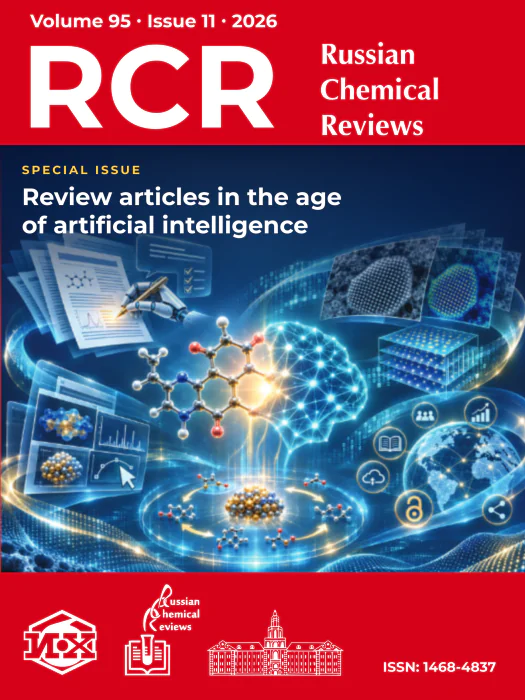
Over the past several decades, we have witnessed changes in the directions and methods of chemical research, as well as in the culture of scientific writing itself. This culture is now entering a new phase as artificial intelligence (AI) becomes a practical tool for finding, analyzing, organizing, and generating knowledge. This issue presents two related articles. The first one sets out a practical and transparent approach to preparing reviews with an AI-based digital co-expert.[1] The second article demonstrates this methodology in action on the example of using the analysis of the application of synthetic data in electron microscopy.[2] Their joint publication marks an important transition from debating the acceptability of AI to developing a verifiable, responsible, and reproducible methodology for its use. We see these articles as an invitation to adopt a new standard of scientific practice, based on a considered combination of human expertise and the efficiency offered by digital tools, rather than on prohibitions or uncritical automation.
Founded in 1932, Russian Chemical Reviews provides a historical record of continuity across successive periods of scientific development.[3] Its pages have reflected fundamental changes in the evolution of chemical thought: the emergence of physicochemical research, advances in organic synthesis and catalysis, the growth of polymer chemistry, and the development of bioorganic and medicinal chemistry, nanotechnology, materials chemistry, and numerous interdisciplinary fields. A review journal is particularly responsive to changes in science. In addition to recording new findings, it brings them together into a coherent account that helps the scientific community identify its future directions.
However, the changes have extended beyond research fields and topics. The practical tools and intellectual processes involved in preparing an article have also changed. For decades, manuscripts arrived at editorial offices as typescripts, chemical formulae and schemes were drawn by hand, pages were sent by post, and peer review relied on paper, pencil, and the author’s attention to detail. The digital era brought word processors, electronic typesetting, databases, PDF files, reference management software, e-mail, online archives, and remote peer review. Within a few decades, a scientific article evolved from a set of typewritten pages into a complex digital object connected to bodies of literature, databases, code, images, electronic identifiers, and a global search infrastructure.
This process is now entering its next phase. Artificial intelligence is becoming part of the scientific infrastructure as well as a subject of research. Pioneering studies in recent years have shown that experimental automation, machine learning from successful and failed experiments, the identification of hidden patterns in the scientific literature, robotic synthesis, biomolecular structure prediction, autonomous cycles of planning, experimentation, and learning, and scalable materials design have become practical scientific tools.[4-13] In chemistry, these developments have been brought together in an analytical review of twenty influential AI-based technologies, which presents digital twins, big data, the Internet of Things (IoT), robotic platforms, intelligent control, natural language processing (NLP), and predictive modelling as interconnected elements of a new research environment.[14]
Until recently, we spoke of the age of AI: an age focused on developing algorithms, models, architectures, and platforms. We are now rapidly entering the age of ‘AI for’: AI for chemistry, medicine, materials science, energy, engineering, education, and scientific communication.[15] At this stage, what matters is not merely the availability of a powerful model, but rather its integration into a specific scientific task, whether through an instrument, a database, a synthetic strategy, a process model, a quality control procedure, or the preparation of a review. This shift in focus from developing AI to using it as an intelligent component of a field’s infrastructure represents an important turning point.[15]
This is an important moment for scientific journals. The widespread use of AI in manuscript preparation can no longer be ignored. However, it is equally dangerous to reduce the issue to a simple ban or a formal limit. A ban encourages undisclosed use, whereas unrestricted permission creates risks of superficial compilations, errors, unreliable references, and diminished author responsibility. Russian Chemical Reviews supports informed, clearly disclosed, and verifiable use of AI that assists authors without replacing the scientific content of their work.[16] Guidelines on transparency in the use of AI in reviews and evidence syntheses have already emerged in international publishing. Chemistry now needs its own practical protocols, adapted to the complexity of the chemical literature.
The two articles in this issue are particularly significant in this context. ‘Writing Review Articles with AI: The TRACE Digital Co-Expert Approach’ introduces the TRACE methodology, Transparent Review Acceleration with Co-Expert AI, for transparently accelerating review preparation with a digital co-expert.[1] The second article, ‘Synthetic data in electron microscopy. AI co-expert-assisted review’, provides a comprehensive practical test of this methodology: a full-scale review of synthetic data in electron microscopy was prepared using TRACE and is accompanied by a discussion of methodological issues.[2] To our knowledge, the international review literature has not previously featured such a closely integrated pair of studies, in which a strategy for responsible review writing with a digital co-expert is first formulated and then applied to a substantial body of interdisciplinary material within the same scientific context. Together, these articles present a method and its experimental evaluation in the preparation of a scientific review.
TRACE is not intended to produce a finished review by just ‘pressing a button’. Rather, the methodology recognizes that preparing a review article is a complex, multi-stage process that involves defining the topic, planning the strategy, searching for literature, selecting studies, obtaining full texts, analyzing data, developing the structure, assigning sources to sections, writing, integrating the text, checking facts and references, and making a final update. In this approach, AI acts as a digital co-expert, assisting with tasks that require scale, speed, classification, clustering, comparison, and language processing. The human author retains responsibility for formulating the question, critical interpretation, completeness, novelty, ethics, verification, and final scientific judgement.[1]
The quantitative result is particularly important. Compared with an estimated entirely manual workflow, preparation of the demonstration review was approximately 3.4 times faster: 244 hours (31 working days), compared with 840 hours (105 working days). At individual stages for which AI was well suited, the acceleration reached 10 – 22-fold. The overall gain was more modest because key stages, including conceptual development, comprehensive literature coverage, integration, and checks of facts, references, and originality, remained under human responsibility.[1] This distinction is fundamental. TRACE aims to optimize efficiency while preserving quality, transparency, and scientific integrity, rather than maximizing speed at any cost. In a good review, routine, labour-intensive tasks should become faster, while the stages that generate scientific understanding must be retained.
The digital co-expert strategy was developed in the research group of V.P.Ananikov, an internationally recognized expert in AI in chemistry and a leader in the digital transformation of science in Russia. The group runs a dedicated research programme, ‘Artificial Intelligence in Chemistry’, aimed at developing tools that enhance chemical intuition and accelerate the analysis of complex data, rather than replacing chemists.[17] The digital co-expert methodology has already demonstrated its value in reaction discovery,[18] data analysis,[19] and the use of machine learning to identify hidden patterns in terabyte-scale datasets.[20] The relationship between people and digital technologies has also been a recurring theme: AI does not replace chemists, but chemists who can use it critically and productively gain a substantial advantage.[21, 22]
Given the extensive use of AI tools for text processing, the publication of these two reviews has significance beyond the introduction of a new methodological study. It marks a turning point in the preparation of review articles. A review can no longer be viewed solely as a text written after reading published articles; it is becoming a documented process of knowledge management. This process must make clear the sources, selection criteria, role of AI, points of human oversight, verification procedures, and authors’ ultimate responsibility. The TRACE methodology and its accompanying checklist should therefore gradually become standard tools for preparing reviews, particularly when AI tools are used.
Active integration of digital tools into scientific research allows for the modernization and expansion of scientometric tools. Currently, this includes not only traditional metrics but also various alternative metrics, including those based on public attention to scientific work. This issue is the subject of another focused article in this thematic issue.[23]
The scientific community is entering the digital era as an active participant, rather than an observer. Journals have a duty both to maintain quality standards and to shape them in response to new conditions.[16] Upholding established standards for the quality of scientific knowledge is essential during the digital transformation of science and society.
Methodological note
During preparation of the manuscript, the author followed the VALENCE principles.[16] AI was used only as an auxiliary tool; all text, references, data, interpretations, and conclusions were reviewed and approved by the author, who takes full responsibility for the content of the work.
References