Keywords
Abstract
Malignant tumours are the second leading cause of death among working-age population; meanwhile, prevention and treatment of these diseases is hampered by the wide diversity of cell types that can become malignant or develop resistance to chemotherapy. Recent years have witnessed a considerable growth of the fascination with azolo[1,5-a]pyrimidines as a promising platform for developing antitumour agents; several drugs based on this platform are already in clinical trials or are used in practice. The present review, devoted to this platform, considers the diversity of oncogenic targets that are affected by azolo[1,5-a]pyrimidines and demonstrates their cytotoxic action against various types of cancer cells. The main focus is on the antitumour potential of azole[1,5-a]pyrimidines. Analysis of modern literature including 132 studies reveals the key structure–activity relationships and provides conclusions about the most promising substitution patterns in the heterocyclic system depending on the macromolecular target. The structures of the lead compounds are presented, and the cell lines most sensitive to azolopyrimidines are listed.
The bibliography includes 196 references.
1. Introduction
Malignant tumours pose a serious challenge to global public health, as they are the second leading cause of death, being only behind cardiovascular diseases.[1] The challenge of combating cancer diseases largely stems from the fact that this group of diseases covers a wide range of pathophysiological conditions of various origins that have in common uncontrolled division of cells capable of invading other organs and tissues of the body. Since any dividing cell in the body can actually be susceptible to malignancy, while malignization may involve mutations in a number of oncogenes, anti-oncogenes, and mRNA genes,[2] a separate therapeutic approach is needed for each particular disease in this group. Despite the most recent advances in the treatment of malignant tumours such as development of antitumour vaccines,[3] oncolytic viruses,[4] and antigen-specific antibodies,[5] the use of small molecules is still a key and highly relevant approach to the treatment of cancer. In 2025, the U.S. Food and Drug Administration (FDA) approved 46 medications out of which 31 were based on small molecules. Among anticancer drugs, these numbers were 16 and 10, respectively.[6]
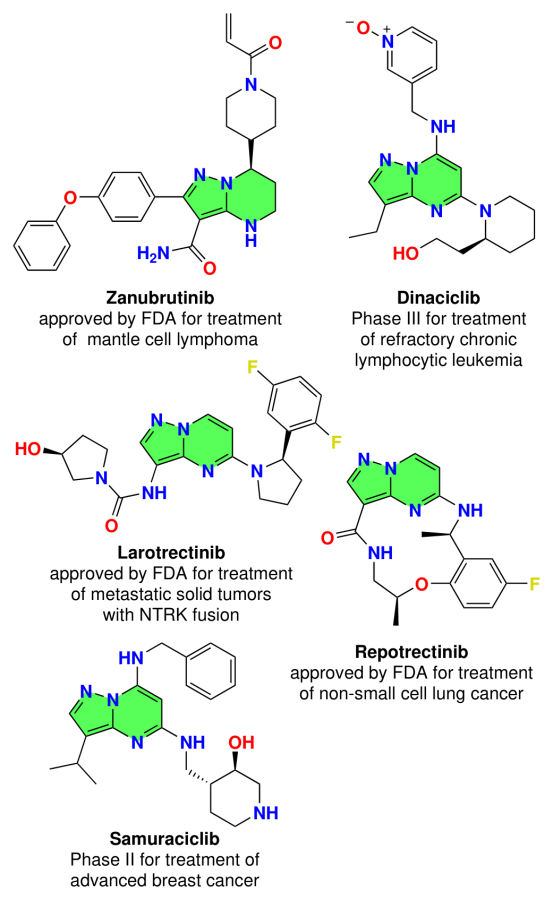
An important structural motif in biologically active compounds is represented by nitrogen-containing heterocycles, which are present in more than 75% of drugs approved for clinical use.[7] Bi- and polycyclic aza-heterocycles, azoloazines, hold a special place in this class, as they are bioisostere analogues of natural purines, which play a key role in the storage of genetic information and signal transduction between cells. The azoloazine subclass includes azolo[a]pyrimidines (azaindolizines), which are nitrogen-containing fused systems with a bridging nitrogen atom. A number of research teams, including ours, have shown[8-15] that these compounds are a privileged class of heterocycles in medicinal chemistry, owing to diverse biological activities they possess. The studies[16-23] carried out by our research team between 2022 to 2025 were related to the search for azolo[a]pyrimidines with a potential anticancer effect. This area of research has become especially relevant over the past few years, since FDA approved a number of anticancer drugs based on heterocycles of this class; some of these derivatives are currently in Phase II and III clinical trials. These compounds exhibit activity against a number of kinases: zanubrutinib is a Bruton’s tyrosine kinase inhibitor,[24] larotrectinib inhibits ROS1 receptor tysosine kinase and pan-TRK and ALK (anaplastic lymphoma kinases),[25] repotrectinib is a tropomyosin-receptor kinase (TRK) inhibitor,[26] dinaciclib inhibits cyclin-dependent kinases,[27] and samuraciclib is a selective inhibitor of cyclin-dependent kinase 7 (CDK7)[28] (Figure 1).
In view of the above, it is evident that the first step in identification of the most promising avenues for the development of anticancer agents based on azole[a]pyrimidines is to systematize the data available from the literature. The existing reviews on this topic often describe the broad spectrum of biological activity of heterocycles in this series,[29-33] without focusing on anticancer activity as a key property; as a result, they lack an analysis of the important structure – activity relationship. The specifically focused papers that discuss the antitumour potential of azolopyrimidines are devoted either exclusively to the effects of such compounds on oncogenic macromolecular targets,[34, 35] or to the quantitative determination of cytotoxic activity,[36] or include other fused systems.[37] The most comprehensive relevant review[38] published in 2025 is limited to pyrazolo[1,5-a]pyrimidines, with emphasis being placed on their synthesis, while paying little attention to structure–activity relationships.
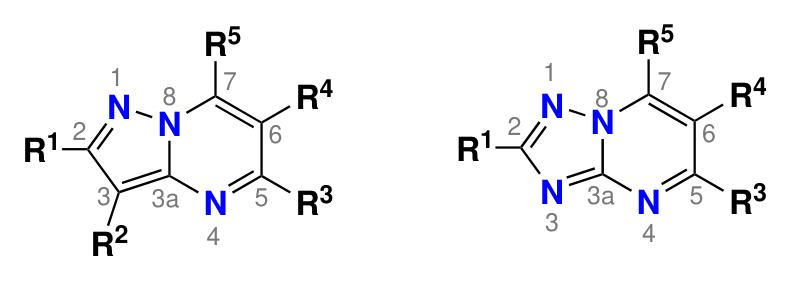
This review analyzes recent publications on pyrazolo- and 1,2,4-triazolo[1,5-a]pyrimidines (Figure 2), which have a cytotoxic effect against tumour cells and/or influence molecular targets involved in oncogenic pathways. Particular attention is paid to ways for structure optimization of these aza-heterocycles in order to increase their affinity for a specific target and/or enhance their cytotoxic activity. The main structure–activity relationships (SARs) have been identified, and the most promising substitution patterns on the central heterocyclic ring were emphasized.
For standardization and clear presentation of the literature data (as well as for correct comparison of the data), this review uses the following principle: the half-maximal inhibitory concentration (IC50) for macromolecular targets is expressed in nmol L\(^{-1}\) (nM), while the half-maximal growth inhibitory concentration against cell lines is denoted by GI50 and is expressed in μmol L\(^{-1}\) (μM).
2. Azolo[1,5-a]pyrimidines as a basis for the design of targeted anticancer drugs
2.1. Kinases and kinase inhibitors
2.1.1. Serine/threonine kinase inhibitors
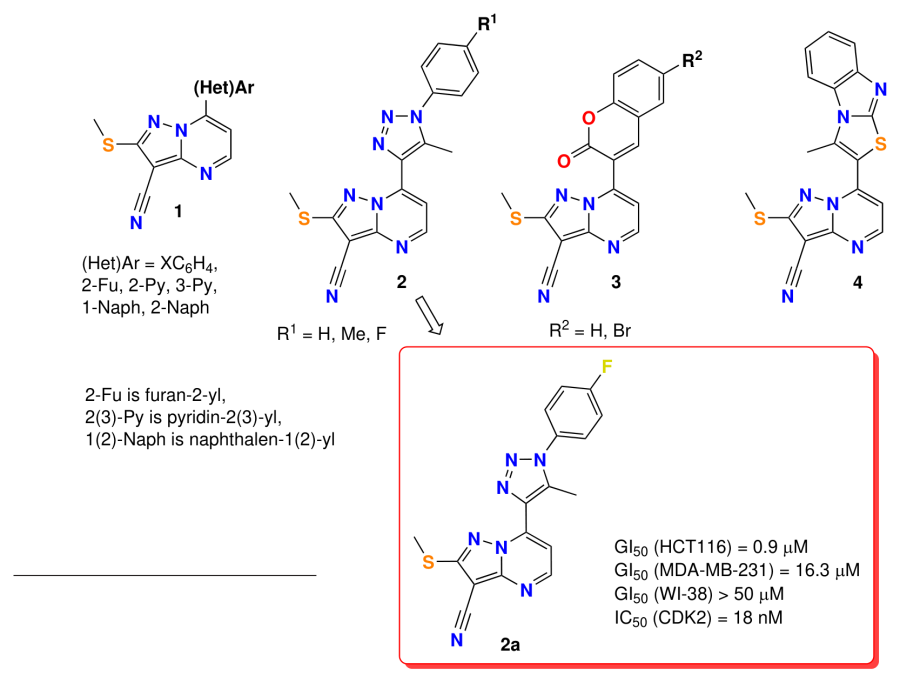
Cyclin-dependent kinases play a central role in mammalian cell division[39] and are considered as promising targets for cancer therapy.[40] The drug dinaciclib inhibiting CDK2 (see Figure 1) was taken as a parent compound to vary substituents in the pyrazolopyrimidine core[41] (Figure 3). It was found that the colorectal carcinoma cell line (HCT-116) is generally quite sensitive to heterocycles 1 – 4. Ten of the twenty compounds tested at a concentration of 10 μM reduced proliferative activity of HCT-116 cells by more than 50% compared to that for triple-negative breast cancer cells (MDA-MB-231). Compound 2a (see Figure 3) proved to be most promising, as it reduced the proliferative activity of HCT-116 and MDA-MB-231 cancer cells and WI-38 cells (human lung fibroblasts) in the submicromolar range and inhibited CDK2 more effectively than roscovitine [IC50 (CDK2) = 140 nM].
For other dinaciclib analogues reported by Almehmadi et al.,[42] it was found that all nine compounds 5 they studied inhibit CDK2 in a low or sub-micromolar range; however, high cytotoxicity against T-lymphoblastic leukaemia cells (MOLT-4) and promyelocytic leukaemia cells (HL-60) was found for compounds containing a halogen atom in the para-position of the benzene ring at the C(7) atom. Compound 5a was most promising in this series: it showed a higher cytotoxicity than dinaciclib and inhibited CDK2 to the same extent (Figure 4).
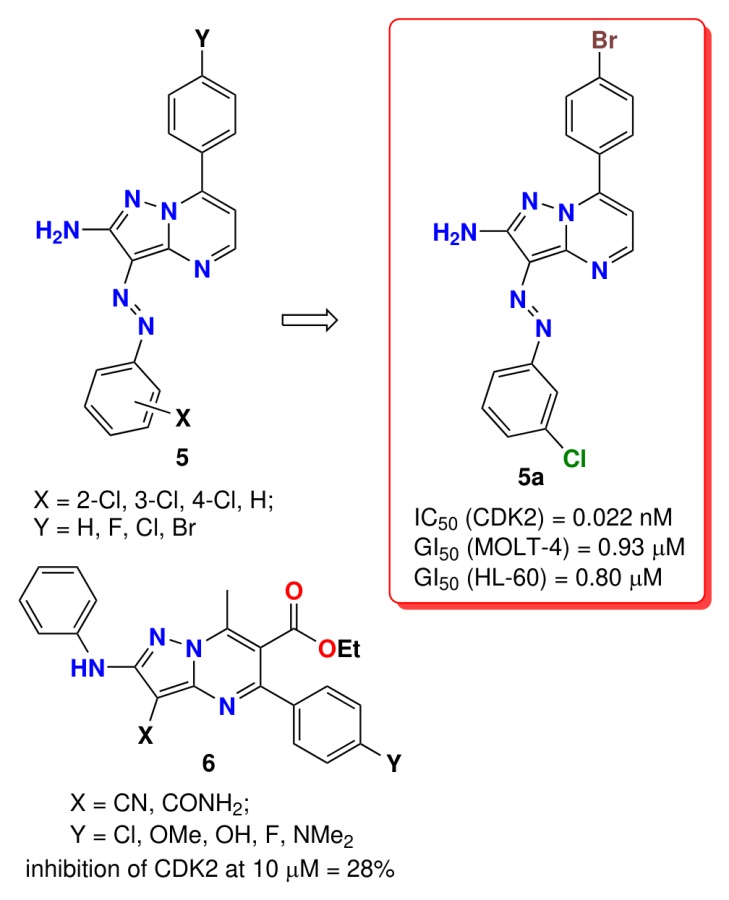
Evaluation of pyrazolo[1,5-a]pyrimidine derivatives 6 (see Figure 4) as CDK2 inhibitors indicated that these heterocycles are not sufficiently active (the maximum inhibition at a concentration of 10 μM was 28%).[43] The subsequent assessment of the cytotoxic activity on cell lines of breast ductal adenocarcinoma (MCF-7), hepatocellular carcinoma (HepG2), lung adenocarcinoma (A549), and human colorectal adenocarcinoma (Caco-2) also confirmed that all compounds 6 are markedly inferior to doxorubicin (IC50 for the indicated cell lines ranges from 10.05 to 111.22 μM, while that for doxorubicin is 0.44 – 8.51 μM).
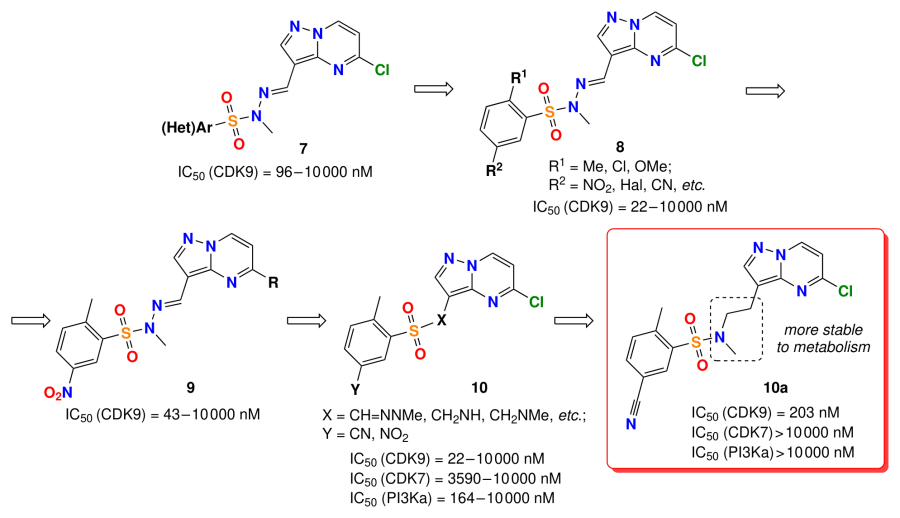
Phillipson et al.[44] investigated the inhibitory properties of pyrazolopyrimidines 7 – 10 against CDK9. A consistent study of SARs has revealed that the substitution pattern in the (hetero)aryl moiety of sulfonamide is exceptionally important for the presence of activity. Furthermore, the optimal substituent at the C(5) position is a chlorine atom, while the hydrazone bridge between the azolopyrimidine and the sulfonamide, although most preferable in terms of inhibitory activity, is metabolically labile; therefore, it was replaced by an ethylamine moiety (structure 10a) (Figure 5). In addition, compound 10a exhibited the highest selectivity to CDK7 and PI3Kα (phosphatidylinositol 3-kinase alpha), despite its reduced inhibitory activity against the target CDK9 kinase.
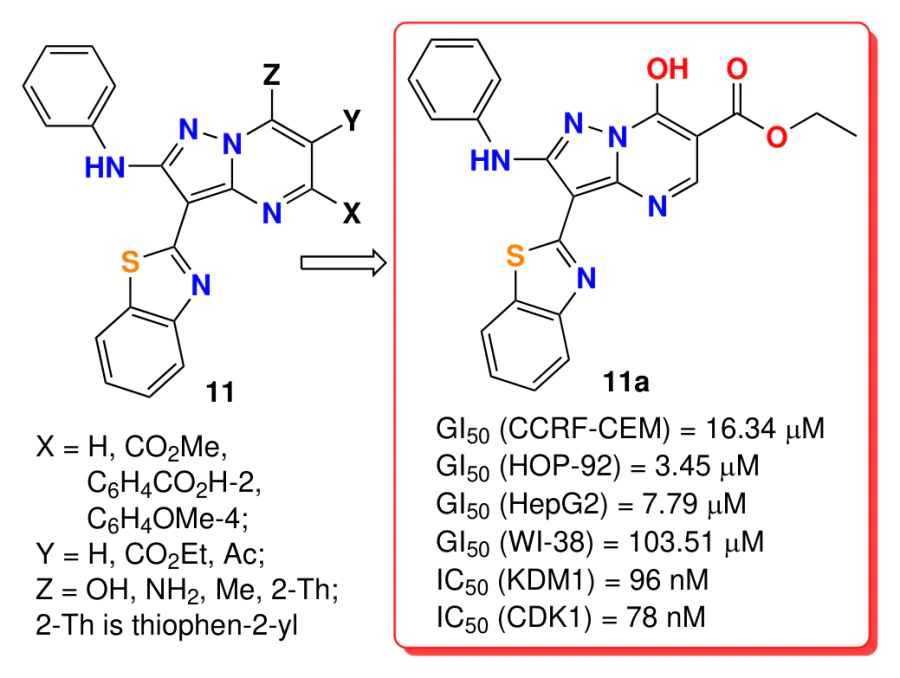
Husseiny[45] incorporated a benzothiazole moiety into azolopyrimidine molecules and studied the cytotoxic properties of six representatives of this family: compounds 11. Derivative 11a proved to be most promising; the half-maximal inhibitory concentrations were determined for this compound in extended tests. It was found that the mechanism of action of this compound may be attributable to the inhibition of the CDK1 and KDM1 proteins, as it causes cell cycle arrest in the G2/M phase and induces apoptosis (Figure 6).
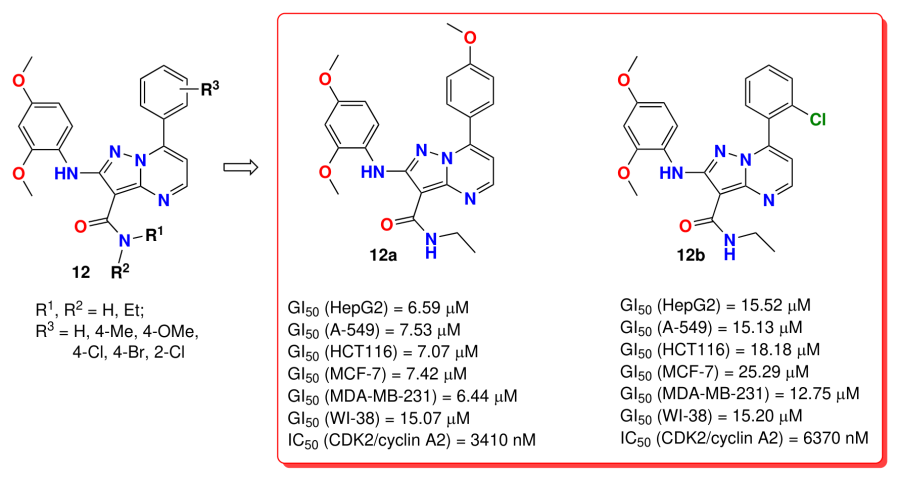
Elgiushy et al.[46] continued optimization of the pyrazolopyrimidine skeleton 12 for the development of dual inhibitors, inhibiting both the CDK2 enzyme and tubulin polymerization. The initial assessment of the activity of compounds 12 in the MTT assay ‡ showed that the unsubstituted amide or diethylamide moiety is less preferable than the monoethylamide group. The introduction of a halogen atom into the para-position of the benzene ring at C(7) resulted in the disappearance of the cytotoxic effect. When a methyl group was present at this position, the corresponding derivative exhibited some activity, while the 4-methoxy group and an ortho-chlorine atom proved to be the optimal choice. It was found that the cytotoxic activity of compounds 12a,b is due to the inhibition of tubulin polymerization (which is more pronounced than that by colchicine) and the CDK2 enzyme. However, these compounds caused a decrease in the viability of not only tumour cells but also normal cells such as the WI-38 diploid human fibroblasts (Figure 7).
‡ MTT is 3-(4,5-dimethylthiazol-2-yl)-2,5-diphenyltetrazolium bromide.
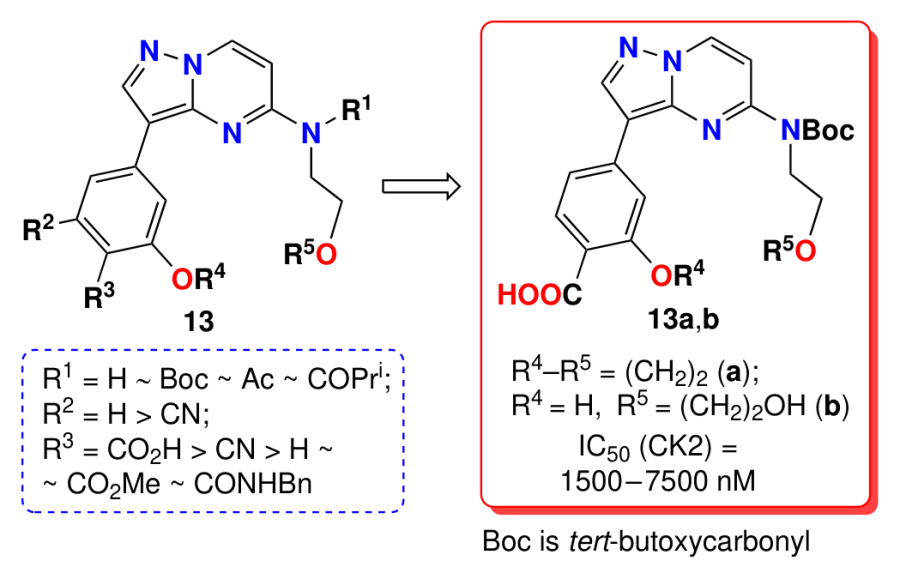
Casein kinase 2 (CK2) is a key regulator of numerous oncogenic pathways, which is overexpressed in cells of breast carcinoma, lung adenocarcinoma, prostate carcinoma, and lymphoma.[47] Krämer et al.[48] paid particular attention to optimization of the structure of pyrazolopyrimidines and their macrocyclic analogues 13 to enhance their inhibitory activity against CK2 and reduce their affinity for other targets. The most promising molecules 13a,b were less active than CK2 inhibititor silmitasertib (IC50 = 100 – 500 nM), with the IC50 values in vitro for these compounds being in a low micromolar range (Figure 8).
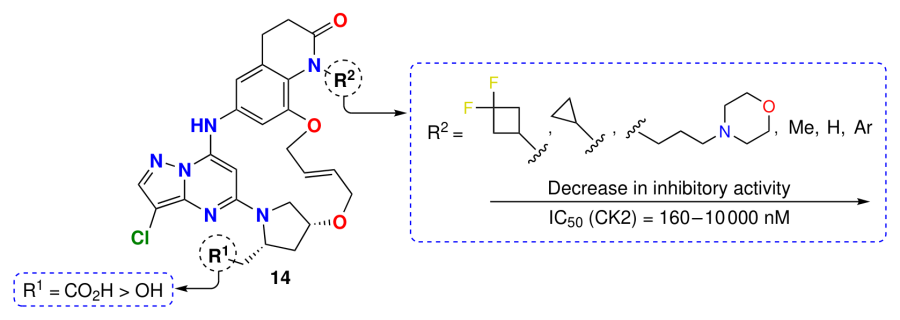
Study of a series of macrocyclic pyrazolo[1,5-a]pyrimidines 14 showed that C(3)-carbonitrile derivatives are the most potent CK2 inhibitors; however, due to their low selectivity in a panel assay involving 126 different kinases, the nitrile group was replaced by a chlorine atom (Figure 9).[49] Quantitative structure – activity relationships were also established for other variable moieties R1 and R2; the most promising compound 14 characterized by IC50 (CK2) = 160 nM contained a 3,3-difluorocyclobutyl substituent and a carboxyl group in the pyrrolidine ring.
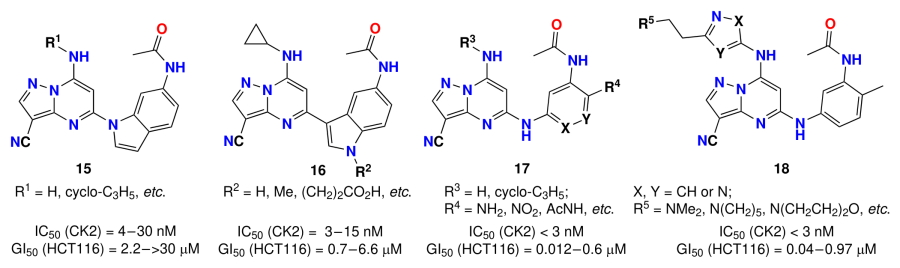
A search for selective CK2 inhibitors performed by sequential variation of the substituents at the C(5) and C(7) positions in pyrazolo[1,5-a]pyrimidinecarbonitriles was described by Dowling et al.[50, 51] (Figure 10). According to initial screening, the most promising compounds for this purpose are pyrazolo[1,5-a]pyrimidine-3-carbonitriles 15 – 18, which contain aryl and heteroaryl moieties at the C(5) atom and a secondary amino group at the C(7) atom, with a small carbocyclic or heterocyclic moiety as a substituent at the nitrogen atom. Most of the compounds considered in this study inhibited the growth of HCT-116 colorectal carcinoma cells in the submicromolar range, and one compound of the series 17 demonstrated a moderate anticancer activity in a DLD-1 xenograft model in immunodeficient mice.
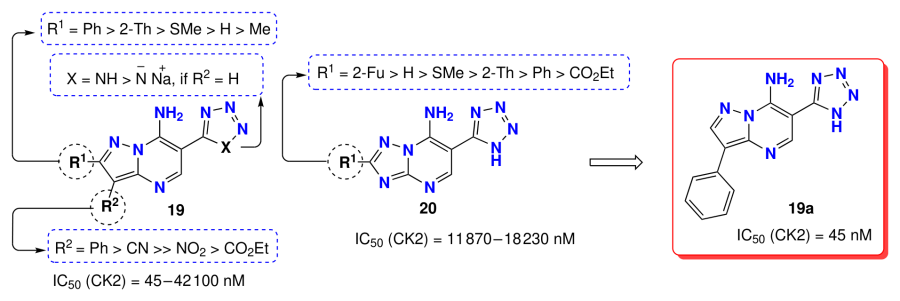
A promising class of CK2 inhibitors was found among a series of 6-(tetrazol-5-yl)azolopyrimidines 19 and 20.[52] The performed screening revealed several compounds with IC50 values in the submicromolar range and also made it possible to establish some structure – activity relationships (Figure 11). It was noted that 1,2,4-triazolo[1,5-a]pyrimidines 20 were generally less active than pyrazolo[1,5-a]pyrimidines 19. The inhibitory effect of the latter may be enhanced by introducing a lipophilic moiety into the azole ring (see, for example, compound 19a).
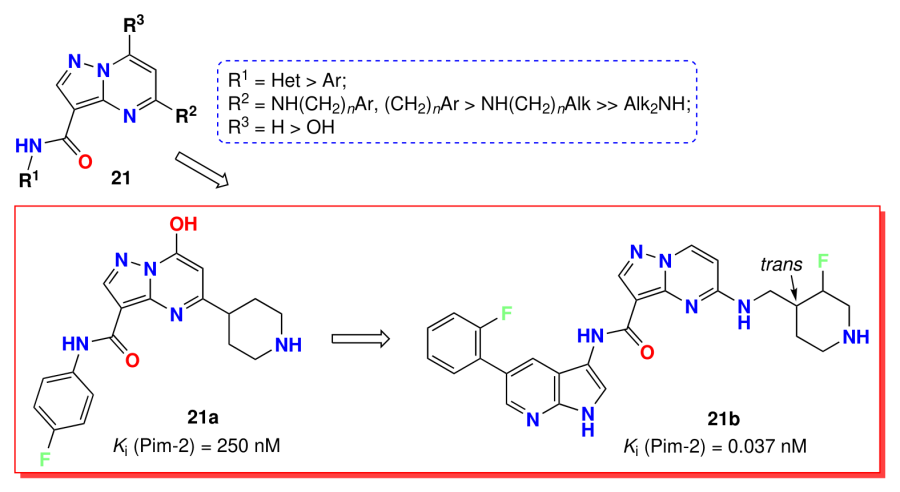
Wang et al.[53] identified SARs for pyrazolo[1,5-a]pyrimidines 21 as inhibitors of Pim-2 kinase, which is an important protein providing growth and survival in multiple myeloma.[54] Molecular design of inhibitors 21 was carried out using X-ray diffraction data for the complex formed by compound 21a with the active site of this enzyme. It was found that the presence of a hydrogen atom at the C(7) position is preferred over the hydroxyl group, even though in the latter case, hydrogen bond formation with Lys-67 is possible in the active site of Pim-2 (Figure 12). The replacement of the aryl amide group by a heteroaryl amide group and introduction of a linker between the azoloazine system and the piperidine moiety were effective strategies, which led to the optimized structure for the new lead compound 21b.
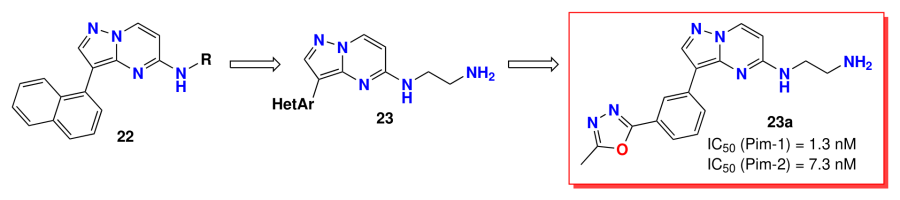
Dwyer et al.[55] performed a search for Pim-1 and Pim-2 kinase inhibitors, because both proteins were shown[56] to be overexpressed in various types of malignant tumours in humans. The initial high-throughput screening identified several hits in the pyrazolo[1,5-a]pyrimidine series, and structural optimization was carried out based on this core structure (Figure 13). First, for a compound with a naphthalene moiety fixed at the C(3) position, derivative 22 containing an ethylenediamine group [R = (CH2)2NH2] was found to have the strongest inhibitory properties. The (hetero)aryl moiety at the C(3) position of ethylenediamine derivative 23 was optimized considering these data. It was found that replacement of the fused naphthalene rings by a combination of aryl and heteroaryl moieties leads to an increase in the inhibitory properties, with meta-substituted derivatives (compound 23a) being more active than the ortho- and para-isomers.
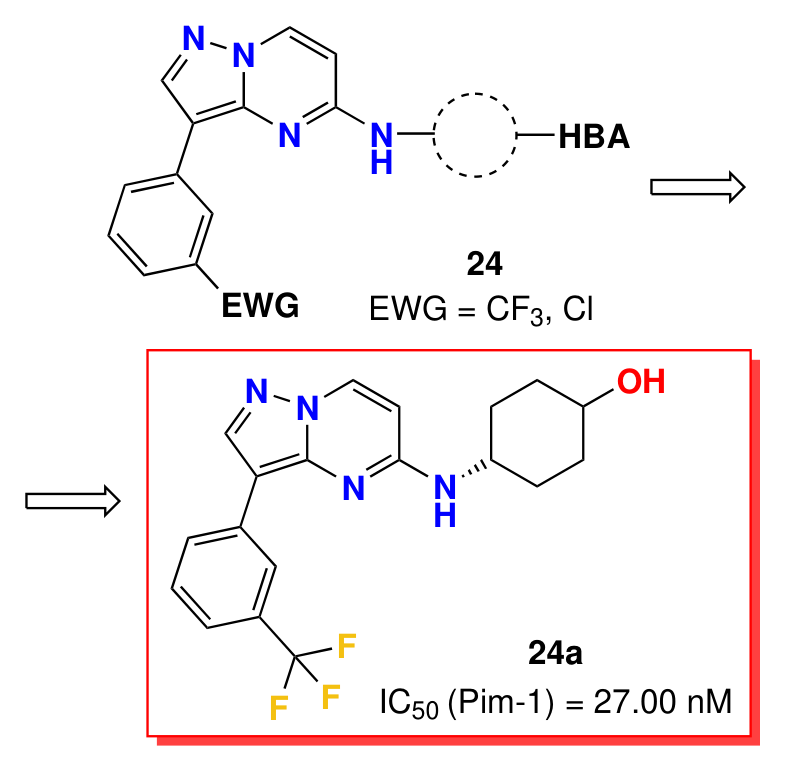
A similar optimization of the structure of the original hit was also carried out in a later study.[57] The authors noted that for Pim-1 inhibition by heterocycles 24, an electron-withdrawing group (EWG), trifluoromethyl group or a chlorine atom, must be present at the meta-position of the benzene ring at the C(3) atom. In turn, the C(5) position must contain a group capable of acting as a hydrogen bond acceptor (HBA) for the Asp-128 and Asp-131 residues in the kinase active site. It turned out, however, that amino group is preferred for this position over a hydroxyl group, ester group, or sulfonic group. Compound 24a, which inhibited Pim-1 in the mid-nanomolar range, was most active in this series (Figure 14).
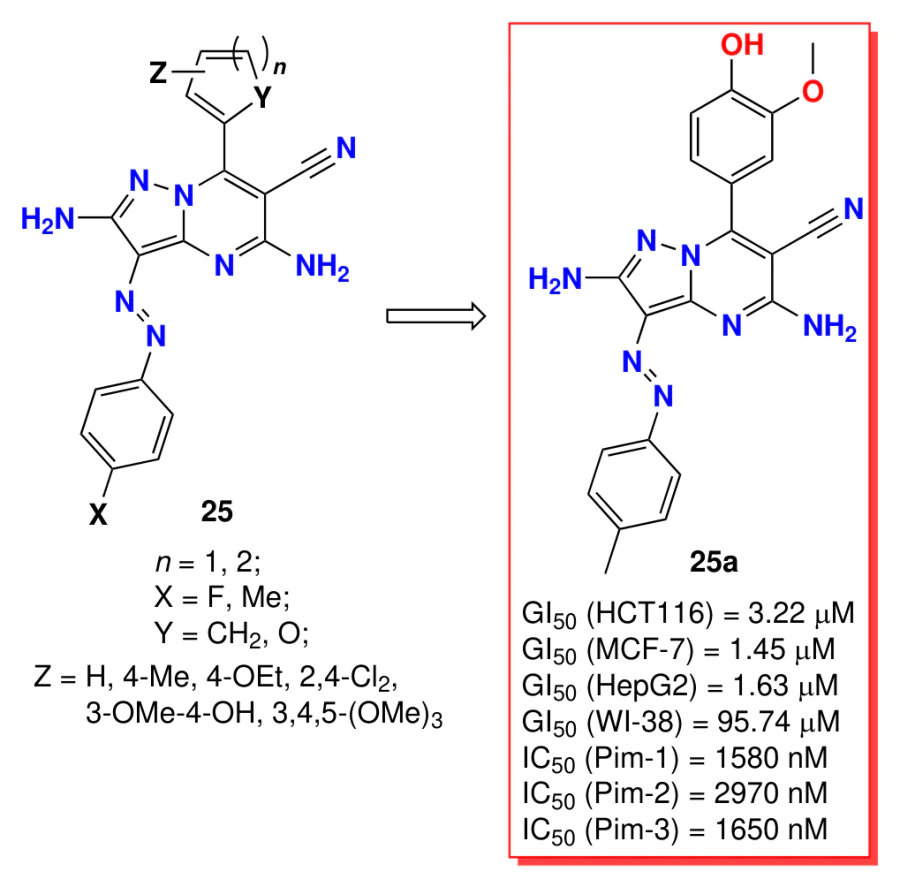
A series of Pim serine/threonine kinase inhibitors was described by Abdulrahman et al.[58] (Figure 15). The primary evaluation of the cytotoxic activity of compounds 25 using three cell lines showed that substituent X has little effect on cytotoxicity. On the one hand, replacement of the aryl group at C(7) by a furan-2-yl group increased the cytotoxic activity of the corresponding derivatives; on the other hand, compound 25a, which contained a 4-hydroxy-5-methoxyphenyl group, proved to be the most active. This compound inhibited Pim kinases in the submicromolar range at the level of the staurosporine drug [IC50 (Pim) = 77 – 477 nM].
While expanding the series of derivatives 25, Farghaly et al.[59] obtained azolopyrimidines 26 containing two azo groups at the C(3) and C(6) positions (Figure 16). All compounds 26 exhibited cytotoxic activity in the low micromolar range, and the most active derivative 26a surpassed doxorubicin in selectivity by inhibiting Pim-1 kinase with IC50 of 870 nM.
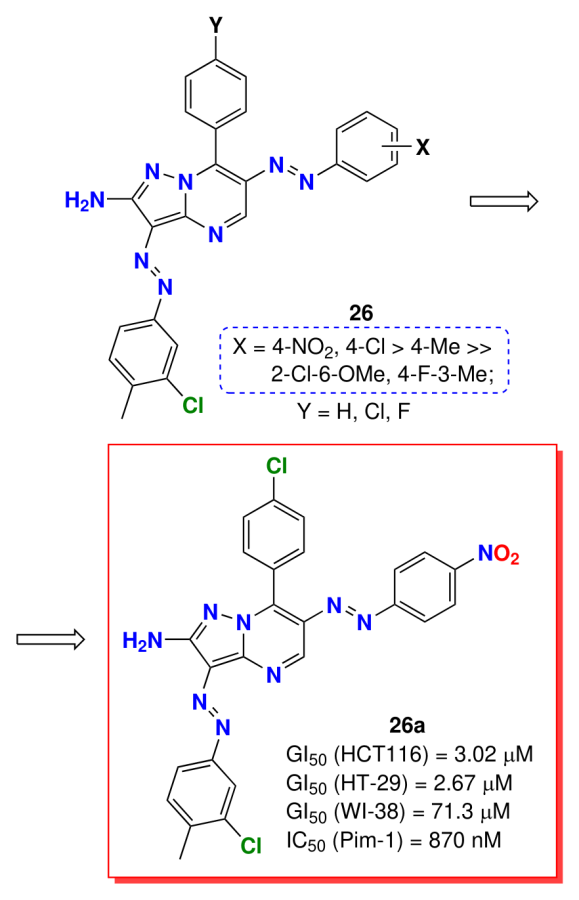
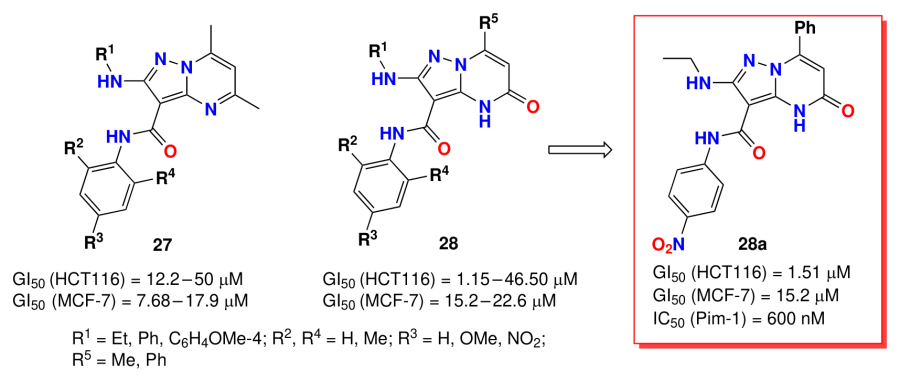
The initial screening of eleven structural analogues of known Pim-1 inhibitors (27 and 28), which exhibited cytotoxic activity against colorectal carcinoma (HCT-116) and breast ductal adenocarcinoma (MCF-7) cell lines was performed by Philoppes et al.[60] (Figure 17). The authors did not conduct a systematic study of SAR. However, the reported data indicate that compounds 28 are, on average, more active against HCT-116 cells, whereas heterocycles 27 are more effective at reducing the proliferative capacity of MCF-7 cells. For several derivatives characterized by the greatest cytotoxic effect, in particular for compound 28a, IC50 values for Pim-1 were determined; all values were in the low micromolar range.
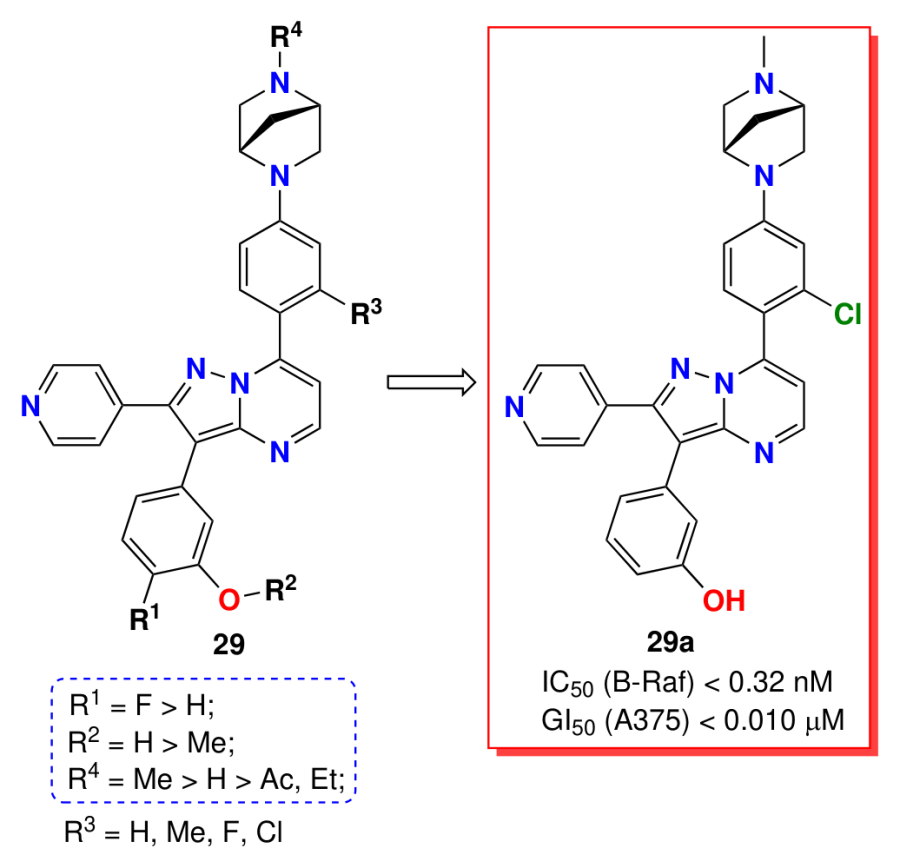
In 66% of cases of malignant melanoma, there is increased activity of the B-Raf kinase, making it a promising target for treating this type of tumour.[61] Wang et al.[62] reported a search for B-Raf inhibitors among pyrazolo[1,5-a]pyrimidines 29 (Figure 18). It was shown that the presence of a diazabicyclo[2.2.1]heptanyl moiety linked to a benzene ring is the most favourable factor influencing both B-Raf inhibition and activity against the A375 cell line. A hydroxy group present in the C(3) phenyl substituent also appears to be an important condition for the manifestation of inhibitory activity. In addition, compounds containing a tertiary amino group in the diazabicyclo[2.2.1]heptanyl moiety are more active than derivatives with secondary or acylated amino groups. The structural optimization resulted in compound 29a, which effectively inhibited B-Raf and decreased the proliferative capacity of A375 melanoma cells.
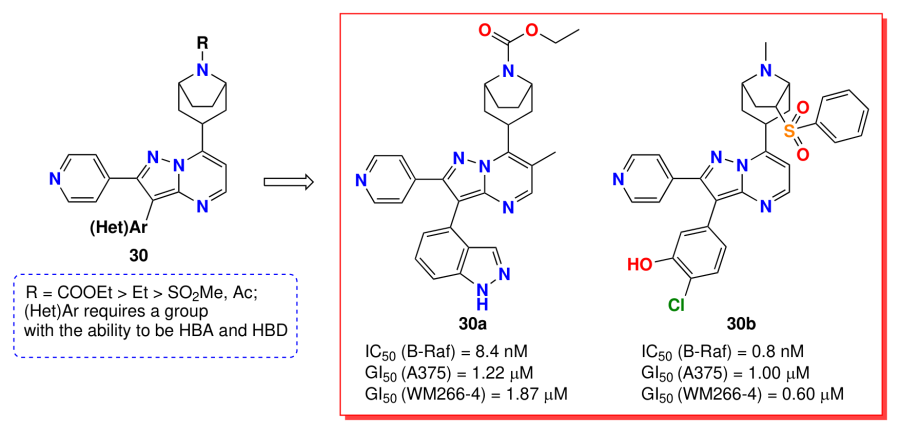
B-Raf inhibitors of a similar series of pyrazolo[1,5-a]pyrimidines 30 were studied by Di Grandi et al.[63] The structural optimization involved the variation of the (hetero)aryl moiety at the C(3) position of the azoloazine skeleton and the N-substituent in the tropane ring (Figure 19). Considering the SAR and molecular docking data, it was found that for a noticeable inhibitory effect, groups that can act as hydrogen bond donors (HBD) and acceptors (HBA) are required in the (hetero)aryl moiety; the 4-indazole (30a) and o-chlorophenol (30b) moieties are optimal for this purpose. The effect of substituent in the tropane ring on the inhibitory activity is less pronounced: various groups may be present, but the activity against malignant melanoma cells (A375 and WM266-4 cell lines) is best preserved in the presence of an ethyl or ethoxycarbonyl group.
Berger et al.[64] synthesized 3-(hetero)aryl-7-arylpyrazolo[1,5-a]pyrimidines 31 as potential B-Raf inhibitors. In the optimization of the structures of these compounds, the main focus was on the substituent at the C(3) position of the heterocyclic system (Figure 20). It was shown that the presence of a (hetero)aryl moiety containing a tertiary alkylamino group (31a) is most favourable for the inhibitory activity. The inhibitory activity somewhat decreases upon removal of the tertiary amino group and decreases even further when the (hetero)aryl ring is replaced by an ester or alkyne group.
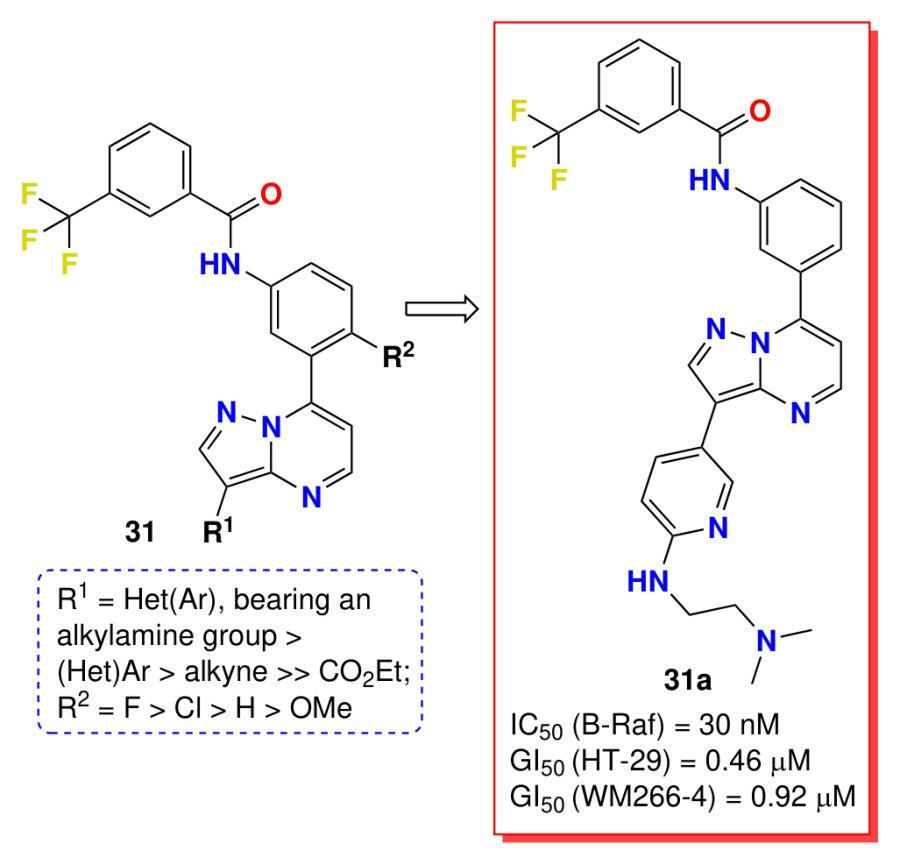
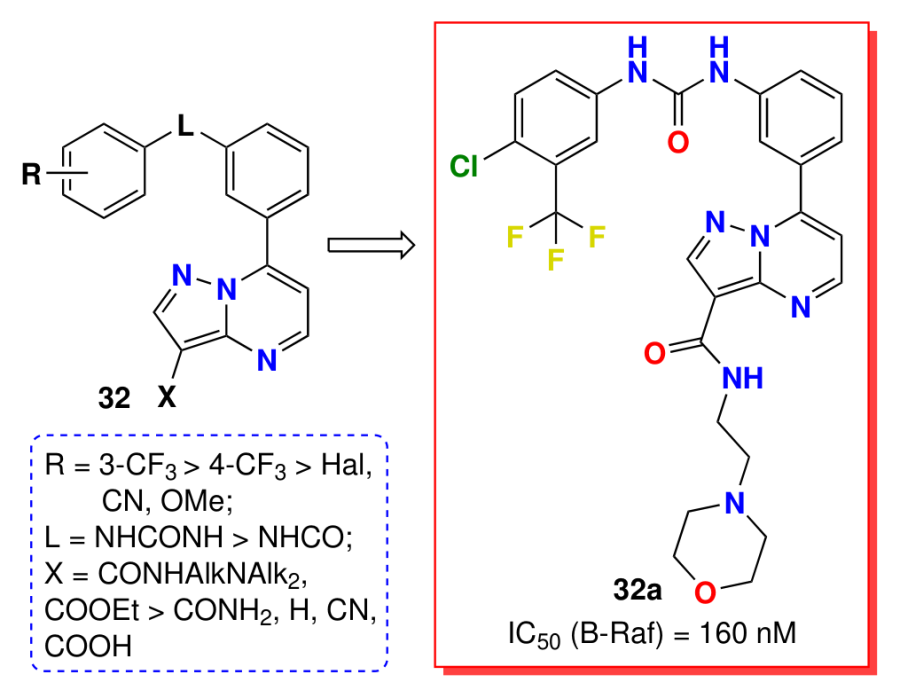
A somewhat lower inhibitory activity against B-Raf was inherent in pyrazolo[1,5-a]pyrimidines 32 reported by Gopalsamy et al.[65] It was found that for the activity of these compounds, it is preferable that an amide moiety linked to a tertiary amino group by an alkyl chain be present at the C(3) position. In addition, an urea moiety is more advantageous as a linker between the two phenyl groups than an amide group (Figure 21). This combination of structural features led to the synthesis of the most potent inhibitor in this series, compound 32a.
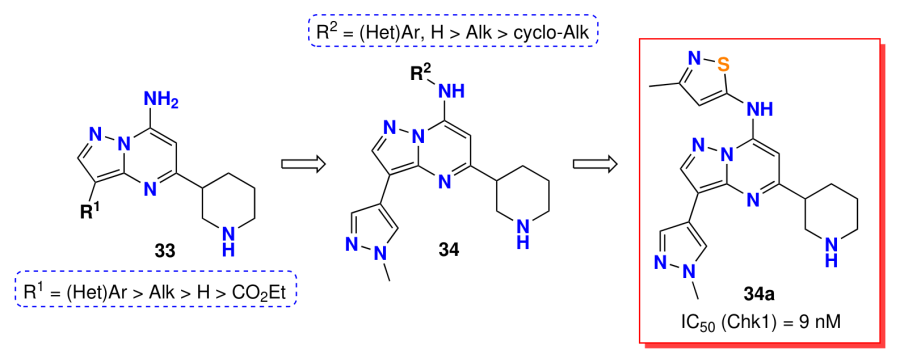
The serine/threonine kinase Chk1 regulates the cellular response to DNA damage and is, therefore, considered to be a promising target for the development of anticancer agents.[66] A SAR study of Chk1 inhibitors[67] in the pyrazolo[1,5-a]pyrimidine series revealed certain correlations, which are shown in Figure 22. Thus, by sequential variation of the corresponding substituents in molecules 33 and 34, the optimized structure 34a was obtained.
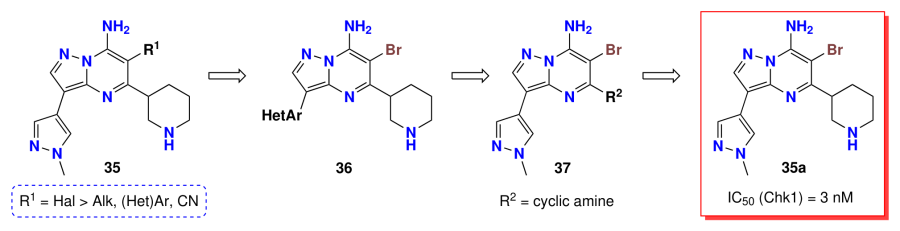
Further studies[68] indicated that for amino derivatives 35, a halogen atom is the preferred substituent at the C(6) position of the heterocyclic system, since alkyl, (hetero)aryl, and nitrile derivatives were less active than halogen-containing molecules (IC50 values were in the mid- to high nanomolar range) (Figure 23). The replacement of the N-methylpyrazole ring by an alternative heterocyclic substituent (pyridin-3-yl, furan-2-yl, or thiophen-2-yl) did not produce more active derivatives 36. A similar trend was also observed for the C(5) position of molecule 37: all alternative cyclic amine residues were inferior to the initially selected piperidin-3-yl ring. As a result, the only modification was the introduction of a bromine atom at the C(6) position, yielding compound 35a.
2.1.2. Tyrosine kinase inhibitors
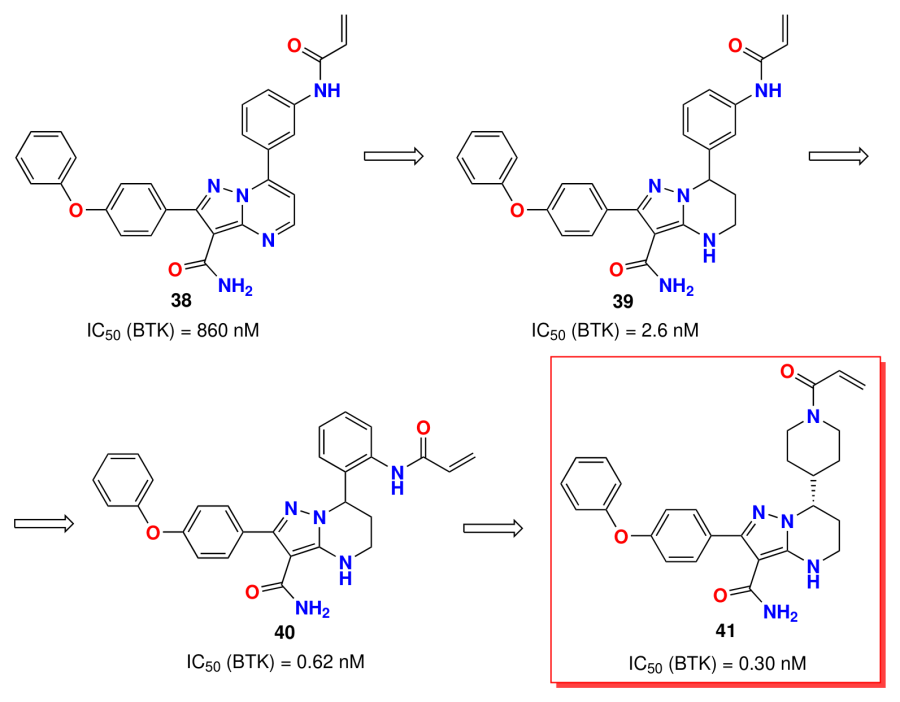
Bruton’s tyrosine kinase (BTK) is an important protein for the development and functioning of B-lymphocytes.[69] A few FDA-approved BTK inhibitors are used in clinical practice to treat certain types of malignant tumours.[70] Guo et al.[71] reported data on the discovery of zanubrutinib (see Figure 1) as an effective and selective covalent BTK inhibitor (Figure 24). Regarding the relationship between the inhibitory activity and structure, it was found that the biphenyl ether moiety at the C(2) position is the optimal choice, since replacement of the terminal benzene ring by an alkyl group or replacement of the whole hydroxyphenyl moiety by OMe, OCF3, CF3, Me, Cl, or F resulted in lower activity. The inhibitory activity increased by two orders of magnitude upon transition from the pyrimidine-based compound 38 to tetrahydropyrimidine derivatives 39, and further variation of the C(7)-substituent made it possible to decrease the IC50 value for structures 40 and 41 by yet another order of magnitude. The S-isomer of zanubrutinib 41 was 3.5 times more active than the corresponding R-isomer (a similar difference in activity depending on the stereochemistry was also observed for other derivatives in this series; however, the absolute configuration of the stereocentre was not determined in such cases).
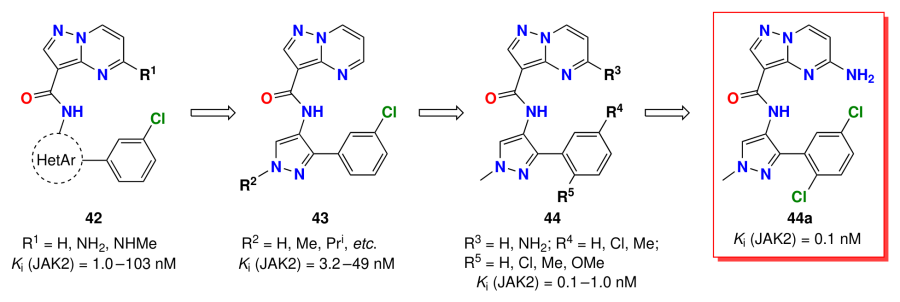
Myeloproliferative disorders involve a mutation in Janus kinase 2 (JAK2), which leads to its permanent activation.[72] Hanan et al.[73] reported the design of pyrazolo[1,5-a]pyrimidine-based JAK2 inhibitors (Figure 25). The variation of the heteroaryl moiety (pyridine, pyrazole, oxazole, and thiazole rings) in compounds 42 showed that the two last-mentioned options produce compounds possessing the highest inhibitory activity against JAK2. However, they caused undesirable inhibition of cytochrome P450 family enzymes, which was not observed for pyrazole derivatives 43. Later, it was found that replacement of the N(1)-methyl group in pyrazole by a larger substituent R2 leads to decreasing inhibitory effect. Finally, variation of the substituents on the benzene ring and introduction of C(5)-amino group afforded a series of heterocycles 44, among which lead compound 44a exhibited activity in the subnanomolar range.
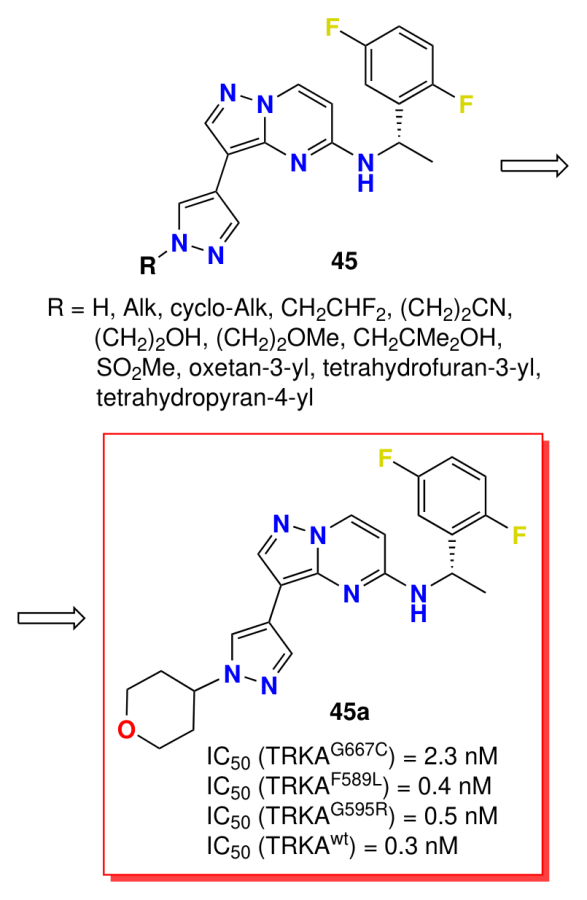
Tropomyosin receptor kinases are involved in signalling pathways that trigger cell proliferation, differentiation, and survival; in the case of mutation of the corresponding gene, this leads to oncogenesis.[74] Among the TRK inhibitors approved for clinical use, larotrectinib and repotrectinib contain azolopyrimidine as a heterocyclic ring. Gong et al.[75] tested modifications of various substituents in the azoloazine skeleton taking account of the X-ray diffraction data for complexes of known TRK inhibitors. It was found that replacement of the hydrogen atom in the NH group of the pyrazole ring in molecule 45 leads to increasing inhibitory activity, with the exception of bulky substituents [R = (CH2)2OMe, CH2CMe2OH]. Cycloalkyl groups and their analogues containing an oxygen atom in the saturated ring (for example, compound 45a) also show promise in terms of activity (Figure 26).
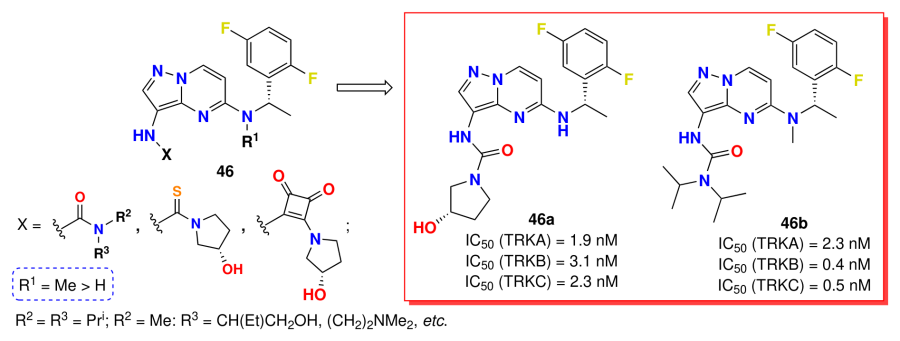
Further studies of this chemotype 45 provided the following conclusions. On the one hand, the pyrazole ring at the C(3) position of the heterocyclic system can be replaced by an urea moiety without any loss of activity (Figure 27).[76] On the other hand, derivatives 46 containing thiourea or cyclobut-3-ene-1,2-dione moieties were much less active against all three TRK isoforms, unlike their analogues containing an aromatic ring at the urea nitrogen atom or a cyclic amino group (e.g., compound 46a). The methylation of the C(5)-amino group resulted in a further increase in activity (compound 46b).
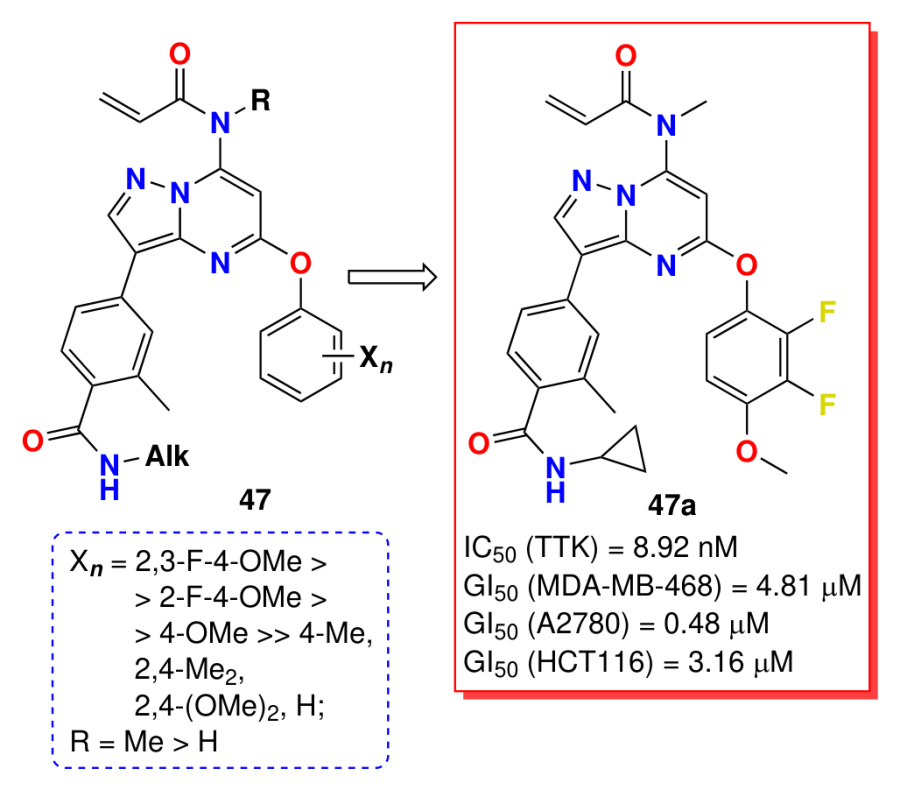
Jiang et al.[77] optimized the pharmacokinetic characteristics (low oral bioavailability, short half-life) of the initial threonine tyrosine kinase (TTK) inhibitor found as a result of virtual screening by replacing the central pyrazolo[3,4-d]pyrimidine scaffold with pyrazolo[1,5-a]pyrimidine (Figure 28). Structure–activity relationship studies demonstrated that the most favourable substitution pattern in the C(5)-benzene ring of heterocycle 47 is the presence of two fluorine atoms at positions 2 and 3 and a methoxy group at position 4. The replacement of the cyclopropylamide substituent by other alkylamide groups resulted in a decrease in activity, so did the variation of the group at the C(7) atom. The most promising compound 47a exhibited cytotoxic activity against several tumour cell lines, MDA-MB-468, HCT116, and A2780 (endometrioid ovarian carcinoma), in the submicromolar range.
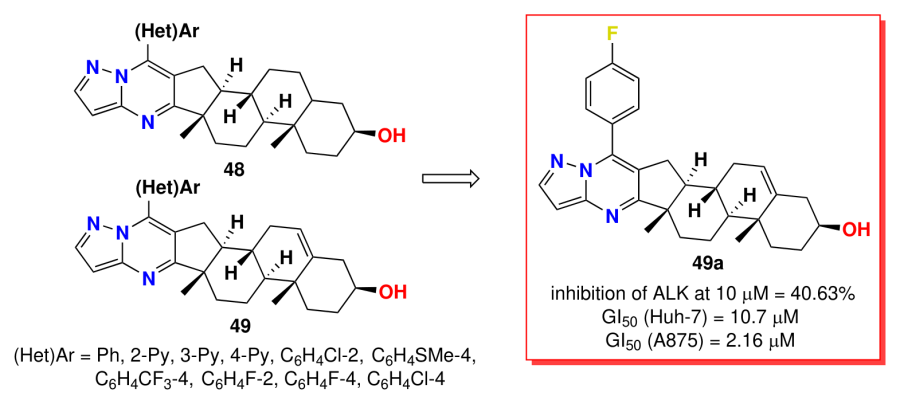
Anaplastic lymphoma kinase (ALK) is a promising target for the treatment of non-small-cell lung cancer.[78] Liu et al.[79] combined a pyrazolopyrimidine scaffold and a steroid moiety to give compounds 48 and 49, among which the search for ALK inhibitors has been performed. A primary evaluation of cytotoxicity against A875 melanoma and Huh-7 hepatocellular carcinoma cell lines identified the most promising compound 49a; however, investigation of the inhibitory activity of this compound against ALK revealed only a moderate effect at a concentration of 10 μM (Figure 29).
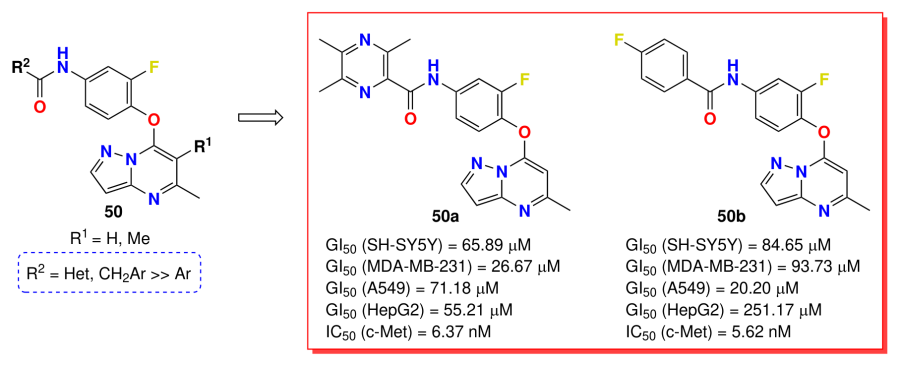
The c-Met kinase is a key component of signalling pathways that trigger cell division, differentiation, migration, apoptosis, and morphogenesis. In some malignant neoplasms, this kinase is dysregulated, leading to tumour metastasis and angiogenesis.[80] Considering the structure of known c-Met II inhibitors, Luo et al.[81] designed a series of azoloazines 50. A study of cytotoxic activity showed that compounds containing a heteroaryl or benzyl moiety at the amide bond (e.g., derivative 50a) show cytotoxic activity in the mid-micromolar range. Meanwhile, aryl-substituted analogues were inactive, except those containing meta- and para-fluorine atoms and para-methoxy groups (in particular, derivative 50b). The authors selected eight most active heterocycles 50 to evaluate their inhibitory activity against c-Met: they found that heteroaryl derivatives and compounds containing the electron-withdrawing group R2 in the benzene ring exhibit fairly pronounced inhibitory properties (Figure 30).
2.1.3. Inhibitors of other kinases
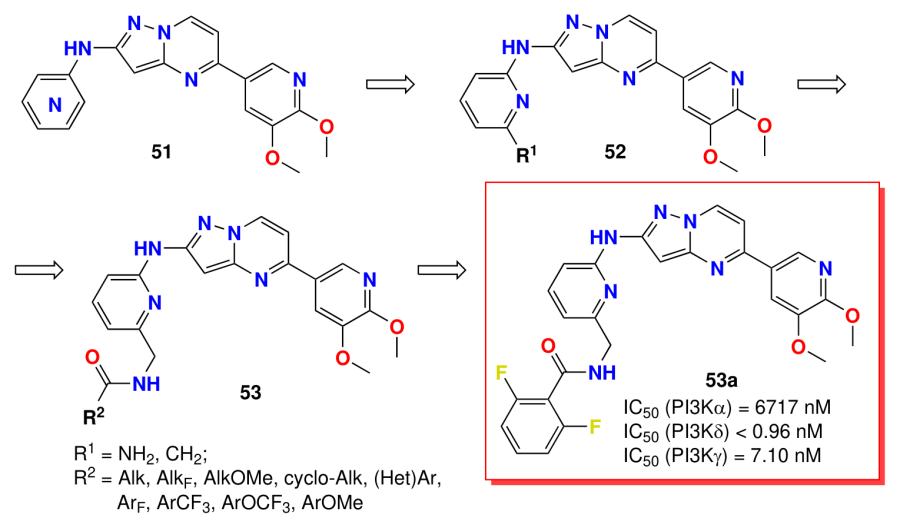
Phosphatidylinositol 3-kinase γ and δ inhibitors are used in the immunotherapy of malignant tumours,[82] but to reduce adverse effects, selective action of an agent on a specific isoform is important.[83] Screening of an author’s in-house library revealed a hit among pyrazolo[1,5-a]pyrimidines 51, the structure of which was subsequently optimized (Figure 31).[84] It was shown that replacement of the pyridine-2-yl moiety in compounds 52 by a 3- or 4-substituted isomer decreases the activity. The introduction of a CH2NHR1 group (R1 varies over a broad range and has little effect on activity) in the C(6) position of the pyridine ring further enhances the inhibitory properties, and acylated amines 53 were found to be most effective. Irrespective of the nature of R2, which also varies over a wide range and has little effect on activity, amines 53 exhibited high inhibitory properties against PI3Kδ(γ), though with varying degrees of selectivity for the α-isoform. This parameter was high for compounds containing a fluorinated benzoyl moiety [for example, for heterocycle 53a, which inhibited the tumour growth in vivo in the MC-38 syngeneic mouse xenograft model (mouse colon adenocarcinoma) in vivo].
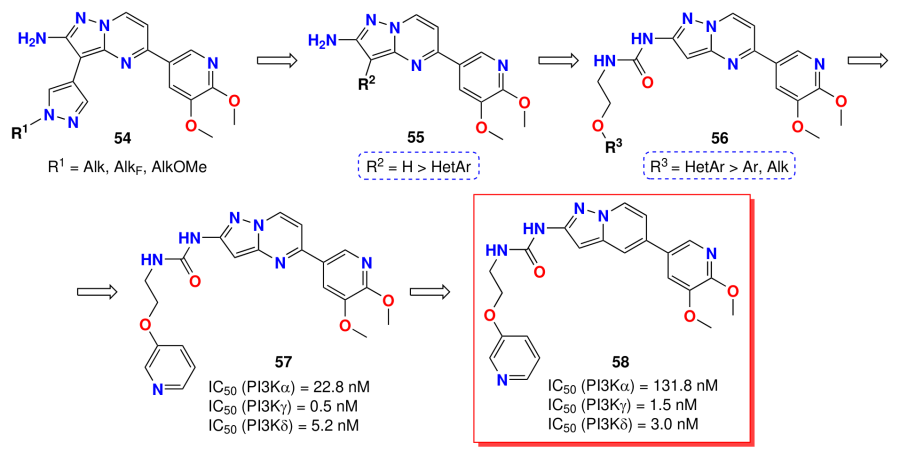
Further expansion of this series of pyrazolopyrimidines (Figure 32) showed that replacement of the pyrazole ring at the C(3) atom in derivatives 54 by a hydrogen atom or a heteroaryl moiety (compounds 55) is preferred.[85] Modification of the C(2)-amino group by conversion to a urea moiety resulted in increasing selectivity of pyrazolo[1,5-a]pyrimidines 56 and 57 to PI3Kα; however, replacement of the pyrazolopyrimidine central core by a pyrazolopyridine one (compound 58) proved to be even more effective in this regard.
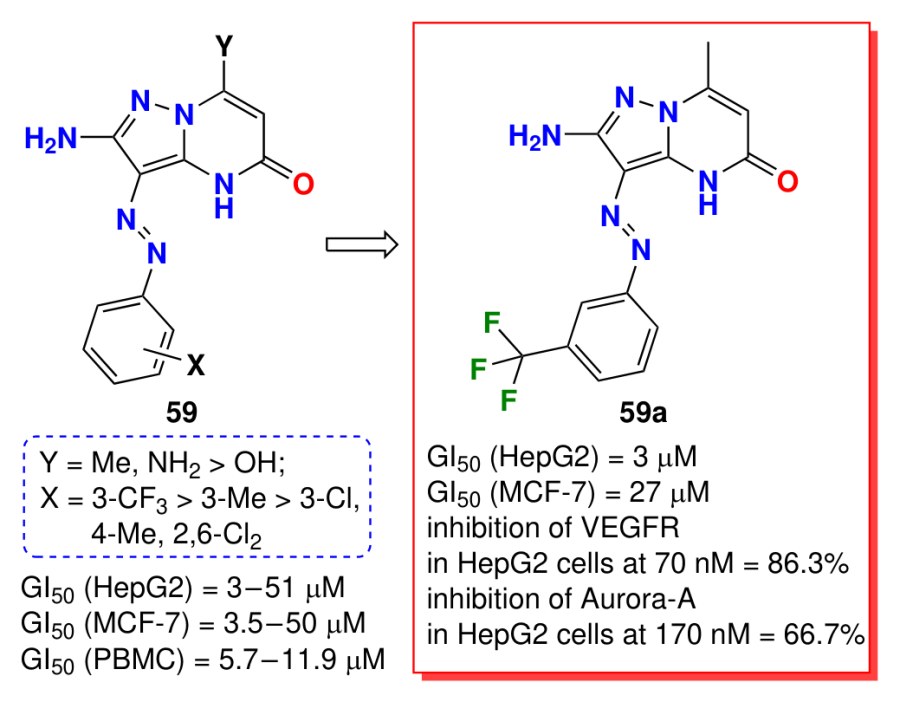
Using the sunitinib parent structure, Anwer et al.[86] designed 3-arylazopyrazolopyrimidin-5-ones 59 as potential inhibitors of VEGFR (vascular endothelial growth factor receptors) and Aurora kinase. The latter is a serine/threonine kinase that regulates mitosis and cell division; for this reason, overexpression of this protein is observed in a number of malignant tumours.[87] Of the nine studied heterocycles 59, three compounds (including derivative 59a) decreased the proliferative capacity of HepG2 hepatocellular carcinoma cells and the hormone-sensitive MCF-7 ductal adenocarcinoma cells with GI50 values of 3 – 6 μM; similar cytotoxicity was also observed against normal peripheral blood mononuclear cells (PBMCs). Nevertheless, according to in vivo assays on mice, heterocycle 59b (X = 2,6-Cl2, Y = Me) had median lethal dose (LD50) > 1500 mg kg\(^{-1}\) and no acute hepato- and nephrotoxicity; however, the authors did not evaluate the antitumour effect of this compound 59b (Figure 33).
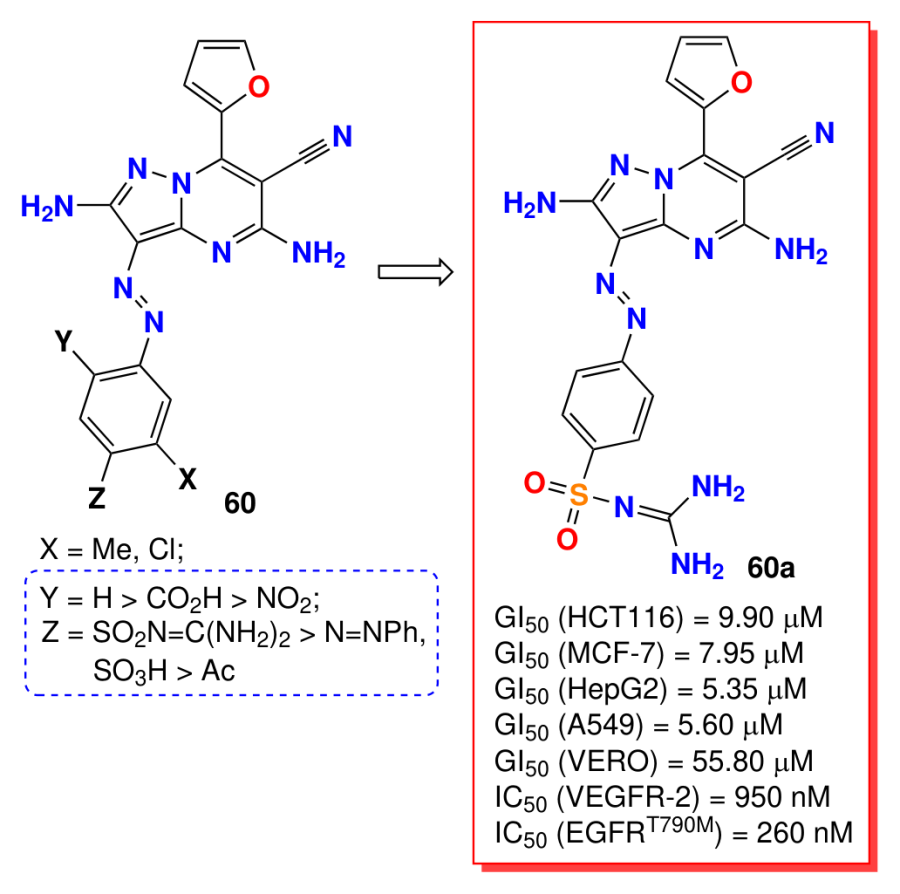
Alsulaimany et al.[88] designed a series of pyrazolo[1,5-a]pyrimidines 60 based on the pharmacophore groups of the anticancer drugs sorafenib and pasopanib.[88] On the basis of the molecular docking data, it was assumed that compounds 60 have high affinity for the active sites of both VEGFR-2 and the mutant epidermal growth factor receptor (EGFRT7980M). In the subsequent in vitro experiments, heterocycles 60 showed half-maximal inhibitory concentrations in the low micromolar range (IC50 = 260 – 5340 nM). The accompanying determination of cytotoxic properties also revealed the ability of heterocycles 60, including the most promising structure 60a, to inhibit the proliferative capacity of a number of tumour cells in the low- or mid-micromolar range with a selectivity index of 4 – 10 over normal VERO cells (Figure 34).
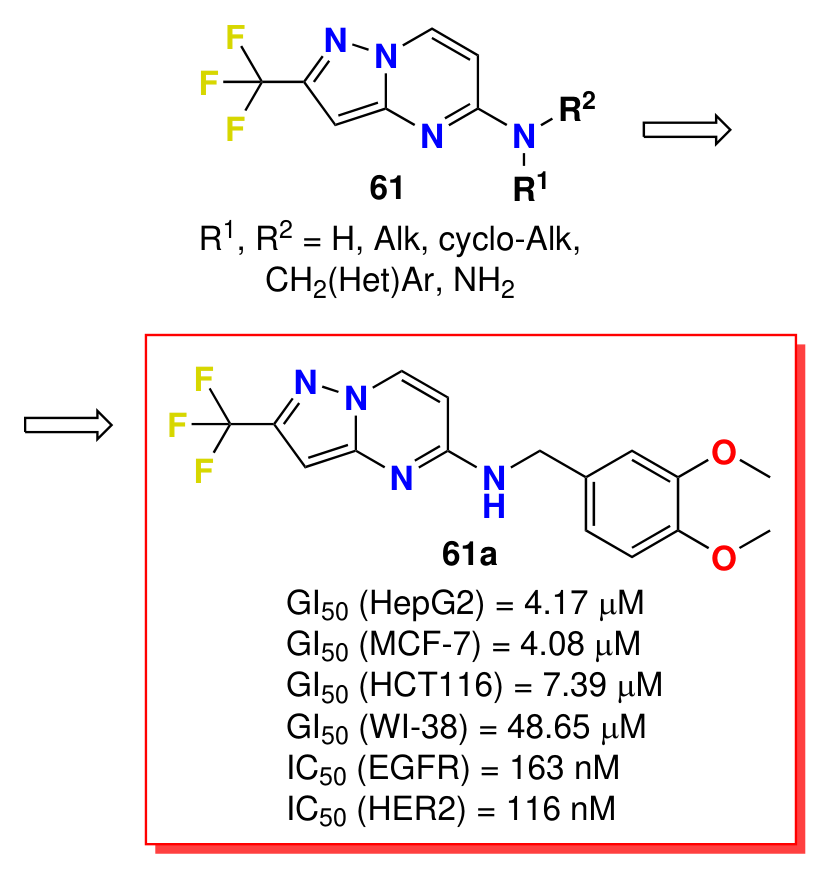
Epidermal growth factor receptors, EGFR and HER2 proteins, are often overexpressed in malignant breast tumours.[89] Sivaiah et al.[90] investigated the cytotoxicity of a small series of 2-trifluoromethyl pyrazolopyrimidine derivatives 61 (Figure 35). It was shown that the cytotoxic effect is enhanced in the presence of a (hetero)aryl group linked to the C(5)-amino group via a methylene bridge. Several most promising compounds such as heterocycle 61a were evaluated for their inhibitory activity against EGFR and HER2: they were slightly inferior in activity to the reference agents sorafenib [IC50 (EGFR) = 112 nM] and staurosporine [IC50 (HER2) = 53 nM].
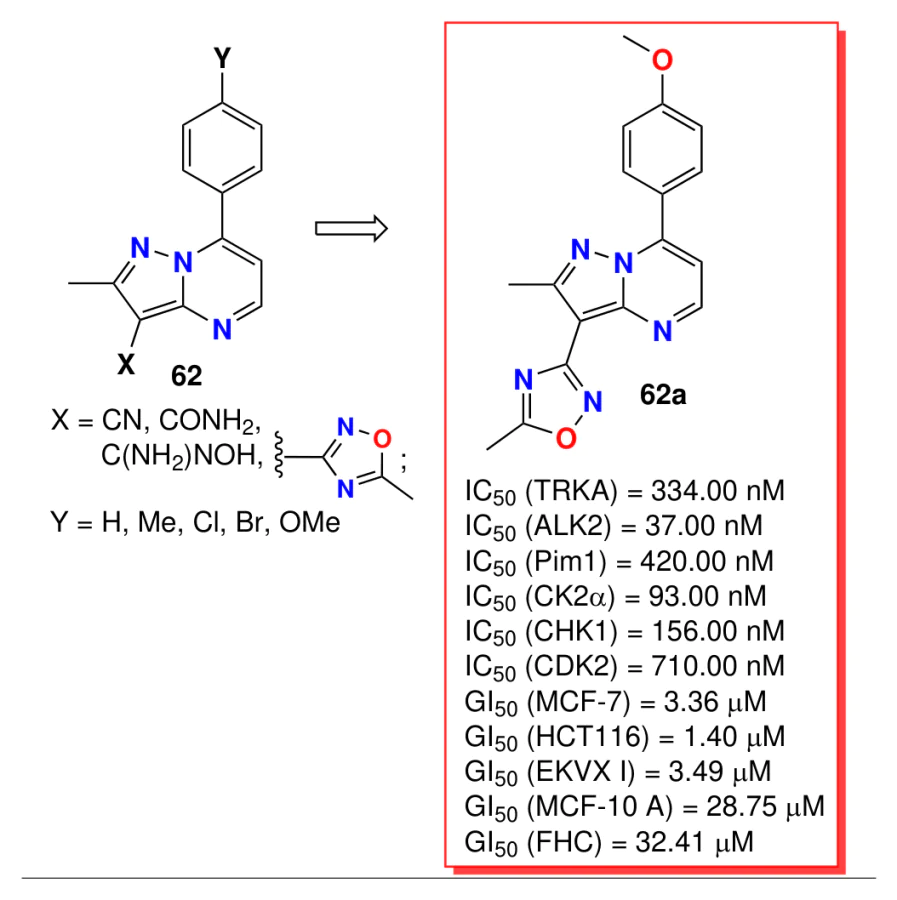
The design of ATP-competing multikinase inhibitors 62 was reported by Al-Qadhi et al.[91] The in vitro studies confirmed the initial hypothesis of the authors: all 20 investigated compounds 62 inhibited various kinases with half-maximal inhibition characteristics in the submicromolar and low micromolar ranges (Figure 36). The most promising compound 62a showed cytotoxicity against a number of tumour cell lines [HCT-116, MCF-7, and EKVX (human non-small-cell lung cancer)] at a level comparable to that of doxorubicin (GI50 = 3.42 – 5.73 μM), while the corresponding value for non-tumorigenic breast epithelial cells (MCF-10A) and normal human colon epithelial cells (FHC) proved to be 10 – 15 times lower.
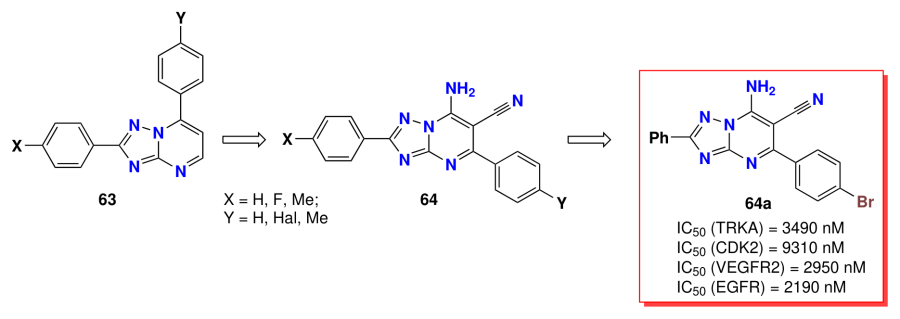
Further expansion of this family of azole[1,5-a]pyrimidines revealed that the introduction of C(6)-nitrile and C(7)-amino groups into the pyrimidine ring to form triazolo[1,5-a]pyrimidines 63 generally increases the cytostatic activity of the compounds. Out of a panel comprising 60 different tumour cell lines, 58 or 59 cell lines were sensitive to heterocycles 64, while the starting compounds 63 exhibited a cytostatic effect only against a small portion of the cells (12 to 21 cell lines).[92] Derivatives 64 also showed more pronounced inhibition of various kinases; however, they were inferior in inhibitory activity to pyrazolopyrimidines 62 described in the previous study (Figure 37).
2.2. Non-kinase enzymes and epigenetic regulators
2.2.1. Hydrolase and transferase inhibitors
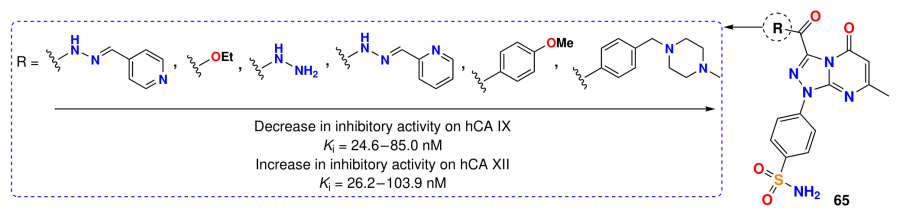
Carbonic anhydrases IX (hCA IX) and XII (hCA XII) are expressed in normal cells by a limited amounts; however, these enzymes are often overexpressed in tumours, leading to a lower pH in the extracellular matrix and the invasion of tumour cells into adjacent tissues.[93] Said et al.[94] investigated 1,2,4-triazole derivatives, including triazolopyrimidines 65, as inhibitors of these carbonic anhydrases (Figure 38).
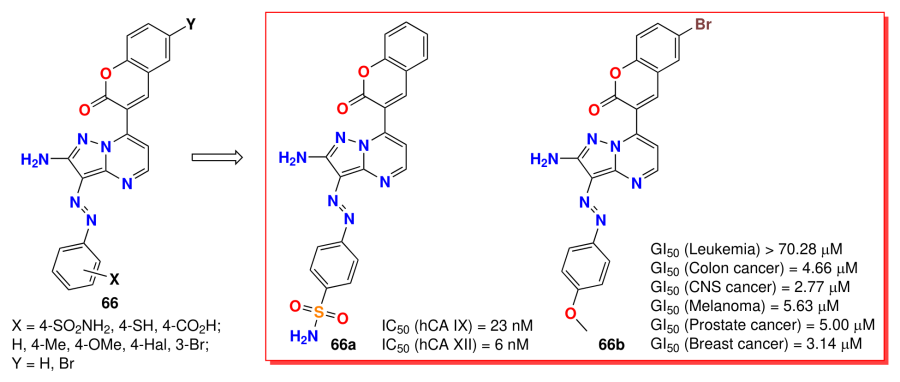
Another strategy for the development of hCA IX and XII inhibitors involved combining pyrazolopyrimidine and coumarin fragments in compounds 66 (Figure 39).[95] It was found that hCA inhibition requires the introduction of zinc-binding groups, such as sulfonamide, thiol, or carboxyl groups (see, e.g., compound 66a). Conversely, an inverse correlation was observed for manifestation of noticeable cytotoxic properties: compounds with zinc-binding groups were inactive, whereas derivatives with substituents X = 4-H, 4-Me, and 4-OMe reduced the proliferative capacity of tumour cells (from a panel of >50 cell lines). The highest efficiency was found for derivative 66b for which median growth inhibitory concentrations (GI50-MID) were in a low micromolar range, although the selectivity index was also moderate (2 – 4). A probable mechanism of the cytotoxic action of this compound 66b was the inhibition of tubulin polymerization, since the IC50 value in the relevant assay was 5.28 μM.
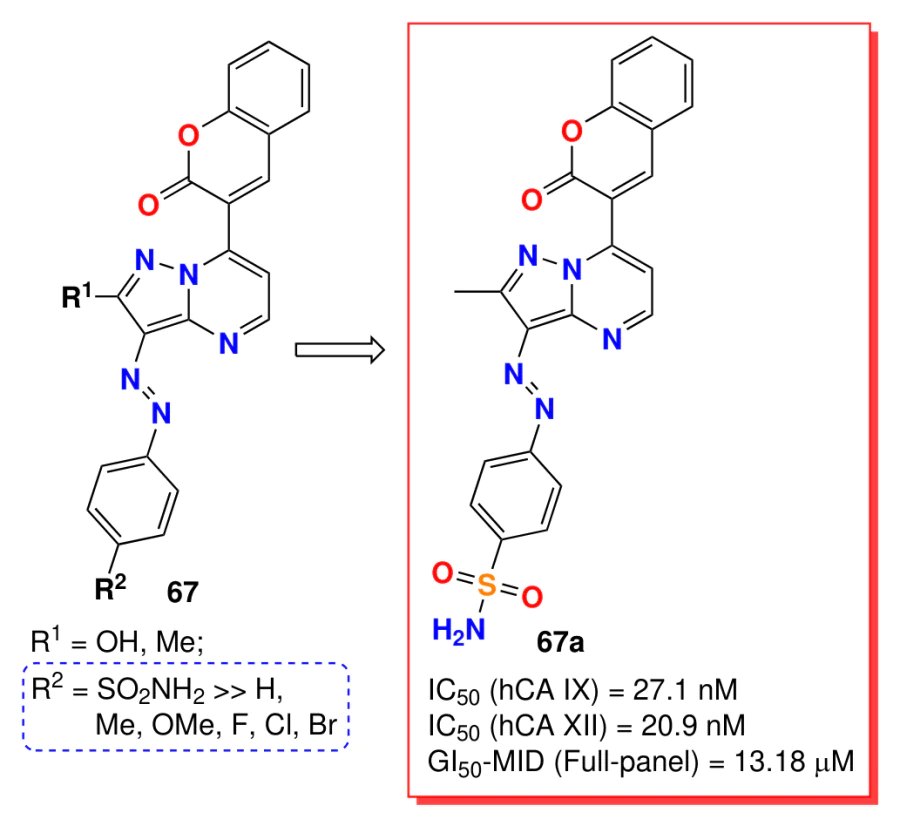
The identified patterns were confirmed for an additional series of derivatives 67 of this family: only heterocycles containing a sulfonamide group effectively inhibited hCA. However, only compound 67a had a pronounced cytostatic effect: the GI50-MID value for a panel of several dozen tumour cell lines was 13.18 μM (Figure 40).[96]
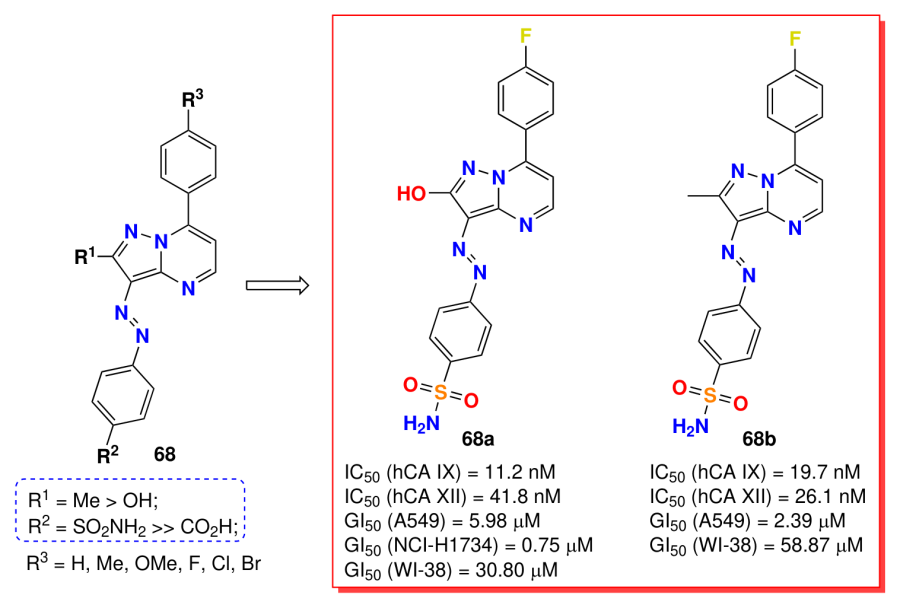
The replacement of the coumarin moiety at the C(7) position by a benzene ring resulted in the formation of structures 68, which effectively inhibited hCA and reduced the proliferative capacity of tumour cells (Figure 41).[97] The authors noted that more effective hCA inhibitors are compounds that contain a halogen atom in the para-position of the benzene ring (e.g., 68a,b) and a methyl group at the C(2) position of the heterocycle (68b).
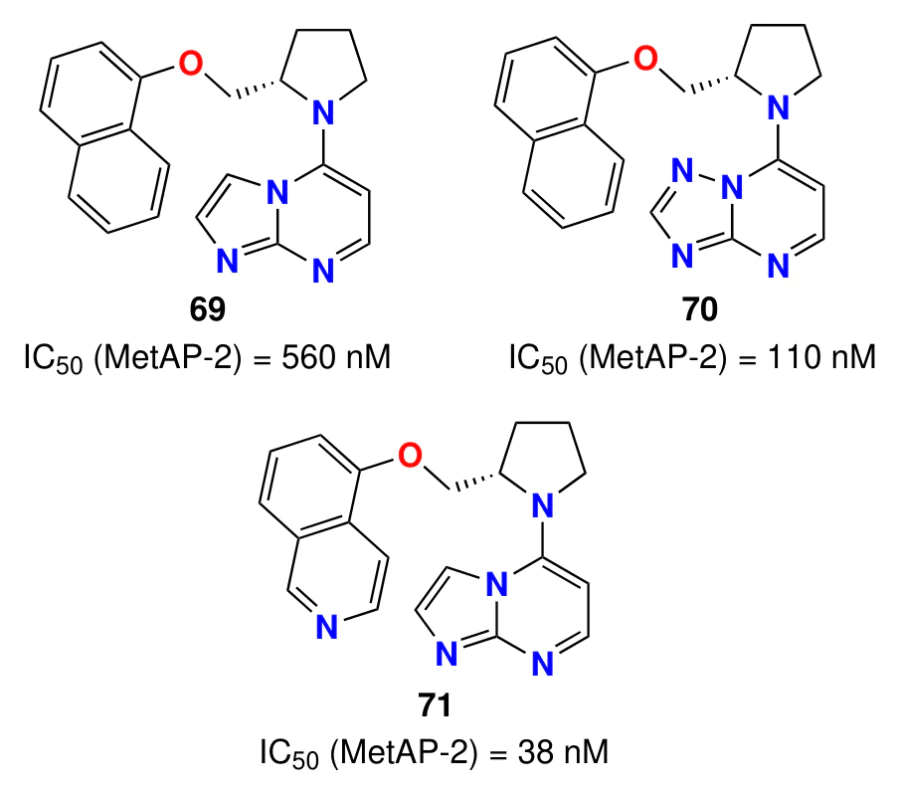
Methionine aminopeptidase 2 (MetAP-2) plays a key role in the regulation of angiogenesis;[98] inhibitors of this enzyme were shown to have an antiproliferative effect.[99] Heinrich et al.[100] mentioned three nitrogen-bridged azolopyrimidines 69 – 71, which inhibited MetAP-2 in the submicromolar range (Figure 42).
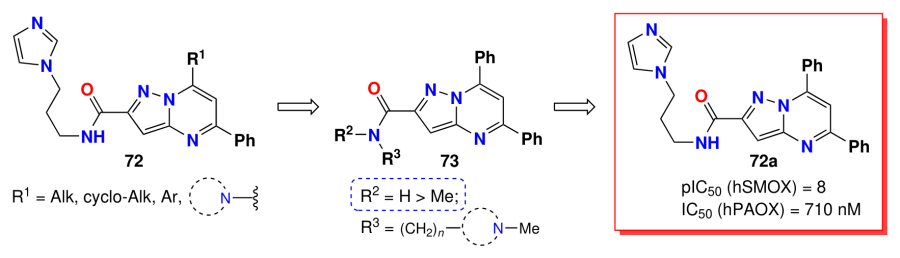
Spermine oxidase (SMOX) is a flavin-containing enzyme involved in the synthesis of polyamines, which determine numerous cellular functions, including cell division, differentiation, and migration; disruption of SMOX activity leads to carcinogenesis.[101] Llaveria et al.[102] performed a high-throughput screening and identified several pyrazolopyrimidine structures 72 that are SMOX inhibitors. According to SAR data, an increase in the size of the alkyl moiety at the C(7) atom leads to increasing activity, whereas the replacement of the alkyl group by nitrogen-containing saturated heterocycles causes the opposite effect. The introduction of a benzene ring at the C(7) position yields compound 72a, which has the highest inhibitory activity, while further variation of the amide moiety and the C(7) substituent does not result in more active compounds 73 (Figure 43).
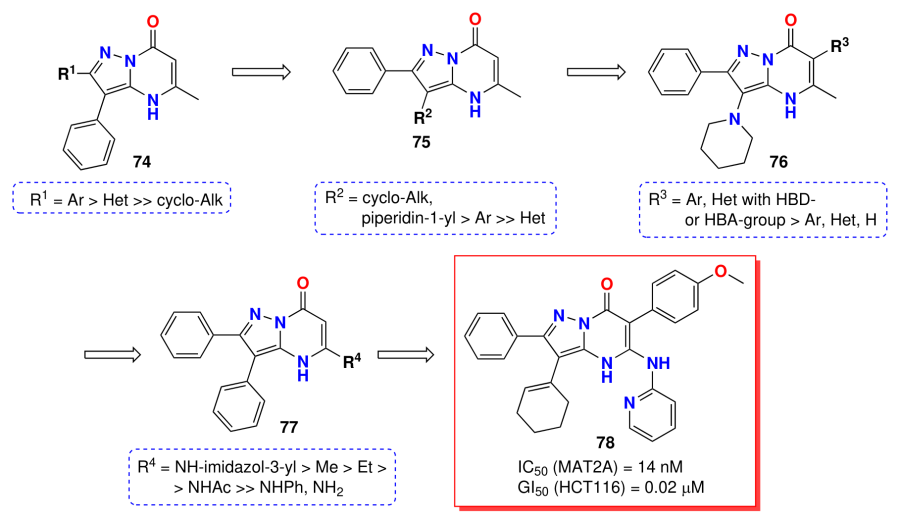
Methionine adenosyltransferase 2A (MAT2A) is an attractive target for the therapy of tumours with a deletion of the methylthioadenosine phosphorylase (MTAP) gene.[103] Konteatis et al.[104] performed screening of a library of compounds, which resulted in identification of pyrazolopyrimidin-7-ones as promising scaffolds. Using X-ray diffraction data for the MAT2A – S-adenosylmethionine – 74 (one of the compounds) ternary complex, further structural modification was predicted. It was found that increasing the polarity of the C(2)-substituent reduces the inhibitory properties of compounds 74, whereas the C(3) position should better bear a cycloalkane or piperidine moiety in place of the phenyl group, to afford compounds 75. The variation of the substituent at the C(6) atom for the series of compounds 76 provided the conclusion that the introduction of a (hetero)aryl moiety capable of forming hydrogen bonds with the MAT2A active site increases the activity of the derivatives. Further modifications, which led to compounds 77, were aimed, first of all, at improving the pharmacokinetic characteristics. This resulted in the development of compound 78, which has entered Phase I clinical trials as an antitumour agent (Figure 44).
Tyrosyl DNA phosphodiesterase 2 (TDP2) in atypical cells is responsible for the mechanisms of resistance to anticancer agents that act as topoisomerase II inhibitors.[105] Screening of a series of 1,2,4-triazolo[1,5-a]pyrimidines 79 for the inhibitory activity against TDP2 showed that most of these compounds are inactive.[106] Only 5-phenyl derivatives 80 containing a meta-electron-withdrawing group on the benzene ring of the C(2)-arylamide substituent (e.g., compound 80a) were active in the mid-micromolar range (Figure 45).

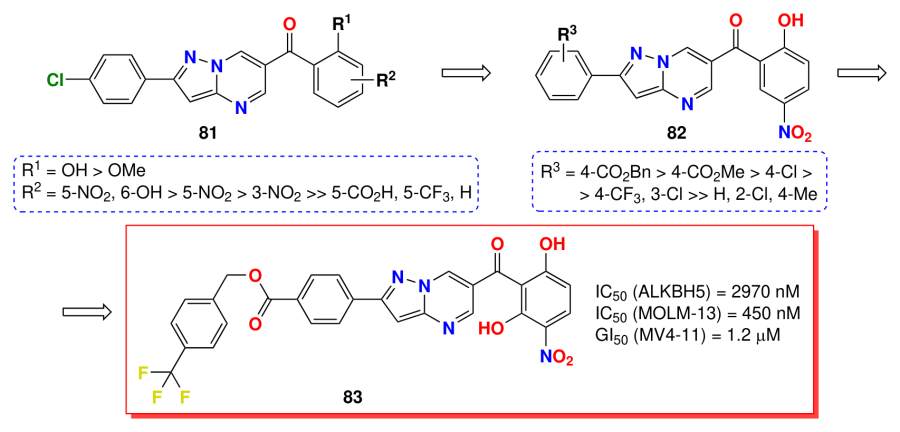
The enzyme Alk homologue 5 (ALKBH5) is a FeII/2-oxoglutarate-dependent dioxygenase able to demethylate N6-methyladenosine and involved in the oncogenesis of certain tumours.[107] In a pharmacophore-based screening conducted by Wang et al.,[108] azolopyrimidine structure was identified as a potential ALKBH5 inhibitor (Figure 46). SAR measurements showed that 2-hydroxy group as R1 and 5-nitro group as R2 are irreplaceable for compounds 81 to exhibit high inhibitory activity. The nature of the para-substituent on the benzene ring at the C(2) atom had a noticeable effect on the activity of compounds 82: the presence of a chlorine atom led to decreasing activity, while ester groups, conversely, resulted in an increase in the activity, with benzyl esters being most effective. The most active compound 83 exhibited cytotoxic properties in the low micromolar range and demonstrated antitumour activity in MV4-11 acute myeloid leukaemia xenografts in mice (the tumour weight halved at a dose of 10 mg kg\(^{-1}\) of compound 83 compared to the negative control).
2.2.2. Inhibitors of epigenetic enzymes
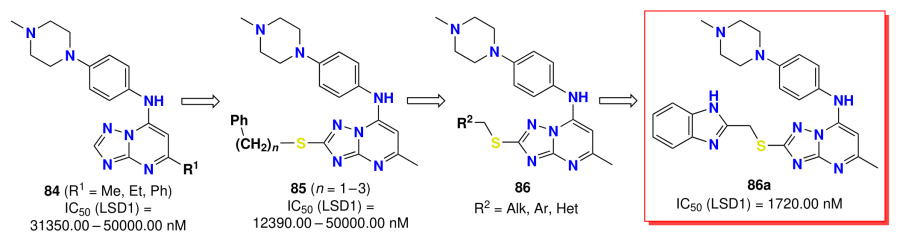
Lysine-specific histone demethylase 1 (LSD1) is overexpressed in various tumour cells and is capable of promoting oncogenesis.[109] A study of inhibitors of this enzyme, 1,2,4-triazolo[1,5-a]pyrimidines 84, showed that the optimal substituent at the C(5) position is a methyl group (compounds 85). At the same time, the presence of a thiomethylene bridge linking the triazole ring to (hetero)aryl moiety is desirable at the C(2) position (compounds 86); among (hetero)aryls, the 2-benzimidazole ring is the best choice in terms of inhibitory activity (compound 86a) (Figure 47).[110]
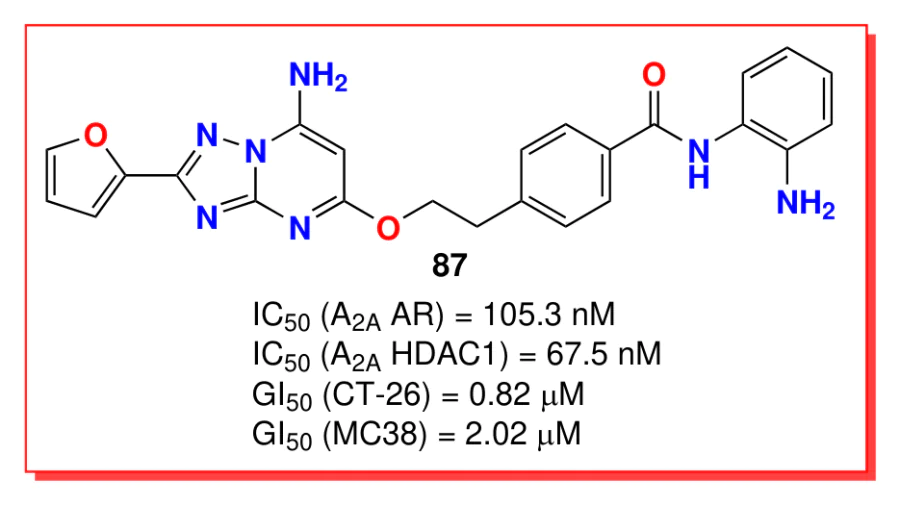
Yan et al.[111] considered the design of dual-action molecules that combine the properties of A2A receptor antagonists and histone deacetylase (HDAC) inhibitors for the immunotherapy of cancer. This mainly concerned triazolo[1,5-c]pyrimidines, but one [1,5-a]-type annulated derivative 87 was also mentioned; the activity of this compound was comparable to that of the heterocycles selected for the extended assays (Figure 48).
2.2.3. Inhibitors of helicases and repair proteins
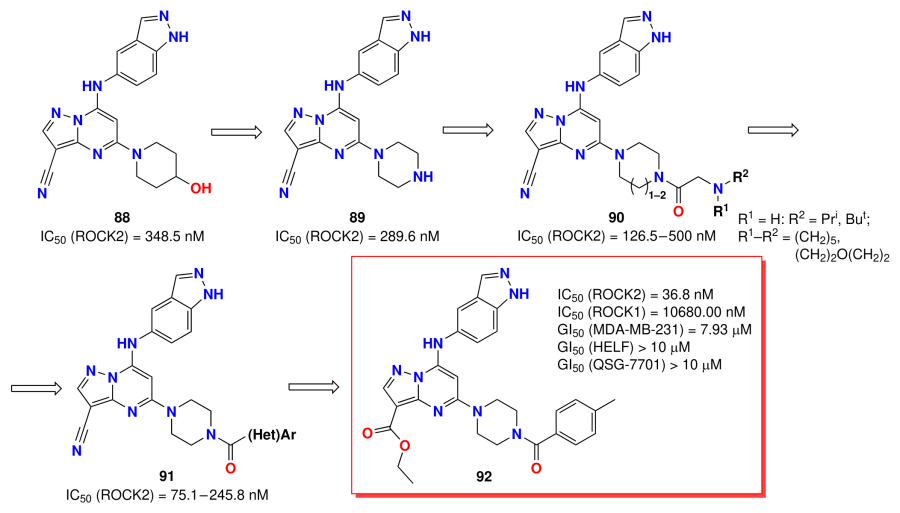
The overexpression of Rho-associated coiled-coil kinase (ROCK) is related to increased tumour cell invasiveness.[112] Cao et al.,[113] who used the central scaffold replacement approach, investigated pyrazolopyrimidine derivatives as ROCK2 inhibitors (Figure 49). It was found that replacement of the C(5) substituent in the starting heterocycle 88 by piperidine slightly enhances the inhibitory properties of compound 89, while acylation of the N(4) atom leads to even more active structures. It was noted that the expansion of the piperidine ring in compounds 90 to a diazepine ring is undesirable and that (hetero)arylated derivatives 91 are markedly more active than their methyleneamine analogues 90. Finally, the replacement of the nitrile group at the C(3) position of azoloazine by an ester group yielded the most promising structure 92, which effectively and selectively inhibited ROCK2 and exhibited cytotoxicity against triple-negative breast cancer cells (MDA-MB-231).
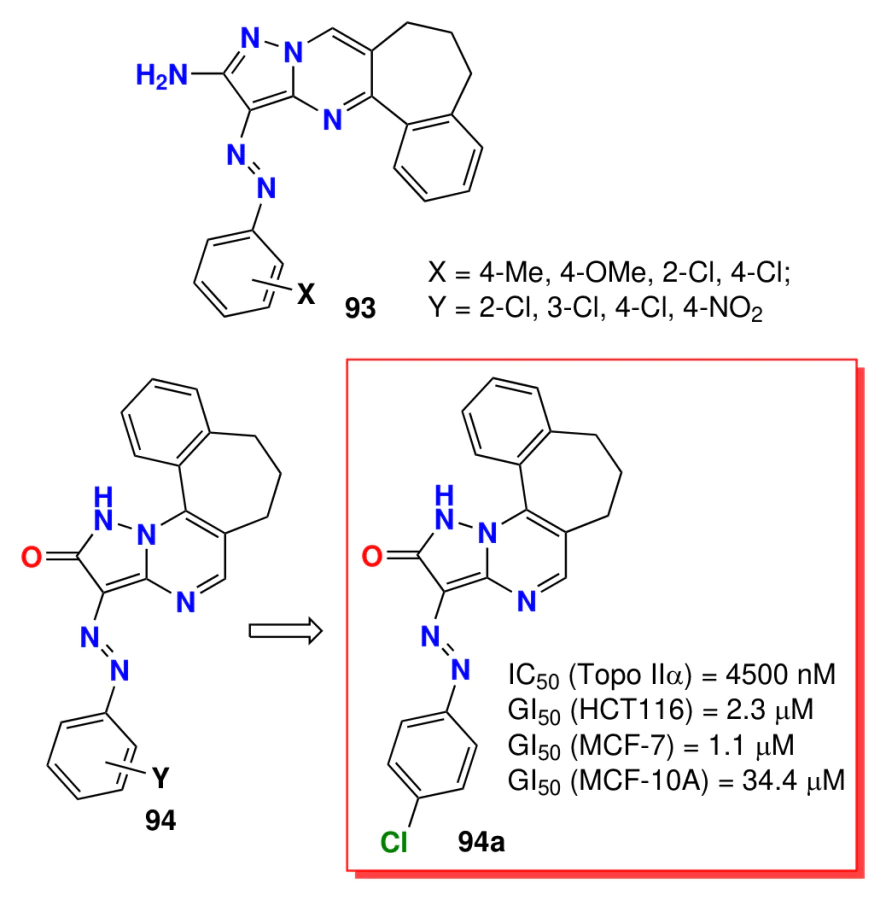
Topoisomerase II (Topo II) inhibitors are well known in medicinal chemistry, in particular as potential anticancer agents.[114] Farghaly et al.[115] reported nine tetracyclic pyrazolo[1,5-a]pyrimidine derivatives 93 and 94, which were investigated as Topo IIα inhibitors. Because of the small number of compounds, it is difficult to establish structure–activity relationships. It can be noted that both scaffolds 93 and 94 were comparable in activity [IC50 (Topo IIα) = 2350 – 22400 nM], and only compound 94a exhibited an affect comparable to that of doxorubicin [IC50 (Topo IIα) = 2710 nM] regarding both topoisomerase inhibition and cytotoxicity (Figure 50).
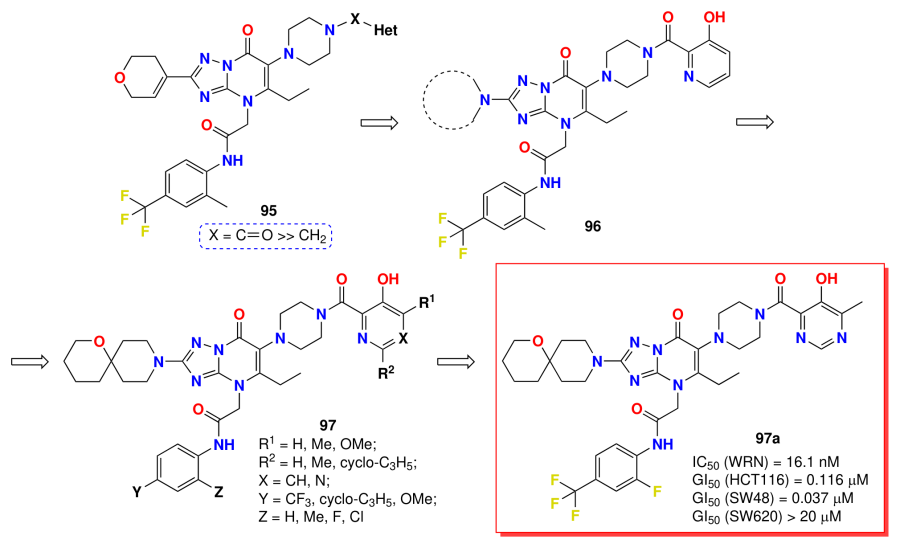
Werner syndrome helicase (WRN) is responsible for DNA uncoiling during replication; there is a relationship between WRN and malignant tumours with microsatellite instability (colorectal cancer, gastric cancer).[116] A molecule with a triazolo[1,5-a]pyrimidine skeleton has entered clinical trials is a WRN inhibitor.[117] Sui et al.[118] investigated the relationship between the structure and the inhibitory and cytotoxic activity against microsatellite instability cells for molecules 95 – 97 (Figure 51). It was found that replacement of the carbonyl group (denoted by the symbol X) by a methylene bridge in compounds 95 results in a complete loss of inhibitory and cytotoxic activity. A similar effect occurs upon the introduction of halogen atoms or a methyl group into the heteroaryl moiety, while the replacement of the pyridine ring by an indole ring slightly reduces the inhibitory properties of the corresponding derivatives. Having introduced a 3-hydroxypyridyl residue into the molecule of 96, the authors varied the C(2) substituent using a series of cyclic amines. Thus, azetidine and pyrrolidine derivatives were markedly weaker inhibitors than spirocyclic piperidines 97. The presence of six-membered saturated rings in the molecule proved to be preferable. The subsequent variation of two amide moieties confirmed that the introduction of substituents in the α-position of the pyridine ring decreases the activity of the compounds, whereas replacement of the pyridine ring by a 4-hydroxy-5-methylpyrimidine moiety, and the replacement of the methyl group in the benzene ring by a fluorine atom lead to increasing inhibitory effect and cytotoxicity. The most promising compound 97a had an inhibitory effect on WRN in the mid-nanomolar range and reduced tumour cell proliferation with GI50 values in the 0.037 – 0.306 μM range and showed an excellent selectivity index when tested on SW620 metastatic colorectal adenocarcinoma cells without microsatellite instability.
The ataxia telangiectasia mutated Rad3-related protein (ATR) plays a key role in DNA repair, which makes some types of tumours dependent on the ATR-Chk1 signalling pathway and sensitive to the inhibition of this serine/threonine protein kinase.[119] Nitrogen-containing heterocycles represent the central core of several ATR inhibitors that have entered clinical trials; this was taken into account in the structural optimization of compounds 98 and 99.[120] First, variation of substituents at the C(3) atom was carried out using pyrazoles with different substituent configurations. It was shown that methylation of the pyrazole NH moiety leads to a decrease in the inhibitory and cytotoxic activities, so does the replacement of the pyrazole ring by a phenyl moiety. In addition, the substituents at the C(5) and C(7) positions are interchangeable and do not have a critical effect on the activity. Further optimization focused on the search for substituents in the pyridine ring of compounds 100: the derivative with unsubstituted pyridine ring was most promising in terms of inhibition of the target and cytotoxic activity, whereas the introduction of certain groups preserved the ability to inhibit ATR but reduced cytotoxicity (Figure 52).
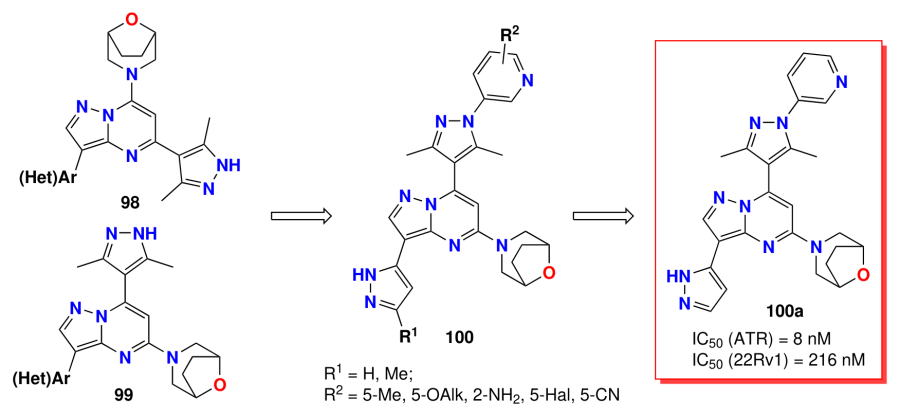
The most active compound 100a exhibited cytotoxic activity against a panel of ~20 cancer cell lines, with average GI50 ≈ 1 μM. Its anticancer activity was confirmed by in vivo experiments using a lung cancer xenograft.
2.3. Receptors, signalling proteins, and cellular models
2.3.1. Compounds that affect membrane and intracellular receptors
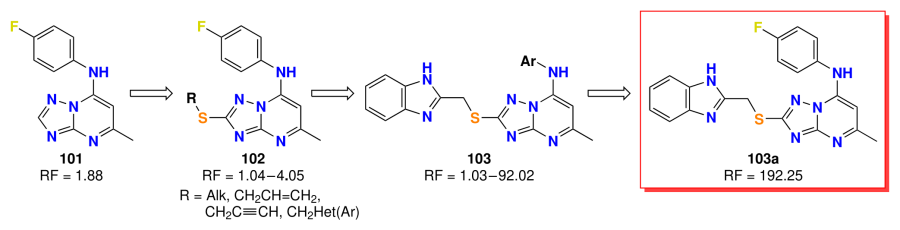
ATP-binding transporter proteins are among the main causes of cancer cell resistance resulting from the efflux of drug molecules.[121] One of the best studied targets in this category is the ABCB1 protein. Liu and co-workers[122, 123] reported the design of modulating agents 101 – 103 (Figure 53), which enhanced the cytotoxic action of paclitaxel, while the biological effect was evaluated in terms of the RF coefficient.¶ It was found that the introduction of a thioether bridge to the C(2) position of the 1,2,4-triazolo[1,5-a]pyrimidine system 101 increases the RF coefficient. By varying the R group of the thioether moiety, the authors prepared 29 compounds 102; the introduction of alkyl and aryl moieties did not induce a significant increase in this parameter. Compounds 103 containing a benzimidazole ring provided an exception; the introduction of this ring into the molecule led to an increase in the RF value, and further replacement of the aryl moiety made it possible to identify the most active compound 103a.
¶ The RF (reversal fold) coefficient characterizes the efficiency of the modulating agent in the reversal of the multiple drug resistance (MDR) of cancer cells to cytostatic agents; the higher this coefficient, the better.
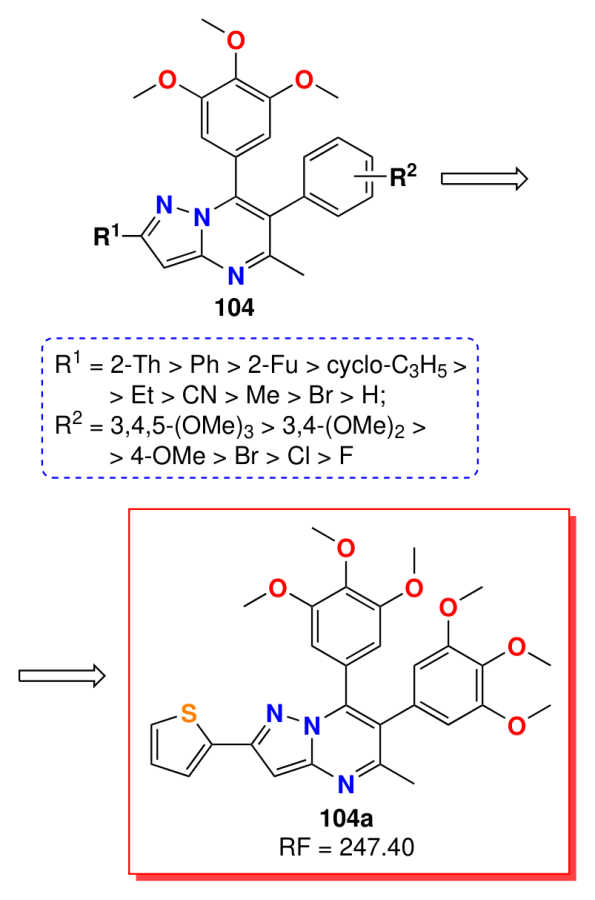
In a later study,[124] a series of pyrazolopyrimidines 104 was investigated in a similar way: the authors evaluated the enhancement of paclitaxel cytotoxicity against the hormone-sensitive MCF-7/ADR breast cancer cell line, which is resistant to doxorubicin. It was shown that the presence of (hetero)aryl groups at the C(2) position is much more effective than the presence of alkyl groups. An increase in the number of methoxy groups in the benzene ring at the C(6) atom also leads to increasing RF value (compound 104a), while the replacement of the para-methoxy group by a halogen atom causes a pronounced decrease in the activity of the corresponding derivative (Figure 54).
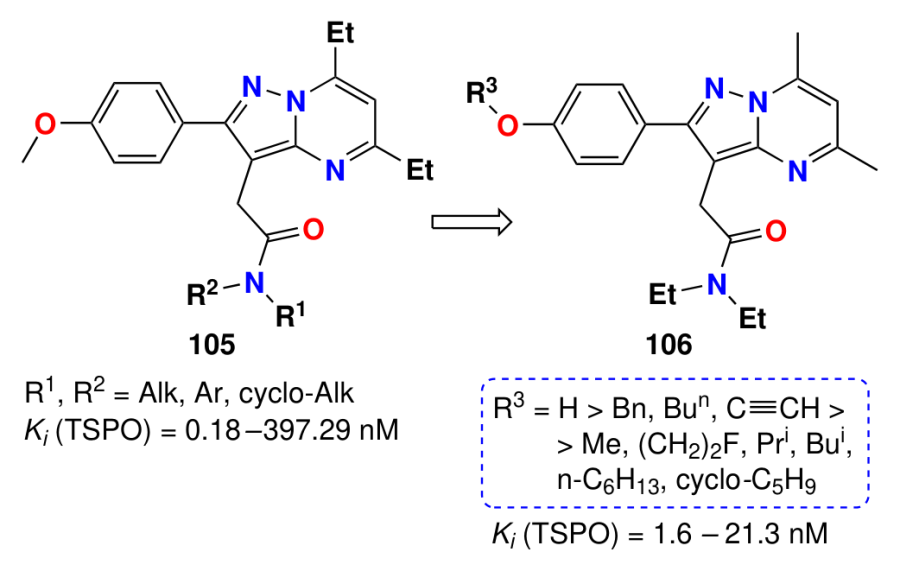
Translocation protein (TSPO) is overexpressed in a number of tumours, including glioma, breast cancer, and colorectal cancer cells.[125] Elucidation of the potential to inhibit this target among various pyrazolo[1,5-a]pyrimidines 105 and 106 revealed that the optimal length of the alkyl groups in the amide is two carbon atoms, and that one of the alkyl groups can be replaced by a benzene ring (Figure 55).[126] Further development of this chemotype did not increase the affinity for the target and revealed that compounds 105 and 106 reduce the proliferative capacity of T98G human glioblastoma cells in the mid-micromolar range.[127]
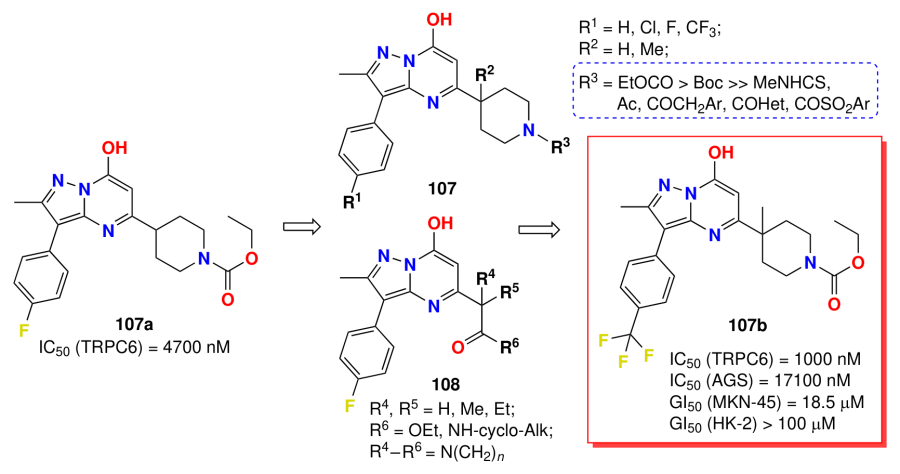
A protein from the transient receptor potential channel 6 (TRPC6) subfamily is overexpressed in certain types of prostate and breast tumours, as well as in tumours of the liver, kidneys, and stomach.[128] Ding et al.[129] performed structure optimization for the initial hit compound 107a (Figure 56). It turned out that replacement of the carbamate group in compounds 107 by any other moiety markedly decreases the antagonistic activity. The Boc moiety is an exception; however, in this case, a fluorine atom is required in the para-position of the C(3) benzene ring, while the replacement of fluorine by a chlorine atom or a trifluoromethyl group results in compounds that lack antagonistic activity. A similar effect on the affinity for the target was also observed when the piperidine ring at the C(5) position in compounds 108 was replaced by other groups. Thus, the modification of two substituents in compound 107a furnished a more effective heterocycle 107b.
2.3.2. Compounds that affect signalling proteins and regulatory proteins
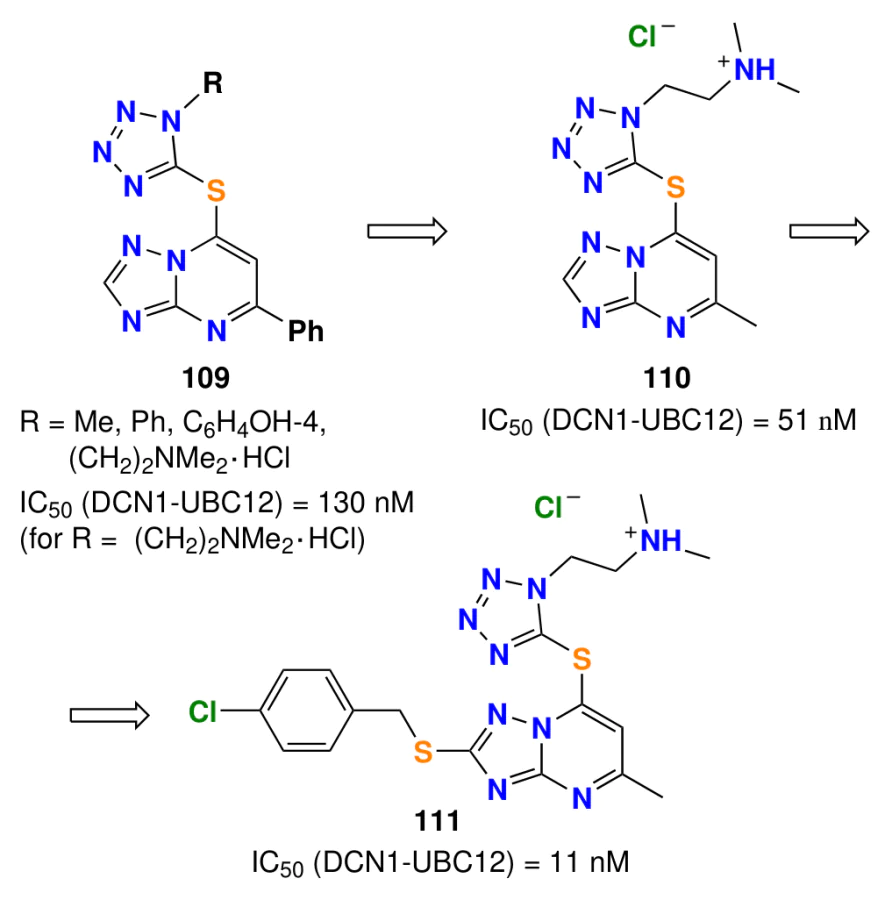
A potential target for anticancer drugs is the DCN1 protein, which is often dysregulated in squamous cell skin carcinoma.[130] Wang et al.[131] investigated the inhibition of the interaction of this protein with the UBC12 enzyme by 1,2,4-triazolo[1,5-a]pyrimidines 109 – 111. It was established that for manifestation of the effect, groups containing a quaternized nitrogen atom are most preferred in the tetrazole ring of these compounds (Figure 57). The replacement of the C(5)-phenyl group by a methyl group increased the activity of compound 109 twofold, whereas substitution of other alkyl groups into this position resulted in compounds with lower activity. The variations of the substituent at the sulfur atom at the C(2) position of the heterocyclic system showed that para-substituted benzyl derivatives 111 are most effective.
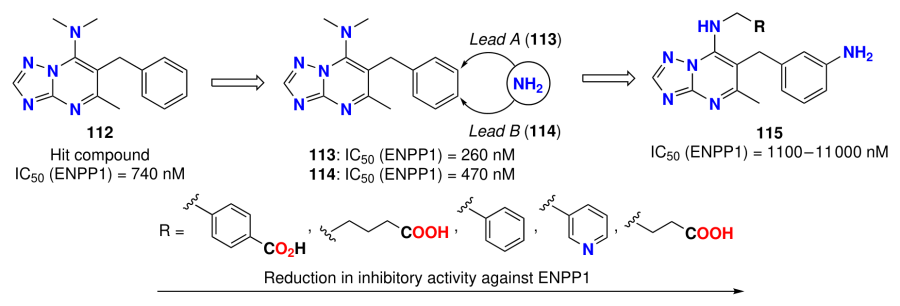
Another way to regulate the immune response is stimulation of interferon genes.††[132] This pathway is activated via cyclic guanosine monophosphate – adenosine monophosphate (2',3'-cGAMP), which is hydrolyzed by ectonucleotide pyrophosphatase/phosphodiesterase (ENPP).[133] Thus, inhibitors of the ENPP family, along with STING agonists, are of great interest as immunoactivators. The initial virtual screening carried out by Kawaguchi et al.[134] identified hit compound 112 (Figure 58). Optimization of its structure was reduced to the introduction of an amino group into the benzyl moiety at C(6). It was shown that the meta-position (compound 113) is more favourable for the activity than the para-position (compound 114). Replacement of the dimethylamino group by other amine residues made it possible to establish some structure – activity relationships for a series of derivatives 115.
†† The stimulator of interferon genes (STING) is a key adapter protein of the innate immune system that recognizes foreign or damaged DNA in the cytoplasm of cells and triggers a protective inflammatory response.
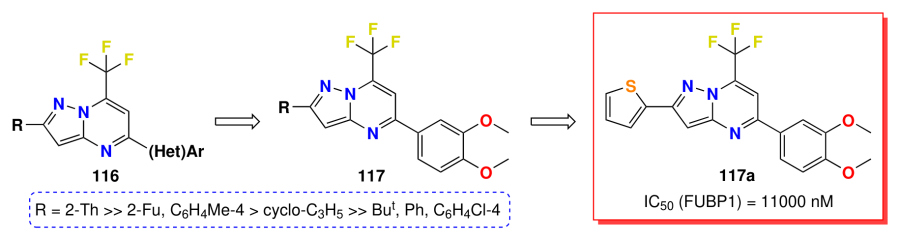
The transcriptional regulator FUSE-binding protein 1 (FUBP1) is involved in the carcinogenesis of several malignant tumours.[135] Study of the structure – activity relationships for a number of inhibitors of this target revealed that replacing the thiophene moiety in the pyrazole ring of compounds 116 and 117 by other substituents markedly decreases the activity.[136] This finding also proved to hold for the replacement of the dimethoxyphenyl group at the C(5) position: any other (hetero)aryl substituents afforded structures 116 that did not exhibit pronounced inhibitory activity (Figure 59).
S-Phase kinase-associated protein 2 (Skp2) plays an important role in the recognition of ubiquitin-tagged substrates that are prepared for degradation. Elevated levels of Skp2 are observed in various malignant tumours, making this target attractive for the development of new chemotherapy methods.[137] High-throughput screening of an in-house library identified 2-benzylthio-5-methyl-7-(2,4,6-trimethoxy)phenyltriazolo[1,5-a]pyrimidine 118 (R = Ph) as the first hit.[138] In the subsequent studies, it was found that replacement of the benzene ring in the thiobenzyl moiety by (cyclo)alkyl groups considerably decreases the inhibitory activity in the Skp2-Cks1 protein interaction assay. A similar effect was observed upon introduction of other (hetero)aryl groups, with the exception of a phenyl substituent bearing a para-halogen atom (Figure 60).
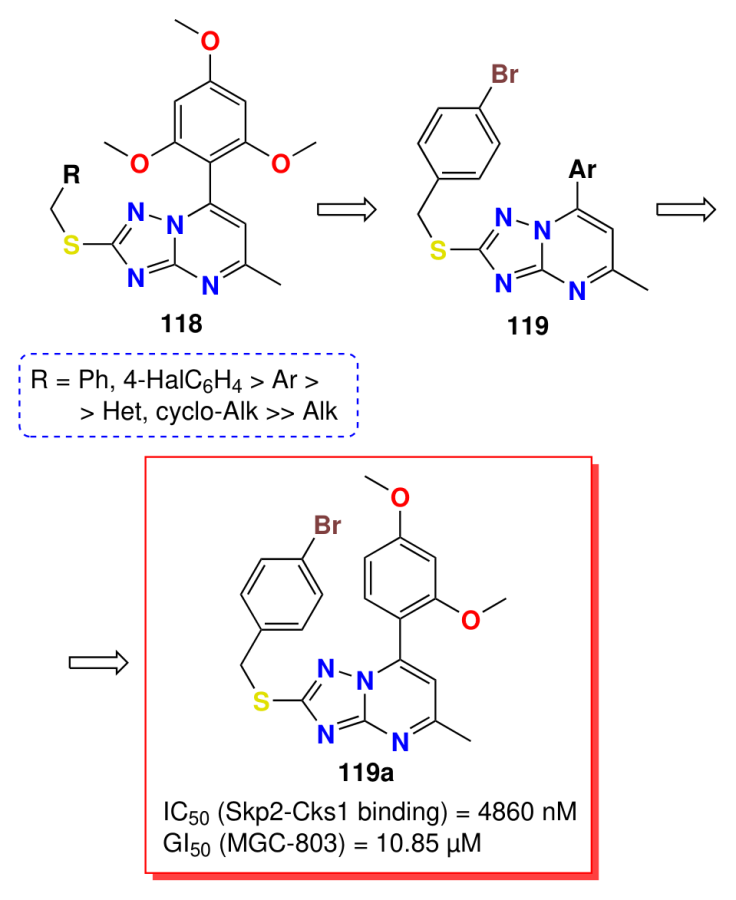
Having fixed the substituent at the C(2) position, the authors varied the group at the C(7) atom, thus obtaining a series of compounds 119. It was found that the replacement of methoxy groups in the benzene ring leads to a decrease in activity, especially if hydrogen-bond donors are introduced. This gave compound 119a possessing cytotoxic activity against MGC-803 hybrid gastric cancer cells.
2.3.3. Pyroptosis inducers
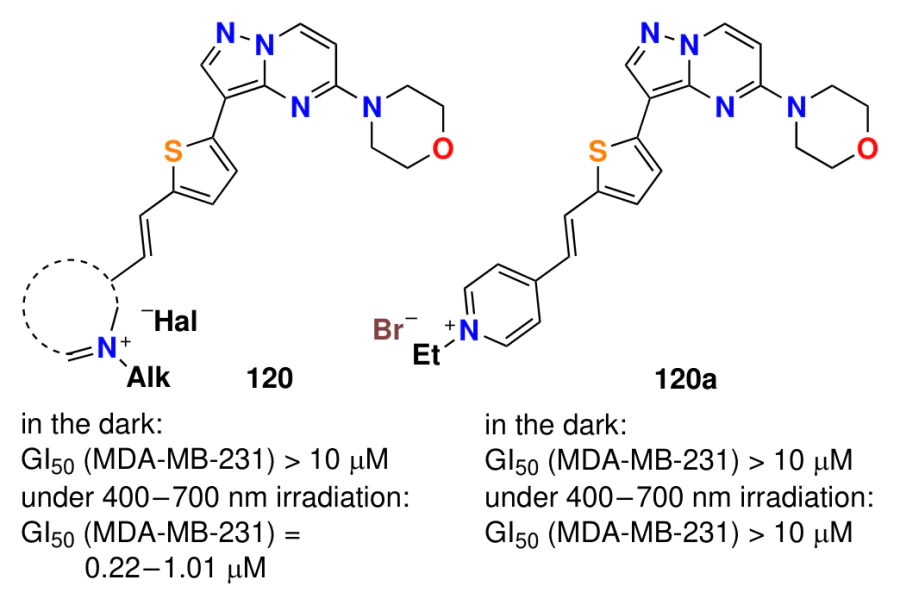
Zhang et al.[139] discovered a group of six photosensitizers, quaternary ammonium salts 120 based on the pyrazolo[1,5-a]pyrimidine scaffold, which trigger pyroptosis in cancer cells.[139] In the absence of light, heterocycles 120 did not exhibit cytotoxic activity against the MDA-MB-231 triple-negative breast cancer cell line. However, on exposure to light with a wavelength of 400 – 700 nm, most derivatives containing benzoannulated rings exhibited a pronounced cytotoxic effect, with GI50 values ranging from 0.22 to 1.01 μM. One heterocycles of this series 120 inhibited tumour growth in in vivo experiments using tumour-bearing mice (a highly aggressive 4T1 triple-negative model of breast cancer in mice). At the same time, compound 120a with a quaternary nitrogen atom in the pyridine ring was an exception and did not possess cytotoxic activity both under light and dark conditions (Figure 61).
2.4. Summary of Section 2
As noted above, malignant tumours are one of the leading causes of death worldwide; therefore, the search for and discovery of new targets to combat this disease are highly relevant. Since cancer aetiology has not been definitively established, it seems reasonable that azolopyrimidines can target a variety of macromolecules. The targets include various transporter proteins and enzymes involved in the development of chemotherapy resistance; vascular endothelial growth factor receptors, methionine aminopeptidase, and other proteins involved in angiogenesis; a wide variety of kinases, including B-Raf, Pim, CDK, Bruton’s tyrosine kinase, Janus kinases, and casein kinase type 2.
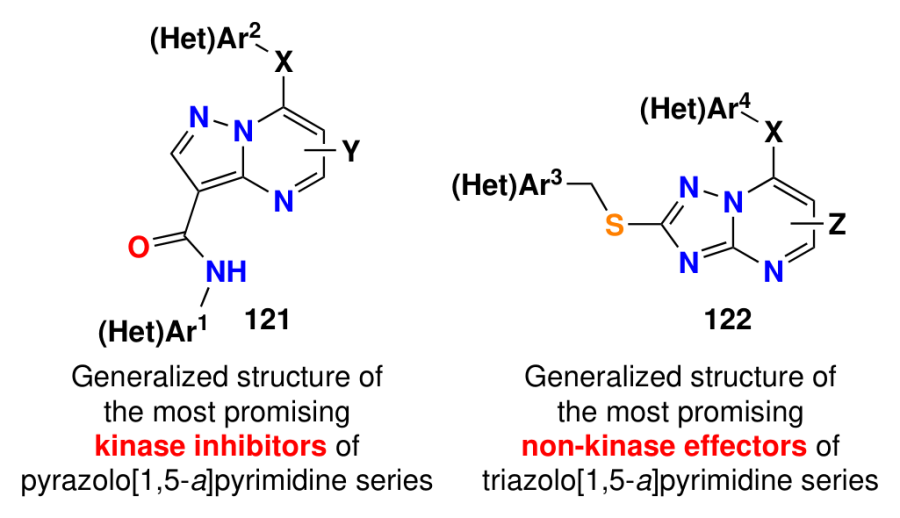
In view of the diversity of targets, summarizing the presented data provides the conclusion that kinase inhibitors based on fused azoloazines, including those approved for clinical use, are exclusively pyrazolo[1,5-a]pyrimidine derivatives. The most promising substitution pattern is represented by structure 121, which contains a (hetero)arylamide moiety at the C(3) position of the heterocyclic system and a second (hetero)aryl ring linked to the C(7) atom either directly or via a sulfur, oxygen, or nitrogen atom (Figure 62). Conversely, in the case of non-kinase targets, including enzymes or receptors, 1,2,4-triazolo[1,5-a]pyrimidine-based effectors predominate; the most promising substitution pattern for these compounds is represented by structure 122.
Although most of the reported data on the pharmacological effects of azoloazines were obtained in in vitro experiments, a small number of studies also describe in vivo animal studies. In the latter case, the following xenograft mouse models were used: the DLD-1 colorectal cancer (compound 17, the putative target is CK2), MC-80 breast cancer (compound 53a, the putative target is PI3Kδ), MV4-11 acute myeloid leukaemia (compound 83, the putative target is ALKBH5), NCI-H1703 squamous cell lung cancer (compound 100a, the putative target is ATR), and 4T1 triple-negative breast cancer (compound 120a, the putative mechanism is the induction of pyroptosis).
3. Cytotoxic action of azolo[1,5-a]pyrimidines
Quite a number of studies addressing the anticancer potential of azoloazines are devoted to their cytotoxic effects on various cell lines rather than to their effect on specific macromolecular targets involved in oncogenesis. The material in this Section is arranged as follows: the structures of the most active compounds are presented in the order of decreasing cytotoxicity index.
3.1. Compounds with cytotoxic activity in the low and submicromolar ranges
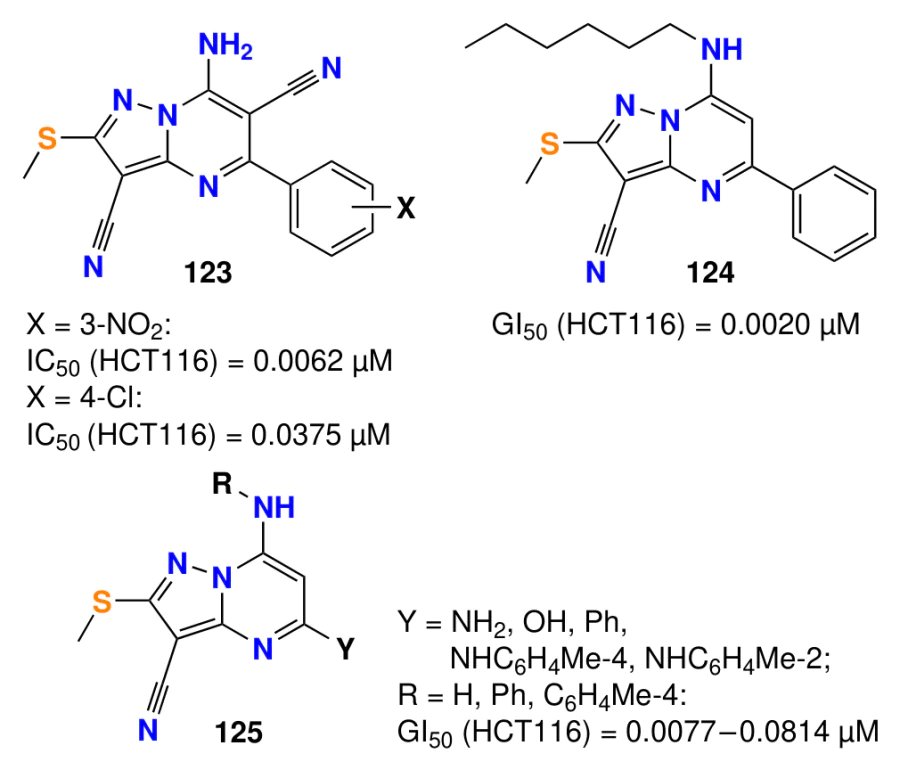
The most pronounced cytotoxic action against HCT-116 human colorectal carcinoma cells was found for pyrazolo[1,5-a]pyrimidines 123 – 125, which were superior to doxorubicin [GI50 (HCT116) = 0.007 μM] used in clinical practice (Figure 63).[140]
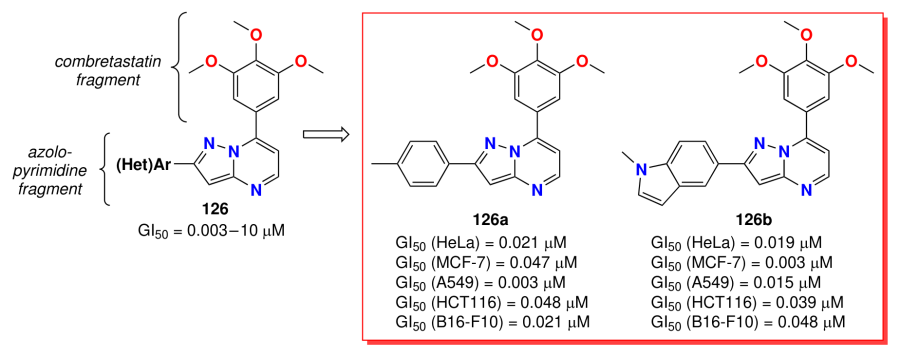
One approach to design of compounds with pronounced cytotoxic activity is combining combretastatin and azolopyrimidines fragments. Most of 7-(3,4,5-trimethoxyphenyl)pyrazolo[1,5-a]pyrimidines 126 showed a cytotoxic activity in a low micromolar and mid-nanomolar ranges (Figure 64).[141] In general, compounds containing a small electron-donating substituent on the C(2)-benzene ring were more active than those with an electron-withdrawing or bulky substituents. In addition, replacement of the phenyl group by an indol-5-yl ring did not result in a loss of activity, unlike the replacement by the indol-3-yl. The most active compounds 126a,b were slightly superior to the colchicine drug (GI50 = 0.018 – 0.107 μM) against HeLa (cervical adenocarcinoma), MCF-7, A549, HCT116, and B16-F10 (mouse melanoma) cell lines.
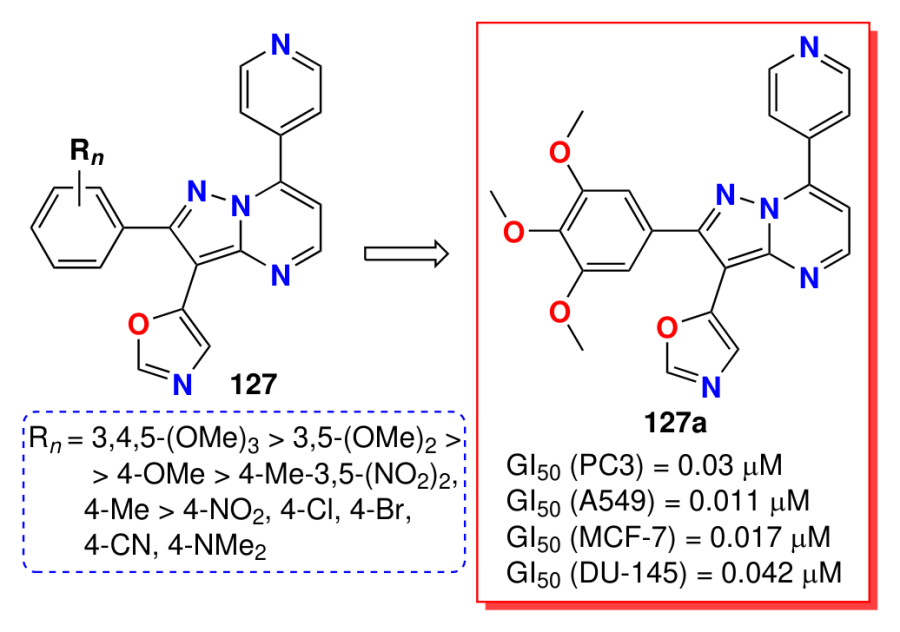
One more piece of evidence for increasing cytotoxic action of azolopyrimidines 127 in the presence of a para-anisole moiety was reported by Bhogireddy et al.[142] The authors showed that an increase in the number of methoxy groups leads to enhancement of the cytotoxic effect and that the most active derivatives, including compound 127a, show cytotoxicity in the submicromolar range (Figure 65).
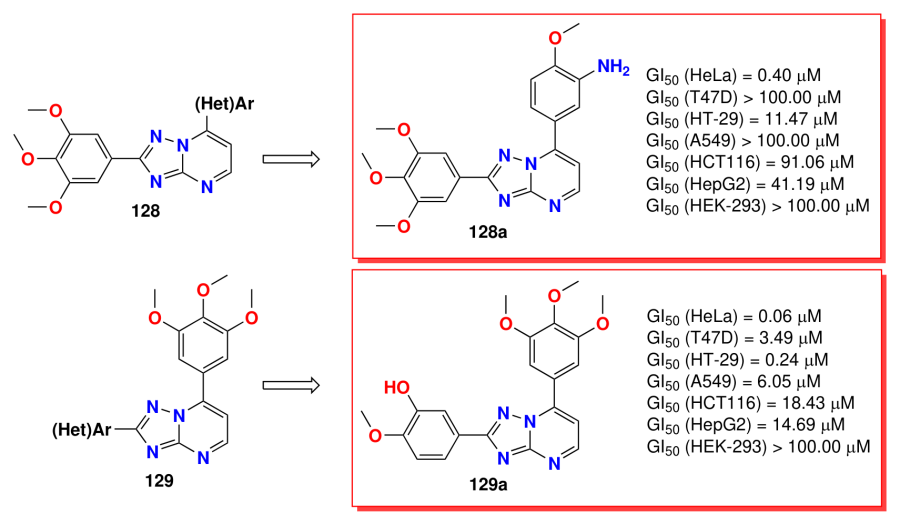
The development of the concept of combining combretastatin and azolopyrimidine fragments within a single molecule was also described by Huo et al.[143] Testing of compounds 128 and 129 for cytotoxicity against HeLa cells revealed that heterocycles 129, containing a 3,4,5-trimethoxyphenyl moiety on the pyrimidine ring rather than on the triazole ring, are more promising in terms of activity. Experiments using an expanded panel of cell lines confirmed this conclusion; furthermore, the compounds 128 and 129 were found to exhibit selectivity, as they did not reduce the viability of human embryonic kidney cells (HEK-293) at a concentration of 100 μM (Figure 66).
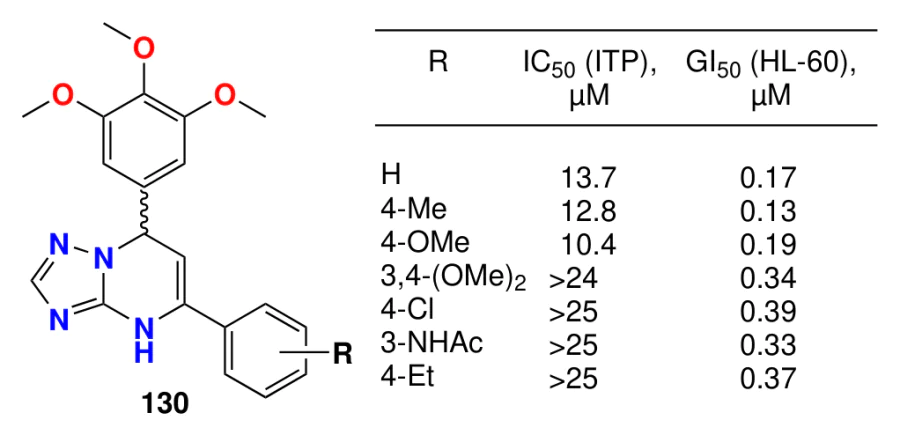
Kim et al.[144] carried out pharmacophore analysis of β-tubulin complexes with inhibitors that interact with the colchicine binding site. A key structural unit was the 3,4,5-trimethoxyphenyl group the presence of which in the molecule made it possible to make a selection of compounds, including hydrogenated triazolopyrimidines 130, from a library of 15 925 structures. Generally, it was shown that compounds 130 inhibit tubulin polymerization (ITP) in a mid-micromolar range and exhibit pronounced cytotoxicity against HL-60 promyelocytic leukaemia cells (Figure 67).
Zhang et al.[145] proved pronounced cytotoxic activity of [1,2,4]triazolo[1,5-a]pyrimidines 131 against COLO 205 human colorectal adenocarcinoma cell line and identified some structure – activity relationships (Figure 68). The mechanism of action of the most effective compounds 131 was investigated, and it was shown that they promote tubulin polymerization and also exhibit anticancer activity in in vivo experiments against U87-MG glioblastoma following intravenous and oral administration.
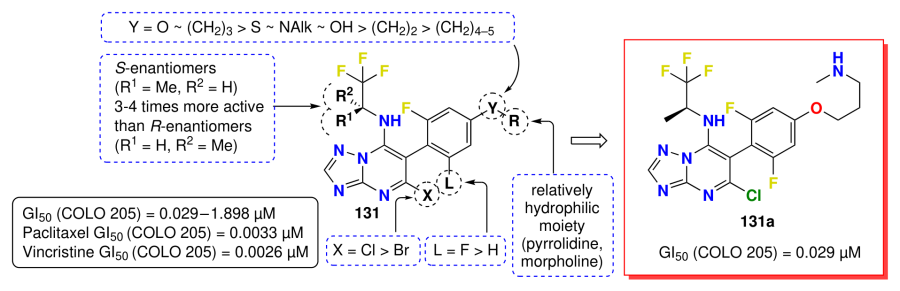
The subsequent extended studies of the most promising compound[146] demonstrated that [1,2,4]triazolo[1,5-a]pyrimidine 131a inhibits the binding of vinblastine to the αβ-tubulin heterodimer; hence, this ligand may represent a new class of compounds that are active against microtubules.[147] Preclinical trials of this compound have shown[148] that it exhibits antiproliferative activity against tumours resistant to paclitaxel and vincristine. However, Phase I clinical trials of compound 131a identified a noticeable side effect as neutropenia.[149]
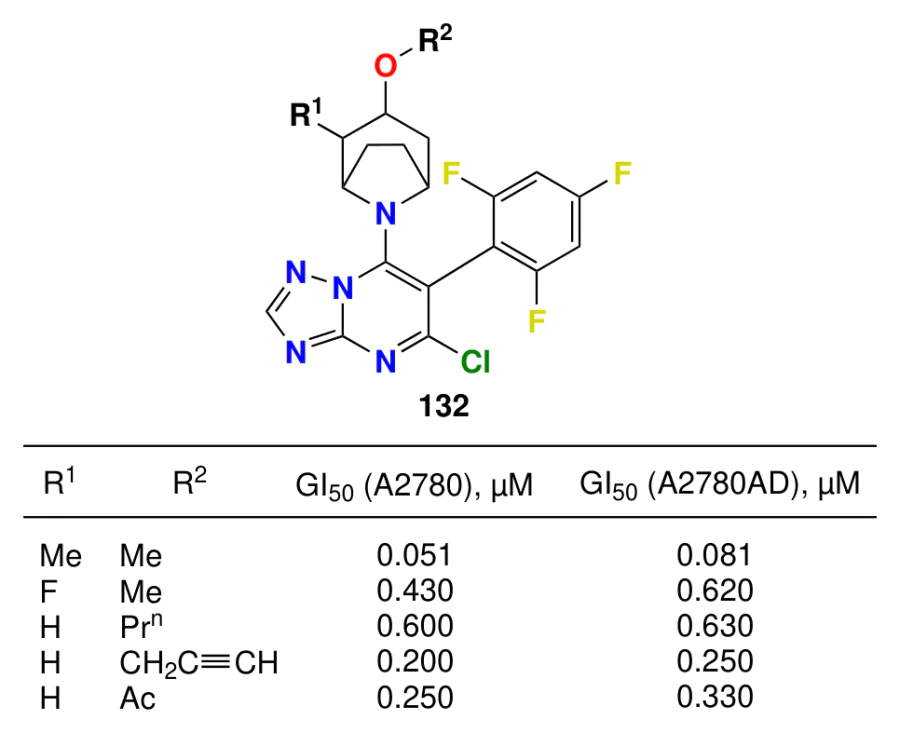
It was shown that pyrazolopyrimidines 132 (Figure 69) at concentrations in the submicromolar range effectively reduce the proliferative capacity of both A2780 ovarian carcinoma cells and the corresponding resistant mutant A2780AD.[150]
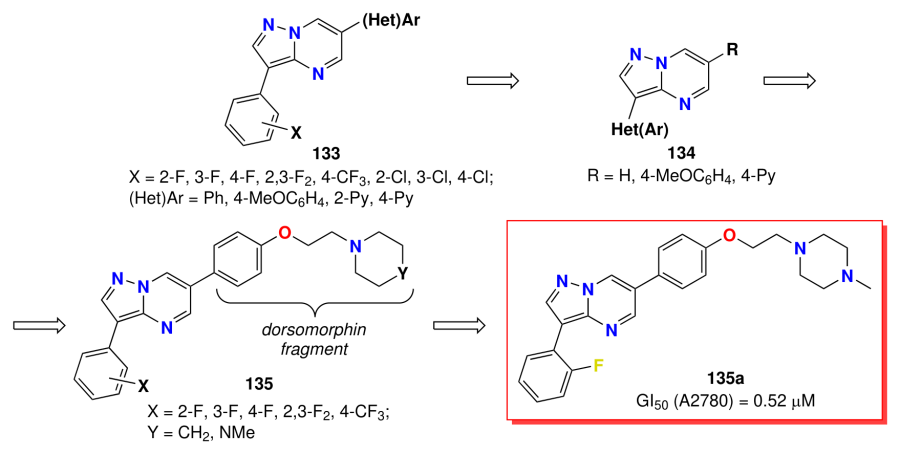
Singleton et al.[151] prepared analogues of dorsomorphin, an inhibitor of various kinases with antiproliferative activity, belonging to the class of pyrazolo[1,5-a]pyrimidines. The initial screening using A2780 ovarian carcinoma cells indicated that compounds 133 and 134 at a concentration of 10 μM do not exhibit significant cytotoxicity. The introduction of a dorsomorphin-resembling moiety into the C(6)-position of the system resulted in structures 135 with a pronounced cytotoxic effect. As a result, the authors identified several compounds that were more active than dorsomorphine [half-maximal effective concentration, EC50 (A2780) = 1.1 μM], e.g., heterocycle 135a (Figure 70).
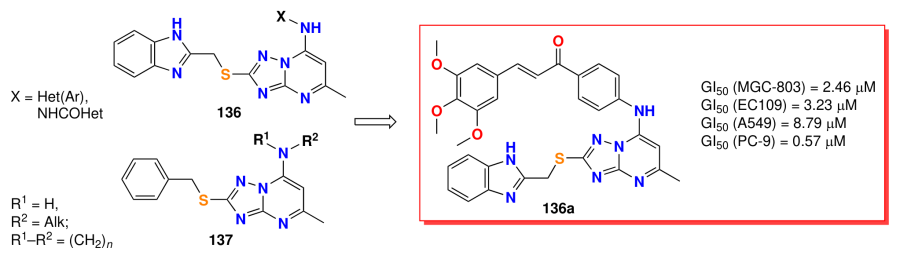
Some members of series 136 and 137 also had cytotoxic properties against four cancer cell lines (MGC-803 human gastric cancer, EC109 human esophageal squamous cell carcinoma, A549 lung adenocarcinoma, and PC-9 non-small cell lung cancer) in the low- and mid-micromolar ranges (Figure 71).[152] The most active compound 136a comprised a benzimidazole moiety and a combretastatin residue.
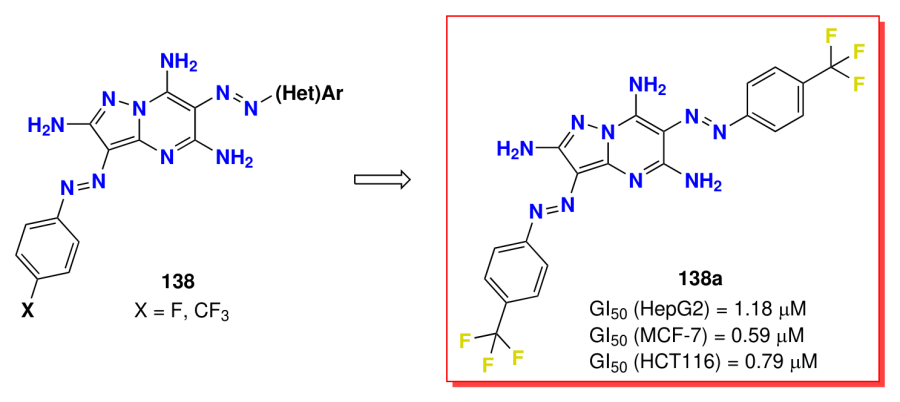
Fouda et al.[153] performed screening of the cytotoxic activity of 3,6-(hetero)arylazopyrazolopyrimidines 138; the authors identified a few compounds exhibiting cytotoxicity against HepG2, MCF-7, and HCT116 cells in the low and submicromolar ranges (Figure 72). Compound 138a was most effective.
Series of [1,2,4]triazolo[1,5-a]pyrimidines 139 and 140, containing a 3,4,5-trimethoxyphenyl moiety, were reported by Yang et al.[154] (Figure 73). These heterocycles were found to reduce the viability of lung adenocarcinoma (A549) and cervical adenocarcinoma (HeLa) cells in a low micromolar range, while HCT116 colorectal carcinoma cells and HEK-293 human embryonic kidney cells were affected to a lesser extent. Bicyclic derivatives 140 were found to be superior to tricyclic derivatives 139. However, the most active compound 140a was inferior to combretastatin CA-4 [GI50 (HeLa) = 0.043 μM, GI50 (A549) = 0.055 μM] against the two cell lines.
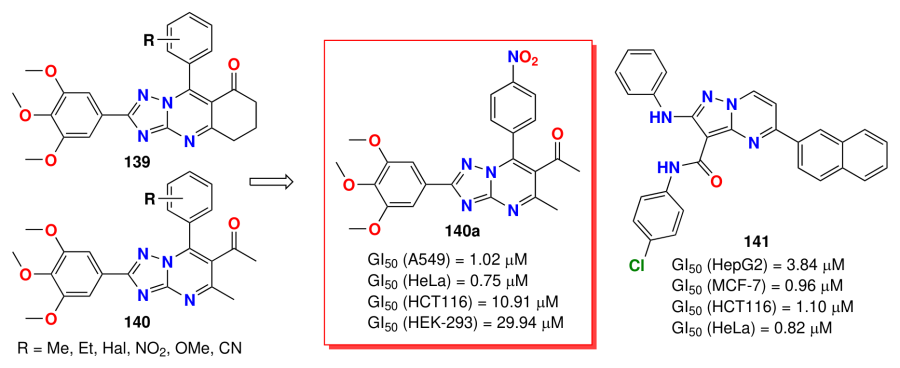
A brief report on assessment of the cytotoxicity of pyrazolopyrimidine 141 against four cell lines was presented by Ahmed et al.[155] Compound 141 effectively reduced the proliferative capacity of tumour cells in the low micromolar range (see Figure 73).
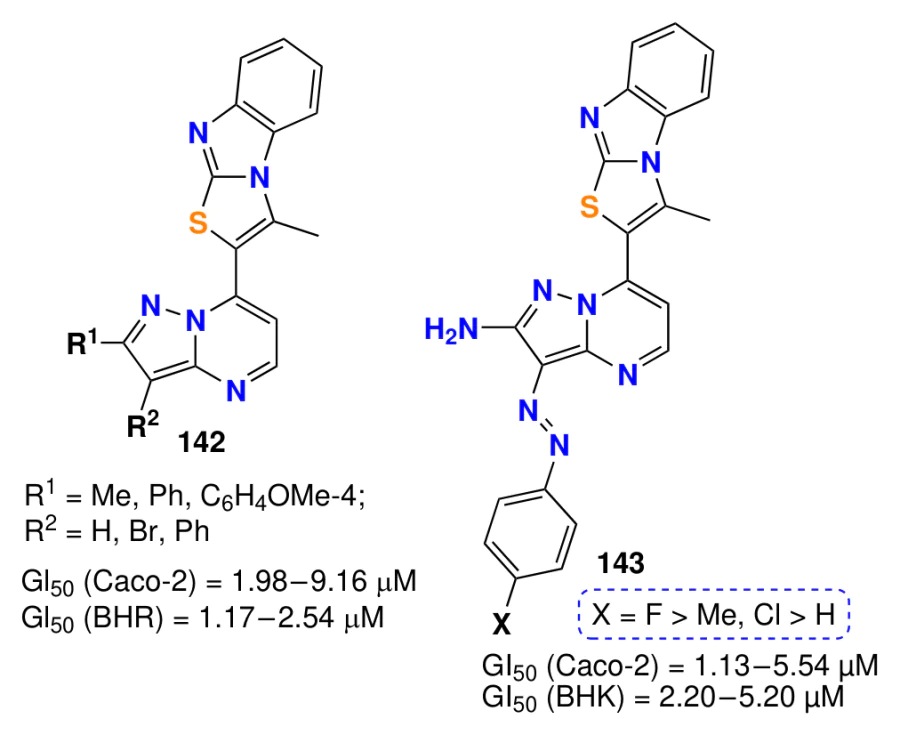
A study of the cytotoxic effects of hybrid compounds 142 and 143 comprising pyrazolopyrimidine and thiazolobenzimidazole moieties demonstrated that all of them inhibit the proliferation of Caco-2 human colorectal adenocarcinoma cells to a greater extent than doxorubicin; however, they also inhibited the viability of normal BHK cells from the kidneys of baby Syrian hamsters [for doxorubicin, GI50 (Caco-2) = 11.2 μM and GI50 (BHK) = 0.74 μM] (Figure 74).[156]
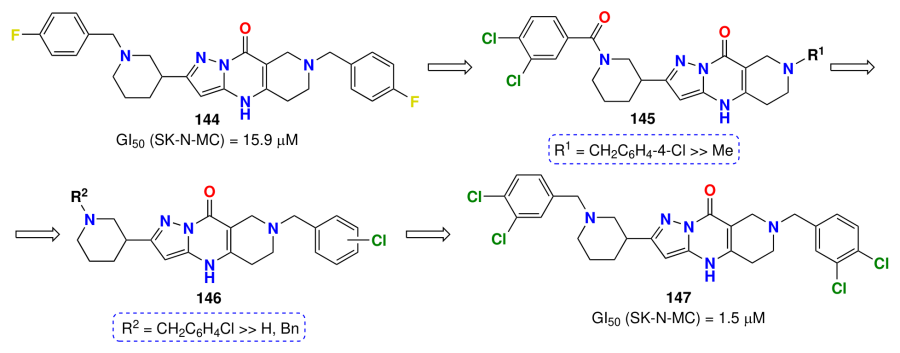
A promising strategy for the treatment of Ewing’s sarcoma is to inhibit the Hsp90 protein.[157] Zajec et al.[158] reported optimization of the structure of hit compound 144, which was identified via virtual screening (Figure 75). It was shown that replacing the benzyl moiety at the N(7) atom by a methyl group (compound 145) or a similar modification in the side-chain piperidine ring (compound 146) leads to a loss of cytotoxic activity against Ewing’s sarcoma cells (SK-N-MC). A similar decrease in the activity was also noticed in the absence of a halogen atom in the benzyl moiety. Furthermore, the benzyl moiety (compound 147) proved to be more beneficial for the activity than the benzoyl moiety: this modification induced a two- to three-fold increase in the cytotoxicity.
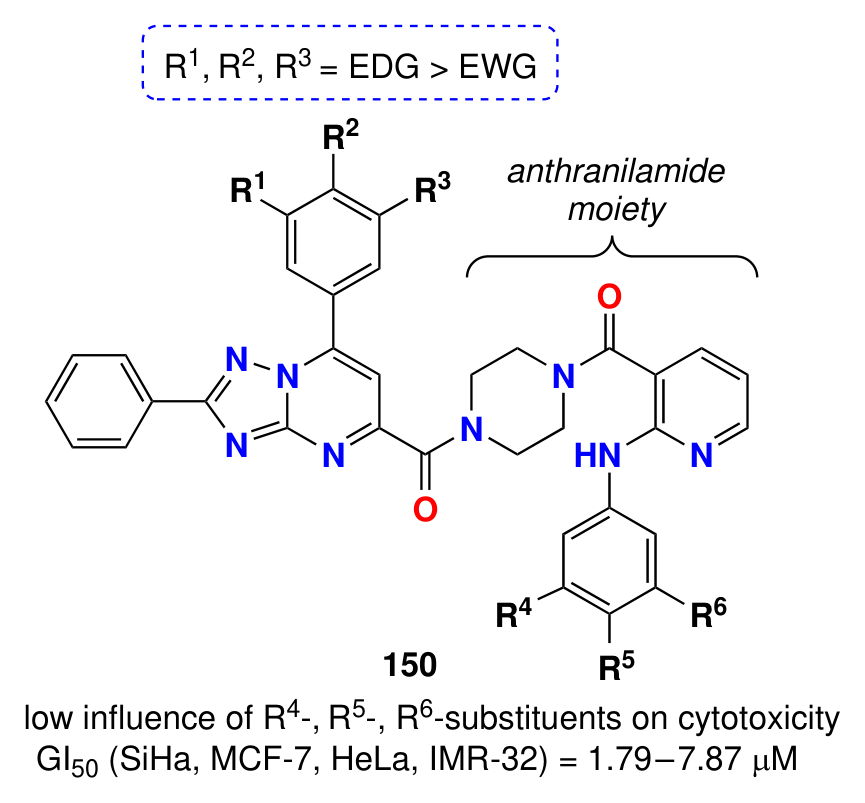
Kamal et al.[159] combined a [1,2,4]triazolo[1,5-a]pyrimidine scaffold and the AAL993/CI-1040 antitumour anthranilamide moiety within a single molecule (Figure 76).[160] The resulting derivatives 148 had a marked cytotoxicity against SiHa squamous cell cervical carcinoma and HeLa cervical adenocarcinoma cells. The most active compounds 148 were tested against an expanded panel of cell lines (> 50 variants) and also showed GI50 values in the low micromolar range.
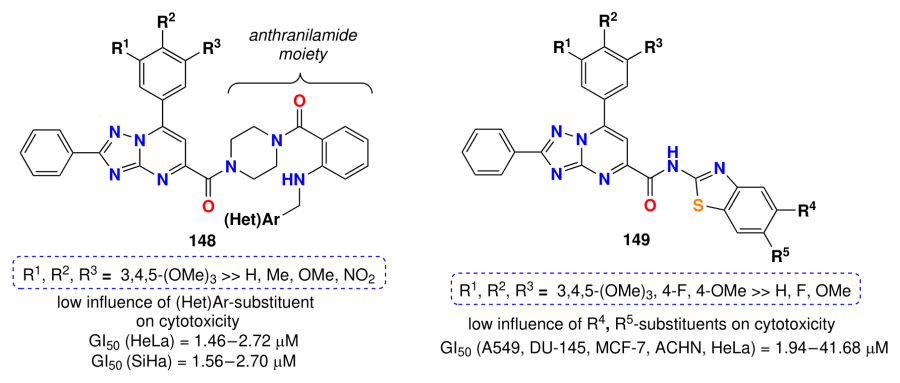
A similar strategy for conjugate design based on [1,2,4]triazolo[1,5-a]pyrimidines was employed by Kamal et al.[161] Covalent coupling to various benzothiazoles furnished heterocycles 149, which exhibited pronounced cytotoxicity against a number of cell lines in the low- and mid-micromolar range (see Figure 76).
Further development of the approach consisting in the conjugation of azolopyrimidines and anthranilamide derivatives resulted in yet another series of compounds 150. It was found that substituents on the C(7)-phenyl moiety of compounds 150 exert a more pronounced influence on cytotoxicity than the substitution pattern in the amide portion of the molecule (Figure 77).[162]
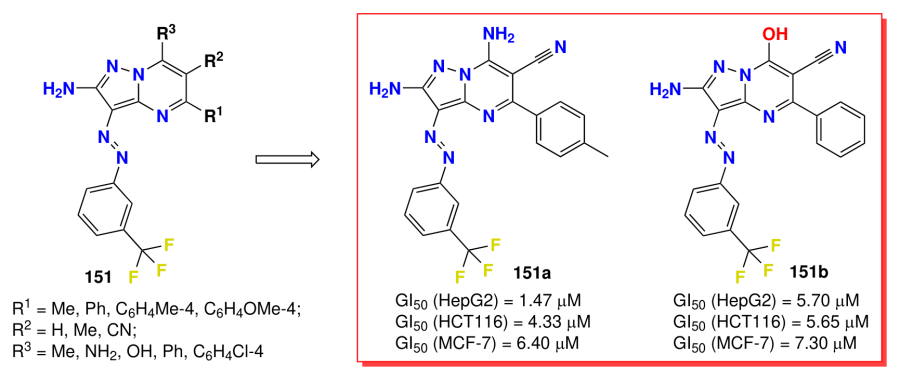
Two heterocycles, 151a and 151b, comparable in cytotoxicity to Taxol (GI50 = 0.40 – 5.50 μM) against the HepG2 hepatocellular carcinoma cell line, the HCT116 colorectal carcinoma cell line, and the MCF-7 breast ductal carcinoma cell line, were identified in study[163] among the series of derivatives 151 (Figure 78).
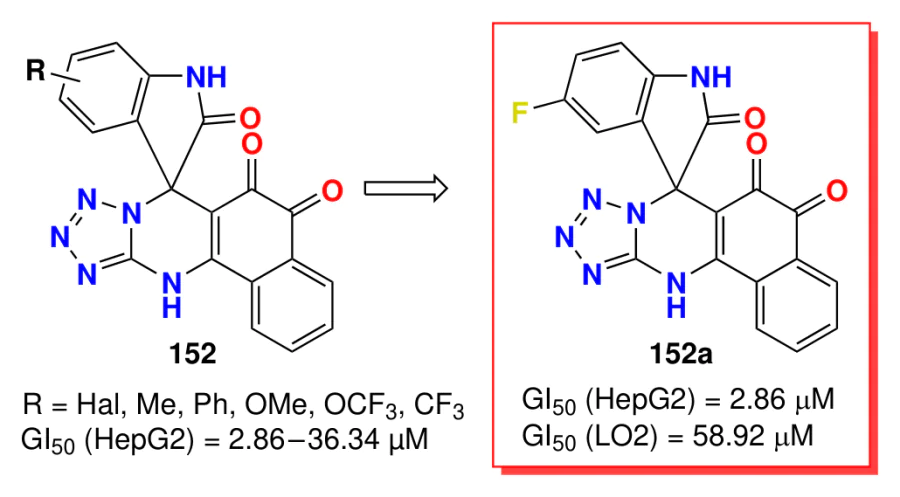
Unusual spiro[benzo[h]tetrazolo[5,1-b]quinazoline-7,3'-indoline]triones 152 were described by Wu et al.[164] It was established that these heterocycles substantially affect the viability of HepG2 hepatocellular carcinoma cells, with GI50 in the range of 2.86 – 36.34 μM (Figure 79). The most active compounds contained a substituent at the C(5) or C(7) position of the indole ring. 5-Fluoro derivative 152a proved to be more cytotoxic against HepG2 cells and more selective in the action on LO2 hepatocytes than tanshinone IIA [GI50 (HepG2) = 24.85 μM, GI50 (LO2) = 65.29 μM].
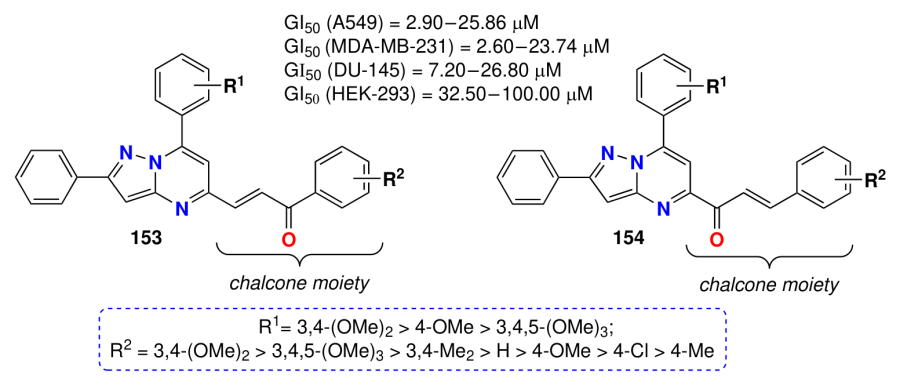
A study of two series of compounds 153 and 154 in which a pyrazolo[1,5-a]pyrimidine ring was combined with a chalcone moiety revealed differences in their cytotoxic activity against four cell lines.[165] Thus, heterocycles 154 in which the keto group is directly linked to the heterocyclic skeleton has greater cytotoxicity against DU-145 prostate adenocarcinoma cells, while their isomers 153 were more effective at reducing the viability of A549 lung adenocarcinoma and MDA-MB-231 triple-negative breast cancer cells. Certain structure – activity relationships for these compounds were elucidated by screening (Figure 80).
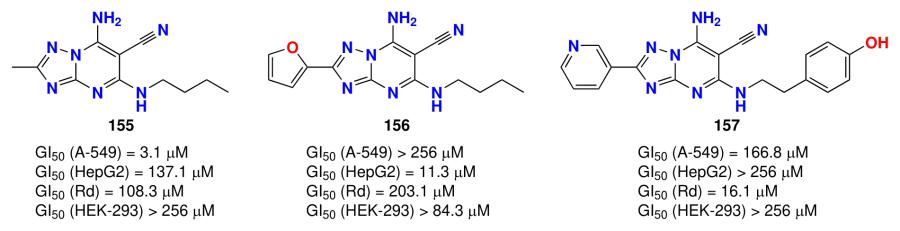
Among a small series of 5,7-diaminoazolopyrimidine-6-carbonitriles, Urakov et al.[22] identified three promising compounds that exhibited selective cytotoxic activity against A549 lung carcinoma cells (compound 155), HepG2 hepatocellular carcinoma cells (156), and Rd embryonic rhabdomyosarcoma (157) cells (Figure 81).
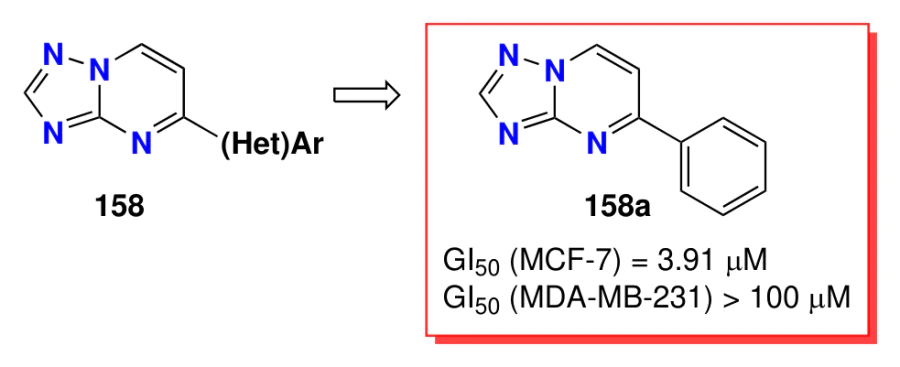
Of the few 5-(hetero)aryl-[1,2,4]triazolo[1,5-a]pyrimidines 158, only compound 158a showed a marked cytotoxicity against MCF-7 breast cancer cells, while the GI50 values for the other derivatives exceeded 100 μM (Figure 82).[166]
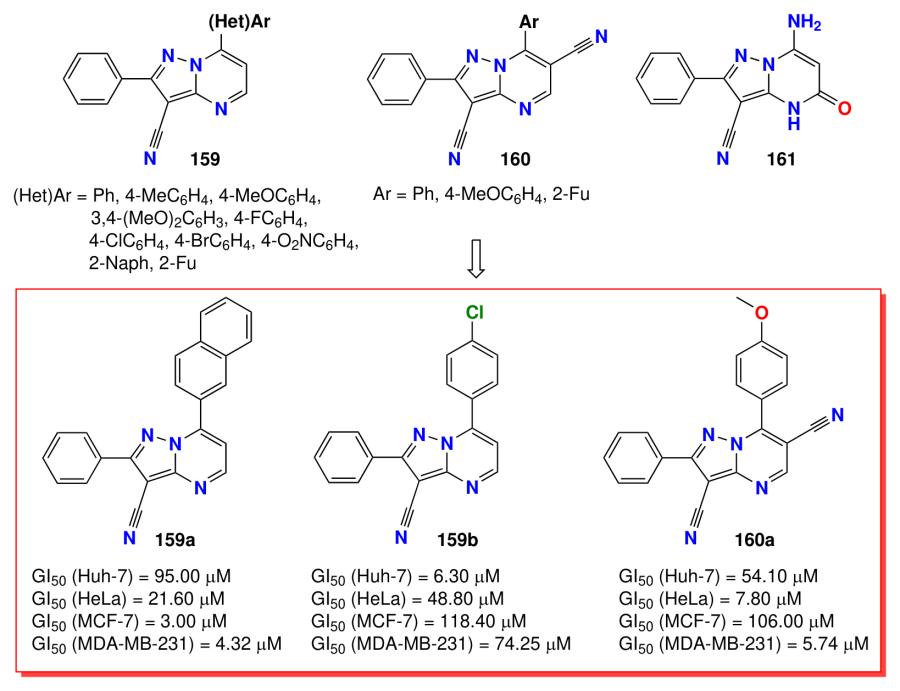
Attia et al.[167] investigated larotrectinib analogues (see Figure 1), compounds 159 – 161, for their antiproliferative activity against Huh-7 hepatocellular carcinoma cells, HeLa cervical adenocarcinoma cells, and MCF-7 breast ductal adenocarcinoma cells (Figure 83). Most of these derivatives exhibited a cytotoxicity index in the mid- and high micromolar range, with the exception of three structures, 159a,b and 160a. These compounds were additionally tested on the MDA-MB-231 triple-negative breast cancer cell line where they showed cytotoxicity exceeding that of doxorubicin [GI50 (MDA-MB-231) = 6.0 μM].
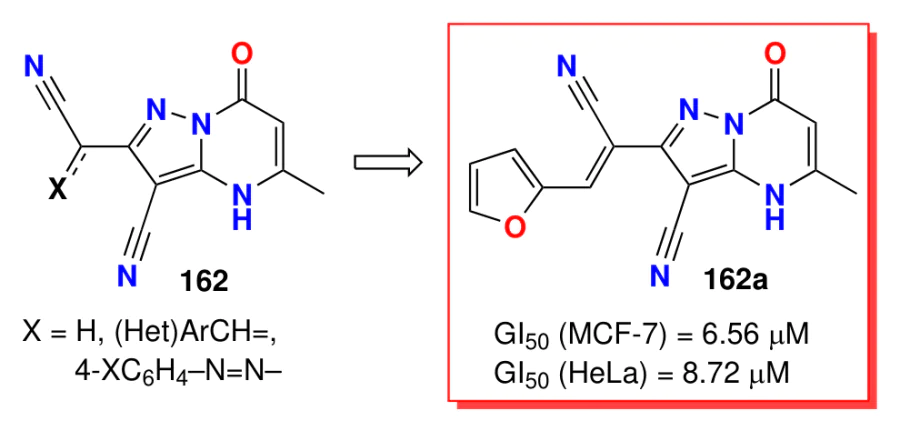
Modification of the pyrazolopyrimidines 162 containing two nitrile groups as peripheral substituents yielded a series of compounds that demonstrated cytotoxic activity in the mid-micromolar range (Figure 84). The most promising structure 162a was an order of magnitude more active than the others, although it was inferior to doxorubicin against two cell lines [GI50 (MCF-7) = 4.17 μM; GI50 (HeLa) = 5.57 μM].[168]
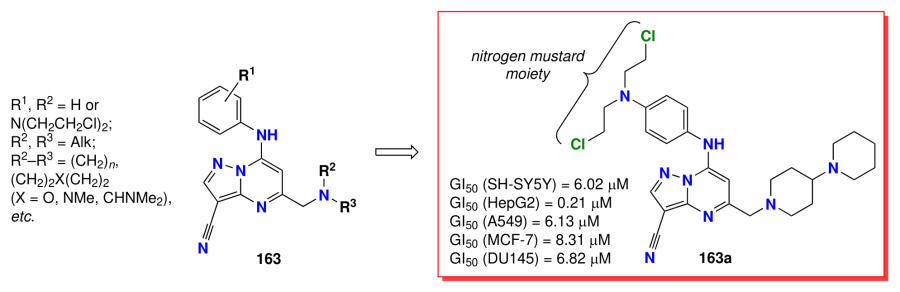
Zhao et al.[169] described a series of 3-cyanopyrazolo[1,5-a]pyrimidines 163 containing a nitrogen mustard analogue [R1 = N((CH2)2Cl)2] (Figure 85). The authors found that compounds 163, in which the bis(chloroethyl)amino group is located at the methylene atom at C(5) [R2 = R3 = (CH2)2Cl], have virtually no effect on tumour cells. Conversely, the introduction of this moiety into the benzene ring of the aniline substituent gives compounds with a pronounced cytotoxicity. It is noteworthy that para-substituted compounds are more effective (e.g., compound 163a) than meta-isomers.
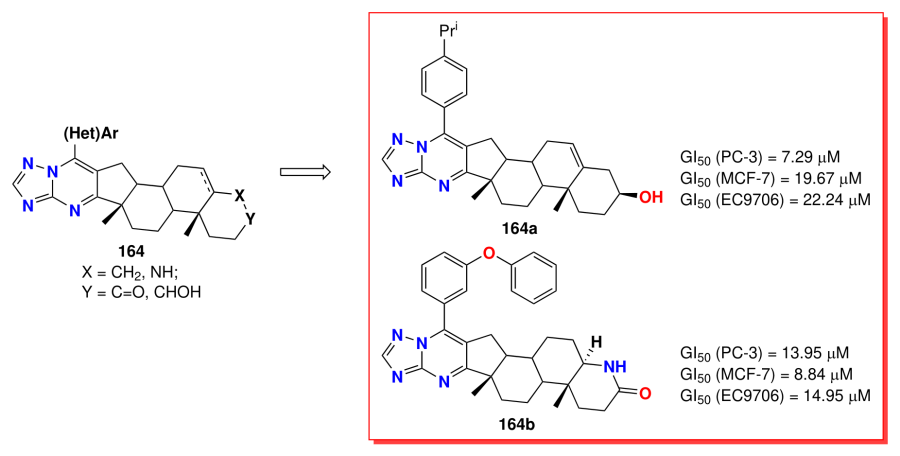
Among polycyclic fused heterocycles based on azole[1,5-a]pyrimidines, there are also compounds with antiproliferative activity. Huang et al.[170] synthesized a series of derivatives 164, in which a steroid moiety was annulated to a [1,2,4]triazolo[1,5-a]pyrimidine system (Figure 86). Variation of the (hetero)aryl moiety at the C(7) atom demonstrated that most of compounds 164 had no cytotoxic activity against three cancer cell lines: MCF-7, PC-2 (human pancreatic carcinoma), and EC9706 (human esophageal squamous cell carcinoma). However, several exceptions were found: for example, derivatives 164a and 164b reduced cell proliferation in the low- and mid-micromolar ranges.
Two structurally similar heterocycles were reported by Bondock et al.[171] Despite their similar structures, compounds 165 and 166 markedly differed in the cytotoxic activity (Figure 87).
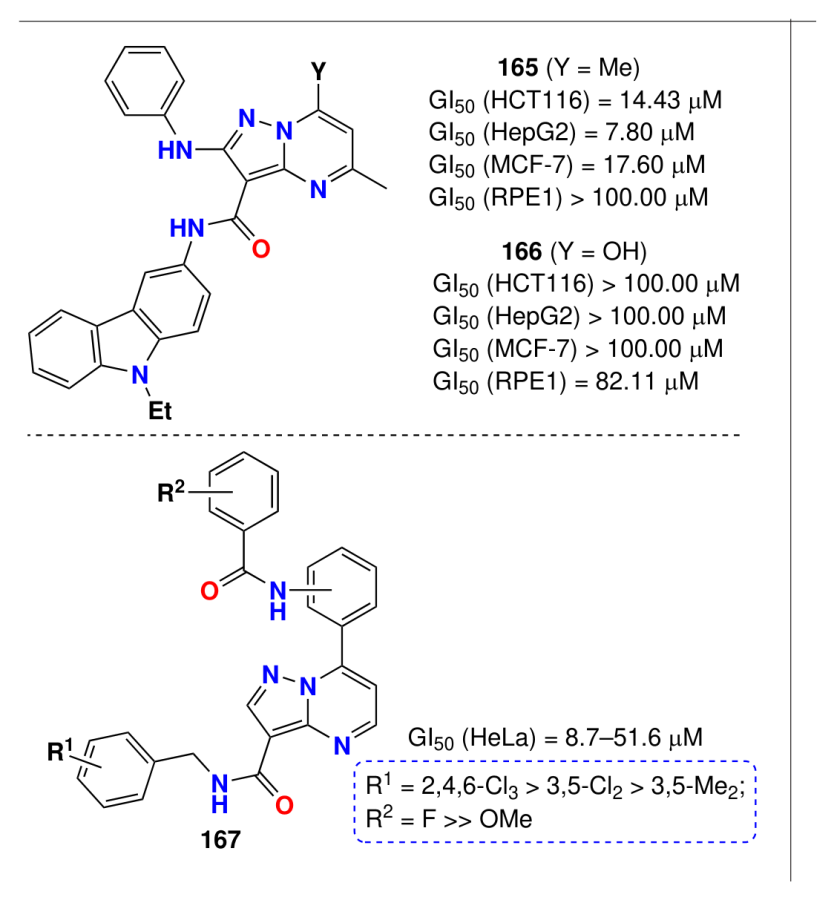
The cytotoxicity of compounds 167 (see Figure 87) against HeLa cervical adenocarcinoma cells depended on the number of halogen atoms on the phenyl moieties linked to the pyrazolo[1,5-a]pyrimidine skeleton either directly or via an amide linker.[172] The highest activity was observed for compounds containing at least three halogen atoms, with chlorine being more beneficial than fluorine.
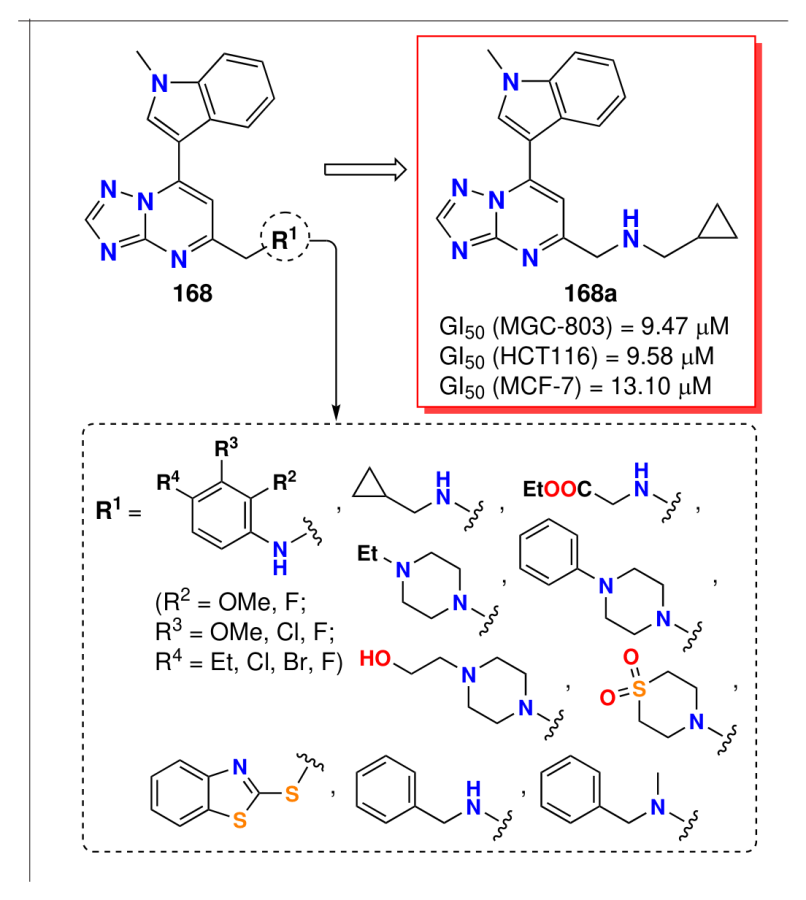
The antiproliferative activity of 5-substituted 7-(1-methylindol-3-yl)-[1,2,4]triazolo[1,5-a]pyrimidines 168 against the MGC-803 (human gastric cancer), HCT116 (human colorectal carcinoma), and MCF-7 (breast ductal adenocarcinoma) cell lines was investigated by Yu et al.[173] (Figure 88); however, the authors did not establish any SARs. It was shown that most compounds exhibited moderate antiproliferative activity against the above cell lines, while compound 168a had a substantial cytotoxicity.
3.2. Compounds with cytotoxic activity in the mid-micromolar range
Some ester derivatives of pyrazolo[1,5-a]pyrimidines 169 and 170 were considered by Naik et al.[174] (Figure 89); however, no targeted SAR studies were carried out. The available data indicate that the most active compounds, in particular heterocycle 170a, are slightly less cytotoxic than paclitaxel (GI50 = 3.23 – 6.31 μM).
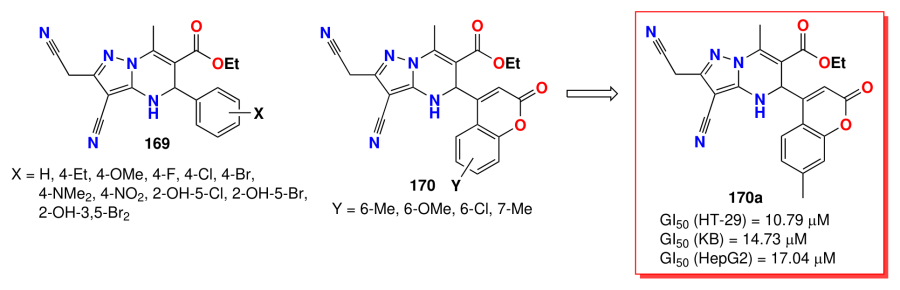
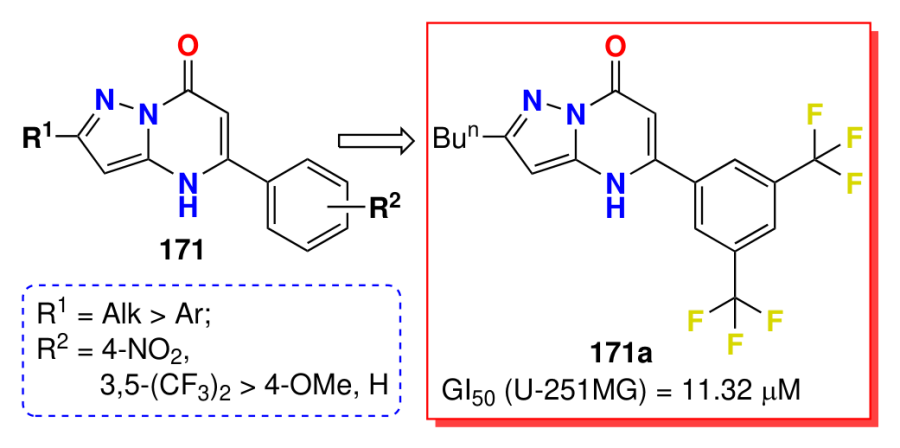
A search for pyrazolo[1,5-a]pyrimidines exhibiting cytotoxicity against U-251MG glioblastoma cells among fifteen structures 171 was described by He et al. (Figure 90).[175] It was found that for a compound to be active, a benzene ring must be present at the C(5) position of the molecule (the molecule with a tert-butyl group was inactive); conversely, an alkyl group is required at the C(2) position (aryl-substituted derivatives proved to be less cytotoxic). Most of compounds 171 had a GI50 value in the high micromolar range; however, the most promising compound 171a was an order of magnitude more active.
Fused pyrido[2',3':3,4]pyrazolo[1,5-a]pyrimidine systems 172 (Figure 91) were investigated for cytotoxicity against a number of cell lines: stage IV prostate cancer (PC3), cervical adenocarcinoma (HeLa), triple-negative breast cancer (MDA-MB-231), hepatocellular carcinoma (HepG2), and human umbilical vein endothelial cells (HUVEC).[176] It was found that the cytotoxic effect is attenuated in the presence of electron-donating alkyl substituents in the pyrimidine ring. A similar pattern was observed for aryl-substituted derivatives: electron-donating substituents in the aromatic ring decreased the activity, while electron-withdrawing substituents, conversely, ensured a higher activity. Nevertheless, all compounds 172 were inferior to 5-fluorouracil (GI50 = 1.6 – 1.9 μM, SI = 41.89 – 49.75) in terms of cytotoxicity and selectivity index (SI).
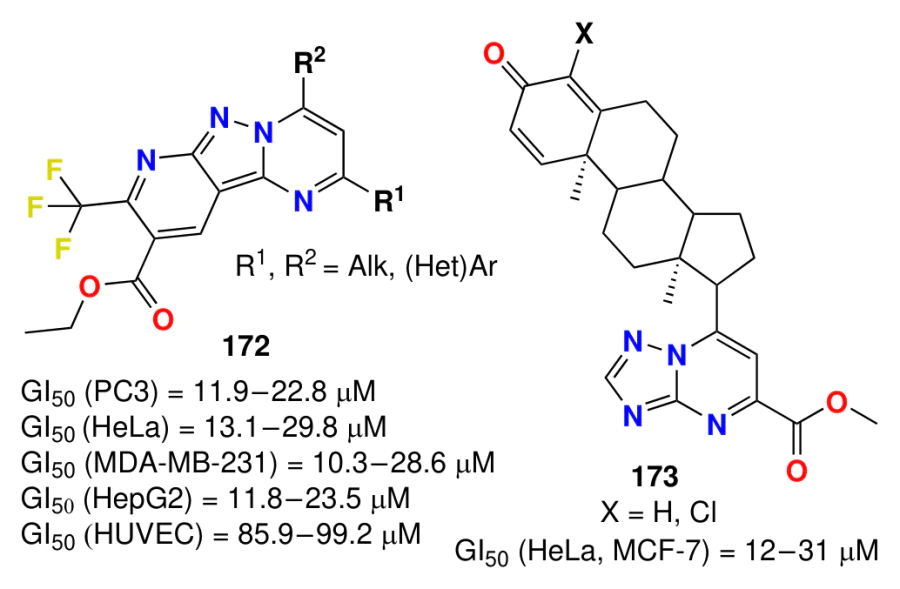
Two derivatives 173 (see Figure 91), belonging to the class of [1,2,4]triazolo[1,5-a]pyrimidines and containing a steroid moiety, were inferior to etoposide [GI50 (HeLa) = 0.8 μM; GI50 (MCF-7) = 3.1 μM] in decreasing the viability of HeLa cells and MCF-7 breast ductal adenocarcinoma cells. For these heterocycles taken at a concentration of 50 μM, the inhibition ranged from 24 to 62%, while for etoposide it was 86 – 90%.[177]
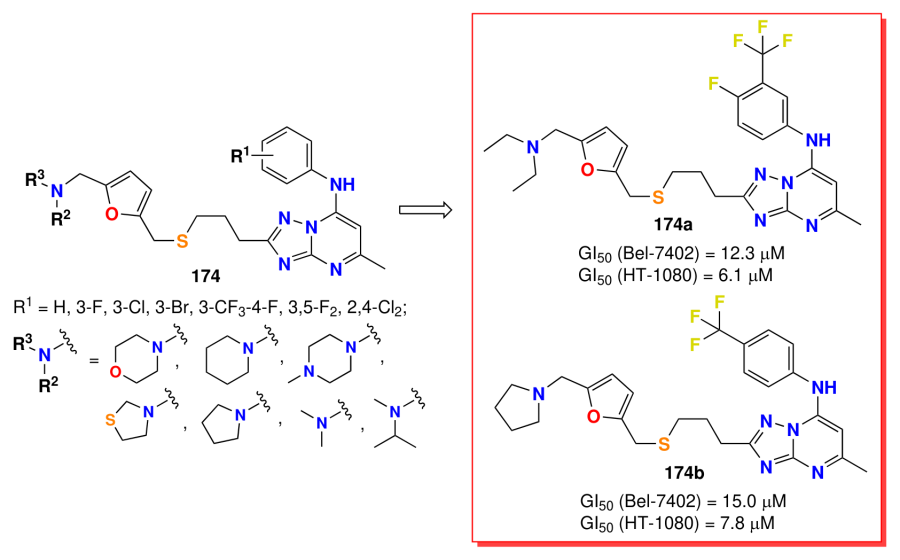
Zhai et al.[178, 179] and Zhao et al.[180] investigated the dependence of cytotoxic activity against Bel-7402 hepatocellular carcinoma cells and HT-1080 human fibrosarcoma cells on the nature of the side chain at the C(2) position and on substituents at the C(7) atom of azolo[1,5-a]pyrimidines 174. It was shown that substituents R1 in the aniline moiety have a more pronounced effect (Figure 92): fluorine-containing groups on the benzene ring are preferred (compounds 174a,b). Thus, derivative 174a, which had the highest cytotoxicity, was four times more active than cisplatin, which has GI50 (Bel-7402) = 35.5 μM and GI50 (HT-1080) = 22.7 μM.
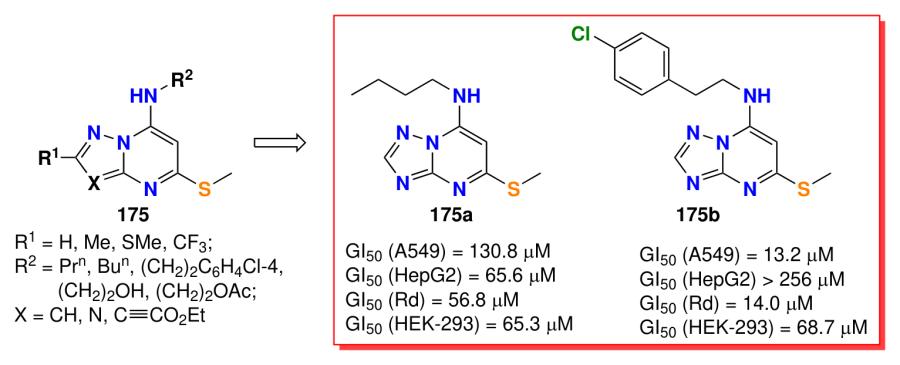
A few compounds with cytotoxicity in the mid-micromolar range were found among 7-amino-azolo[1,5-a]pyrimidines 175 (Figure 93), e.g., compounds 175a,b. However, almost all of derivatives 175 also reduced the proliferative capacity of human embryonic kidney cells (HEK-293), with the best selectivity index being 4.82.[21]
Among pyrazolo[1,5-a]pyrimidines 176, many compounds exhibited cytotoxic activity against cancer cells in the mid-micromolar range; however, these molecules often inhibit the viability of normal diploid cells (WI-38) to a greater extent (Figure 94).[181]
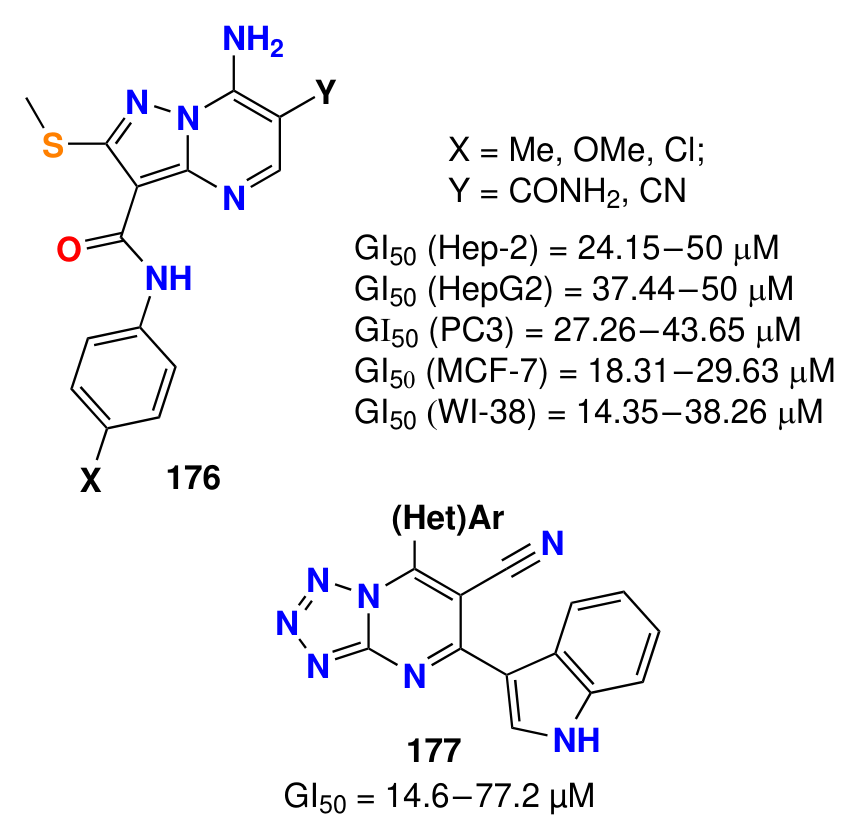
Tetrazolo[1,5-a]pyrimidine-6-carbonitriles 177, containing an indol-3-yl substituent at the C(5) position, were investigated for cytotoxic activity against the HCT116 colorectal cancer cells, MCF-7 breast ductal adenocarcinoma cells, MDA-MB-231 triple-negative breast cancer cells, A549 lung adenocarcinoma cells, and telomerase-immortalized human retinal pigment epithelial cells (RPE1). HCT-116 cells proved to be most sensitive to the action of compounds 177, whereas the proliferative capacity of immortalized normal RPE1 cells was affected to the least extent (see Figure 94).[182]
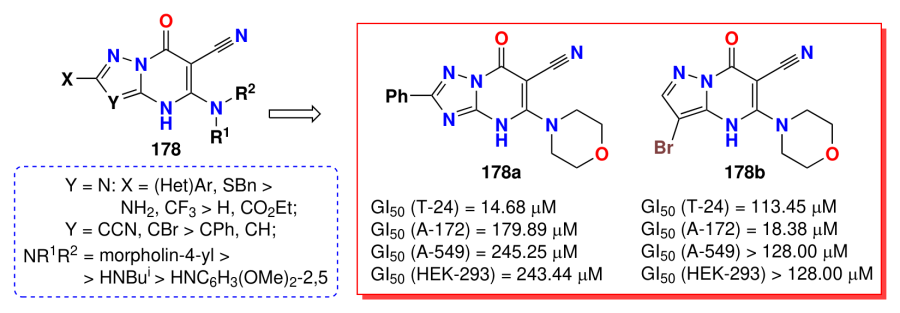
The T-24 bladder carcinoma cells were found to be most sensitive to the action of azole[1,5-a]pyrimidin-7-ones 178; however, the cytotoxic effect was often accompanied by a decrease in proliferation of normal HEK-293 cells (Figure 95). Screening identified two derivatives, 178a and 178b, which had selective cytotoxicity in the mid-micromolar range.[16]
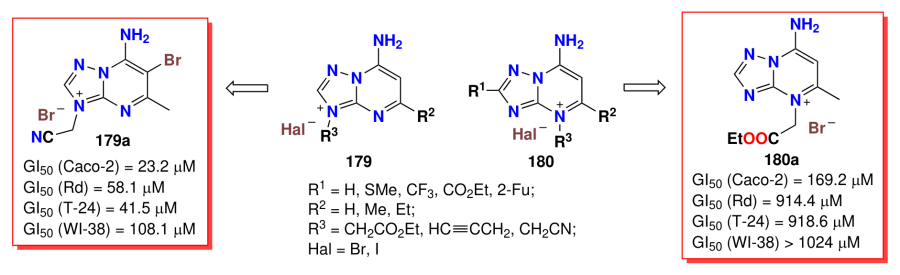
Ushakova et al.[18] evaluated the cytotoxicity of the regioisomeric alkylation products of 7-amino[1,2,4]triazolo[1,5-a]pyrimidines 179 and 180 against embryonic rhabdomyosarcoma cells (Rd), colorectal adenocarcinoma cells (Caco-2), bladder carcinoma cells (T-24), and human lung fibroblasts (WI-38) (Figure 96). Among 3-substituted [1,2,4]triazolo[1,5-a]pyrimidines 179, compound 179a demonstrated the greatest cytotoxic effect against tumour cells, while exhibiting some selectivity relative to normal cells. The authors did not present the cytotoxicity data for C(6)-non-halogenated analogue of compound 179a; hence, it is impossible to evaluate the effect of the halogen atom present in the molecule on the anticancer activity. Meanwhile, 4-alkyl derivatives 180 had a less pronounced effect on the division of both tumour and normal cells, with derivative 180a being the most active.
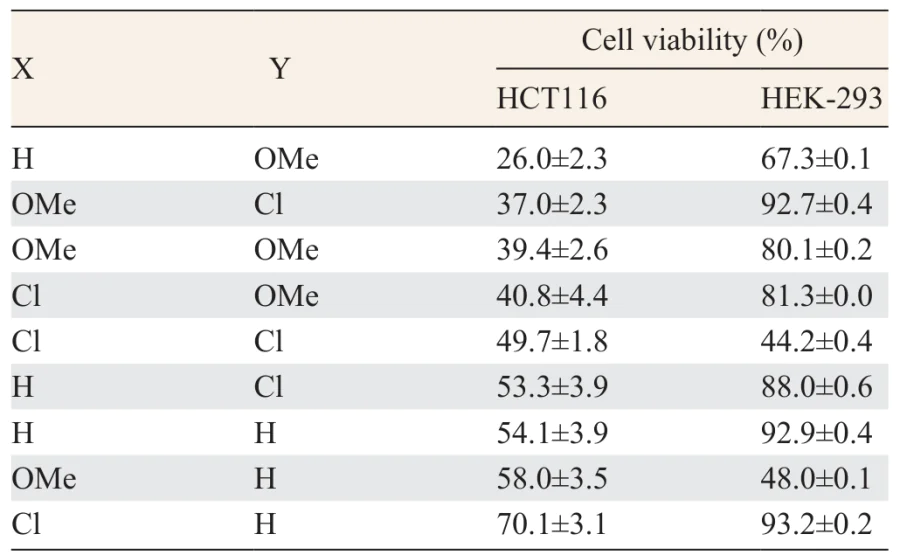
Testing of 2,7-diarylpyrazolo[1,5-a]pyrimidines 181 for their ability to decrease the viability of HCT116 colorectal carcinoma cells and normal HEK-293 human embryonic kidney cells revealed that the most active compounds contain a methoxy group in the benzene ring linked to the pyrazole ring (Table 1).[183]
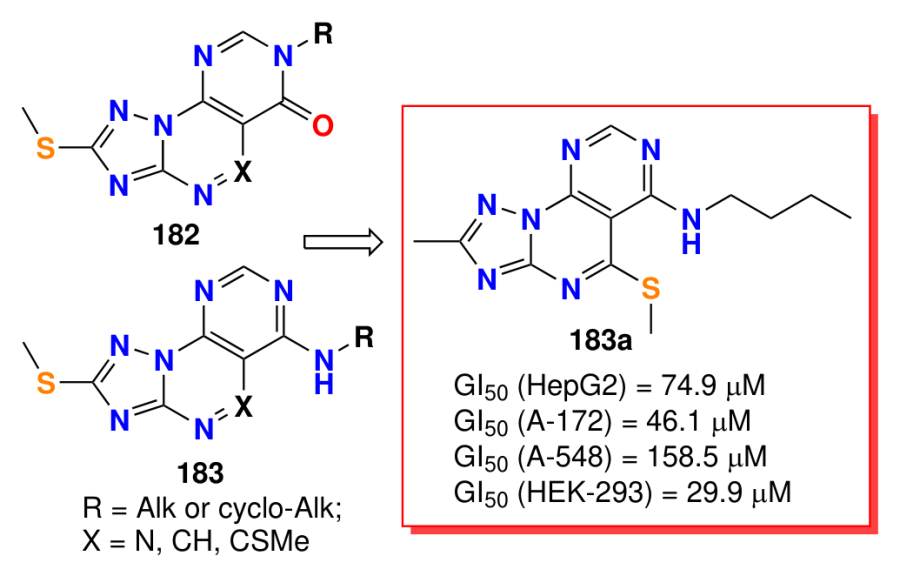
Bersneva et al.[17] considered the cytotoxic activity of thirteen compounds belonging to a new family of pyrimido[5,4-e]azolo[1,5-a]pyrimidines and pyrimido[4,5-e][1,2,4]triazolo[5,1-c][1,2,4]triazines against the following cell lines: HepG2 human hepatocellular carcinoma, A-172 glioblastoma, A-549 lung adenocarcinoma, and HEK-293 human embryonic kidney cells (Figure 97). Pyrimidoazoloazines 182 and 183 did not exhibit significant cytotoxicity against either cancer or normal cells. The introduction of a 5-methylsulfanyl group into the heterocyclic skeleton furnished compound 183a, which was found to be cytotoxic against the HepG2 and A-172 cells in the micromolar range and also to inhibit proliferation of HEK-293 cells.
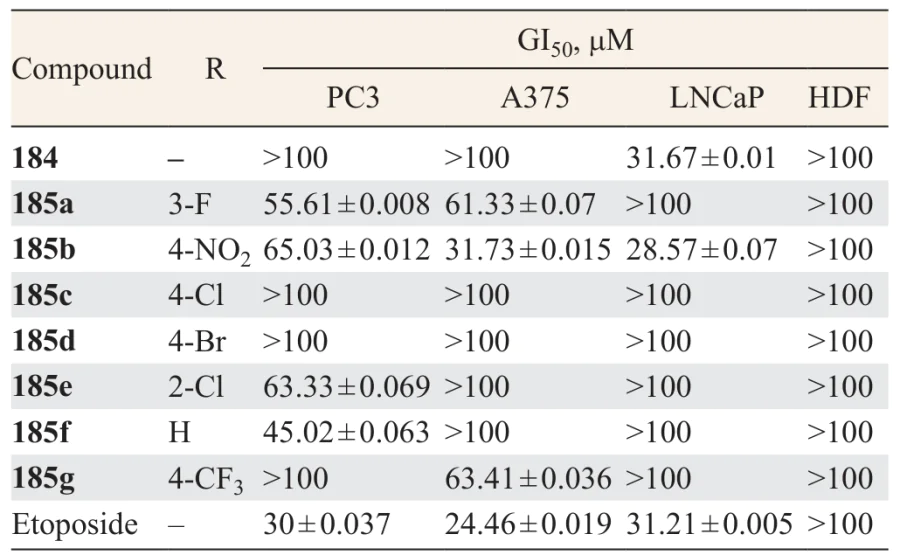
It was found that none of the triazolopyrimidine nitro derivatives 184 and 185 described by Safari et al.[184] were cytotoxic against human dermal fibroblasts (HDF). At the same time heterocycle 184, containing a pyridin-4-yl ring, and 4,5-dihydro derivative 185 with a para-nitrophenyl moiety reduced the viability of LNCaP human prostate adenocarcinoma cells to the same extent as the reference drug etoposide (Table 2).[184]
Study of the cytotoxicity of a small series of azolopyrimidines 186 on the MCF-7 breast ductal adenocarcinoma cells indicated that only heterocycle 186a effectively reduced cell viability at a concentration of 25 μM (Figure 98).[185] In silico docking revealed a relatively high affinity for dihydroorotate dehydrogenase (DHODH), the effect on which is likely to be responsible for the observed cytotoxicity.
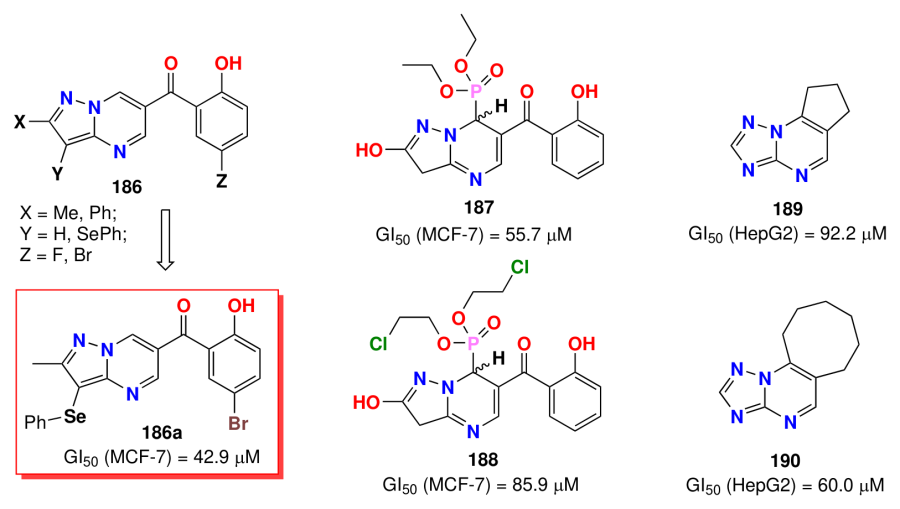
The unusual phosphonate derivatives of pyrazolopyrimidines 187 and 188 (see Figure 98) slightly reduced the proliferative capacity of the MCF-7 breast ductal adenocarcinoma cells, and showed no activity against the HepG2 hepatocellular carcinoma, HCT116 colorectal carcinoma, or PC-3 prostate adenocarcinoma cell lines.[186]
A low cytotoxic effect was observed in HepG2 cells for derivatives 189 and 190, in which an aliphatic ring was fused to the triazolopyrimidine system (see Figure 98).[187]
3.3. Compounds showing cytotoxicity in the high micromolar range or showing no cytotoxicity
Hassan et al.[188] performed a comparison of the cytotoxic activitis of a series of pyrazolopyrimidines 191 and doxorubicin (Figure 99). Only a few compounds of this series were comparable in activity with this anthracycline antibiotic; however, their cytotoxicity indices GI50 were in a high micromolar range.
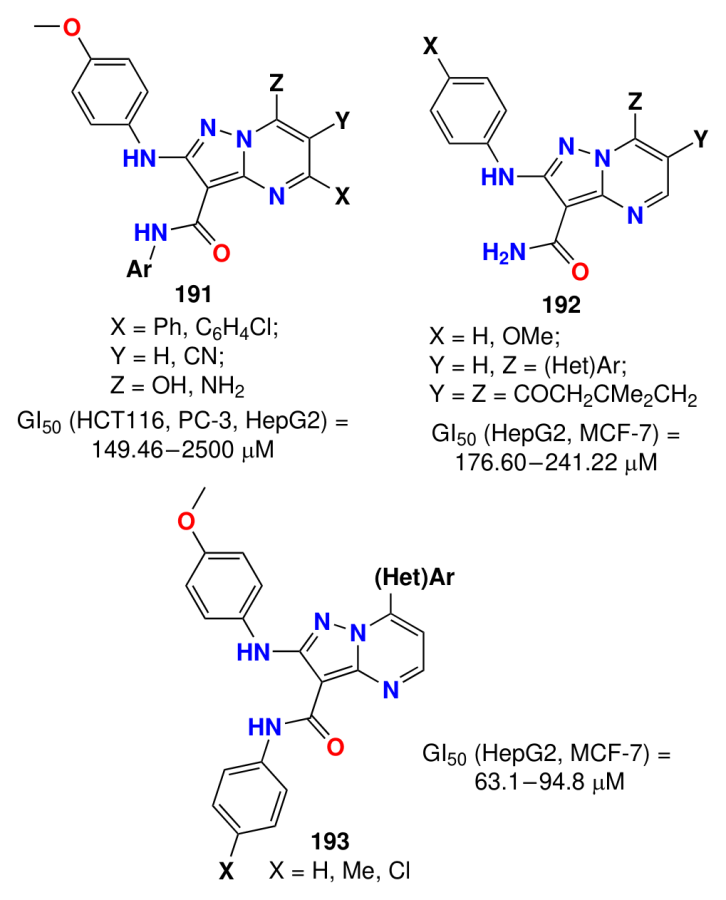
In a later study,[189] a similar cytotoxicity level was noted for a related series of pyrazolopyrimidines 192 (see Figure 99): their cytotoxicity slightly exceeded that of doxorubicin (GI50 = 148.85 and 120.70 μM for the HepG2 and MCF-7 cell lines, respectively), but fell within the high micromolar range.
Further modification of this scaffold afforded compounds 193 (see Figure 99), which exhibited a somewhat more pronounced cytotoxic effect, again slightly exceeding that of doxorubicin.[190]
Almehizia et al.[191] investigated the biological effects of heterocycles 194 and 195, including their cytotoxicity against lung adenocarcinoma (A549) and colorectal adenocarcinoma (Caco-2) cells and diploid lung fibroblasts (WI-38). The GI50 cytotoxicity indices found for these compounds were in the mid- and high micromolar ranges, with a certain degree of selectivity in relation to the normal WI-38 cell line (Figure 100).
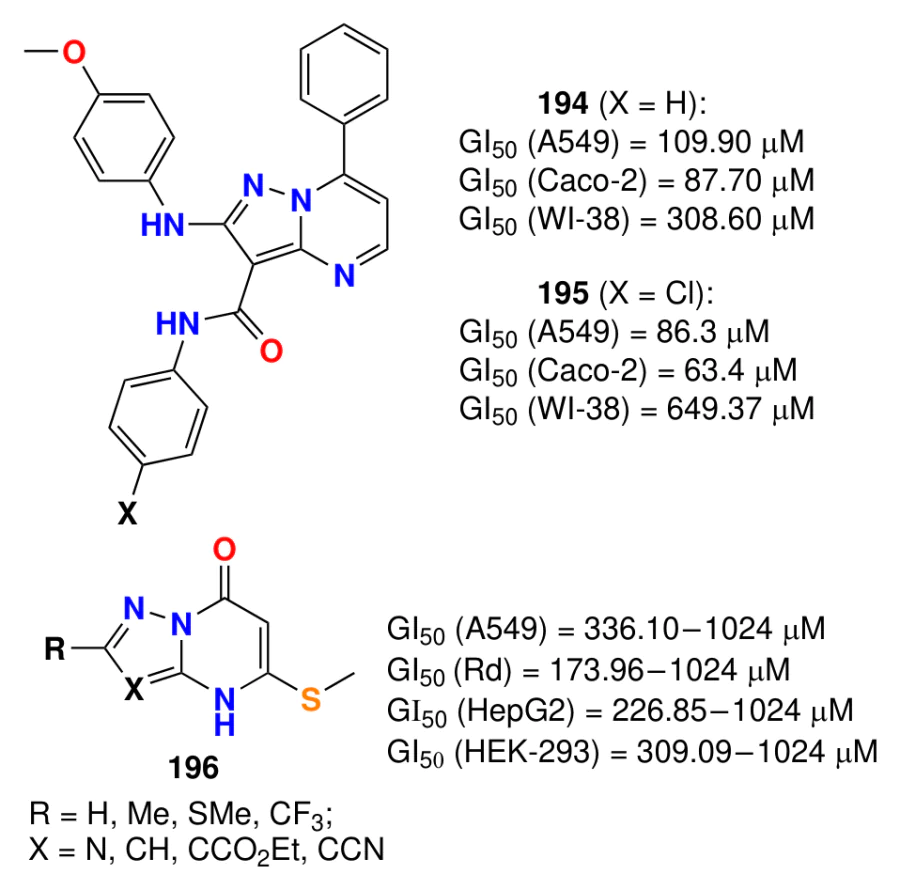
5-(Methylsulfanyl)azolo[1,5-a]pyrimidin-7-one series 196 (see Figure 100) did not exhibit pronounced cytotoxic properties against the A549 lung adenocarcinoma cells, Rd embryonic rhabdomyosarcoma cells, HepG2 hepatocellular carcinoma cells, or HEK-293 human embryonic kidney cells.[20]
Some preliminary data on the cytotoxicity of derivatives 197 were obtained by Kaping et al.[192] (Figure 101). A study of the effect of these heterocycles on the ability of Chinese hamster ovary cells (CHO-K1) to metabolize MTT indicated that they may possess this effect; however, quantitative values for the activity were not provided in the publication.
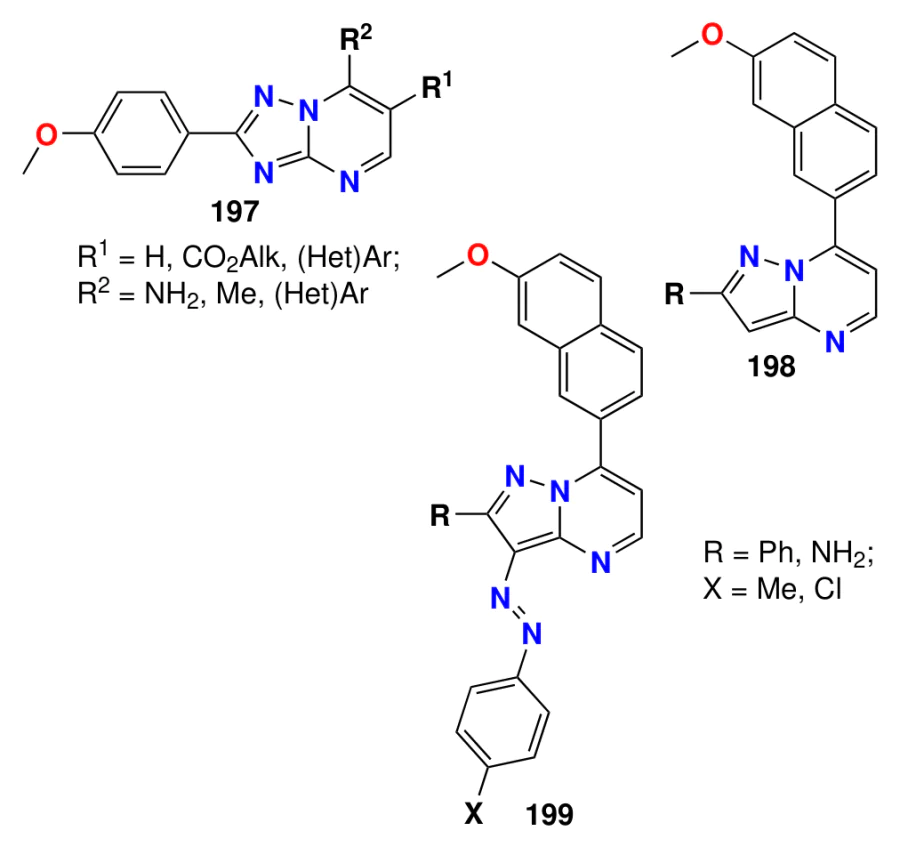
Evaluation of seven pyrazolo[1,5-a]pyrimidine derivatives 198, 199 (see Figure 101) on an extensive panel of cell lines (approximately 50 types) revealed that these heterocycles do not possess pronounced cytotoxic activity. The proliferative capacity of the most sensitive SR lymphoma and UO-31 renal carcinoma cells was inhibited by 41.3% in the presence of these compounds at a concentration of 10 mM.[193]
Metwally et al.[194] discussed the effect of the 3-azo derivatives of pyrazolo[1,5-a]pyrimidines 200 and 201 (Figure 102) on the proliferative capacity of Ehrlich ascites carcinoma cells. The authors postulated that these compounds possess marked anticancer properties; however, the format in which they presented the results precluded an objective assessment of this type of activity.
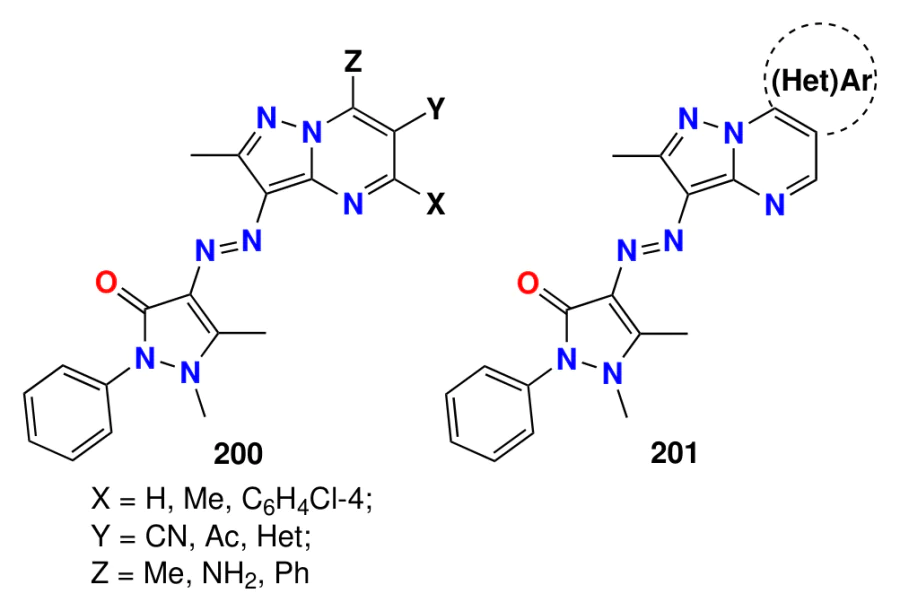
Ajeesh et al.[195] varied the substituents in the amide moiety linked to the pyrazole ring in compounds 202, while maintaining the substitution pattern on the pyrimidine ring (Figure 103). According to cytotoxicity assays for these compounds against a number of cell lines, the presence of a trifluoromethyl group increases the cytotoxicity, while compounds with a 4-methoxy group in the Ar1 substituent, conversely, slightly reduced the proliferative capacity of tumour cells.
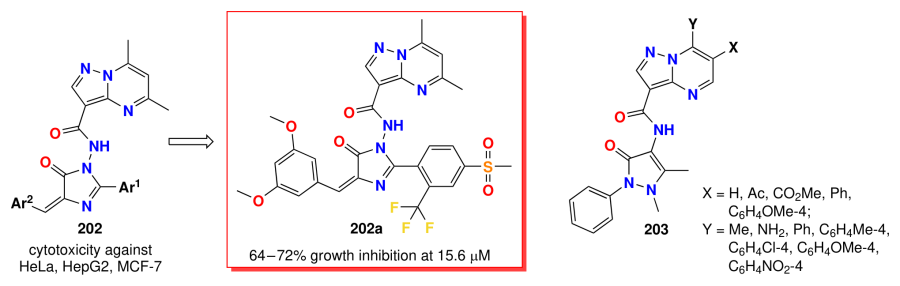
The cytotoxicity of pyrazolo[1,5-a]pyrimidines 203 (see Figure 103) was investigated using the CHO-K1 Chinese hamster ovary cell line. Although some of the compounds 203 reduced the viability of these cells, the half-maximal concentrations were around 27 mM, which means that these derivatives cannot be considered to be promising for the development of anticancer drugs.[196]
3.4. Summary of Section 3
Analysis of publications dealing with the cytotoxic properties of azolo[1,5-a]pyrimidines indicates that the most frequently mentioned (> 10 studies) cell lines are MCF-7 breast ductal adenocarcinoma cells, HCT116 colorectal carcinoma cells, HepG2 hepatocellular carcinoma cells, HeLa cervical carcinoma cells, and A549 lung adenocarcinoma cells. The studies that address the effect of azolo[a]pyrimidines on these tumour cells give cytotoxicity indices falling within the low micromolar range (GI50 < 10 μM) in approximately 50% of cases, indicating the sensitivity of these cells to the action of the heterocycles in question. The Rd embryonic rhabdomyosarcoma cells, MDA-MB-231 triple-negative breast cancer cells, and DU-145 and PC-3 prostate cancer cells are less frequently (5 – 7 times) encountered in the literature. Furthermore, regarding the three last-mentioned types of cells, almost half of the publications consider azolo[1,5-a]pyrimidines exhibiting cytotoxicity at concentrations <10 μM, whereas for Rd cells, the most effective compound has a GI50 value of 14 μM. Pyrazolo[1,5-a]pyrimidines and [1,2,4]triazolo[1,5-a]pyrimidines are addressed in cytotoxicity studies in approximately equal proportions.
As regards identification of particular moieties that provide most pronounced cytotoxicity against tumour cells, it can be noted that the introduction of a 3,4,5-trimethoxyphenyl group (a fragment of the natural antitumour compound combretastatin) resulted in the synthesis of compounds 204, 205 with GI50 values in the mid-nanomolar range. A similar activity was also observed for some 3-cyanopyrazolopyrimidines 206. Furthermore, structures exhibiting pronounced cytotoxicity were characterized by relatively high lipophilicity; therefore, the introduction of fluorine-containing moieties or annulation of a steroid scaffold furnished derivatives with cytotoxic activity in the low micromolar range (Figure 104).
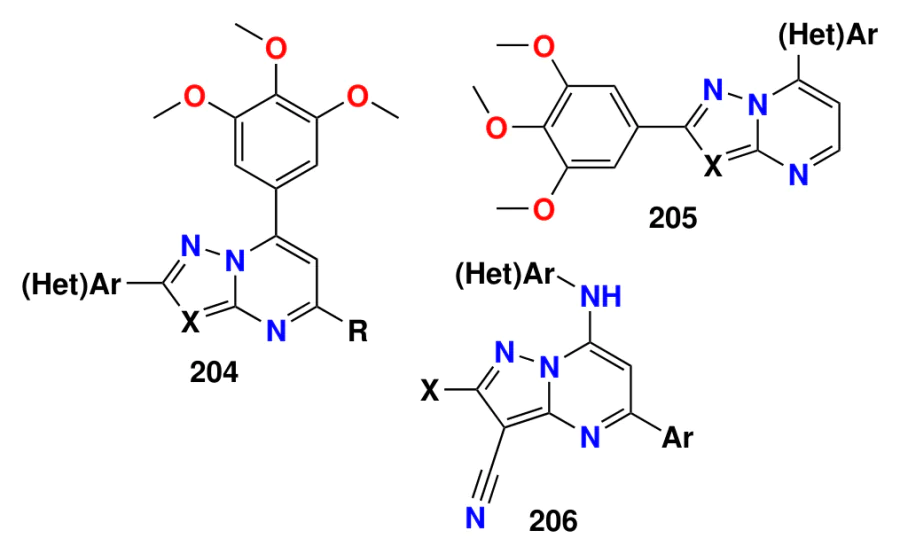
It is noteworthy that among C(3)-substituted pyrazolo- [1,5-a]pyrimidines 207 – 209, the highest activity was inherent in the derivatives containing a benzophenone moiety or its heterocyclic analogue at this position (compound 207). Meanwhile, structurally similar amides 208 or azo compounds 209 exhibited a less pronounced ability to influence tumour cell proliferation (Figure 105).
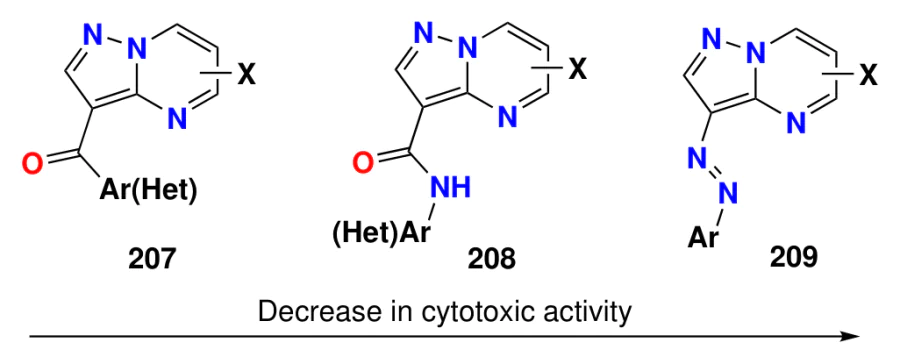
It was noted that [1,2,4]triazolo[1,5-a]pyrimidines rarely have a substituent other than a hydrogen atom at the C(6) position, and even in such cases, the effect of this substituent on the antitumour activity has not been elucidated. The results of studies into the effect of [1,2,4]triazolo[1,5-a]pyrimidines on α-tubulin polymerization indicate that a pronounced effect is caused by a substituted benzene ring at the C(6) position of the molecule (e.g., compounds 210) (Figure 106). However, compounds that inhibit β-tubulin polymerization to the highest extent lack a substituent at this position, as indicated by the in silico and in vitro studies presented by Kim et al.[144] On the other hand, particularly for derivative 131a investigated as an α-tubulin polymerization inhibitor, an antitumour effect against U87-MG glioblastoma was found in vivo.
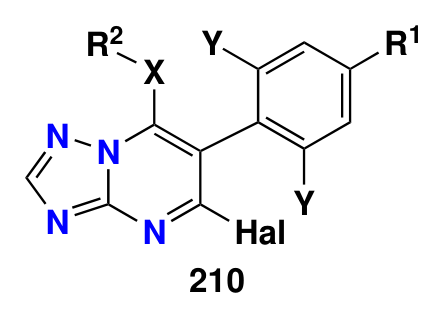
4. Conclusion
The information presented above provides the conclusion that azole[1,5-a]pyrimidines represent an important and promising platform for the development of anticancer agents. A key benefit of these compounds is their ability to interact with a variety of macromolecular targets, which opens up opportunities to overcome the chemoresistance acquired by tumour cells. However, the transition to clinically significant results requires not only in-depth studies of metabolism, but also standardization of initial screening protocols as well as the implementation of computer-aided design methods for the targeted construction of active molecules. In this context, the development of highly selective and bioavailable anticancer drugs, free from undesirable toxic effects, represents a central challenge facing medicinal chemistry in the foreseeable future.
The performed literature review covering both information on the direct cytotoxic activity of azolo[1,5-a]pyrimidines against a wide range of tumour cell lines and data on their interaction with particular molecular targets makes it possible to systematize the accumulated data and identify key features that determine the antitumour potential of compounds in this class. Such heterocycles are capable of inhibiting a variety of macromolecular targets ranging from classic kinases to apoptosis regulators and transcription factors. Determination of the cytotoxic action systems provides clear structure – activity relationships: an increase in the π-deficiency of the system through the introduction of electron-withdrawing groups correlates with enhancement of the cytotoxic effect of these heterocycles.
However, along with the obvious achievements in identification of hits among compounds of this class, the review highlights a systemic problem in these studies: the lack of integrated data on the solubility, bioavailability and metabolic stability in vivo for these compounds. The currently available body of information represents rather a set of structural ideas than a pool of candidates for preclinical trials. This dictates the need to combine efforts in the field of pharmacokinetic screening and experimental in vivo validation of the most active members of this class.
This work was carried out with the financial support of the Ministry of Science and Higher Education of the Russian Federation (theme № FEUZ-2026-0008).
5. List of abbreviations and symbols
The following abbreviations and symbols are used in this review:
- Ki — inhibition constant,
- ALK — anaplastic lymphoma kinase,
- ATR — ataxia telangiectasia mutated Rad3-related protein,
- Boc — tert-butoxycarbonyl,
- BTK — Bruton’s tyrosine kinase,
- CDK — cyclin-dependent kinase,
- cGAMP — cyclic guanosine monophosphate-adenosine monophosphate,
- Chk1 — serine/threonine kinase,
- CK2 — casein kinase 2,
- DHODH — dihydroorotate dehydrogenase,
- EC50 — half-maximal effective concentration,
- EDG — electron-donating group,
- EGFR — epidermal growth factor receptor,
- ENPP — ectonucleotide pyrophosphatase/phosphodiesterase,
- EWG — electron-withdrawing group,
- FDA — US Food and Drug Administration,
- 2-Fu — furan-2-yl,
- FUBP1 — FUSE-binding protein 1,
- hCA — carbonic anhydrases,
- HBA — hydrogen bond acceptor,
- HBD — hydrogen-bond donor,
- HDAC — histone deacetylases,
- GI50 — half-maximal growth inhibitory concentration,
- IC50 — half-maximal inhibitory concentration,
- ITP — inhibition of tubulin polymerization,
- JAK2 — Janus kinase 2,
- LD50 — median lethal dose,
- LSD — lysine-specific histone demethylase,
- MAT — methionine adenosyltransferase,
- MetAP — methionine aminopeptidase,
- MGC-803 — hybrid gastric cancer cells,
- MTAP — methylthioadenosine phosphorylase,
- MTT — 3-(4,5-dimethylthiazol-2-yl)-2,5-diphenyltetrazolium bromide,
- 1(2)-Naph — naphthalen-1(2)-yl,
- PI3K — phosphatidylinositol 3-kinase,
- 2(3)-Py — pyridin-2(3)-yl,
- ROCK — Rho-associated kinase linked to a coiled-coil protein,
- SAR — structure – activity relationship,
- SI — selectivity index,
- Skp2 — S-phase kinase-associated protein 2,
- SMOX — spermine oxidase,
- STING — interferon gene stimulator,
- TDP — tyrosyl-DNA phosphodiesterase,
- 2-Th — thiophen-2-yl,
- Topo — topoisomerases,
- TRK — tropomyosin-receptor kinase,
- TRPC6 — transient receptor potential channel 6,
- TSPO — translocation protein,
- TTK — threonine tyrosine kinase,
- VEGFR — vascular endothelial growth factor receptors,
- WRN — Werner syndrome helicase.
Cell line designations:
- A2780 — endometrioid ovarian carcinoma,
- A549 — lung adenocarcinoma,
- A375 and A875 — melanoma,
- A-172 — glioblastoma,
- ACHN — renal adenocarcinoma,
- B16-F10 — mouse melanoma,
- Bel-7402 — hepatocellular carcinoma,
- BHK — normal cells from the kidneys of baby Syrian hamsters,
- Caco-2 — human colorectal adenocarcinoma,
- CHO-K1 — Chinese hamster ovary cells,
- COLO 205 — human colorectal adenocarcinoma cells,
- CT26 — murine colorectal carcinoma cells,
- DLD-1 — colorectal cancer,
- DU-145 and PC3 — prostate adenocarcinoma cells,
- EC109 and EC9706 — human esophageal squamous cell carcinoma,
- EKVX — human non-small cell lung cancer,
- FHC — normal human colon epithelial cells,
- HCT-116 — colorectal carcinoma cells,
- HDF — human dermal fibroblasts,
- HEK-293 — human embryonic kidney cells,
- HeLa — cervical adenocarcinoma,
- HELF — human embryonic lung fibroblasts,
- HepG2 — hepatocellular carcinoma,
- HK-2 — human renal proximal tubular epithelial cell line derived from normal human kidney cortex,
- HL-60 — promyelocytic leukaemia,
- HT-29 — colorectal adenocarcinoma,
- HT-1080 — human fibrosarcoma,
- Huh-7 — hepatocellular carcinoma,
- HUVEC — human umbilical vein endothelial cells,
- KB — continuous human epithelial cell line,
- LNCaP — human prostate adenocarcinoma,
- LO2 — hepatocytes,
- MCF-10A — non-tumorigenic breast epithelial cell line,
- MC38 — mouse colon adenocarcinoma,
- MC-80 — breast cancer,
- MCF-7 — breast ductal adenocarcinoma,
- MDA-MB-231 — triple-negative breast cancer,
- MGC-803 — human gastric cancer,
- MKN-45 — gastric adenocarcinoma,
- MOLM-13 — acute monocytic leukaemia,
- MOLT-4T — lymphoblastic leukaemia,
- MV4-11 — acute myeloid leukaemia,
- NCI-H1703 — squamous cell lung cancer,
- PBMC — normal peripheral blood mononuclear cells,
- PC-2 — human pancreatic carcinoma,
- PC-3 — stage IV prostate cancer,
- PC-9 — non-small cell lung cancer,
- QSG-7701 — normal human liver cells,
- Rd — embryonic rhabdomyosarcoma,
- RPE1 — telomerase-immortalized human retinal pigment epithelial cells,
- SH-SY5Y — human neuroblastoma,
- SiHa — squamous cell cervical carcinoma,
- SK-N-MC — Ewing’s sarcoma,
- SR — lymphoma,
- SW48 and SW620 — metastatic colorectal adenocarcinoma,
- T47D — breast ductal carcinoma,
- T98G — human glioblastoma,
- T-24 — bladder carcinoma,
- 4T1 — triple-negative breast cancer,
- U87-MG and U-251MG — glioblastoma,
- UO-31 — renal carcinoma,
- WI-38 — human lung fibroblasts,
- WM266-4 — malignant melanoma.
References