
Abstract
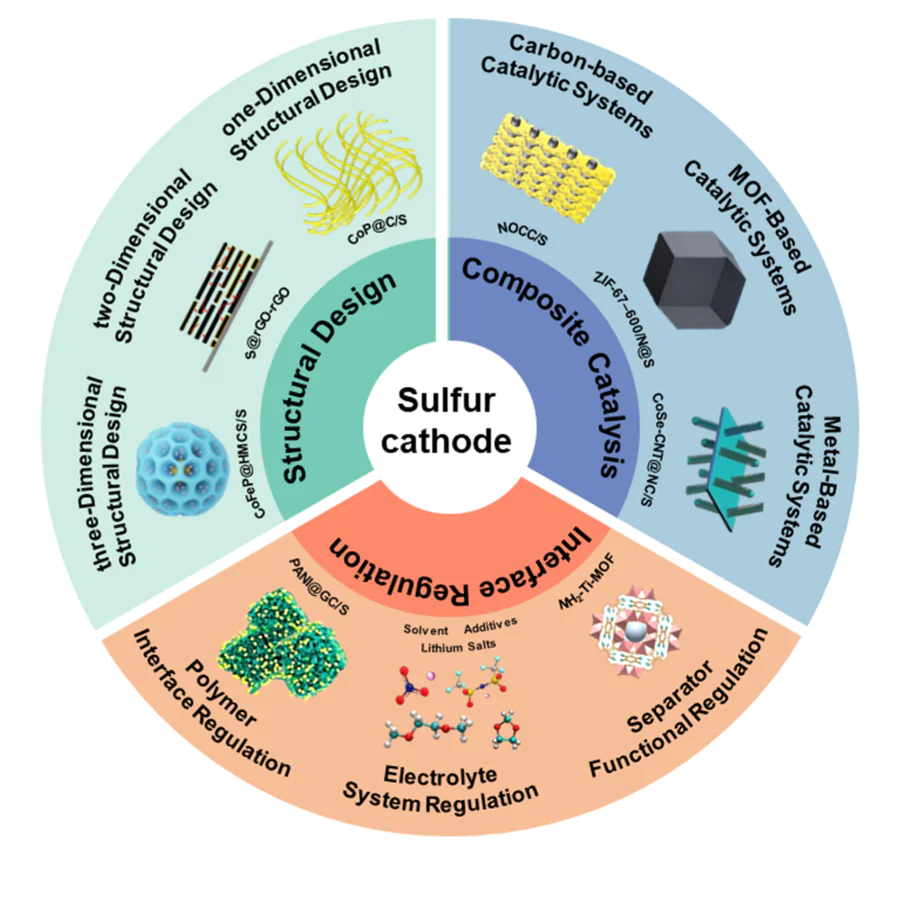
Lithium-sulfur batteries feature ultrahigh energy density and low-cost sulfur cathodes, yet poor conductivity, severe volume expansion and polysulfide shuttle hinder their commercialization. This review categorizes mainstream sulfur cathode optimizations into three independent technical routes: structural design, composite electrocatalysis and interfacial regulation. We systematically elaborate the working mechanisms, merits and inherent drawbacks of each strategy, and critically analyze unavoidable performance trade-offs when combining multiple modifications. High-porous carbon hosts boost catalysis but sacrifice volumetric energy density; dense interfacial layers suppress shuttling yet raise ion transport resistance; metal catalysts accelerate redox kinetics but suffer ion leaching and active site passivation. Sulfurized polyacrylonitrile cathodes with solid-solid conversion are discussed separately, as they fundamentally eliminate soluble polysulfides and match ester electrolytes well. Industrial metrics including areal sulfur loading, electrolyte‑to‑sulfur ratio (E/S ratio) and negative‑to‑positive ratio (N/P ratio) are adopted to evaluate reported electrode practicability. Unlike reviews advocating idealized integrated synergies, this work clarifies the lack of quantitative evidence for cross-strategy synergistic gains. We finally propose differentiated optimization schemes tailored to distinct performance targets and highlight key research gaps oriented toward practical pouch cells, offering critical references for developing viable high-energy Li-S cathodes.
Keywords
References